
Medieval documents scattered across Norway, Iceland, and Denmark for centuries have been reunited in a new digital archive, bringing together records that survived fires, political disputes, and generations of separation. Among them are an 1189 papal letter, a 700-year-old will, and hundreds of monastery documents revealing how people managed property, settled legal matters, and prepared for death in medieval Scandinavia.
Launched in Iceland on November 14, 2026, the Diplomatarium Arnamagnæanum makes the historic collection accessible through a single online platform. Its origins lie in the work of an Icelandic scholar who spent decades rescuing medieval records from obscurity, only to see much of his collection threatened by one of Copenhagen’s worst fires.
An 1189 Papal Letter and a Medieval Man’s Last Wishes
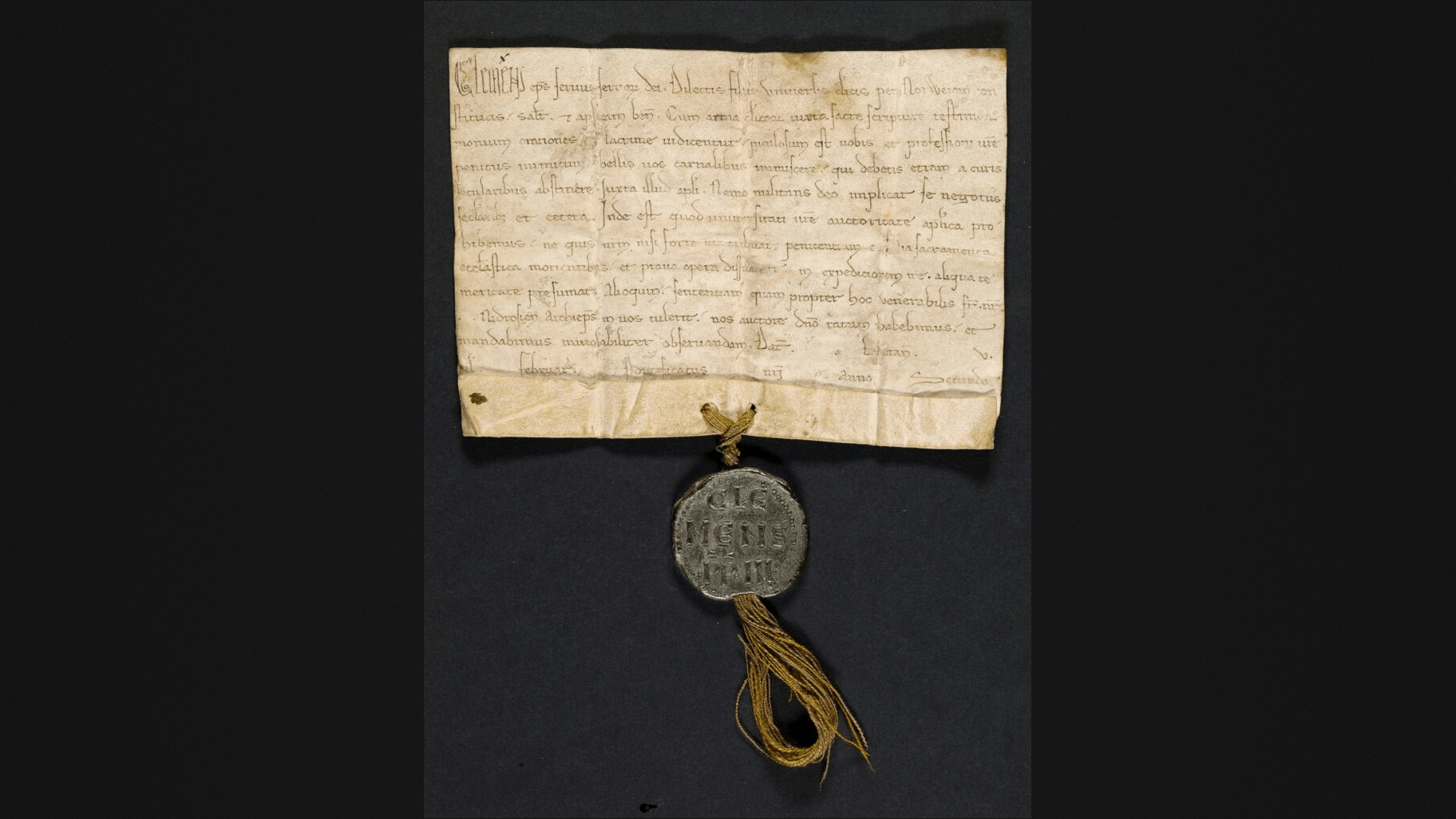
One of the collection’s most significant documents is a letter sent to Norway by Pope Clement III in 1189. Considered Norway’s oldest surviving letter, it instructed members of the clergy not to take part in warfare.
Written on parchment made from donkey skin, the letter still bears a lead papal seal attached with hemp thread. Preserved by the Norwegian National Archives, it provides a direct connection to the authority exercised by the medieval Church across northern Europe.
Other documents offer a more personal perspective.
On August 24, 1310, a wealthy Norwegian named Torgeir Petersson prepared his will in Stavanger while suffering from a serious illness. He divided his property among relatives, allocated funds to seven churches, and donated money toward efforts to recover Jerusalem for Christianity.
He also specified where he wished to be buried in Stavanger Cathedral.
But the document included an unusual condition: if Torgeir recovered, the entire will would become invalid.
The surviving parchment captures an intimate moment from medieval life, when concerns over illness, inheritance, and religious duty could determine how a person’s wealth would be distributed.
The Scholar Who Rescued Medieval History from a Fire
The collection owes much of its existence to Árni Magnússon, an Icelandic historian and philologist born in 1663.
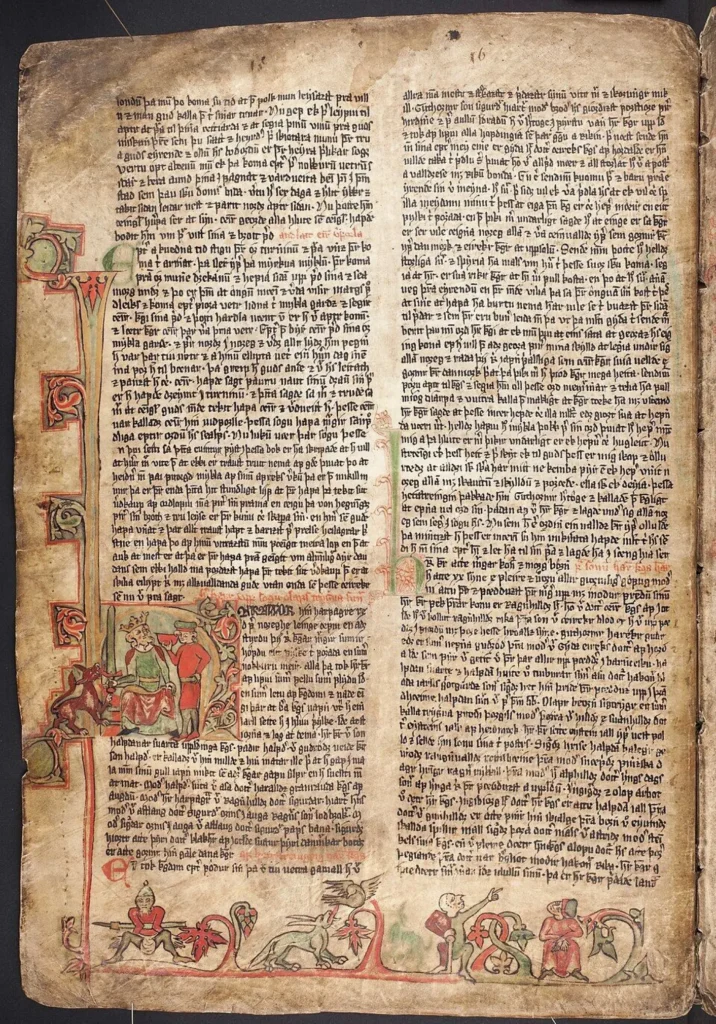
Working largely from Copenhagen, Magnússon spent decades searching for manuscripts, letters, and legal records across Scandinavia. His investigations took him into monasteries, private homes, farms, and attics, where old parchments had sometimes survived unnoticed for generations.
When their owners refused to part with them, he arranged for copies to be made.
According to the Árni Magnússon Institute for Icelandic Studies, his efforts produced approximately 6,300 copies of Icelandic documents, 3,000 Norwegian records, and 1,400 Danish documents. Magnússon personally copied about one-seventh of the material.
Then, in 1728, a devastating fire swept through Copenhagen.
Magnússon managed to save a substantial portion of his collection, but numerous manuscripts, books, and research notes were destroyed. The documents he rescued became the foundation of the Arnamagnæan Collection, one of the most important surviving collections of medieval Scandinavian records.
Its troubles, however, were far from over.
How the Collection Became Divided Between Countries
Following Norway’s separation from Denmark in 1814, the ownership and location of historical documents held in Copenhagen became increasingly contentious.
Norwegian authorities sought the return of records connected to their country’s history, while Iceland also pursued the recovery of manuscripts and documents that had been taken to Denmark during earlier centuries.
In 1937, Norway received 1,160 documents from Magnússon’s collection at the University of Copenhagen, including letters and land registers associated with medieval church properties.
Today, more than 1,100 documents from the collection are preserved by the Norwegian National Archives, while approximately 900 documents of Norwegian origin remain in Denmark.
The new digital project does not change their ownership or physical location. Instead, it allows records separated by centuries of political and institutional history to be studied together.
A Monastery Archive That Never Returned to Its Owner
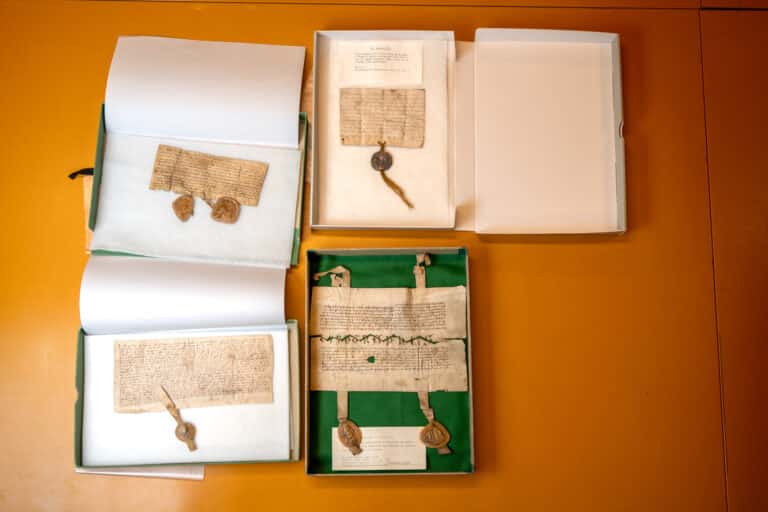
Among the records now brought together is an extensive archive from St. Clare’s Convent in Roskilde, Denmark.
Containing 462 documents dating from 1253 to around 1551, it is the largest surviving medieval monastic archive in the country.
After the convent was dissolved in 1561, its estates and records passed to the University of Copenhagen. In January 1716, Magnússon borrowed the documents to study them at home.
They were never returned.
Researcher Anne Mette Hansen highlighted the archive’s unusual history during the November 14 launch of the new database. Today, its surviving records provide evidence of the legal and economic affairs of a medieval religious community.
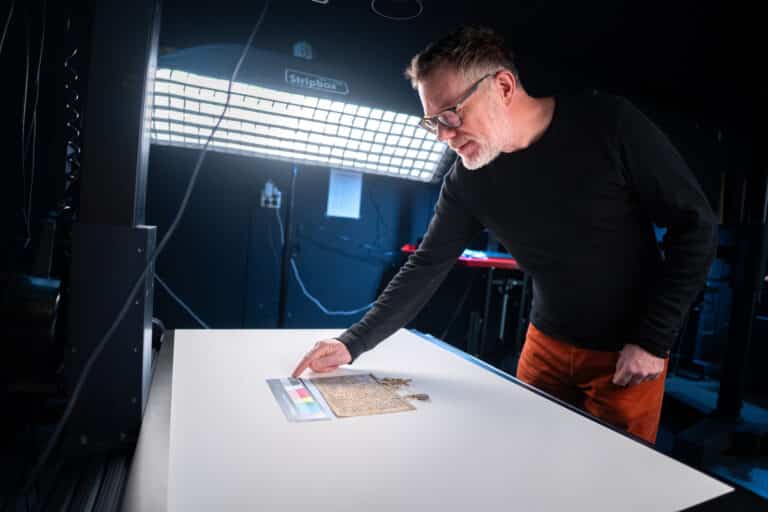
The collection also preserves a remarkable variety of seals, ranging from those used by kings and popes to examples belonging to ordinary individuals. New photographs allow researchers to examine their colors, reverse sides, and attachment methods in greater detail.
Medieval Records Reunited in the Digital Age
Developed through cooperation between institutions in Norway, Iceland, and Denmark, the Diplomatarium Arnamagnæanum brings photographs and catalog information from the dispersed collection into a shared digital system.
Many Norwegian documents were already available online. The significance of the new platform lies in connecting previously separate collections and making them searchable through common records and descriptive information.
Researchers are also working to improve searches involving historical people and places, potentially revealing connections between documents that have long been studied in isolation.
Nearly 300 years after Magnússon struggled to save his manuscripts from the Copenhagen fire, the collection remains physically divided across northern Europe. For the first time, however, its dispersed documents can be explored together, allowing historians and the public to follow traces of medieval lives across the borders that separated their records.
Cover Image: A papal letter issued by Pope Clement III in 1189, considered Norway’s oldest surviving letter. Written on parchment, it retains its lead papal seal attached with hemp thread. Credit: National Archives of Norway (Nasjonalarkivet).