
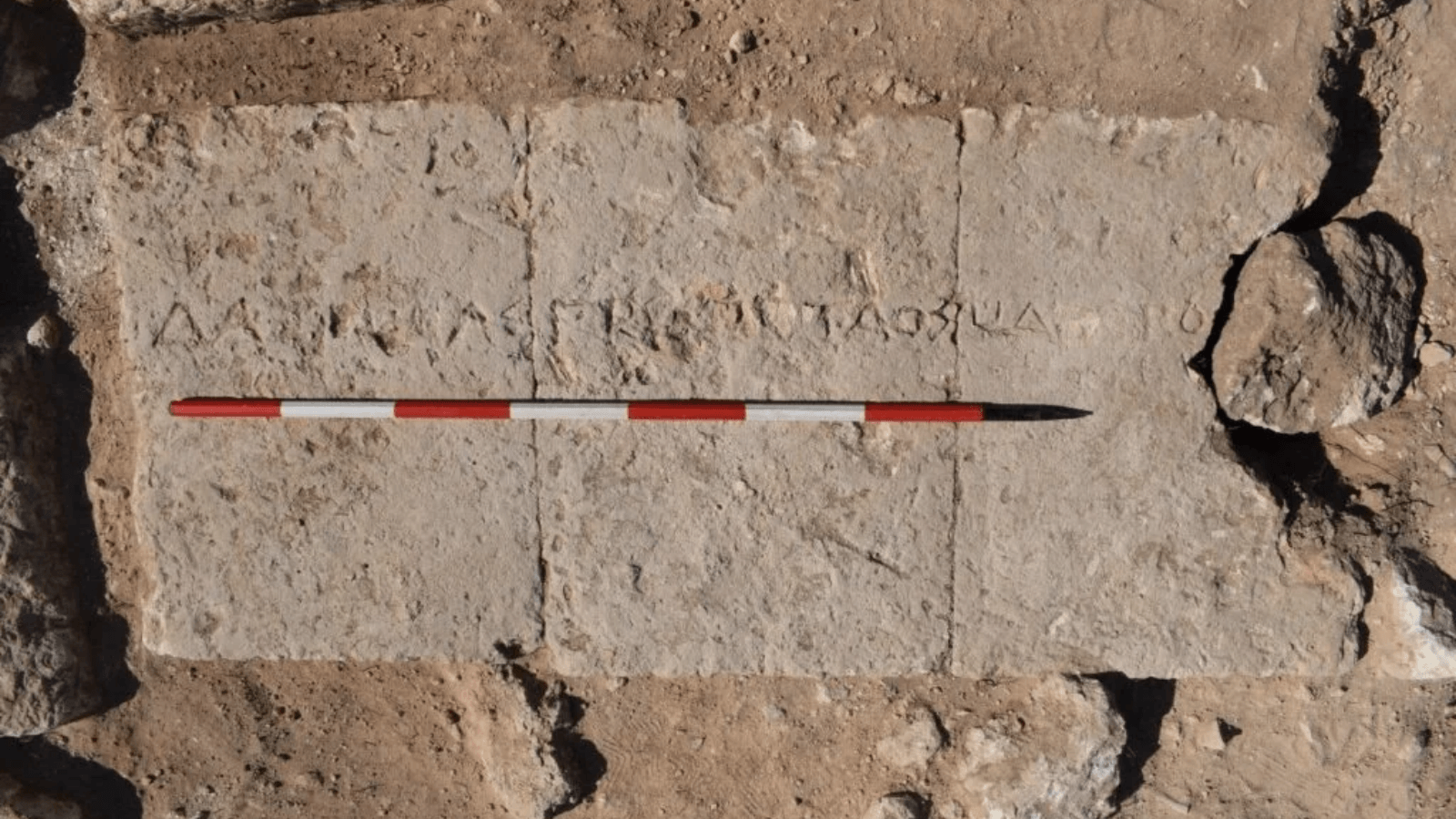
Excavations at the ancient city of Manduria in southern Italy have uncovered a 2,300-year-old Messapian tomb containing two inscriptions and painted images associated with religious ceremonies. Among the images is an object interpreted as a sanctuary key, a symbol sometimes linked to female religious officials in the ancient Greek world. Together with a possible priestly title recorded in the inscriptions, these details suggest that the burial may have belonged to a woman who held religious authority in her community.
The discovery was made at the Mura Messapiche Archaeological Park in Puglia, where researchers have been investigating the remains of the pre-Roman city. The burial, designated Tomb 17, is among the most notable finds from excavations conducted by the Soprintendenza Archeologia, Belle Arti e Paesaggio for the provinces of Brindisi, Lecce, and Taranto. Archaeologists Vincenzo Ria and Stefania Montanaro presented the findings on October 29.
Painted Symbols Inside the Ancient Tomb
Tomb 17 was carved directly into the bedrock and originally sealed with three large stone slabs. Inside, archaeologists documented traces of painted plaster, including an upper decorative band featuring meander patterns in red and blue pigments. The inner surfaces of the covering slabs preserve additional images that researchers believe may represent objects used in religious ceremonies.
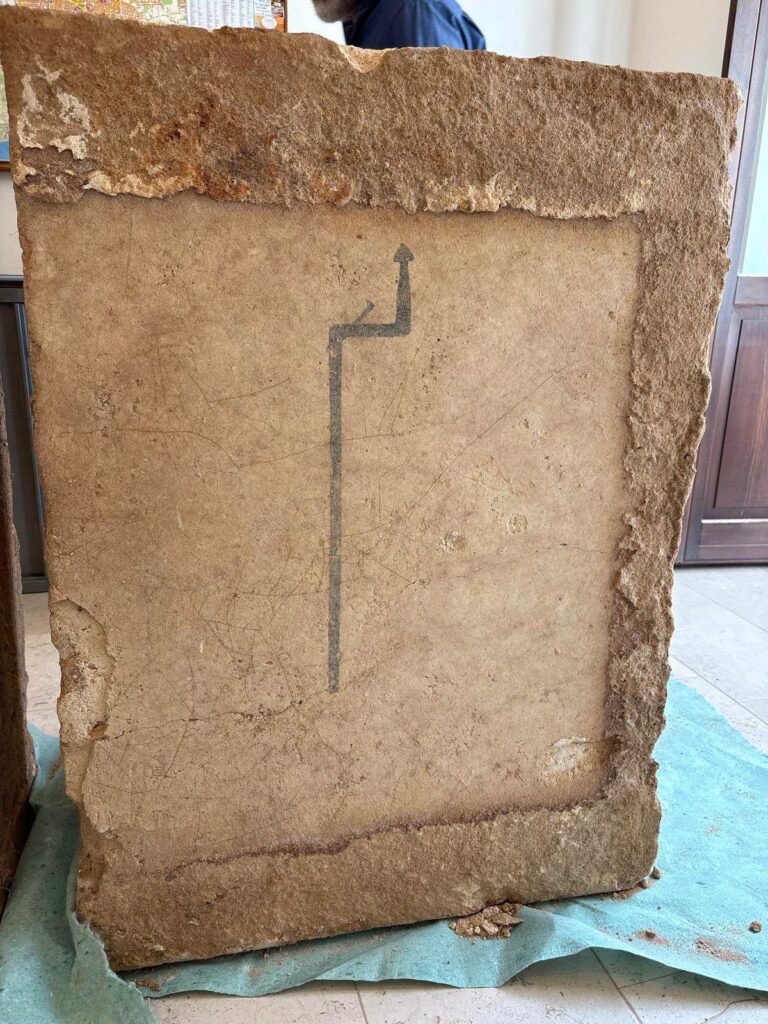
One of these images resembles a sanctuary key. In parts of the ancient Greek world, such keys served as symbols of authority for female religious officials responsible for sacred spaces. Researchers believe the Manduria image may have carried a similar meaning, particularly when considered alongside the inscriptions found on the tomb.
Another painted image may represent a thymiaterion, a vessel used to burn aromatic substances during religious rituals. The two representations suggest a possible connection between the tomb’s decoration and the religious responsibilities of its occupant.
Neither a sanctuary key nor an incense burner was recovered as a physical artifact. Their identification is based on the surviving paintings, and the interpretation of their religious meaning remains preliminary.
A Priestly Title in the Messapic Inscription
The exterior surfaces of the three covering slabs bear a monumental inscription written in Messapic, the language of the ancient Messapians. The text extends across all three stone blocks and contains several clues about the person for whom the tomb was constructed.
Preliminary epigraphic analysis identified a female personal name, a patronymic indicating family descent, and the word thabara. All three elements appear in the genitive case. Researchers associate the term thabara with a priestly title, suggesting that the woman named in the inscription may have performed religious duties.
The Messapians inhabited southeastern Italy, particularly the Salento Peninsula, before Roman domination. They maintained their own language and cultural traditions while developing close connections with Greek communities across the Adriatic and Ionian Seas.
Manduria was one of their major settlements, known for its defensive walls and extensive burial grounds. The newly discovered inscriptions offer additional evidence of how individuals may have expressed religious status within this society.
A Second Inscription and the Possible Link to Demeter
The tomb also contains a second inscription in Messapic, this time painted in light blue pigment across four lines on the inner surface of a covering slab. Unlike the engraved exterior text, the painted inscription preserves partly different information.
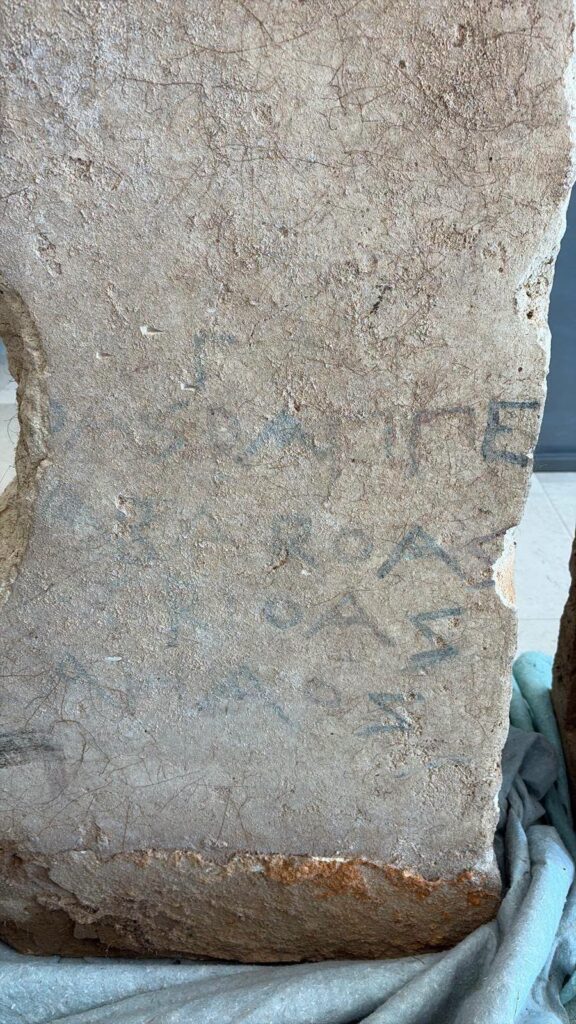
Although earlier illegal excavations damaged sections of the writing, researchers identified the term thabara once again. They also recognized a name provisionally reconstructed as Damatrioas, which may refer to a religious tradition associated with Demeter, the Greek goddess of agriculture and fertility.
Demeter’s worship was closely connected with the agricultural cycle, the fertility of the earth, and ideas of regeneration. A possible reference to the goddess in a funerary inscription is therefore of particular interest, although its precise meaning in the Messapian context has not yet been established.
Researchers have not confirmed that the woman buried in Tomb 17 served specifically as a priestess of Demeter. Further examination of the inscriptions and their relationship to the painted images will be necessary before such a conclusion can be drawn.
Grave Goods Survived Earlier Looting
Despite damage caused by earlier looting, archaeologists recovered several objects from Tomb 17. These include bronze fibulae used to fasten clothing, a silver ring, a silver coin attributed to the mint of Taranto, and an iron implement whose function is still being investigated.
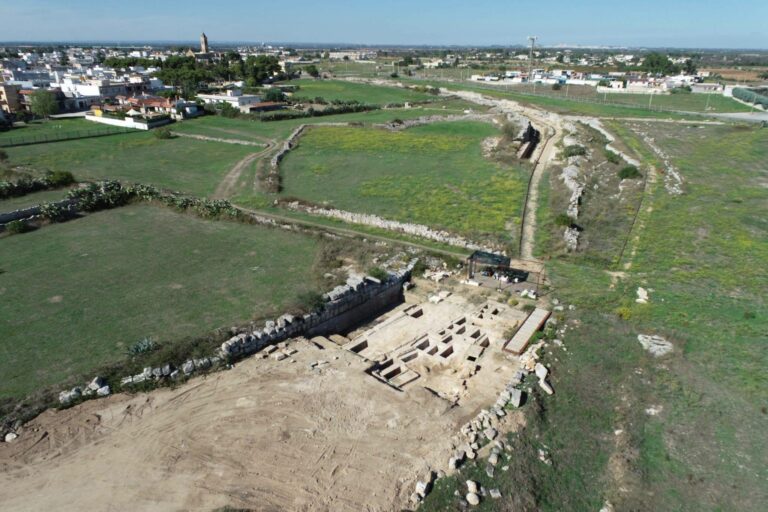
The burial forms part of a wider investigation involving 24 tombs at Manduria. The excavations have contributed to understanding the city’s funerary customs during the fourth and third centuries BCE, as well as changes to its defensive structures and urban layout.
Researchers also documented an ancient road constructed during the third century BCE over an area previously used as a necropolis. The finding shows how the Messapian community reorganized parts of its settlement over time.
The next phase of research will focus on the detailed study of the inscriptions, conservation of the painted surfaces, and archaeobotanical analysis of samples recovered during excavation. Authorities are also considering preserving Tomb 17 in its original location while displaying the inscribed slabs and surviving grave goods at the Archaeological Museum of Manduria.
Cover Image: Stone slabs bearing a Messapic inscription from the 2,300-year-old Tomb 17 in Manduria, southern Italy. Credit: Soprintendenza Archeologia, Belle Arti e Paesaggio per le province di Brindisi, Lecce e Taranto.