
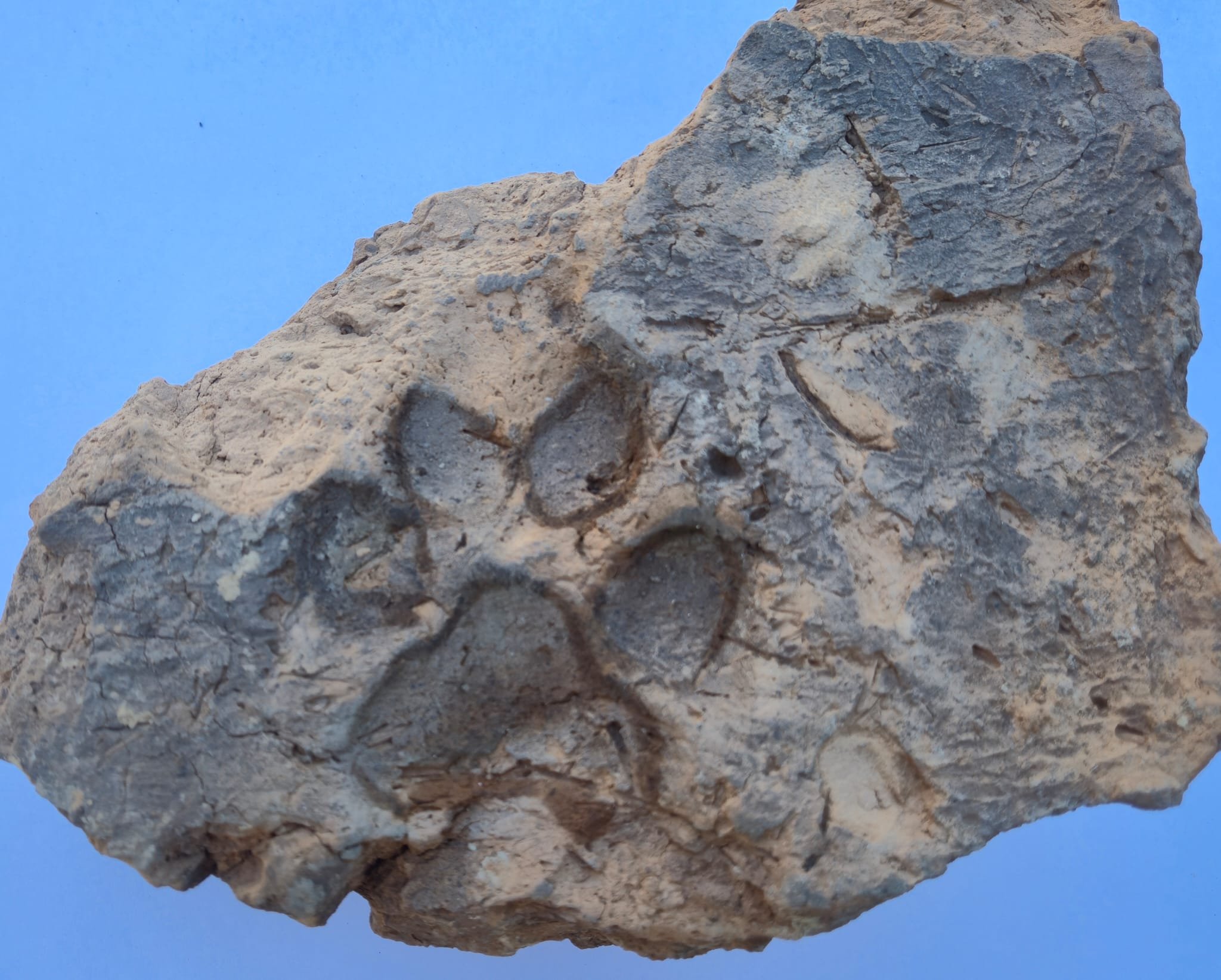
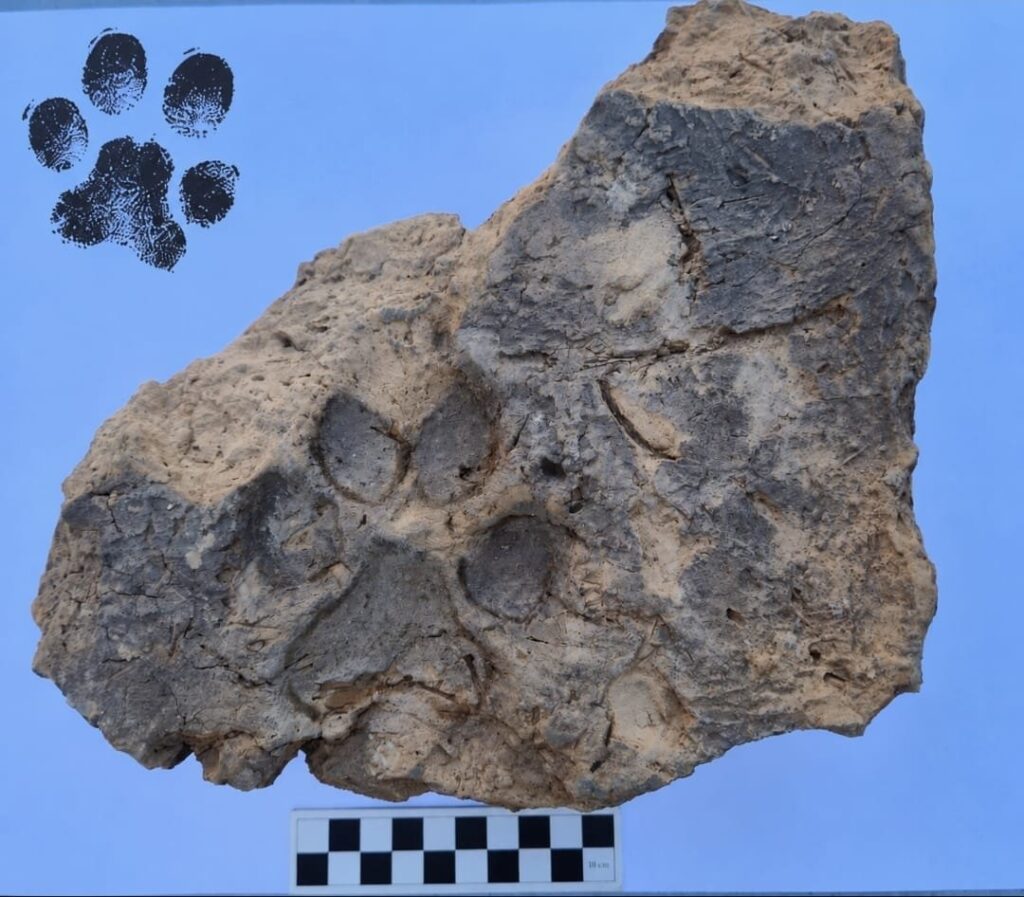
Nearly 4,000 years ago, a dog walked across a wet mudbrick in western Anatolia, leaving paw prints that would survive for millennia. Archaeologists have now discovered the marked brick among the remains of a Bronze Age house destroyed by fire at Tavşanlı Höyük in Türkiye.
A dog passing through a Bronze Age settlement left behind something its inhabitants could hardly have imagined would survive for thousands of years: its paw prints. Pressed into a mudbrick before it dried, the impressions became part of a house wall and remained hidden beneath the ruins until archaeologists recovered the brick at Tavşanlı Höyük.
The discovery, announced on October 26 by Türkiye’s Minister of Culture and Tourism, Mehmet Nuri Ersoy, comes from one of western Anatolia’s largest Bronze Age settlements. While excavations have revealed evidence of ancient trade, warfare and destruction, the newly discovered impressions preserve a much quieter moment from the lives of the people and animals who once inhabited the town.
A Chance Encounter with Wet Mudbrick
Mudbrick was among the most widely used construction materials in ancient Anatolia. Builders mixed earth, water and straw, shaped the mixture into bricks and allowed them to dry in the sun before incorporating them into walls.
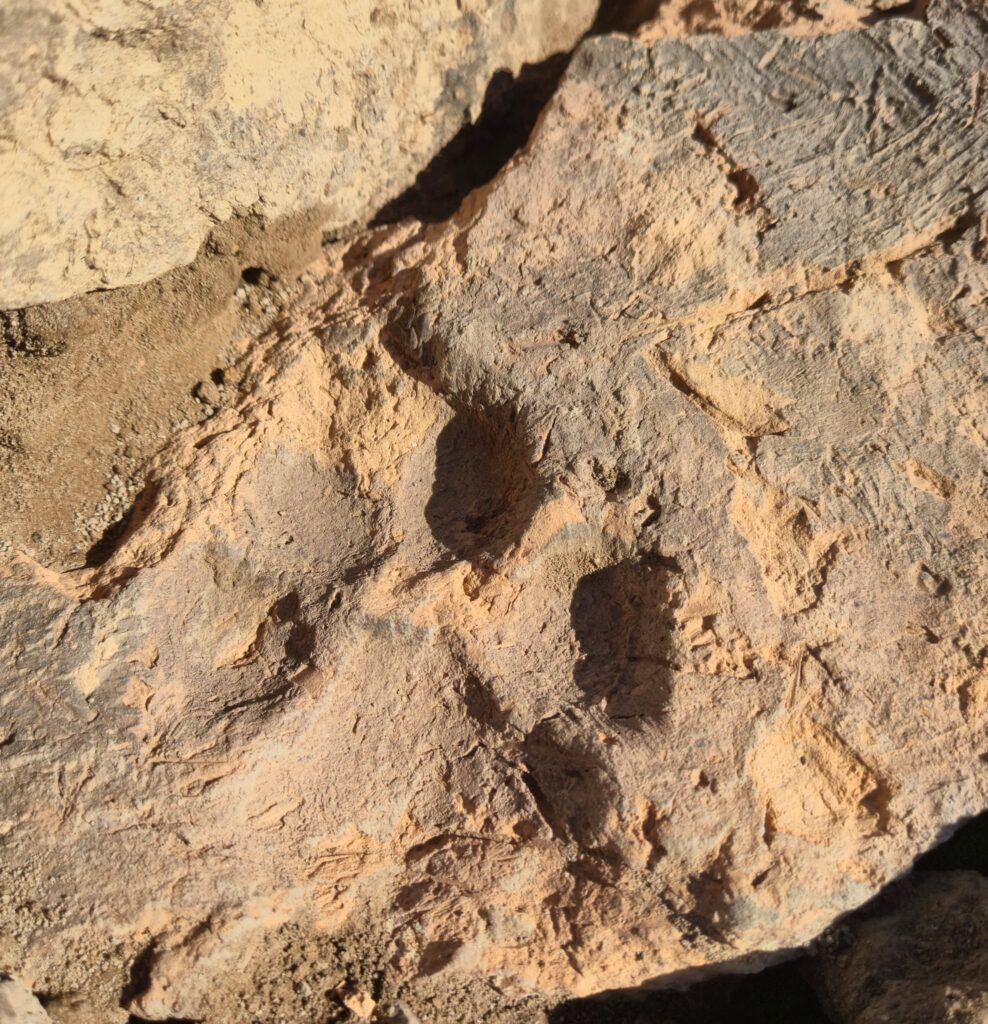
At Tavşanlı Höyük, a dog apparently walked across one of these bricks while its surface was still soft. Its paws pressed into the wet material, leaving impressions that remained after the brick hardened.
Builders later incorporated the brick into a house wall. When fire destroyed the building during the Bronze Age, the wall collapsed, leaving the marked brick among the debris. Archaeologists recovered it during excavations directed by Professor Erkan Fidan of Bilecik Şeyh Edebali University.
The impressions offer a rare record of animal activity within the ancient settlement. Dogs had lived alongside humans for thousands of years by the Bronze Age, but the Tavşanlı discovery cannot tell us whether this particular animal belonged to a household, helped with daily tasks or simply wandered through the area.
What survives is the physical trace of its movement through a place where people were preparing materials for construction.
A Major Bronze Age Settlement in Western Anatolia
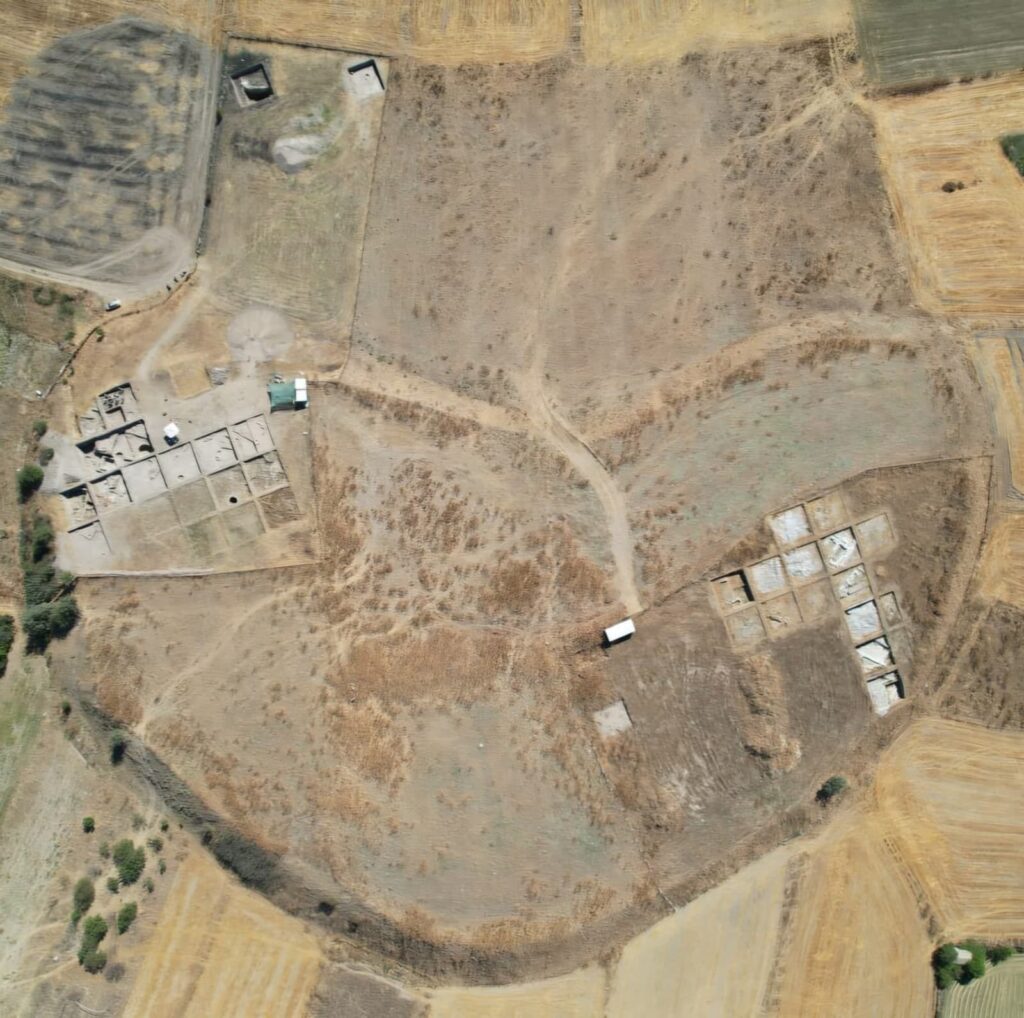
Located in Kütahya province, Tavşanlı Höyük extends across approximately 45 hectares, making it one of the largest Bronze Age settlements in the region. Its archaeological sequence spans several millennia, with evidence of occupation continuing through successive phases of the Bronze Age.
Since excavations began in 2021, Fidan and his team have investigated the settlement’s buildings, material culture and connections with other Anatolian communities.
Among their most significant discoveries are the remains of buildings destroyed during a violent episode approximately 3,700 years ago. Archaeologists found human skeletons and weapons among the ruins, suggesting that an attack devastated part of the settlement. In one extraordinary case, researchers identified carbonized brain and skin tissue preserved with human remains.
The excavations have also revealed evidence of long-distance exchange. A 3,750-year-old faience cylinder seal discovered in 2024 offered important clues about Tavşanlı’s connections with commercial networks extending across Anatolia.
Cylinder seals served administrative and commercial purposes in the ancient Near East. Examples from major central Anatolian trading centers, including Kültepe and Acemhöyük, provide a broader context for understanding the objects discovered at Tavşanlı.
A study published in the archaeological journal Cedrus in 2026 examined four faience cylinder seals from the settlement, including examples dating to both the Middle and Late Bronze Ages. Their presence suggests that Tavşanlı maintained connections with wider cultural and economic networks over a considerable period.
Other discoveries, including ancient hazelnut remains and owl-faced figurines resembling examples from Troy, have added further detail to the settlement’s domestic and cultural history.
Yet the latest find tells a different kind of story. Unlike seals that point to administrative practices or burned buildings that reveal episodes of conflict, the impressions on the mudbrick record an ordinary encounter between an animal and its surroundings.
For archaeologists studying Tavşanlı Höyük, the paw prints offer another piece of evidence for reconstructing life in this Bronze Age community. The buildings, objects and human remains reveal the larger history of the settlement; the dog’s footprints preserve one small moment within it.
Cover Image: A 4,000-year-old dog paw print preserved on a Bronze Age mudbrick discovered at Tavşanlı Höyük in western Türkiye. Credit: Republic of Türkiye Ministry of Culture and Tourism.