-
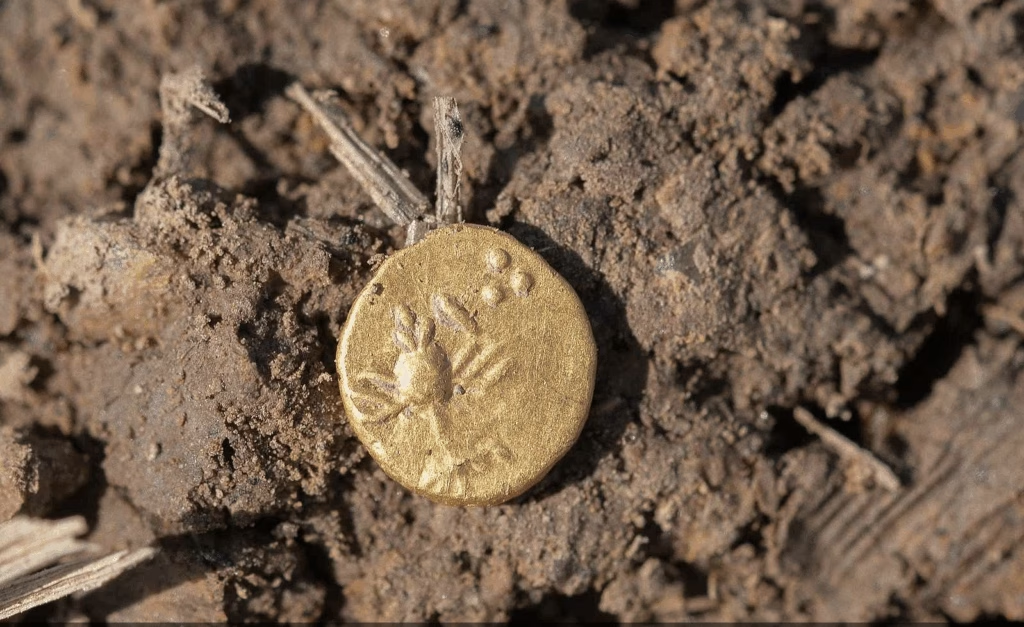
Ancient Celtic Coins Unearthed in Czech Farmland Reveal a Hidden Settlement Beneath Bohemia
A farmer’s field in western Czech Republic has yielded one of the most remarkable Celtic discoveries of the decade — a buried hoard of gold and silver coins, bronze ornaments, and a mysterious horse figurine. Archaeologists say the find exposes a previously unknown Celtic settlement that challenges what was believed about Iron Age Bohemia. The…
-
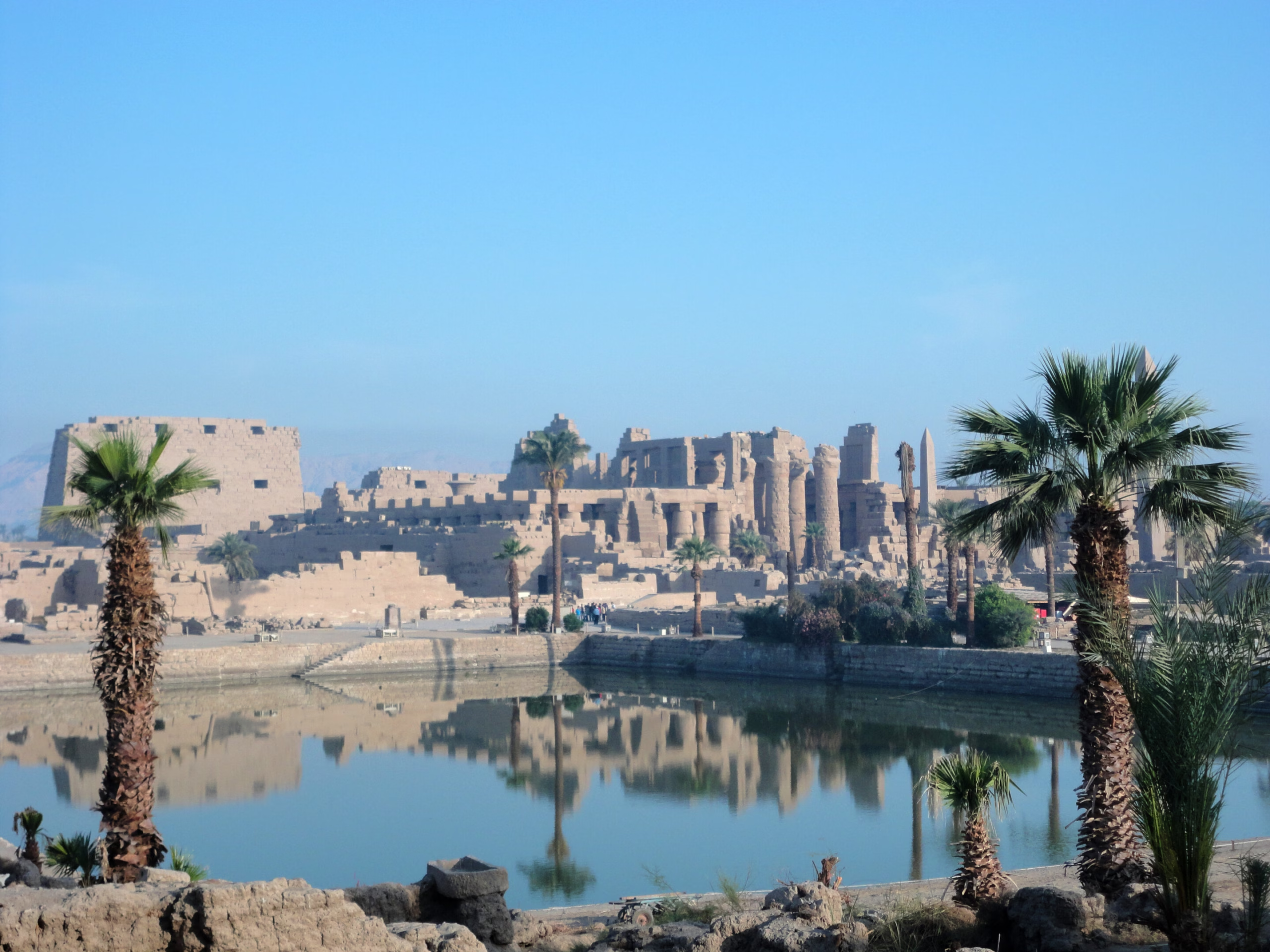
Ancient Island Origins of Egypt’s Karnak Temple Revealed by Groundbreaking Geoarchaeological Study
Researchers have unveiled new evidence that Egypt’s Karnak Temple — one of the largest religious complexes of the ancient world — was originally built on a natural island that emerged from the Nile more than 4,000 years ago. The discovery, published in Antiquity on October 6, sheds new light on the temple’s origins, its connection…
-
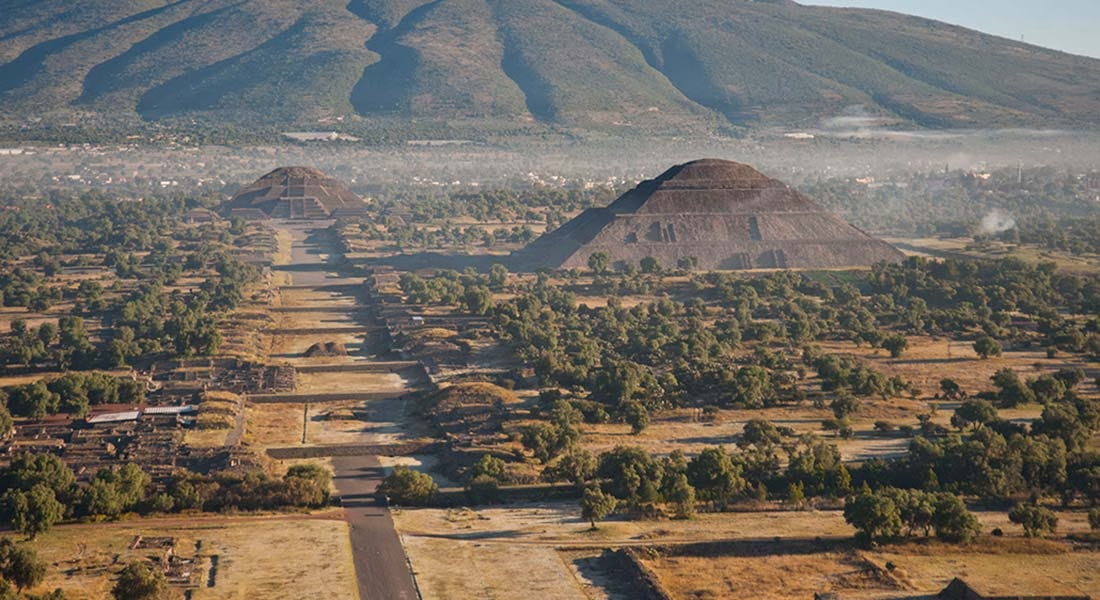
Researchers May Have Deciphered the Lost Language of Teotihuacan, Linking the Ancient City to the Aztec World
For centuries, one of Mesoamerica’s greatest enigmas has remained unsolved: the language of Teotihuacan. Now, two researchers from the University of Copenhagen — Dr. Christophe Helmke and Dr. Magnus Pharao Hansen — may have cracked the code behind the mysterious symbols covering the city’s ancient murals and pottery. Their study, published in Current Anthropology, proposes…
-
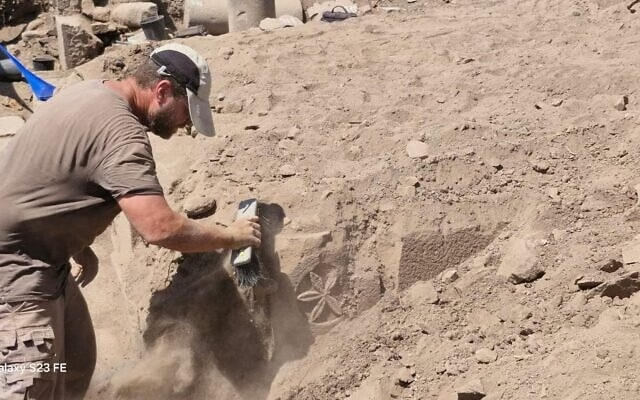
1,500-Year-Old Synagogue Unearthed Beneath Abandoned Syrian Village in the Golan Heights
Archaeologists from the University of Haifa and Kinneret College have uncovered the remains of a 1,500-year-old synagogue hidden beneath the deserted Syrian village of Yehudiya in Israel’s Golan Heights — revealing new insight into one of the region’s oldest Jewish communities. A Hidden Sanctuary Beneath Yehudiya The discovery emerged within the Yehudiya Nature Reserve, a…
-
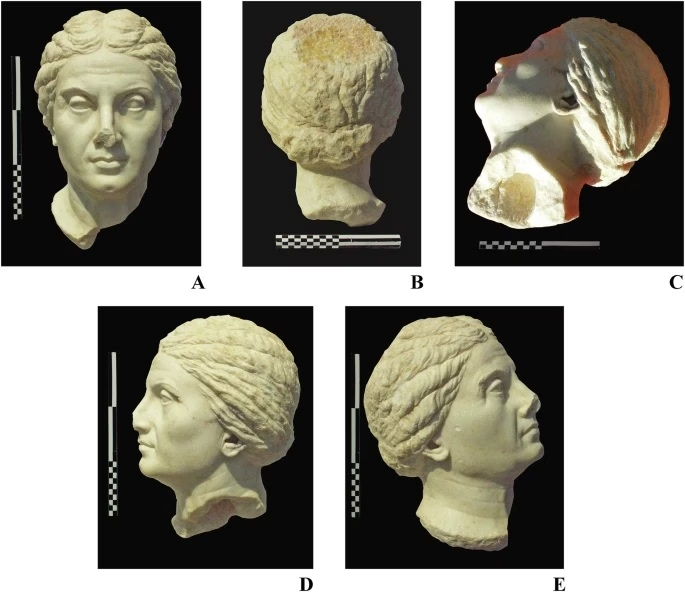
Roman Portrait from Crimea Identified After Two Millennia: Scientists Name the Woman as Laodike
A 2,000-year-old marble portrait discovered in Crimea has finally revealed its secret.An international team of researchers from Poland and Spain identified the sculpture as depicting Laodike, a Roman woman who lived in the early centuries of the Empire and held a prominent social position in the ancient city of Chersonesos. Rediscovering a Forgotten Roman Lady…
-
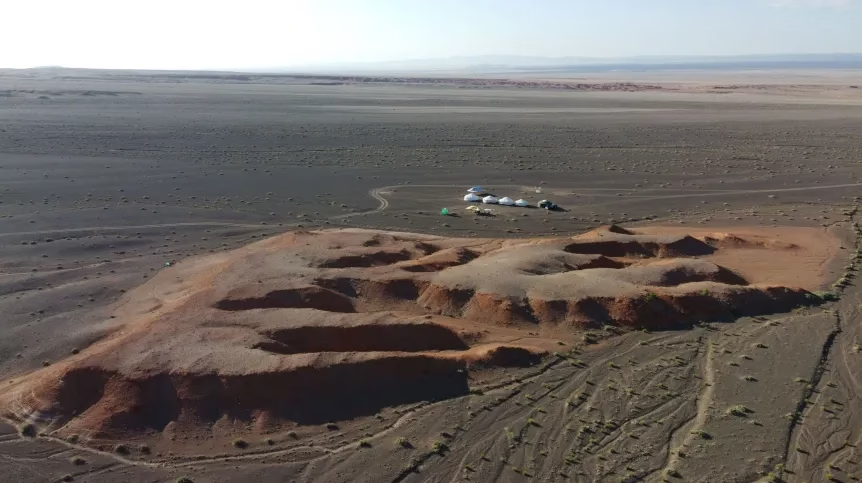
Ancient Lakes Beneath the Gobi Desert Once Sustained Human Life 8,000 Years Ago
Polish–Mongolian team uncovers evidence that one of Earth’s driest regions was once a green corridor for prehistoric hunter-gatherers. Long before the Gobi Desert became a realm of dust and wind, it was a landscape alive with water. A network of ancient lakes — now vanished — once formed a mosaic of fertile basins across what…
-
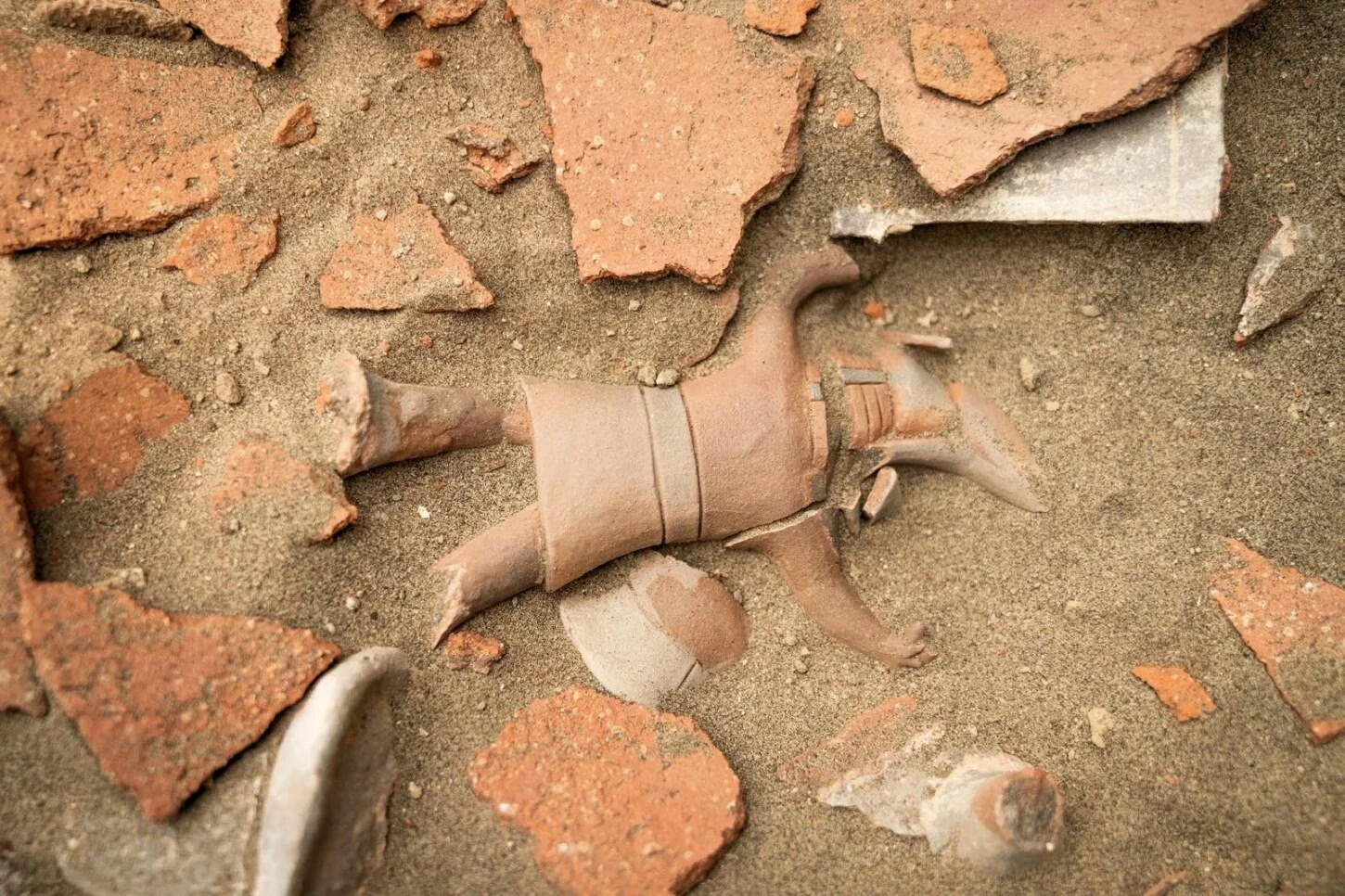
Warrior Vessel Unearthed at Chankillo, the Americas’ Oldest Solar Observatory
Archaeologists in Peru have uncovered a fragmented ceramic vessel depicting a warrior at Chankillo, the 2,300-year-old solar observatory in the Casma Valley. The discovery sheds light on how ancient elites fused astronomy, ritual, and military power to reinforce their authority. A Ritual Object with a Martial Face The vessel, crafted in the Patazca style (ca.…
-
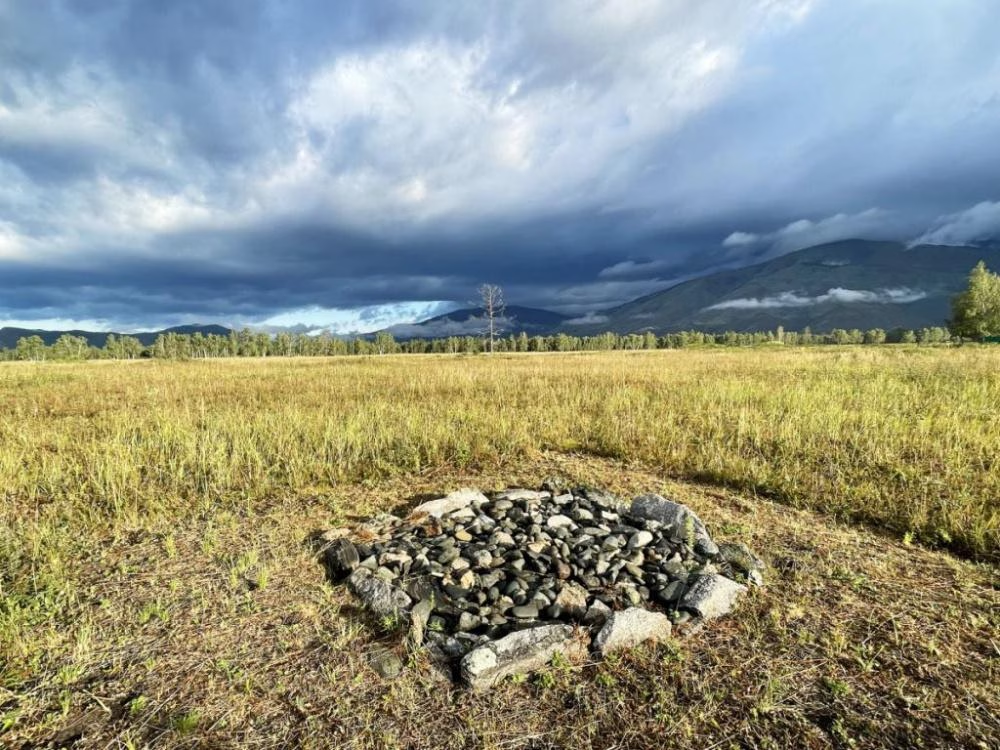
Rare Artifacts of the First Turkic Khaganate Unearthed in Russia’s Altai Mountains
Archaeologists have uncovered rare artifacts dating back to the First Turkic Khaganate (6th–7th centuries CE) during excavations in the Altai Republic of Russia. The discovery sheds new light on the Altai region’s role as a cradle of early medieval nomadic culture. Discovery at the Katanda-I Site The finds were made at the Katanda-I archaeological site…
-
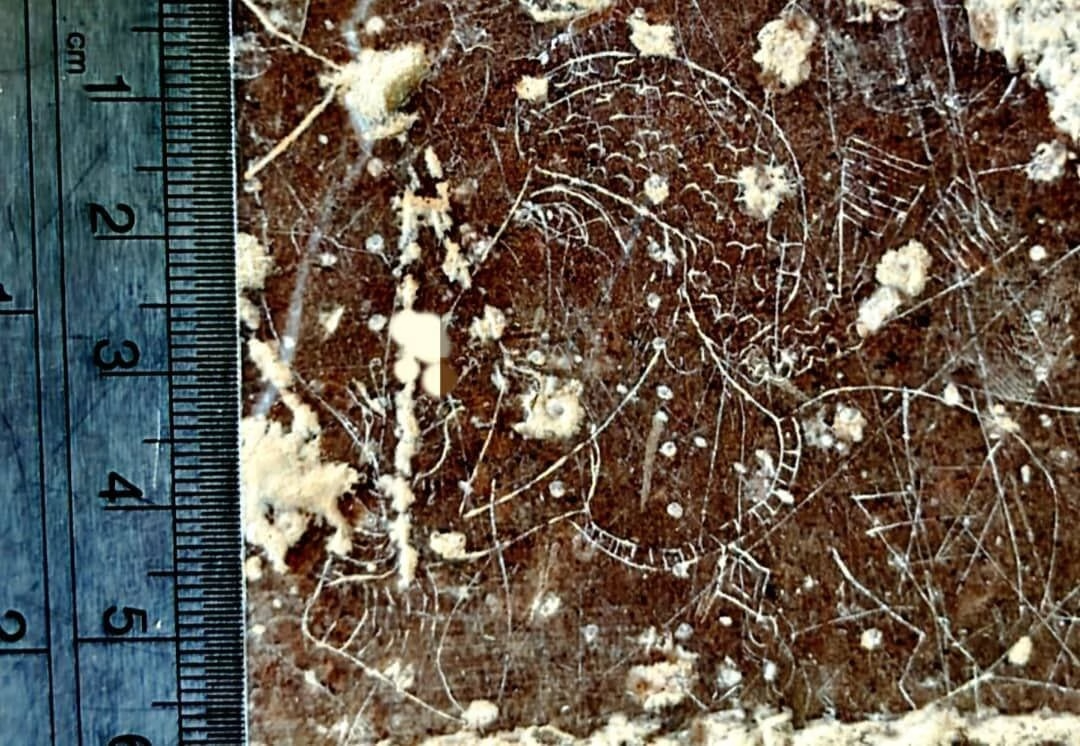
The World’s Smallest 1,500-Year-Old Sasanian Rock Carving Discovered in Southern Iran
Archaeologists in Iran have announced the discovery of what may be the world’s smallest Sasanian rock carving: a remarkably detailed, needlepoint-style engraving dating back more than 1,500 years. The carving, etched into the cliffs of Marvdasht in Fars Province — home to the UNESCO-listed Sasanian Archaeological Landscape — is expected to reshape scholarly understanding of…