-
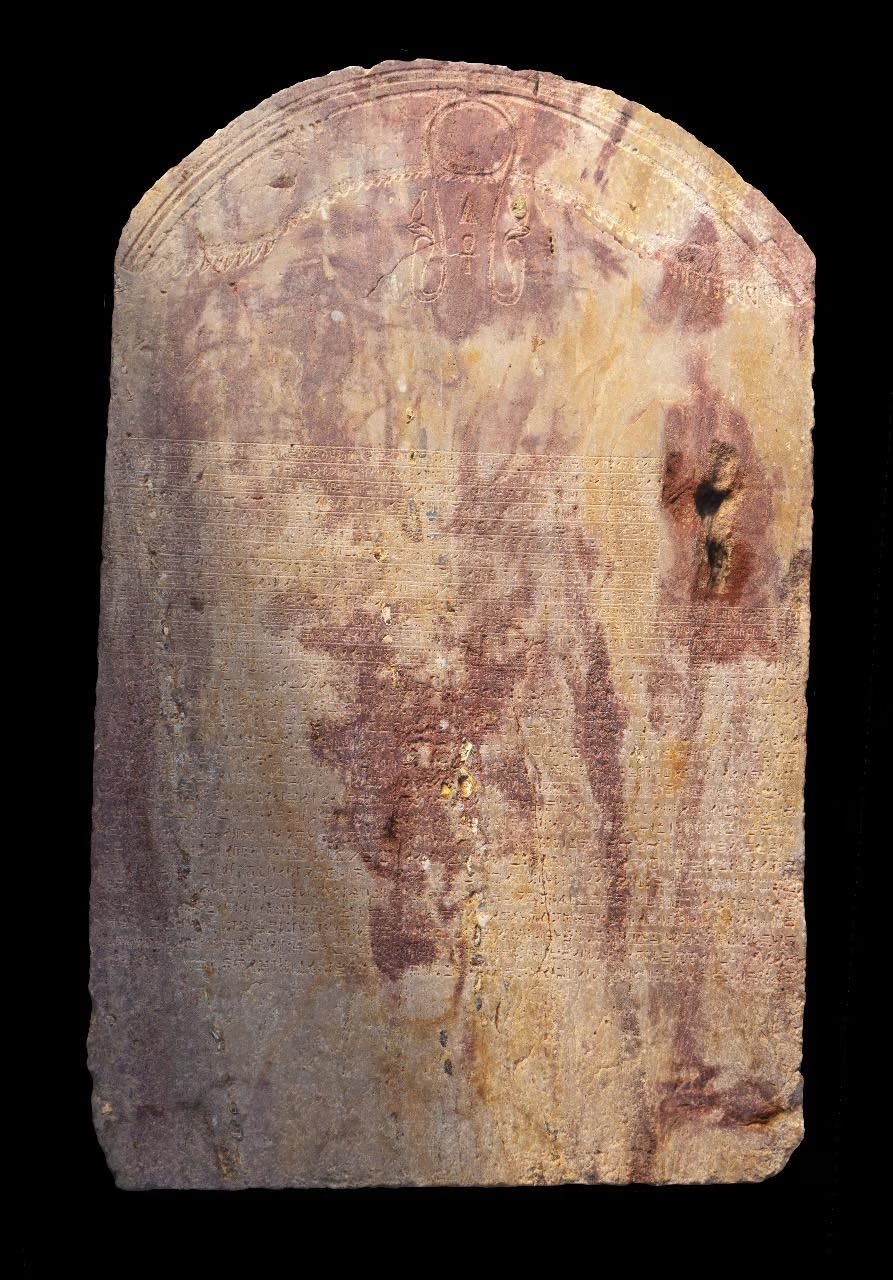
First Complete Copy of the Canopus Decree in 150 Years Unearthed in Egypt
Archaeologists excavating at Tell el-Pharaeen in Egypt’s Sharqia governorate have discovered a sandstone stele bearing a complete copy of the Canopus Decree (238 B.C.)—the first such find in over a century. Unlike the famous Rosetta Stone, this example is inscribed solely in hieroglyphs, making it unique among the seven known copies of the decree. In…
-
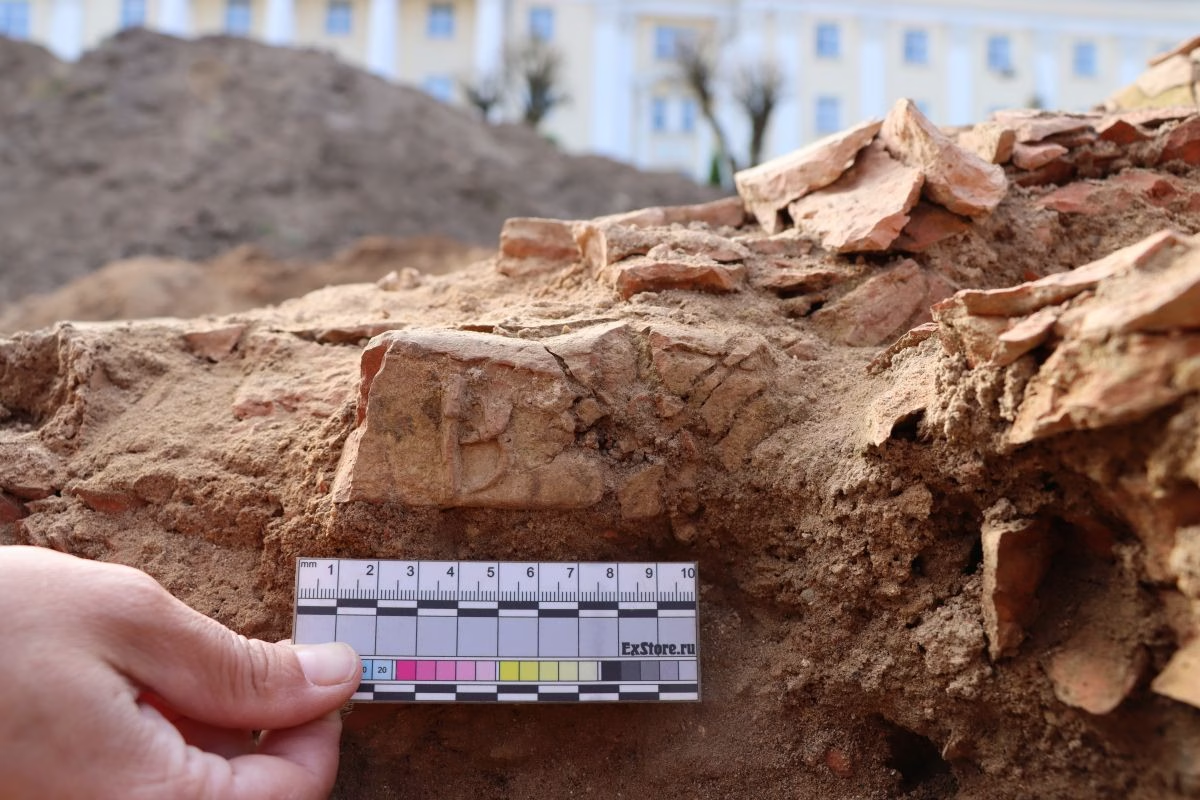
Archaeologists Unearth Rare Pre-Mongol Brick Building in the Heart of Smolensk
Smolensk’s historic center has yielded an extraordinary discovery: archaeologists from the Russian Academy of Sciences (RAS) have uncovered the remains of a rare pre-Mongol stone building—an architectural treasure dating back to the 12th century, when most structures in medieval Rus’ were built of wood. The find, unearthed in a 1,300-square-meter excavation area on the future…
-
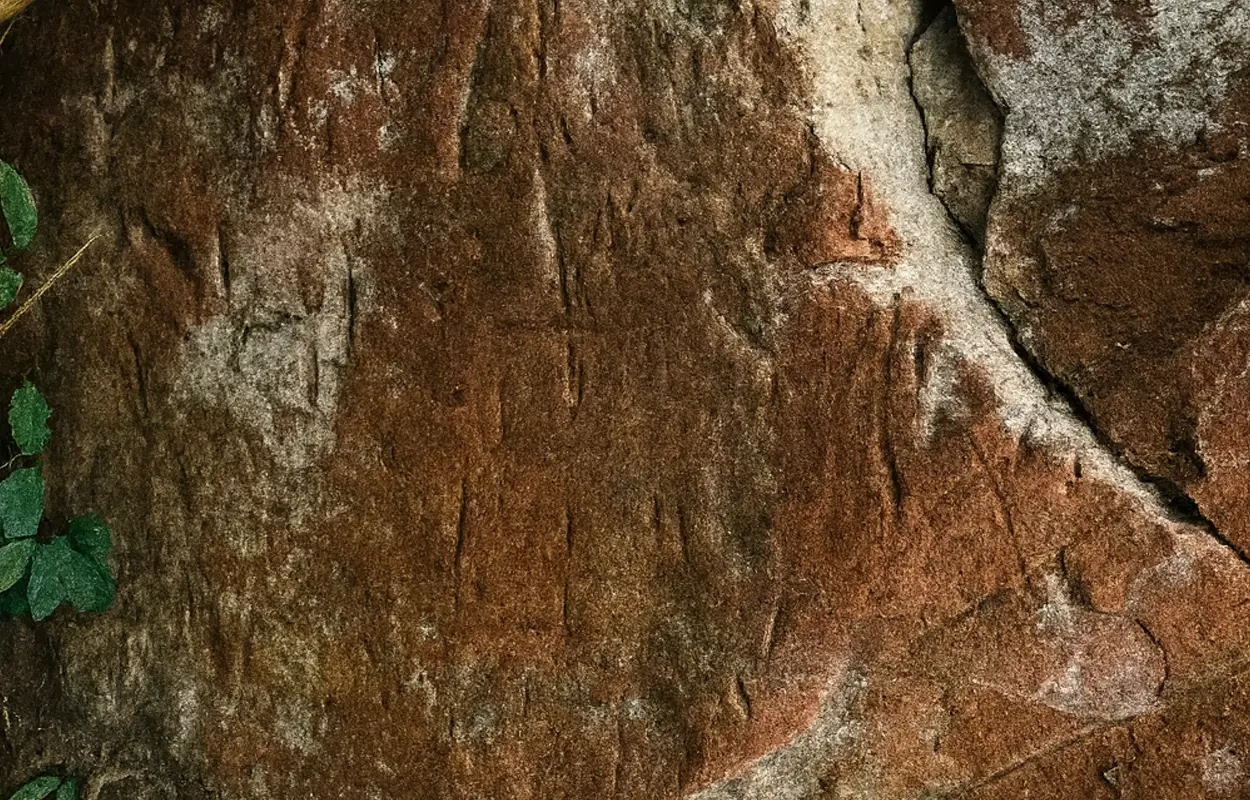
Ancient Petroglyph Sites Discovered on Thailand’s Phu Khat Mountain
Archaeologists in Thailand’s Loei Province are investigating two newly identified rock art sites near the summit of Phu Khat Mountain, the highest point in the Phu Khat Wildlife Sanctuary at 1,307 meters above sea level. Rangers on a routine patrol recently spotted the markings, which were found only 300 meters apart on the rugged mountain…
-
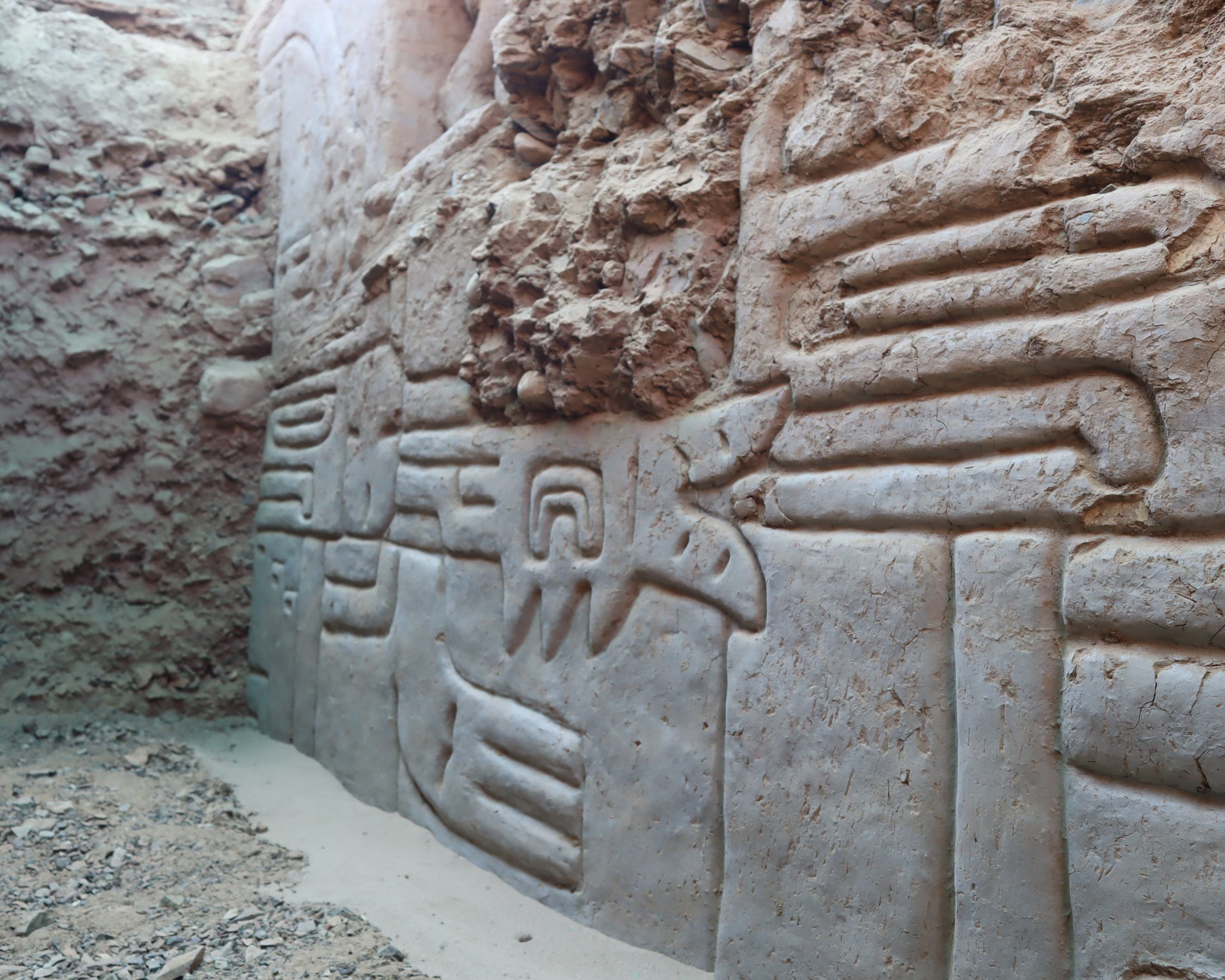
4,000-Year-Old 3D Mural Unearthed in Peru Reveals Early Andean Civilisation’s Spiritual World
Archaeologists in northern Peru have uncovered a spectacular 4,000-year-old multicoloured mural that may redefine what we know about the origins of civilisation in the Americas. Discovered at Huaca Yolanda, a ceremonial temple complex in the Tanguche Valley, the intricately carved wall features bold high-relief imagery and traces of vivid pigments, offering a rare glimpse into…
-
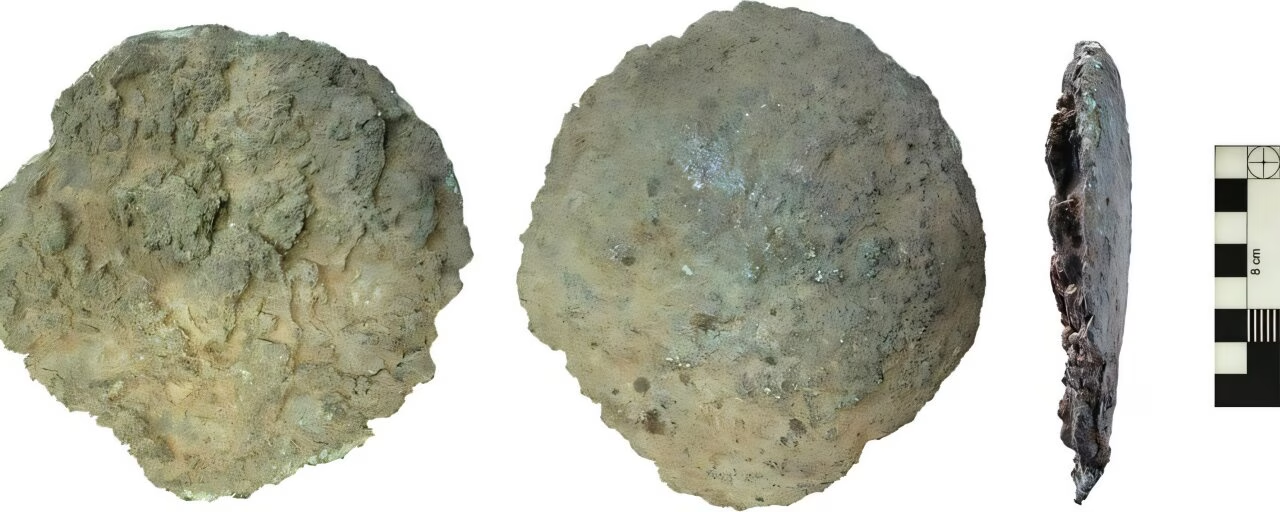
First Complete Plano-Convex Ingot Discovered in Sweden: Chemical Analysis Dates Artifact to the Iron Age
Archaeologists from the University of Gothenburg have identified the first complete plano-convex ingot ever discovered in Sweden. The find, unearthed in Särdal, was analyzed using advanced lead isotope and trace element analysis, and the results, published in Journal of Archaeological Science: Reports, confirm that this unique artifact dates to the Iron Age. Plano-convex ingots—typically made…
-
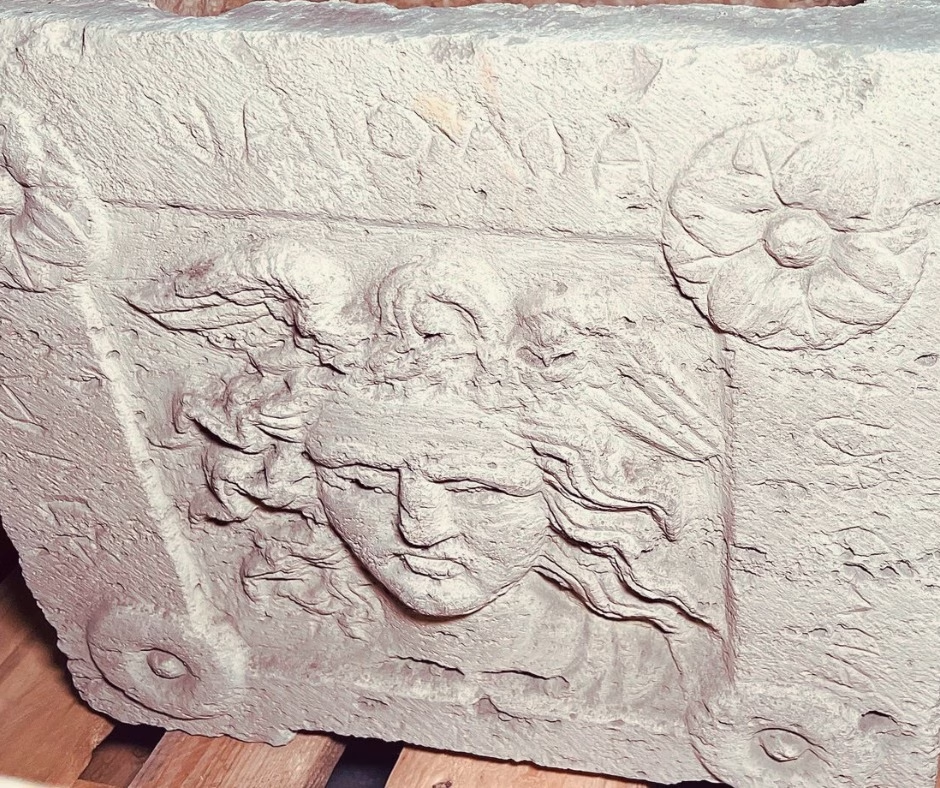
Medusa-Relief Etruscan Urn Unveils a Mysterious “Empty Tomb” in Perugia
Routine conservation work at the Palazzone Necropolis in Perugia, Italy, has revealed an extraordinary discovery: a travertine urn adorned with the face of Medusa that contained no human remains, but instead a set of simple ceramic vessels. The finding challenges conventional views of Etruscan funerary traditions. An Unexpected Discovery in an Etruscan Family Tomb The…
-
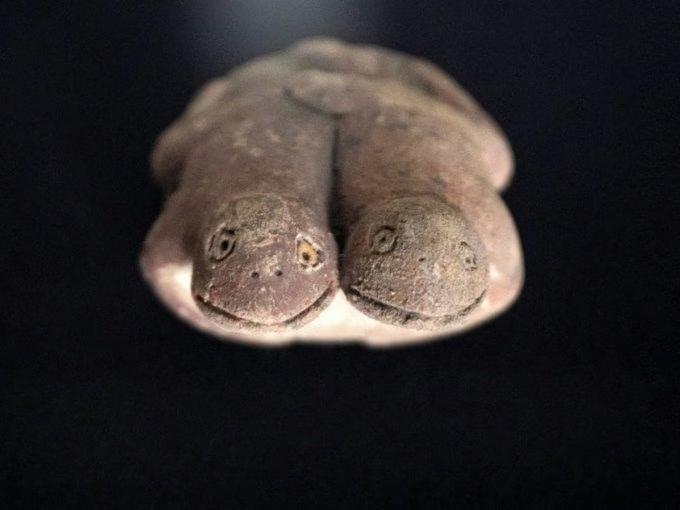
3,800-Year-Old Clay Frog Figurine Discovered in Peru: A Rare Insight into Caral Civilization
Archaeologists in Peru have revealed a remarkable discovery at the Vichama archaeological site: a 3,800-year-old clay figurine depicting two frogs joined at their hind legs. This is the first time such a sculpture has been found at Caral-related sites, offering a unique glimpse into the symbolic world of one of the Americas’ oldest civilizations. The…
-
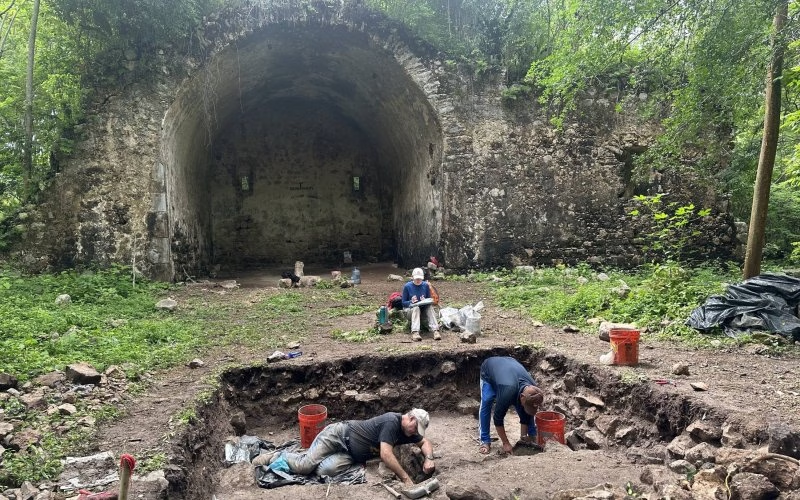
Maya Resistance Unearthed: Archaeologists Reveal the Lost Story of Hunacti
Yucatán, Mexico — Archaeologists have uncovered the dramatic story of Hunacti, a short-lived 16th-century Maya mission town that flourished for just 15 years before collapsing under colonial repression, famine, and defiant resilience. Founded in 1557 as a Franciscan visita mission, Hunacti was laid out with gridded streets, a central plaza, and a Spanish-style church. Surrounding…
-
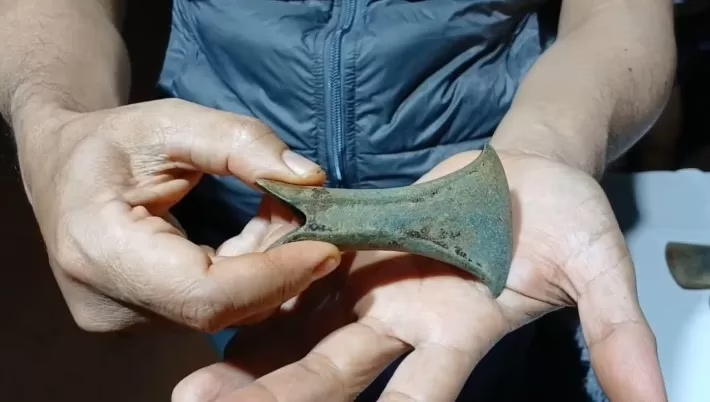
3,000-Year-Old Bronze Age Conical Axe Discovered in Indonesia: Possible Meteorite Metal
A rare Bronze Age conical axe, dating back over 3,000 years, has been unearthed in Borneo, Indonesia, astonishing archaeologists and historians with its unique design and potential meteorite origin. Believed to be the first artifact of its kind in the region, the find sheds new light on the advanced metalworking skills and social structures of…