
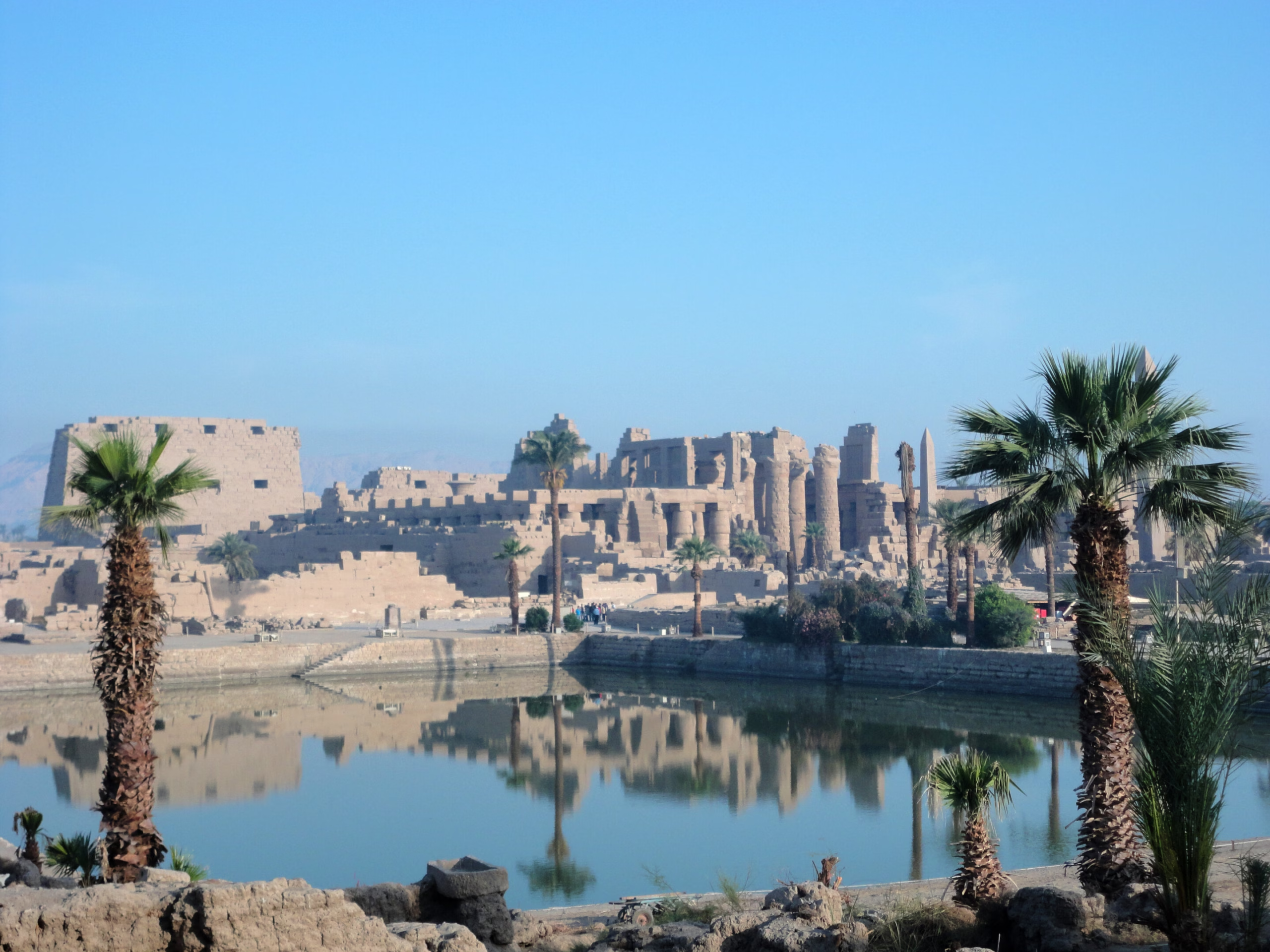
Researchers have unveiled new evidence that Egypt’s Karnak Temple — one of the largest religious complexes of the ancient world — was originally built on a natural island that emerged from the Nile more than 4,000 years ago. The discovery, published in Antiquity on October 6, sheds new light on the temple’s origins, its connection to Egyptian creation myths, and how the landscape shaped the rise of one of humanity’s most iconic sacred sites.
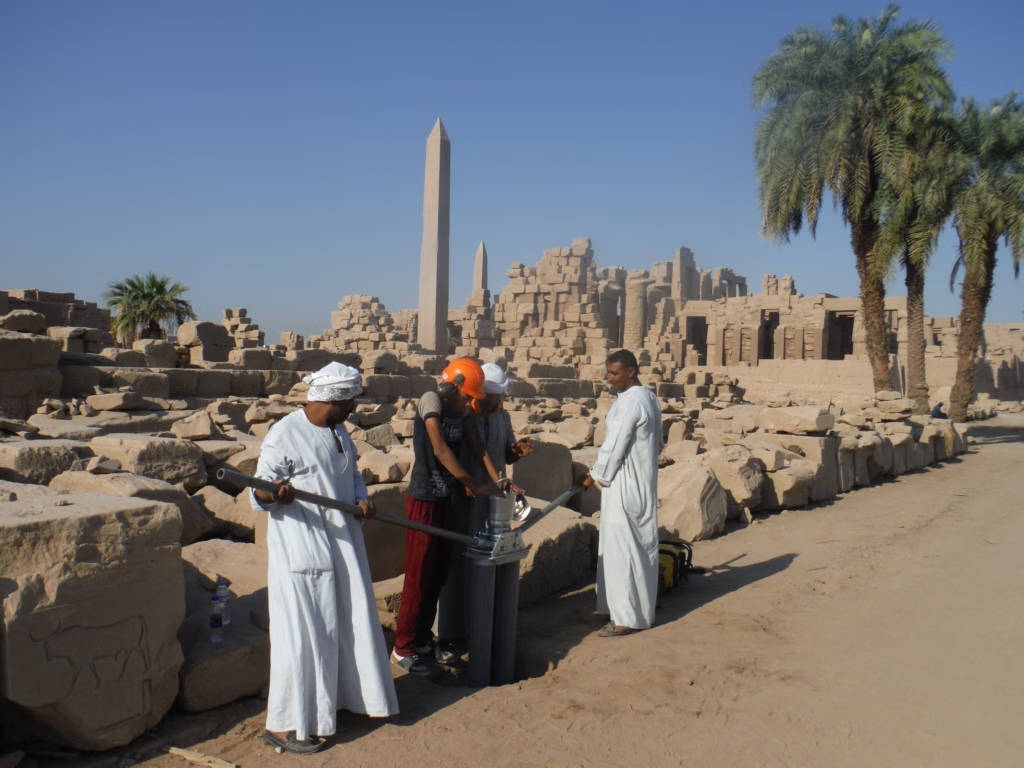
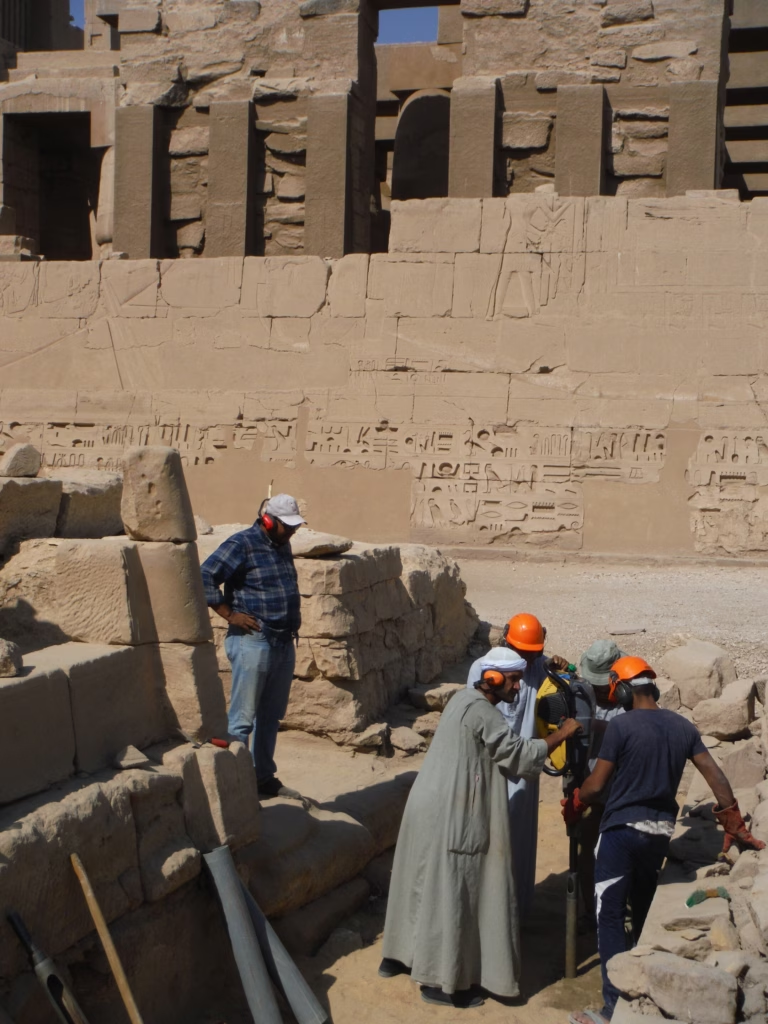
Led by Dr. Angus Graham of Uppsala University and Dr. Ben Pennington of the University of Southampton, the international research team conducted the most comprehensive geoarchaeological survey ever carried out at Karnak, near modern Luxor. The project involved analyzing 61 sediment cores and tens of thousands of ceramic fragments to reconstruct the temple’s ancient environment and settlement history.
The findings reveal that before around 2520 BCE, the area where Karnak now stands was regularly inundated by strong Nile floods, making permanent habitation impossible. It was only during Egypt’s Old Kingdom (c.2591–2152 BCE) that the land began to stabilize, allowing the first construction activity to take place. Pottery fragments dating to between c.2305 and 1980 BCE support this timeline, suggesting the temple’s earliest origins lie in this formative period.
The team discovered that the site’s foundations were laid on an elevated island formed between two ancient river channels — one to the east and one to the west. This high ground eventually became the heart of Thebes’ great sanctuary dedicated to Amun-Ra. Over millennia, as the Nile’s channels shifted and silted up, the temple complex expanded, layer upon layer, into the monumental sprawl that still dominates the Luxor landscape today.
“The river channels surrounding the site determined how the temple could grow,” said co-author Dominic Barker of the University of Southampton. “We even see evidence that ancient builders manipulated the river itself — diverting sands from the desert into channels to reclaim land for construction.”
This reshaped environment, the researchers argue, may have mirrored the Egyptian myth of creation itself. According to Old Kingdom texts, the creator god first appeared as a mound of earth emerging from the primordial waters. The island beneath Karnak may have been deliberately chosen to embody this sacred image — a place where land rose out of the flood, symbolizing the birth of the divine.
“It’s hard to ignore the poetic symmetry,” said Dr. Pennington. “The temple of Amun-Ra at Karnak seems to have been conceived as the physical realization of Egypt’s cosmogony — high ground rising from the waters of chaos.”
The study, The Conceptual Origins and Geomorphic Evolution of the Temple of Amun-Ra at Karnak (Luxor, Egypt), offers a new way of reading the temple’s architecture and symbolism — not merely as an artistic or religious expression, but as a direct dialogue between myth, landscape, and the natural rhythms of the Nile.
With ongoing permits from the Egyptian Ministry of Tourism and Antiquities and support from the Egypt Exploration Society, the research team is now extending its geoarchaeological work across the wider floodplain of Luxor, aiming to reconstruct the entire sacred topography of ancient Thebes.
Benjamin Thomas Pennington et al, Conceptual origins and geomorphic evolution of the temple of Amun-Ra at Karnak (Luxor, Egypt), Antiquity (2025). DOI: 10.15184/aqy.2025.10185