Archaeologists have uncovered rare artifacts dating back to the First Turkic Khaganate (6th–7th centuries CE) during excavations in the Altai Republic of Russia. The discovery sheds new light on the Altai region’s role as a cradle of early medieval nomadic culture.
Discovery at the Katanda-I Site
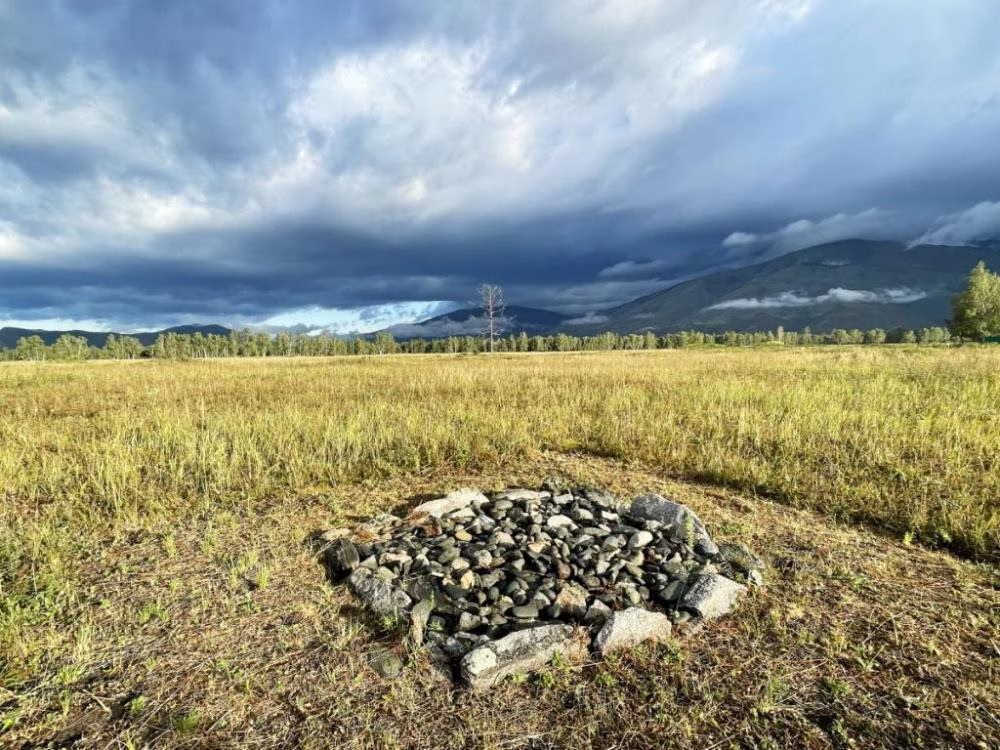
The finds were made at the Katanda-I archaeological site in the Ust-Koksa district as part of the Katanda-2025 International Archaeological Expedition (July 25 – August 12, 2025). The project, led by Professor Nikolai Seregin of Altai State University’s Research and Education Center for Altaic and Turkic Studies “Greater Altai,” included experts from Kazakhstan’s Margulan Institute of Archaeology and Al-Farabi Kazakh National University.
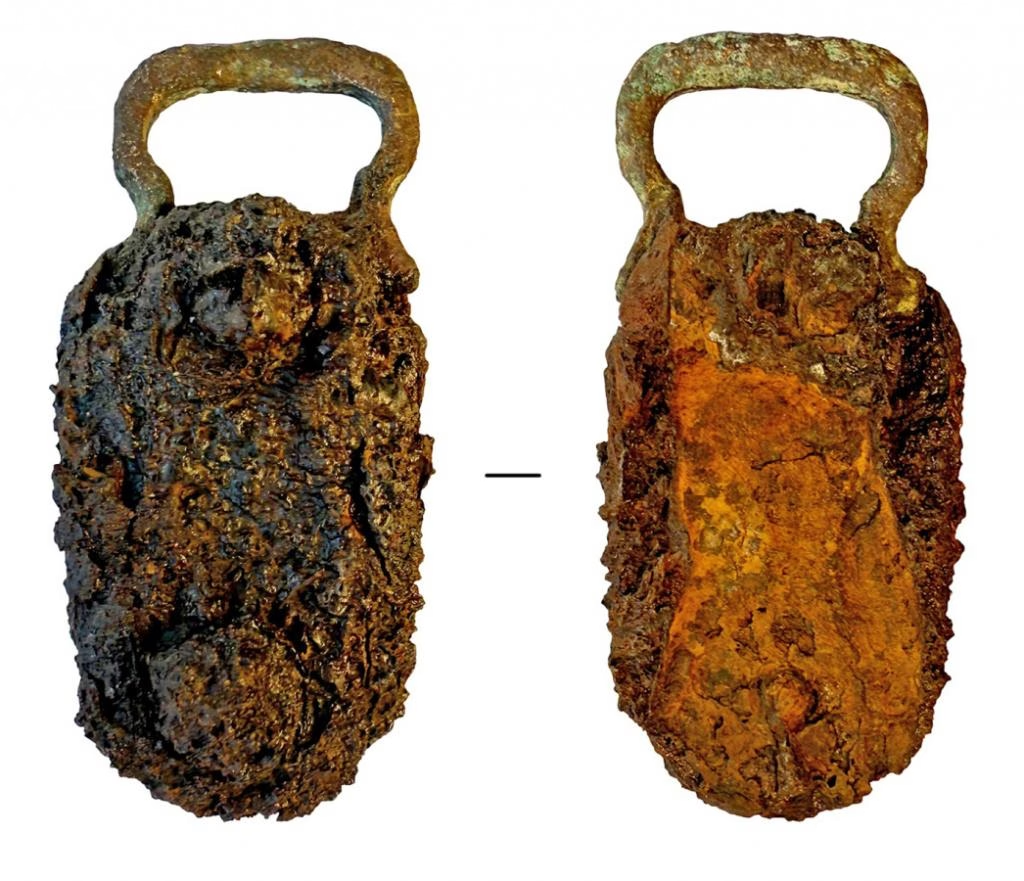
Excavations revealed ritual stone enclosures associated with Turkic funerary traditions. While such structures often contain little material evidence, one yielded exceptional artifacts: a miniature iron spearhead, a bronze belt buckle, an iron chisel, and fragments of a belt.
“These discoveries are unique,” said Professor Seregin. “The miniature spearhead and other items are not just rare artifacts but important cultural markers that help us better understand the rituals and material culture of early Turkic nomads.”
Evidence of the First Turkic Khaganate
Radiocarbon dating places the finds in the era of the First Turkic Khaganate, a short-lived yet powerful nomadic empire established in the mid-6th century CE. Stretching across Central Asia, the khaganate shaped the destinies of many peoples before its collapse after just half a century.
The artifacts reinforce the Altai Mountains’ status as a cultural and spiritual hub of the Turkic world, even after political power shifted to Mongolia.
Symbolic Objects of Nomadic Life
The bronze buckle and belt fragments testify to the high craftsmanship of Turkic metalworkers, while the iron chisel represents everyday tools of nomadic life. The most intriguing artifact, the miniature spearhead, may have had ritual or commemorative significance.
Such finds are invaluable, as archaeological evidence from the First Turkic Khaganate is scarce. Each discovery helps reconstruct the spiritual and material life of early Eurasian nomads.
Collaborative Archaeology
The Katanda discoveries also highlight the importance of international collaboration. Russian and Kazakh scholars are working side by side to uncover the role of the Altai region in Eurasian history.
As Professor Seregin emphasized: “Each new find brings us closer to understanding how the Turkic Khaganate influenced the political and cultural trajectories of Central Eurasia.”
The Katanda-2025 expedition will continue in future seasons, with researchers hoping to uncover further insights into the world of the first Turkic empire.
Cover Image Credit: Press Service of Altai State University