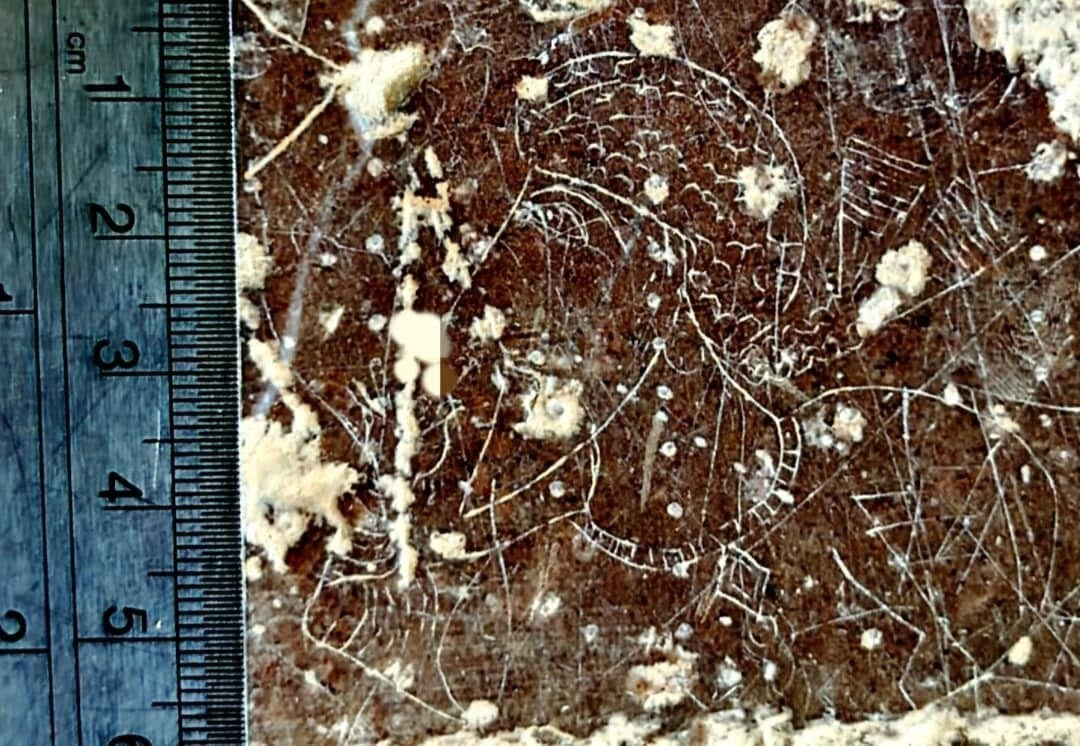
Archaeologists in Iran have announced the discovery of what may be the world’s smallest Sasanian rock carving: a remarkably detailed, needlepoint-style engraving dating back more than 1,500 years. The carving, etched into the cliffs of Marvdasht in Fars Province — home to the UNESCO-listed Sasanian Archaeological Landscape — is expected to reshape scholarly understanding of Persian rock art.
A Micro-Masterpiece of Sasanian Art
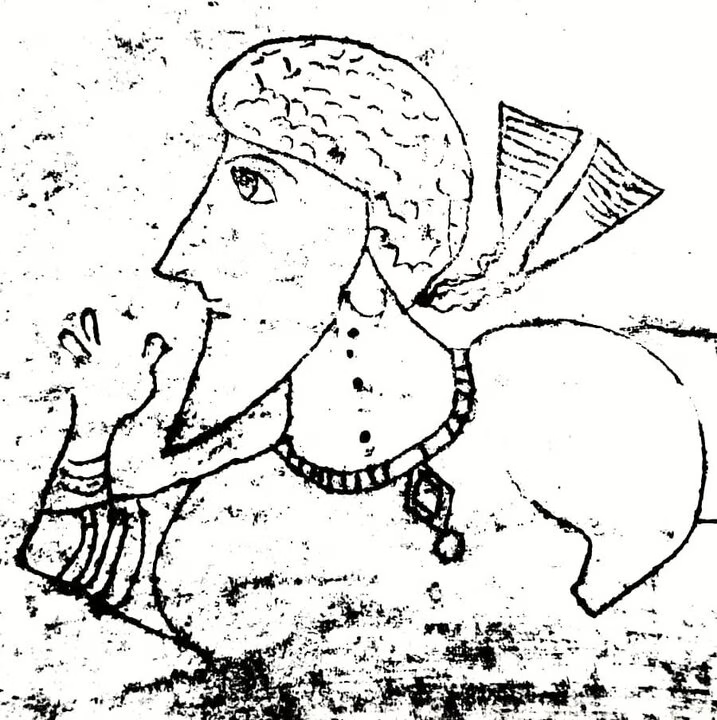
Historian Abolhassan Atabaki, who revealed the find on Thursday, described the piece as “one of the smallest and most sophisticated examples of Sasanian stone engraving ever recorded.” Measuring just 4 by 5 centimeters, the relief depicts a nobleman or cavalry officer wearing an ornate necklace, flowing ribbons, and ceremonial dress, rendered in an exceptionally fine needlepoint technique.
“This carving shows that such needlepoint motifs were not limited to early Sasanian rulers; they continued into the later centuries of the empire, while maintaining a remarkable level of compositional balance and contrast,” Atabaki said.
Damaged Yet Historically Priceless
Although partially damaged by a later Islamic-era inscription, the carving retains striking artistic details. Researcher Najmeh Ebrahimi said its unique iconography suggests it represents a late Sasanian aristocrat from Estakhr, the early imperial capital near Persepolis.
“This is not just a miniature carving; it is a condensed work of imperial propaganda and artistry that reflects Sasanian social hierarchy,” Ebrahimi noted.
Marvdasht: A Living Archaeological Landscape
Marvdasht is among Iran’s richest archaeological zones, containing over 50 significant finds from Elamite, Achaemenid, and Sasanian civilizations. In recent months, Atabaki’s team has uncovered:
- A rare inscription condemning oath-breaking, dating to the Sasanian period.
- The world’s smallest known ancient inscription, a 1,600-year-old text from the same cliffs.
These finds reinforce Marvdasht’s reputation as a cultural crossroads of pre-Islamic Persia.
The Sasanian Legacy
The Sasanian Empire (224–651 CE) is celebrated for its monumental architecture, silverwork, and gem engraving, with iconic sites including Naqsh-e Rostam, Bishapur, and Firuzabad. In 2018, UNESCO recognized the Sasanian Archaeological Landscape of Fars Region as a World Heritage site, highlighting the empire’s enduring global significance.
The miniature carving adds a new dimension to this legacy, offering unprecedented insight into micro-scale craftsmanship during one of Persia’s most artistically vibrant eras. Archaeologists are now preparing high-resolution imaging and 3D scanning to preserve and analyze the artifact in detail.