
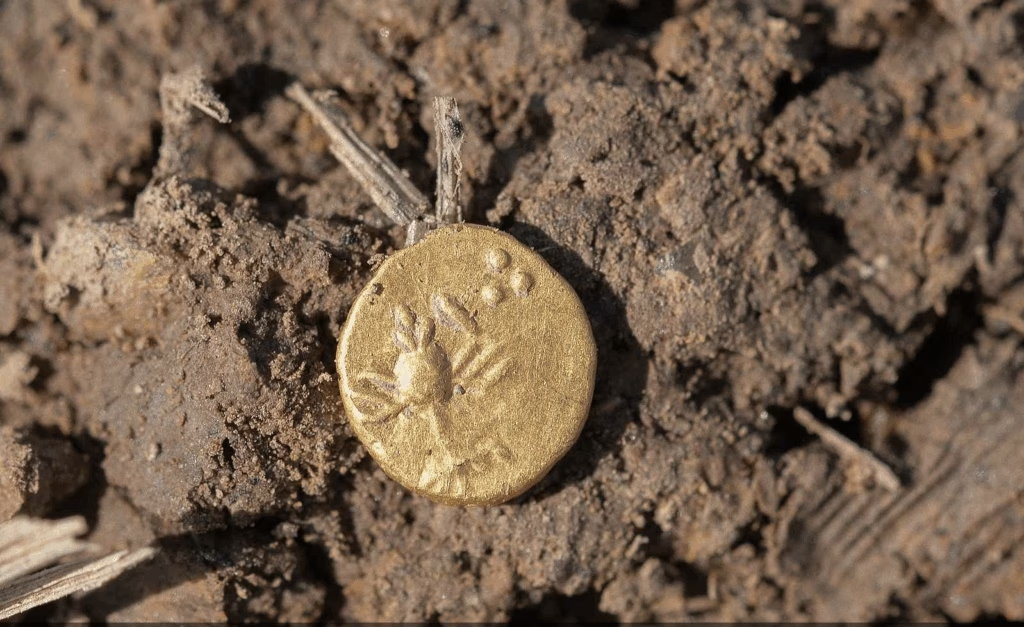
A farmer’s field in western Czech Republic has yielded one of the most remarkable Celtic discoveries of the decade — a buried hoard of gold and silver coins, bronze ornaments, and a mysterious horse figurine. Archaeologists say the find exposes a previously unknown Celtic settlement that challenges what was believed about Iron Age Bohemia.
The excavation, conducted by the Czech Academy of Sciences (AV ČR) together with the Plzeň Region Museum, uncovered hundreds of coins, many of them unique types never recorded before. Early analyses suggest that the coins belonged to the Boii, the Celtic tribe that once gave Bohemia its name, Boiohaemum.
Yet, what astonished the team was the site itself. No stone walls, no house foundations — only layers of scattered artifacts buried in dark soil.
“This looks less like a permanent village and more like a seasonal trade and ritual ground,” said the excavation director. “The distribution of coins and bronze pieces hints at gatherings, possibly markets or festivals held here centuries ago.”
Among the finds are delicately crafted fibulae, bracelets, and fragments of cut gold and silver ingots — evidence of active metalworking and trade networks stretching deep into Central Europe. The small bronze horse figurine, likely of religious significance, adds a ritual dimension to the discovery.
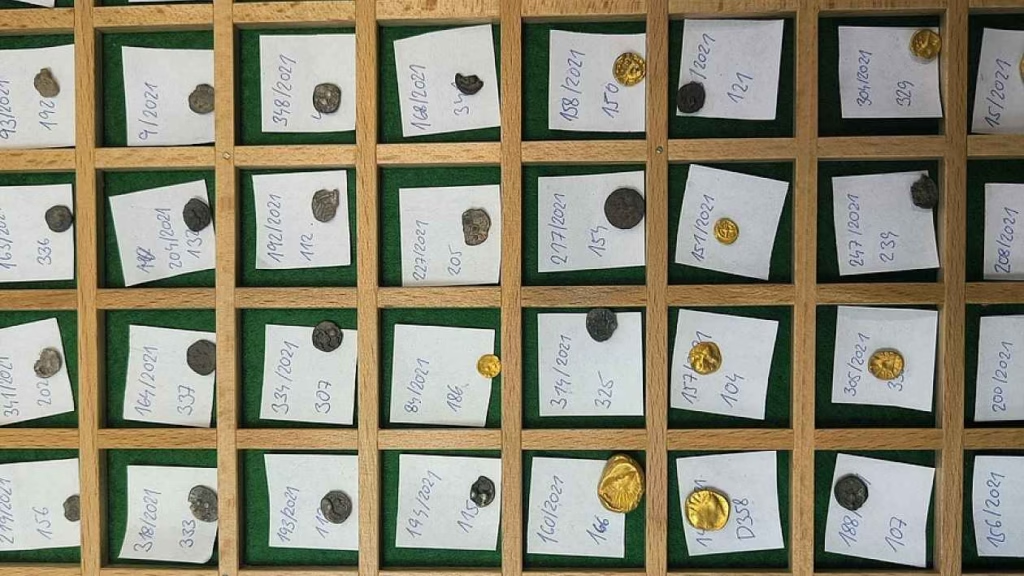
The site lies north of Plzeň, far from known Celtic strongholds, making it a rare key to understanding how the Celtic economy and belief systems operated beyond fortified oppida.
The La Tène–period objects (450–50 B.C.) are now under conservation. Selected pieces will soon be exhibited at the Plzeň Region Museum as part of a new display on Celtic craftsmanship and mobility.
Cover Image: A close-up view of a gold coin from the La Tène period lying in the soil. The coin, unearthed during archaeological excavations in western Czech Republic, is believed to belong to the Celtic Boii tribe. Credit: Museum and Gallery of Northern Pilsen