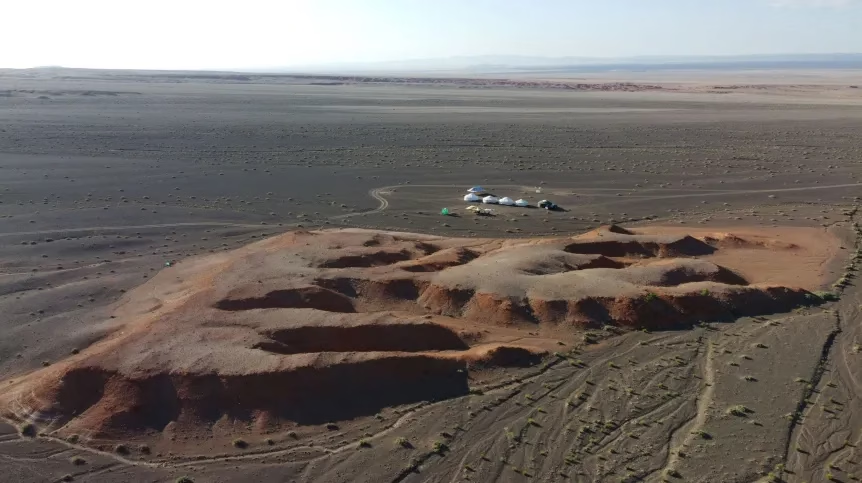
Polish–Mongolian team uncovers evidence that one of Earth’s driest regions was once a green corridor for prehistoric hunter-gatherers.
Long before the Gobi Desert became a realm of dust and wind, it was a landscape alive with water. A network of ancient lakes — now vanished — once formed a mosaic of fertile basins across what is today one of the harshest environments on the planet.
New archaeological research led by Prof. Mirosław Masojć from the University of Wrocław (Poland) has revealed that these lakes supported human settlement as early as 8,000 years ago, rewriting the environmental history of Inner Asia. The study, published in PLOS One, draws on a decade of excavations at a site known as Luulityn Toirom, part of the wider “Flint Valley” region of southern Mongolia.
“The Gobi was not always a desert,” Prof. Masojć explained. “During the Pleistocene and early Holocene, there were real ecosystems here — lakes, vegetation, and wildlife that allowed people to live, hunt, and move between mountain refuges.”
A Forgotten Lake Civilization
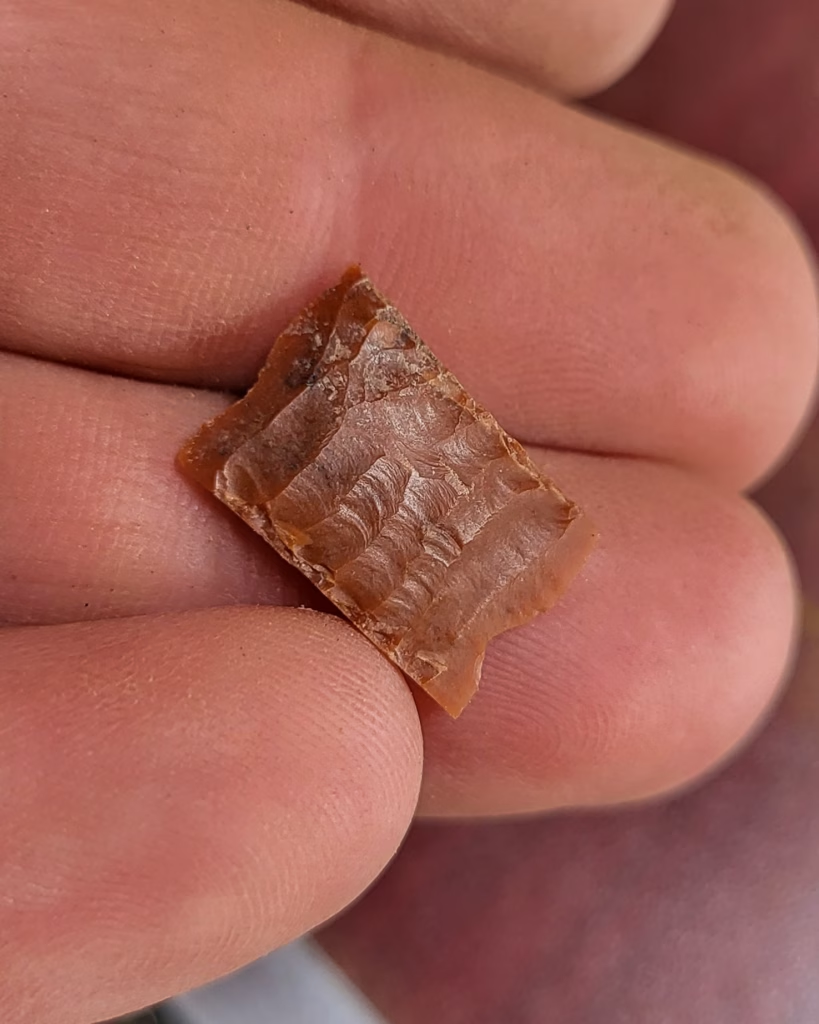
Sediment cores from the former lakebeds indicate that the area’s hydrological system began forming roughly 140,000 years ago, creating conditions favorable to both animals and humans. On the shores of these ancient waters, hunter-gatherer bands crafted tools from deep red jasper, a stone chosen for its sharpness and symbolic beauty.
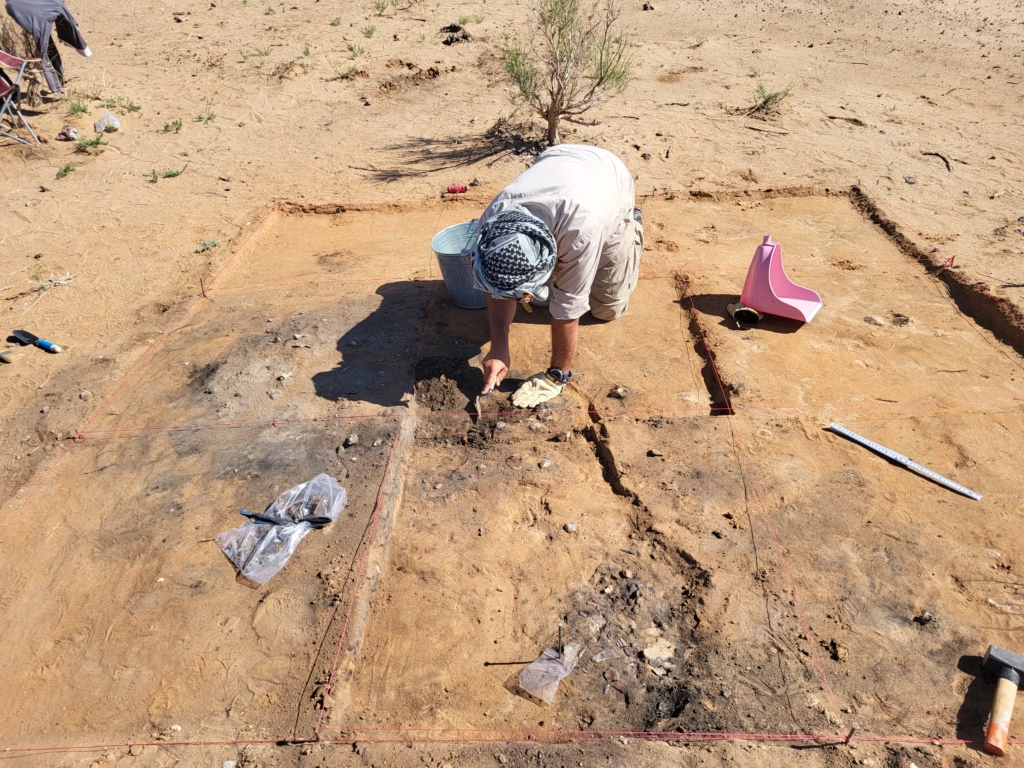
Archaeologists uncovered blades and flakes just a few centimeters long, likely used as cutting tips for arrows and spears. Their presence points to temporary camps, not permanent villages — groups of mobile families following the rhythm of the lakes and game herds.
Organic remains such as bones or wood are almost never preserved in the Gobi’s desiccating environment. Instead, the stone tools, meticulously knapped from jasper, chalcedony, and opal, offer a rare glimpse into the ingenuity of these early inhabitants.
When the Desert Was Green
The findings show that the Gobi’s prehistoric climate bore little resemblance to its modern image. During the Holocene Climatic Optimum (8,000–5,000 years ago), rainfall and groundwater levels were much higher, creating a chain of lakes that turned the desert into a habitable corridor stretching between the Altai Mountains and the Mongolian steppe.
Even earlier, during the late Pleistocene, these water systems likely served as migration routes for humans and animals escaping colder northern zones.
Retreat to the Mountains
As conditions dried, people moved into the Altai uplands, using caves as seasonal shelters. Excavations in this region revealed two cave sites with traces of human activity dating back 27,000 years, including the oldest known human remains in Mongolia — a male tooth dated to around 25,000 years ago.
These mountain refuges, scientists argue, acted as natural sanctuaries during harsh climatic episodes, preserving continuity in human presence across tens of millennia.
A Broader Picture of Prehistoric Adaptation
The Gobi project — a collaboration between the University of Wrocław, Polish Geological Institute, Polish Academy of Sciences, Archaeological Museum of Gdańsk, and the Mongolian Academy of Sciences — is reshaping how scientists view human resilience in extreme environments.
The discovery of pottery fragments dated to around 10,500 BCE at other nearby sites suggests that these mobile groups were also experimenting with early technologies long before the spread of farming.
Funded by Poland’s National Science Centre (NCN), the research underscores a simple but profound truth: the desert we know today was once a land of water, movement, and life.
Cover Image: Archaeological fieldwork at the Luulityn Toirom basin revealed evidence of early Holocene human presence around vanished lakes in the Gobi Desert. Credit: University of Wrocław / PLOS One