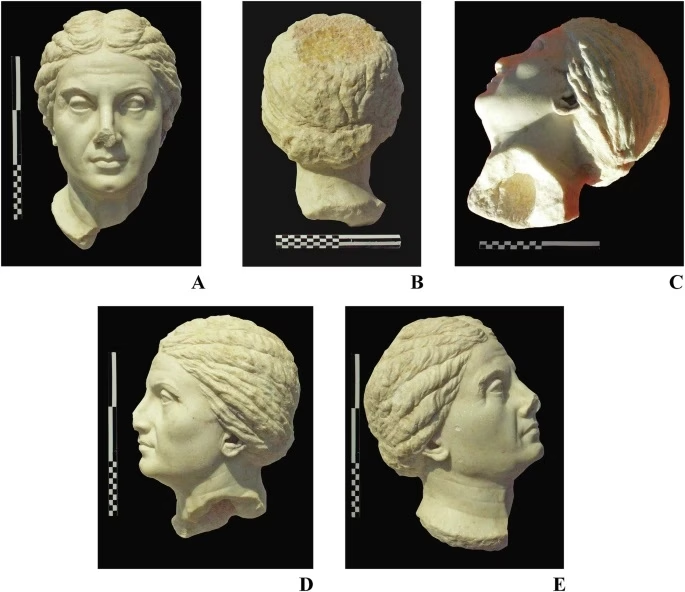
A 2,000-year-old marble portrait discovered in Crimea has finally revealed its secret.
An international team of researchers from Poland and Spain identified the sculpture as depicting Laodike, a Roman woman who lived in the early centuries of the Empire and held a prominent social position in the ancient city of Chersonesos.
Rediscovering a Forgotten Roman Lady
The marble head was unearthed in 2003 during excavations led by a Polish–Ukrainian archaeological mission in Sevastopol, on the site of ancient Chersonesos.
Now, after two decades of detailed scientific study, the woman’s identity has been established through a unique combination of methods — including spectral–isotopic analysis, material science, and stylistic comparison with other Roman portraits.
According to Prof. Elena Klenina of Adam Mickiewicz University, who directed the project, Laodike was the wife of Titus Flavius Parthenokles, a member of the city council and a figure of considerable influence in the region.
“This marble head was not a generic image of a goddess or an idealized beauty,” said Prof. Klenina. “It portrays a real Roman woman — someone who lived, influenced her community, and left her mark on the cultural landscape of Crimea.”
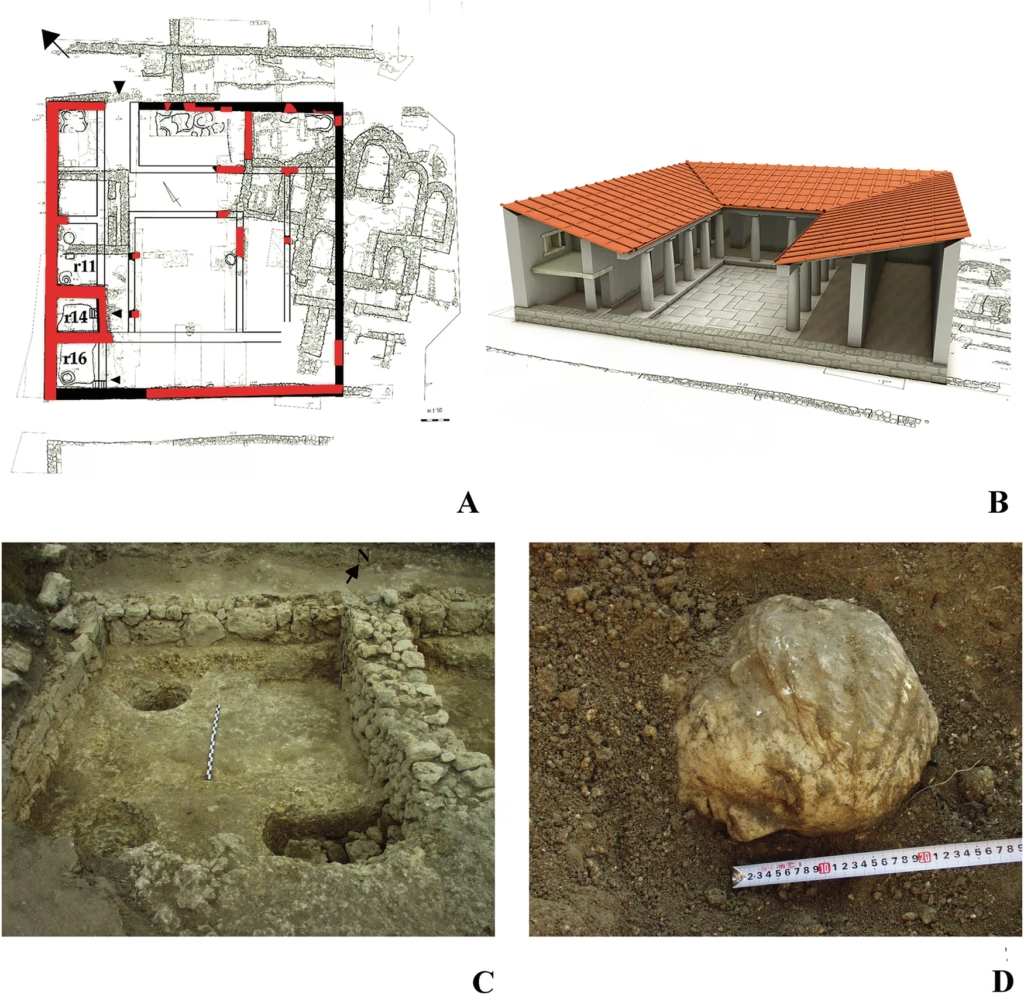
A Roman Presence Beyond the Empire’s Heartland
The discovery underscores how far Roman culture extended into the Black Sea region, shaping cities and identities well beyond Italy’s borders.
For researchers, confirming the identity of Laodike is also a rare achievement, since most portraits from the Roman provinces remain anonymous.
By merging art history with cutting-edge scientific techniques, the team succeeded in linking a single artifact to a specific historical figure, providing valuable insight into how Roman elites projected their image in the eastern provinces.
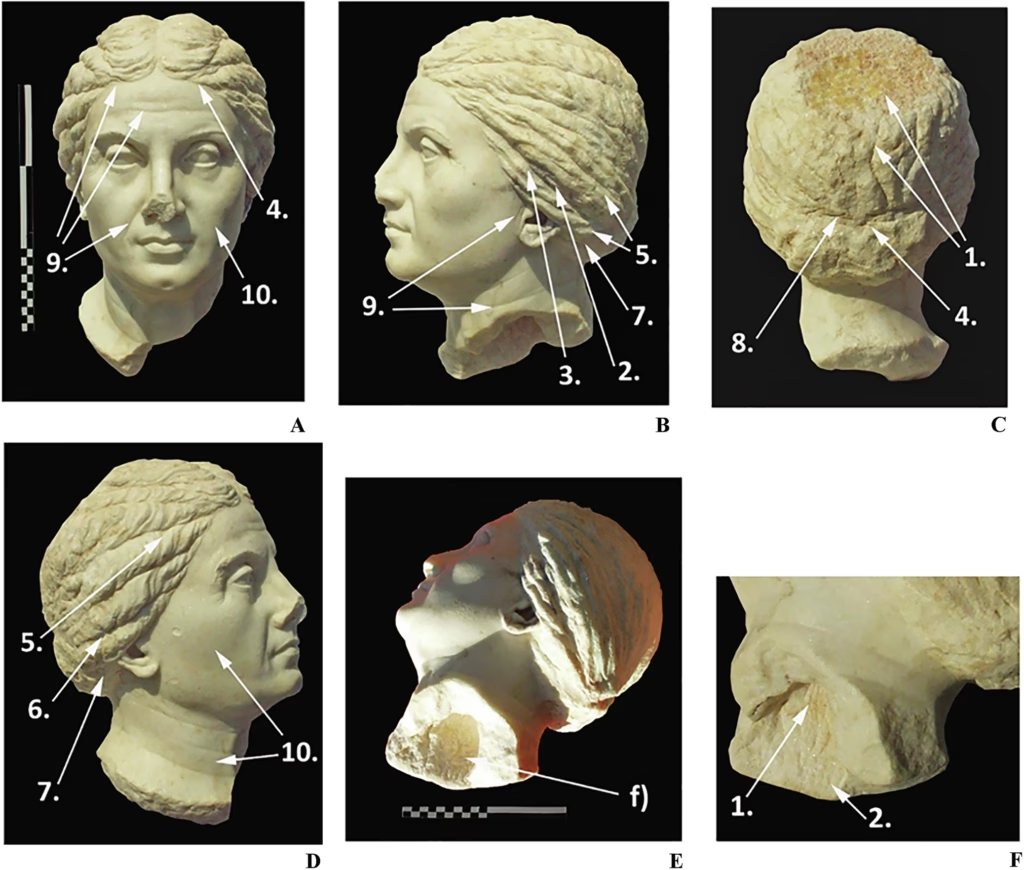
The Science Behind the Portrait
The interdisciplinary analysis included:
- Spectral–isotopic tests to determine the marble’s origin,
- Traseological study to reconstruct carving techniques,
- C14 and surface layer testing for dating and preservation analysis,
- Stylistic and epigraphic comparisons with other known portraits from the early Imperial period.
The results confirmed that the marble was quarried in the Aegean region, often used for high-status Roman commissions, and that the carving reflects a blend of Roman realism and local craftsmanship.
Marble head identified as Laodike, discovered in Chersonesos, Crimea. Photo by A.B. Biernacki, featured in npj Heritage Science.