
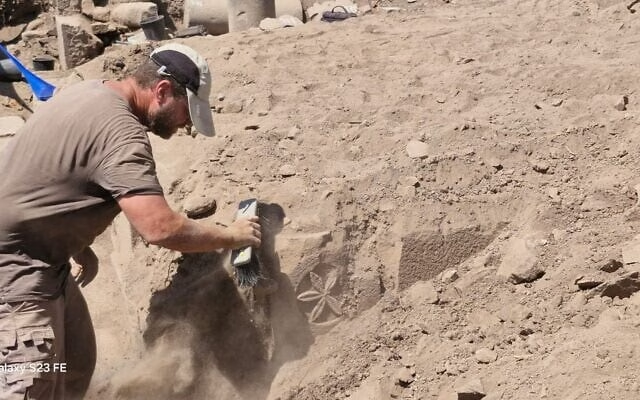
Archaeologists from the University of Haifa and Kinneret College have uncovered the remains of a 1,500-year-old synagogue hidden beneath the deserted Syrian village of Yehudiya in Israel’s Golan Heights — revealing new insight into one of the region’s oldest Jewish communities.
A Hidden Sanctuary Beneath Yehudiya
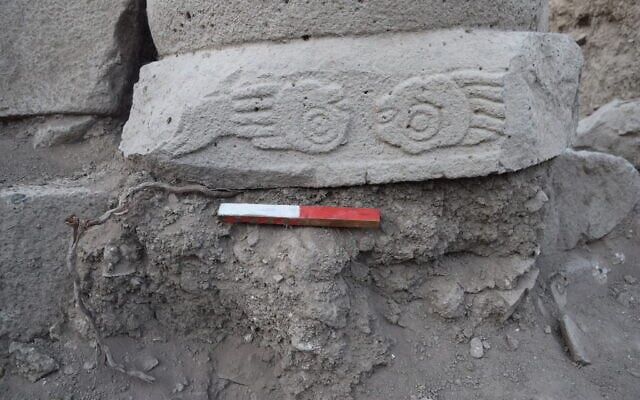
The discovery emerged within the Yehudiya Nature Reserve, a landscape better known for its waterfalls and canyons than its buried heritage. For decades, researchers had suspected that fragments reused in village houses — columns, carved capitals, and even a stone engraved with a menorah — once belonged to a lost synagogue.
That assumption has now been confirmed.
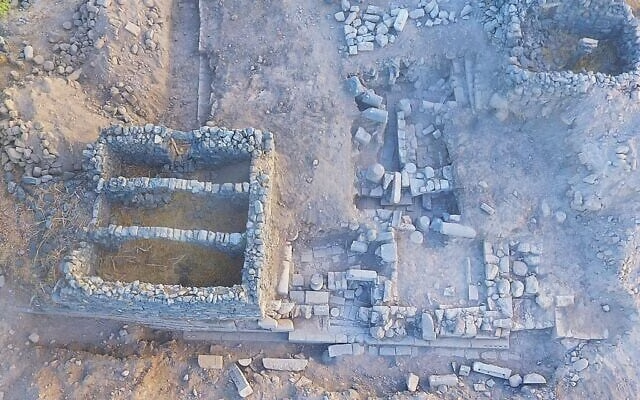
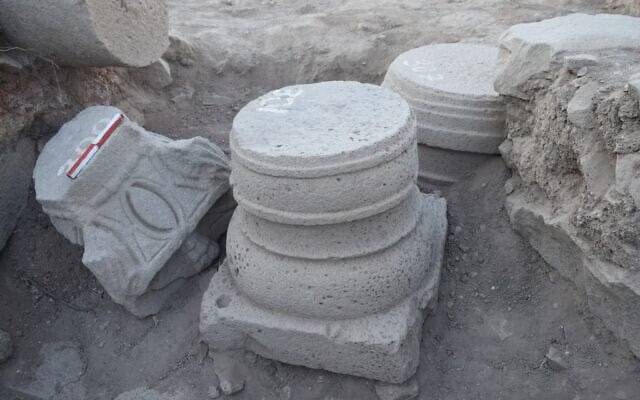
“Our excavations exposed a southern wall with three entrances, column bases, and stone benches that unmistakably belong to a basilica-style synagogue,” said Dr. Mechael Osband of the Zinman Institute of Archaeology at the University of Haifa, who co-directs the project with Prof. Haim Ben-David of Kinneret College.
Reconstructing an Ancient House of Prayer
The building, roughly 13 meters wide and 17 meters long, followed the classic rectangular basilica layout found in late-Roman and Byzantine synagogues, featuring two interior colonnades and seating along the walls. A finely carved tabula ansata — a rectangular tablet with dovetail handles — was also unearthed. Although blank to the naked eye, researchers plan to analyze it with advanced imaging to detect any faded inscriptions.
Over 150 architectural fragments linked to the synagogue have been documented across the ruins, many reused in later village structures. “You could walk into a house and find a column supporting the roof,” Osband noted. “The Syrian settlement was literally built atop an ancient one.”
From the Late Roman to the Byzantine Period
Preliminary stylistic analysis dates the synagogue between the late 3rd century and the 7th–8th centuries CE, a period when Jewish life in the Golan was thriving. Archaeologists estimate that as many as 30 ancient synagogues have now been recorded in the Golan Heights — part of about 130 across the Land of Israel.
According to Osband, the density of finds reflects both a longstanding Jewish presence and the region’s relatively undisturbed landscape. “Because the Golan wasn’t continuously rebuilt like the Galilee, ancient remains survive remarkably well,” he said.
Looking Ahead
The team intends to resume work next summer to expose the northern section of the structure and further clarify its chronology. “Every synagogue tells a different story,” Osband emphasized. “The one beneath Yehudiya may help us understand how local communities prayed, built, and adapted their sacred spaces across centuries.”