
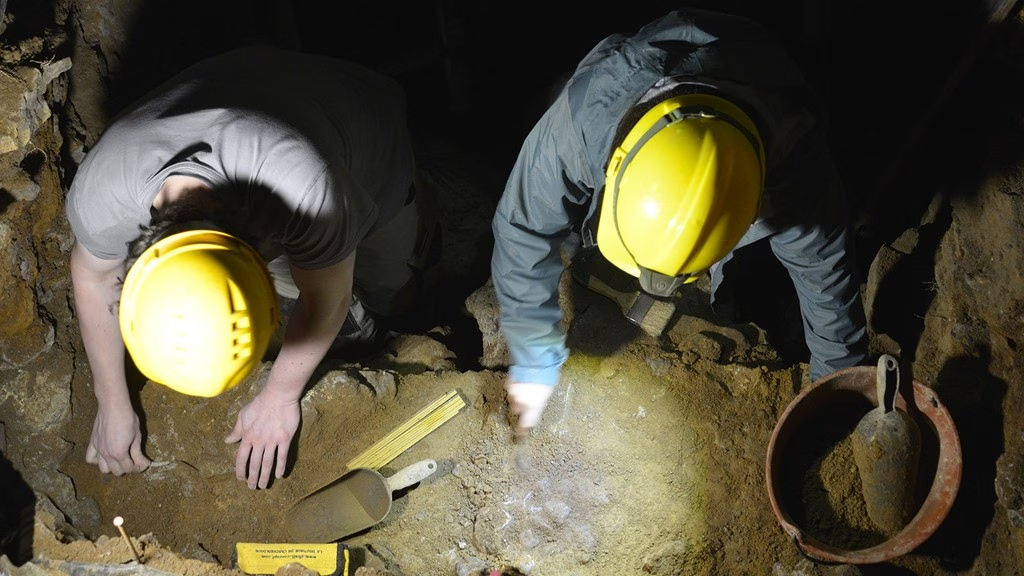
Archaeological excavations in Modave, Belgium, are revealing the traces of the first Homo sapiens communities to settle permanently in Northwestern Europe. Stone tools, mammoth ivory beads, and reindeer antler spear points dating back 40,000 years shed light on the earliest chapters of Paleolithic art and culture.
Hidden within a tranquil nature reserve along the Hoyoux River lies a portal into humanity’s deep past: the Trou Al’Wesse cave. Recent excavations at this limestone shelter in Modave have uncovered striking evidence of early modern human life in the region, dating back roughly 40,000 years.
Led by the University of Liège, in collaboration with experts from Bordeaux, Brussels, and Toulouse, the dig has yielded Aurignacian-era artifacts, including finely crafted flint tools, reindeer antler spear points, and mammoth ivory ornaments. Among the finds are a bead and carved fragments whose radiocarbon dating confirms they are more than 35,000 years old.
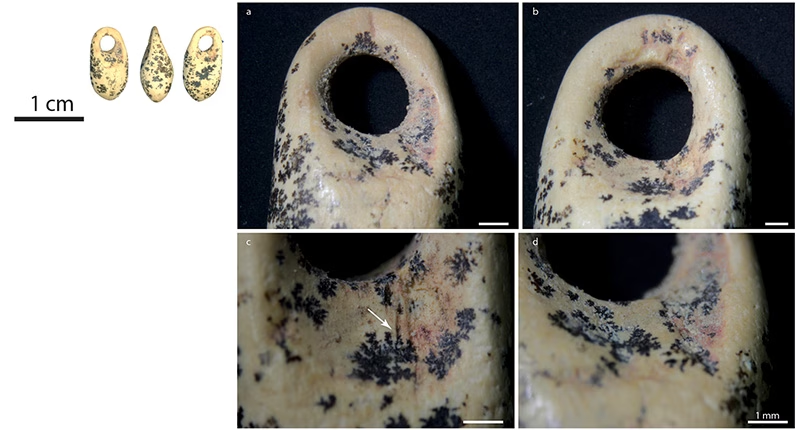
The Aurignacian culture represents the first major cultural wave of the European Upper Paleolithic. Renowned for masterpieces like the Chauvet Cave paintings in France and the ivory figurines of Germany’s Swabian Jura, this period marks both the dawn of symbolic art and significant technological innovation among early hunter-gatherer societies.
The story of Trou Al’Wesse dates back to the 19th century, when early excavations by Philippe-Charles Schmerling and Edouard Dupont revealed fossil-rich layers mixed with Paleolithic stone tools. However, modern archaeological campaigns, spurred by the discovery of undisturbed sediment layers in 2003, are now offering a far more detailed understanding of the site’s prehistoric occupation.
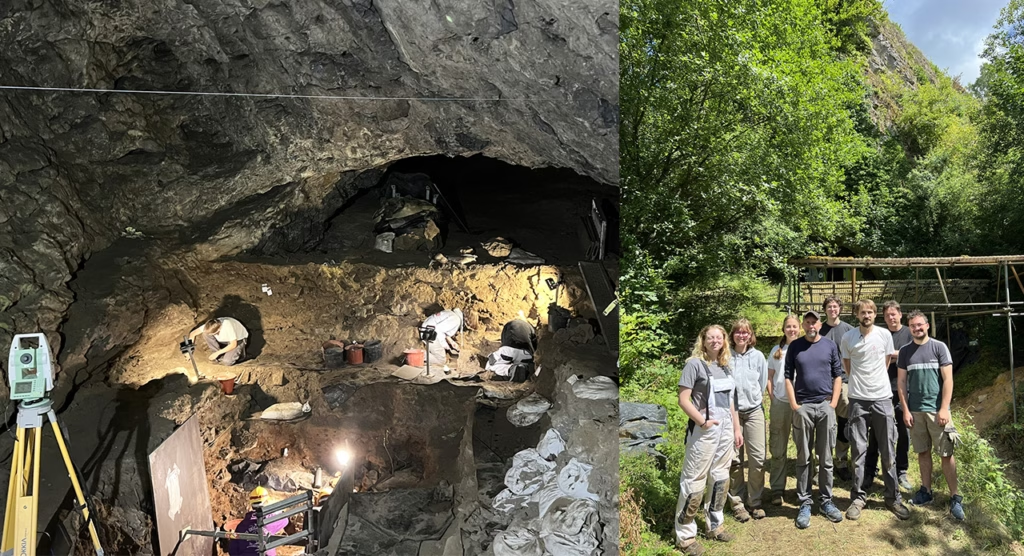
Beyond its scientific significance, Trou Al’Wesse also serves as an invaluable training ground for aspiring archaeologists. Each summer, students from the University of Liège and partner institutions gain first-hand fieldwork experience, bridging academic theory with practical excavation skills.
The ongoing research is supported by the University of Liège, the Walloon Heritage Agency, the Leakey Foundation, and Vivaqua. Experts say the site will continue to play a crucial role in unraveling the story of Europe’s earliest human settlements in the years to come.
Cover Image Credit: Summer 2025 excavation training at the Trou Al’Wesse site. | ©️ University of Liège / Th. Libois