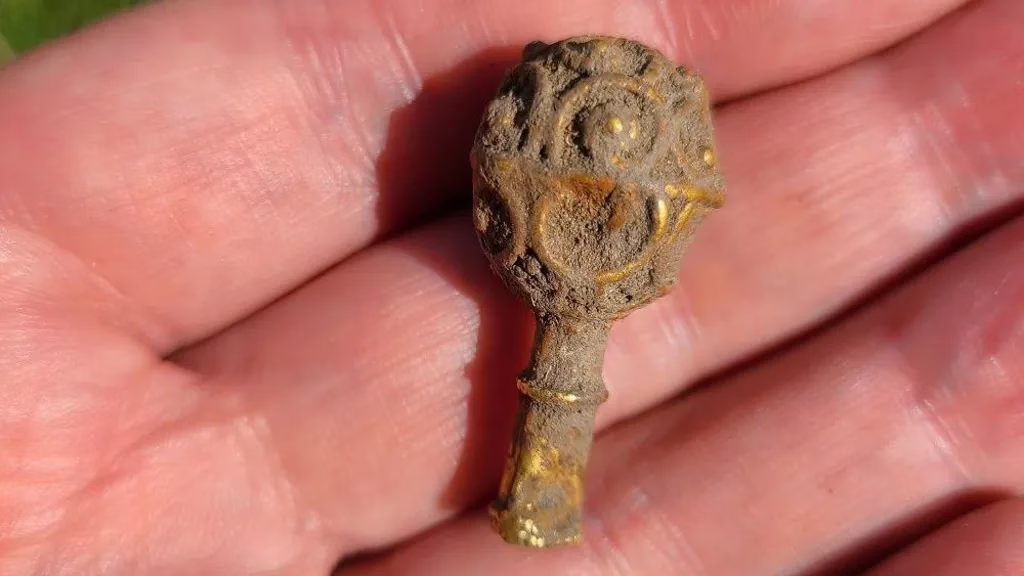
A rare gold object dating back to the 9th century has been unearthed during archaeological excavations in Northumberland, England. The discovery was made by Newcastle University international student Yara Souza near the historic Roman road known as Dere Street.
Measuring approximately four centimeters in length, the early medieval artifact features a finely crafted decorative finial at one end. Dere Street once connected York and Edinburgh during the Roman period and today forms part of the modern A68 highway.
The excavation was launched after a similar gold object was accidentally found at the same location in 2021 by metal detectorist Alan Gray. Archaeologists believe that Dere Street continued to be used by high-status individuals after the fall of the Roman Empire, and that both objects may have been deliberately buried for religious or ceremonial purposes.

Professor James Gerrard of Newcastle University described the find as “of exceptional quality,” adding: “Dere Street remained an important route well into the post-Roman period. This discovery offers new insights into elite use of the area during the early medieval era.”
The object will undergo further analysis and may eventually be displayed at the Great North Museum: Hancock. Andrew Agate, from the Portable Antiquities Scheme for North East England, called the project “a strong example of how metal detectorists and archaeologists can work together to enhance our understanding of Northumberland’s past.”
Cover Image Credit: A 1,100-year-old gold object discovered near Dere Street in Northumberland. | © Newcastle University