
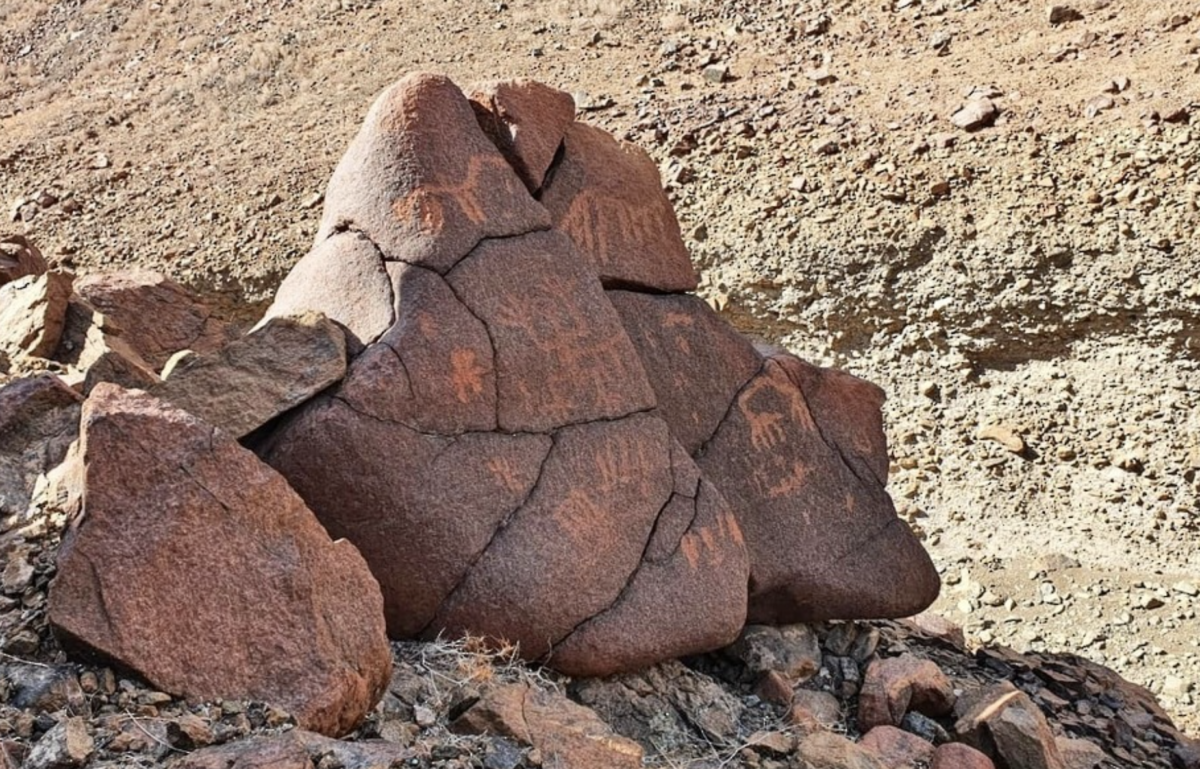
On a rock surface in northern Oman, ancient marks still hold their shape: animals, human-like figures, and geometric signs cut directly into stone.
Oman’s Ministry of Heritage and Tourism has documented a newly registered archaeological site at Hajar Al Sinanat, in the Wilayat of Al Khaboura, North Al Batinah Governorate. The site preserves a group of rock carvings made on natural stone surfaces, adding another important location to Oman’s growing record of rock art.
The ministry has described the carvings as belonging to ancient historical periods, but no precise date has yet been announced. That makes the discovery especially important for future research. Before the images can be fully interpreted, archaeologists will need to study their technique, surface condition, landscape setting, and possible relationship to other known rock art sites in Oman.
Animals and Symbols Pecked Into the Rock
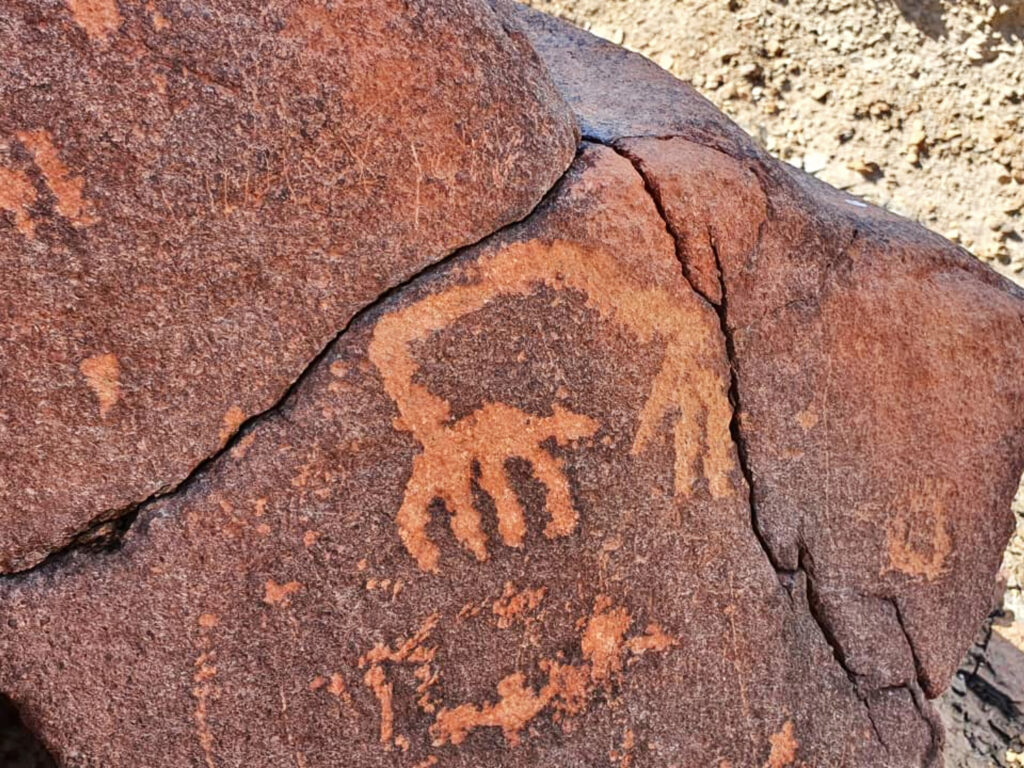
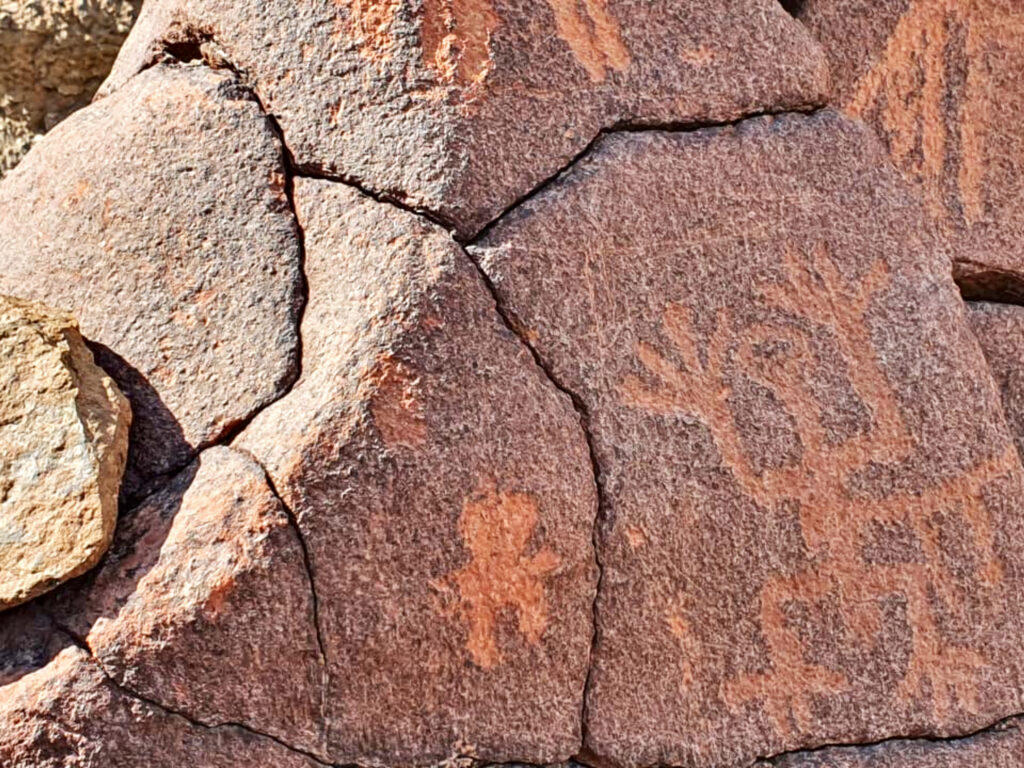
The newly recorded site includes animal figures, human-like figures, and geometric signs. They appear to have been made using a pecking technique, in which repeated blows gradually break the surface of the stone and create visible images.
This method is known from many rock art traditions across the Arabian Peninsula. It is simple in appearance, but not in meaning. A carved animal may reflect hunting, herding, local wildlife, movement through the landscape, or symbolic belief. Human-like figures may point to identity, memory, ritual activity, or scenes that once held meaning for the people who made them.
At Hajar Al Sinanat, those meanings remain open. The site has only recently entered the official archaeological record, and the ministry has not yet released a detailed interpretation of the carvings. For now, their importance lies in what they preserve: a visual trace of human presence fixed into the stone landscape of northern Oman.
A New Site in North Al Batinah
The location adds weight to the discovery. Al Khaboura lies in North Al Batinah, a coastal governorate positioned between the Hajar Mountains and the Gulf of Oman. This part of the country has long been shaped by mountain routes, wadis, settlements, agriculture, and access to the sea.
Rock art sites are rarely isolated marks on stone. They often belong to wider landscapes used for movement, grazing, water access, seasonal activity, or repeated visits across generations. A carved rock surface may have marked a familiar place, a route, a memory, or a space where people returned over time.
The Hajar Al Sinanat carvings now add a new point to that archaeological map. Their documentation may help researchers better understand how ancient communities in northern Oman used the land and how they chose to leave visible signs within it.
A Discovery Still Waiting to Be Dated
One of the most important details is also one of the most cautious: the carvings do not yet have a firm date.
Dating rock art can be difficult. Unlike pottery, coins, or organic material, carvings made into exposed stone do not always provide direct evidence for scientific dating. Archaeologists usually have to compare several clues, including technique, style, weathering, overlapping marks, nearby finds, and the wider archaeological landscape.
A single rock surface can also contain images made at different times. Later groups may have added new figures beside older ones, creating a layered record rather than a single episode. That possibility must remain open at Hajar Al Sinanat until further study is completed.
This does not reduce the value of the site. It makes the next stage of research more important. The carvings may represent one phase of activity, or they may preserve traces of repeated human presence across a longer period.
A Fragile Record in the Open Air
The discovery also underlines the need for protection. Rock art is exposed by nature. Heat, wind, rain, erosion, salt, and accidental human damage can all affect carved surfaces. Once a panel is scratched, removed, or altered, part of its archaeological information may be lost for good.
Official registration gives the site a stronger basis for monitoring and preservation. It also allows specialists to document the carvings before natural weathering or uncontrolled visitation causes further damage.
For Oman, Hajar Al Sinanat is not simply another archaeological location. It is a reminder that some of the country’s oldest cultural traces survive outside monumental buildings, forts, tombs, and settlements. They remain on open stone, in marks left by people whose names are gone but whose gestures are still visible.
The newly documented carvings may not yet have a full chronology or interpretation. But they already add an important fragment to Oman’s ancient human story, one cut directly into the rock of North Al Batinah.
Oman’s Ministry of Heritage and Tourism
Cover Image Credit: Oman’s Ministry of Heritage and Tourism