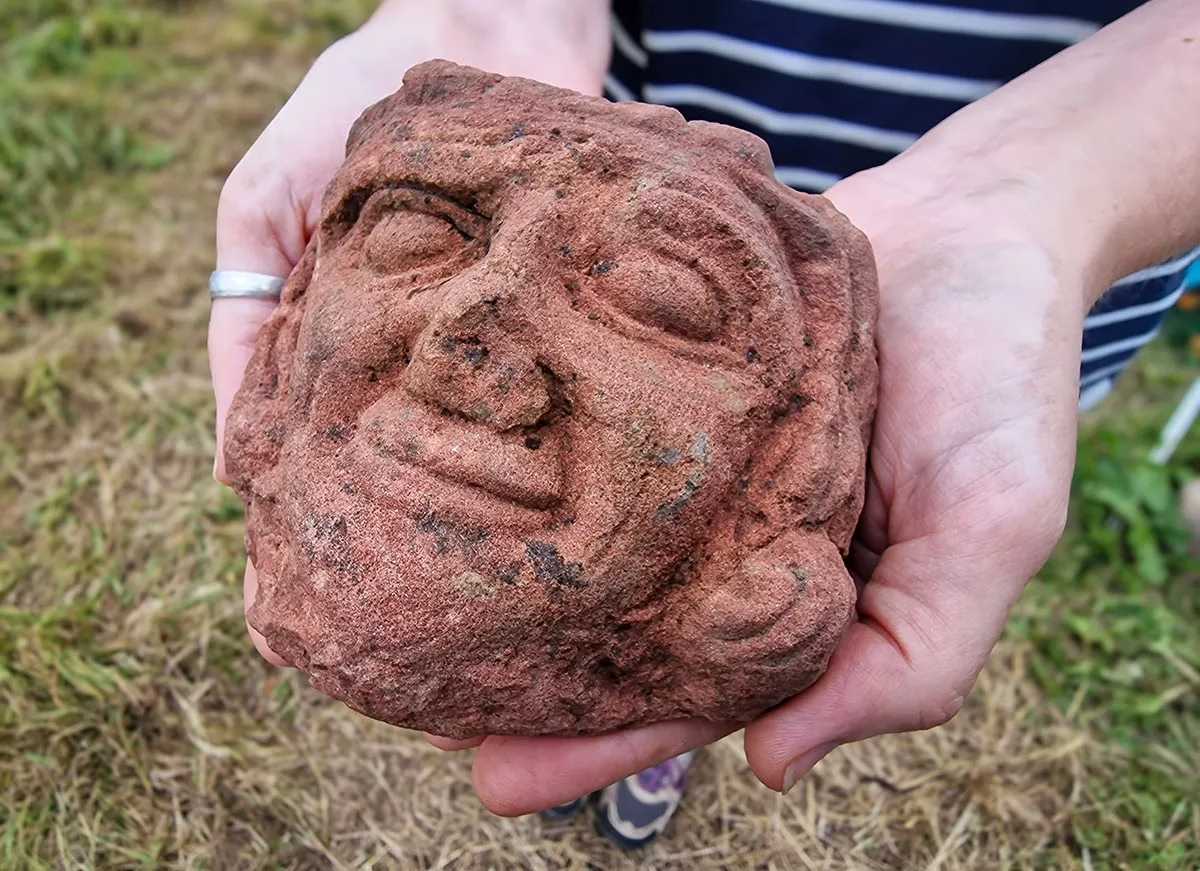
A beautifully carved stone head has been discovered during excavations at Skaill Farm on Rousay, one of Orkney’s most archaeologically rich islands. The find is being hailed as one of the most significant pieces of medieval stone sculpture unearthed in the region in recent years.
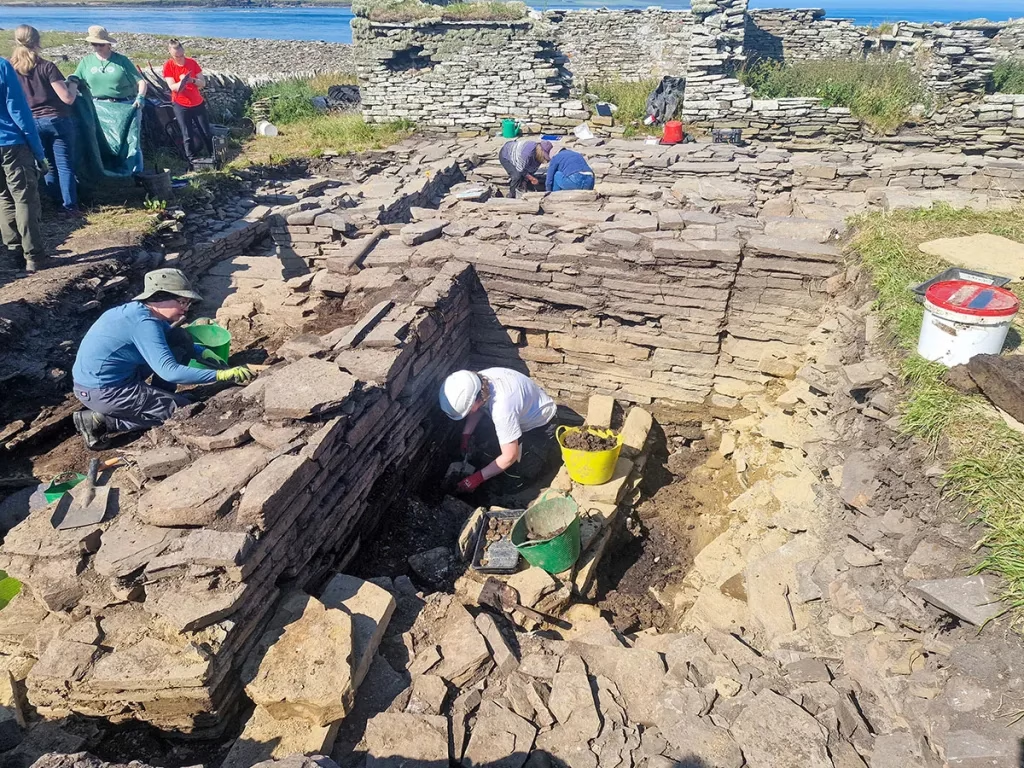
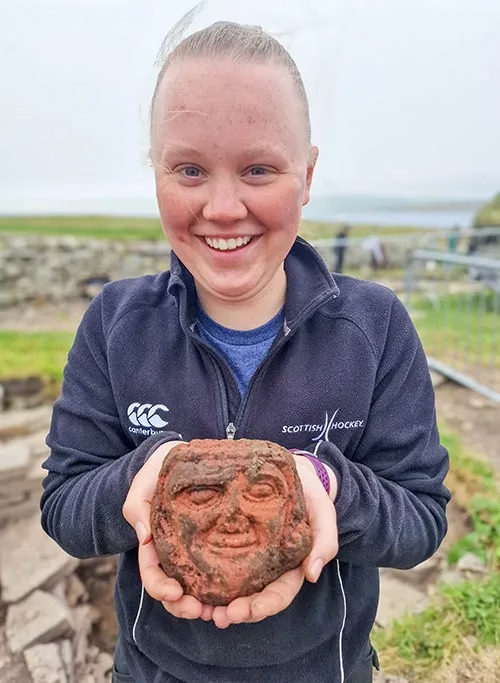
The carved sandstone head was found during the second week of the University of the Highlands and Islands (UHI) Archaeology Institute’s summer dig. As part of their field school, archaeologists and students were excavating a series of large medieval buildings, when undergraduate student Katie Joss uncovered the small artifact.
The head, carved from red sandstone believed to originate from Eday, features finely detailed hair, closed eyes, asymmetric brows, and a slight, enigmatic smile. Despite the broken nose—which experts suggest could be due to iconoclasm—the piece is in remarkably good condition.
“This is such an exciting and rare find,” said Dr. Sarah Jane Gibbon, excavation co-director. “We’ve uncovered many worked stones here before, but nothing like this in terms of artistic quality and emotional depth.”
Potential Link to St Magnus Cathedral
The stone’s craftsmanship has led researchers to draw comparisons with architectural carvings at St Magnus Cathedral in Kirkwall, Orkney’s most iconic ecclesiastical structure. A similar carved face is embedded in one of the cathedral’s south aisle window frames, suggesting that the Skaill head may have once adorned a prominent religious building.
The discovery site itself—a later addition built between two major medieval stone structures—has yielded clues that this area may have once formed part of a larger ecclesiastical or administrative complex. One of the buildings, with meter-thick walls and an external staircase, may have functioned as a storehouse or hall.
A Lost Medieval World Emerging
Excavations at Skaill have previously uncovered a number of red sandstone fragments, likely remnants of a now-lost monumental building. The growing evidence—including reused stonework in a nearby church—points to the presence of a more elaborate medieval landscape than previously recognized.
Future research will focus on comparative analysis with other carvings in Orkney and northern Scotland, with the goal of dating the artifact and determining its original context.
Community Engagement and Living History
The excavation has drawn widespread local interest. At the dig’s open day, visitors participated in youth-led tours, live archaeology demonstrations, and viewed a medieval-style shelter created by artist Anna Gardiner using willow, nettle, and mud—a nod to sustainable, historical building methods.
For Katie Joss, the student who made the discovery, it’s already being called the “find of a lifetime.”
As the dig continues, the Skaill carved head stands not just as a powerful artistic relic, but also as a doorway into the complex, layered past of medieval Orkney.
University of the Highlands and Islands Archaeology Institute – Archaeology Orkney
Cover Image Credit: University of the Highlands and Islands Archaeology Institute – Archaeology Orkney