
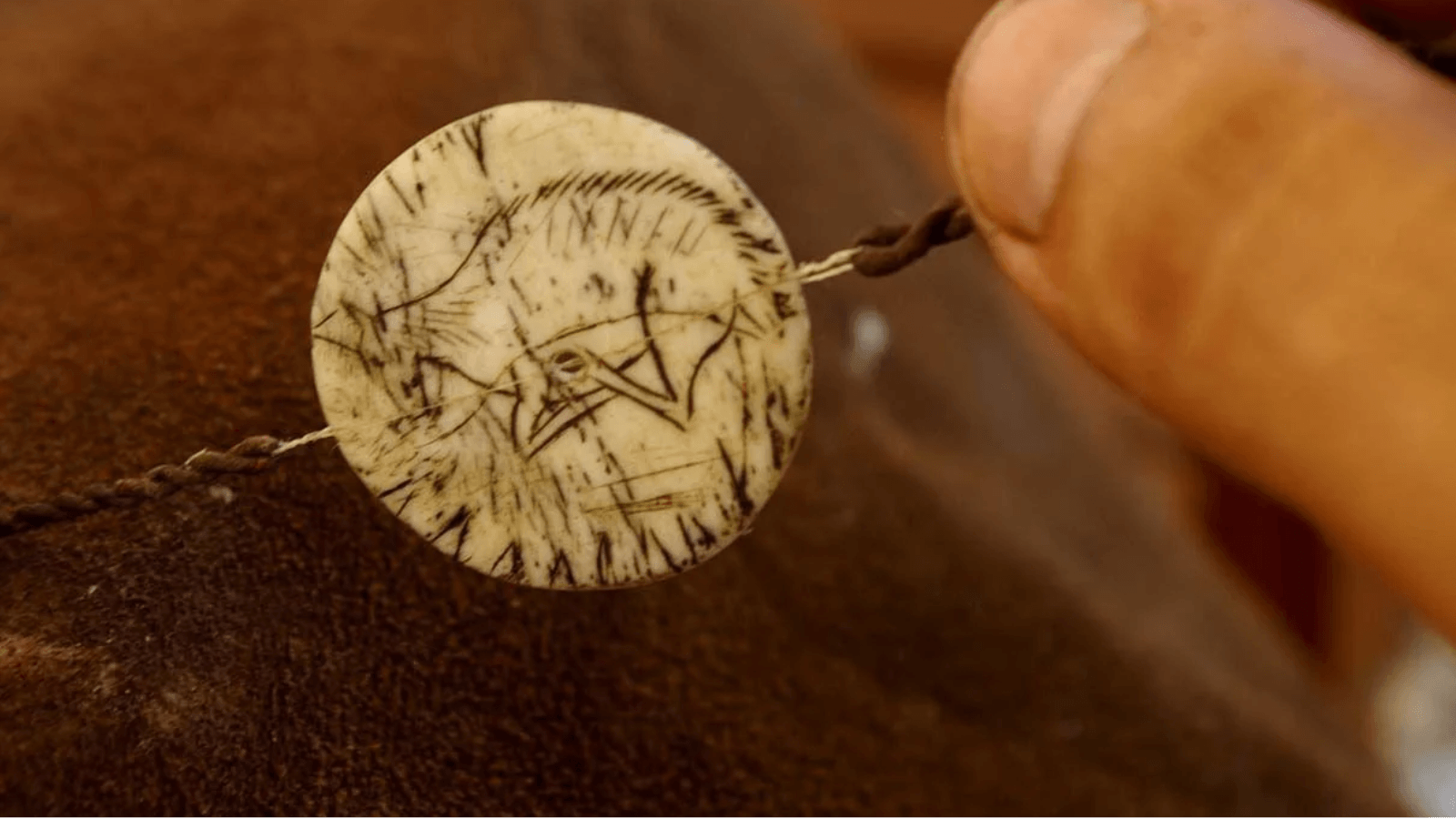
A tiny bone disc discovered in France more than 150 years ago may have allowed Ice Age people to create moving images. Engraved with an animal in two different positions, the roughly 15,000-year-old object produces the illusion of movement when spun rapidly, suggesting that prehistoric artists may have experimented with animation long before cinema existed.
The disc measures just 3.1 centimeters (1.2 inches) across and belongs to the Musée d’Art et d’Archéologie du Périgord in southwestern France. Its unusual design has attracted researchers interested in how prehistoric people represented movement.
Two Images of an Animal on a Small Bone Disc
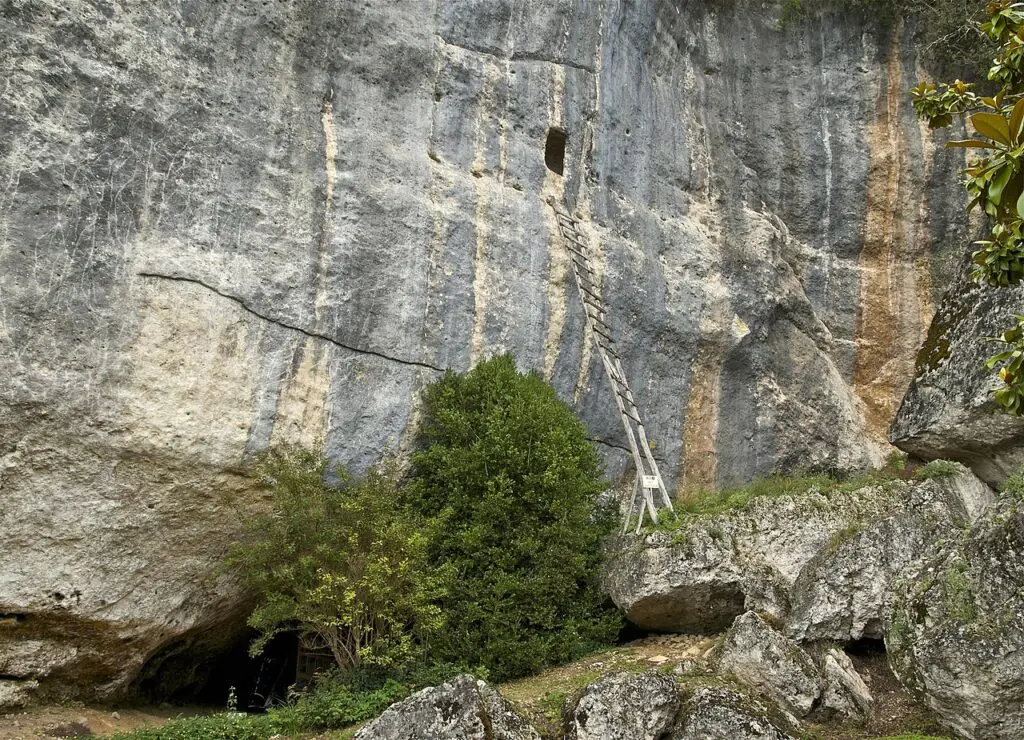
Michel Hardy discovered the disc in 1868 at Laugerie-Basse, a prehistoric rock shelter in France’s Dordogne region. The object dates to the Magdalenian period of the Upper Paleolithic, which the museum places between approximately 18,000 and 11,000 years ago.
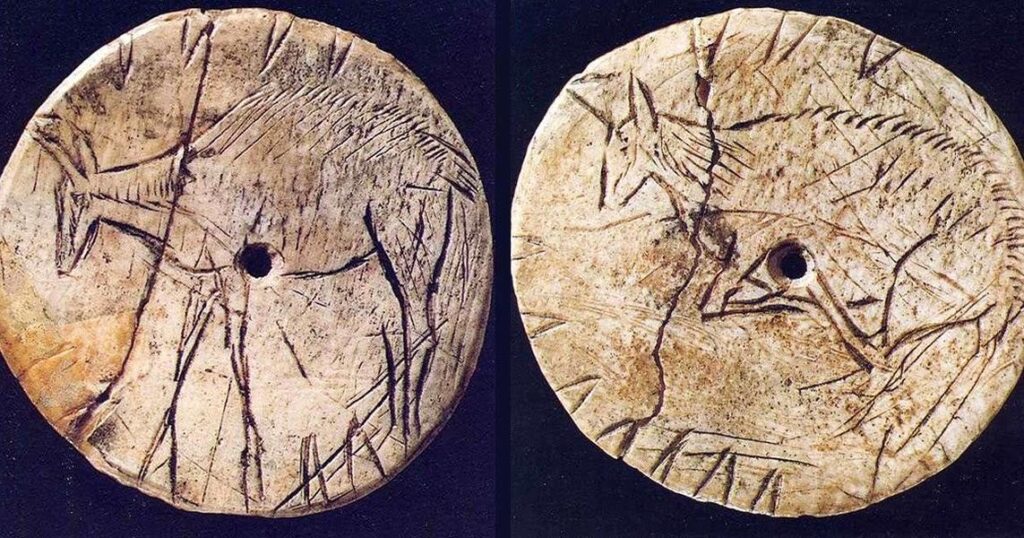
Both sides carry engravings of what researchers believe is a chamois, a goat-like animal found in Europe’s mountains. On one side, the animal stands upright. On the other, it appears to be lying down with its legs folded beneath its body.
The difference becomes more interesting when the images are compared. Both animals occupy similar positions relative to the disc’s central hole, while their proportions and backlines closely match.
Researchers have suggested that these similarities may be intentional, allowing the two images to work together when the disc rotates.
How the Disc Could Have Created Moving Images
In a 2012 study published in Antiquity, archaeologist Marc Azéma and researcher Florent Rivère investigated whether the disc could function as a prehistoric animation device.
They recreated the object using a stag’s shoulder blade and applied manganese and grease to the engravings. They then passed a natural tendon through the central hole and attached it to twisted leather cords.
When the researchers pulled the cords, the disc spun rapidly, alternating between the two images.
The result was remarkable. The animal appeared to drop to the ground and rise again, transforming two stationary drawings into an apparent movement.
The effect resembles a thaumatrope, a 19th-century optical toy consisting of a rotating disc with different images on each side. When the disc spins, the pictures appear to merge or change before the viewer’s eyes.
Azéma and Rivère demonstrated that their reconstruction could produce this effect using materials available to prehistoric people. Whether the original disc served the same purpose remains uncertain.
Ice Age Artists Were Already Experimenting with Movement
The Laugerie-Basse disc is part of a broader pattern in prehistoric art. Azéma and Rivère identified 53 animal figures across 12 French caves in which artists apparently used overlapping body parts to suggest movement.
At Chauvet Cave, for example, an engraved bison has eight legs, which researchers interpret as an attempt to depict successive stages of motion. Other animals appear with multiple heads or repeated outlines, suggesting movement rather than anatomical accuracy.
Prehistoric artists also arranged animals in sequences. At La Vache Cave in the French Pyrenees, engravings on a rib show three successive positions of a running lion.
These examples suggest that Ice Age artists paid close attention to the way animals moved. They developed different techniques to represent running, turning, and other actions, contributing to a prehistoric artistic tradition that also included animal engravings recently documented in a Spanish cave.
The Laugerie-Basse disc raises another possibility: prehistoric people may have taken that interest beyond drawing and used a moving object to animate their images.
An Ancient Animation Device or Something Else?
The disc’s original purpose remains an open question. Archaeologists have traditionally interpreted similar perforated bone objects as buttons or pendants, and no direct evidence establishes that the Laugerie-Basse example was used as an optical toy.
Even the animal’s posture invites different interpretations. Azéma and Rivère suggested that angular marks on its body might represent projectile wounds, potentially showing the animal collapsing after being struck.
Yet the experimental reconstruction demonstrates that the two engravings can produce a convincing visual effect when rotated.
More than 150 years after its discovery, the tiny bone disc continues to raise questions about prehistoric creativity. Whether it was designed to produce moving images or served another purpose, it suggests that Ice Age artists may have explored ways to bring their drawings to life thousands of years before the invention of modern optical toys.
Cover Image: A reconstruction of a prehistoric bone disc from Laugerie-Basse, France, showing how engraved animal figures may have created the illusion of movement when spun. Credit: Florent Rivère / Passé Simple.