
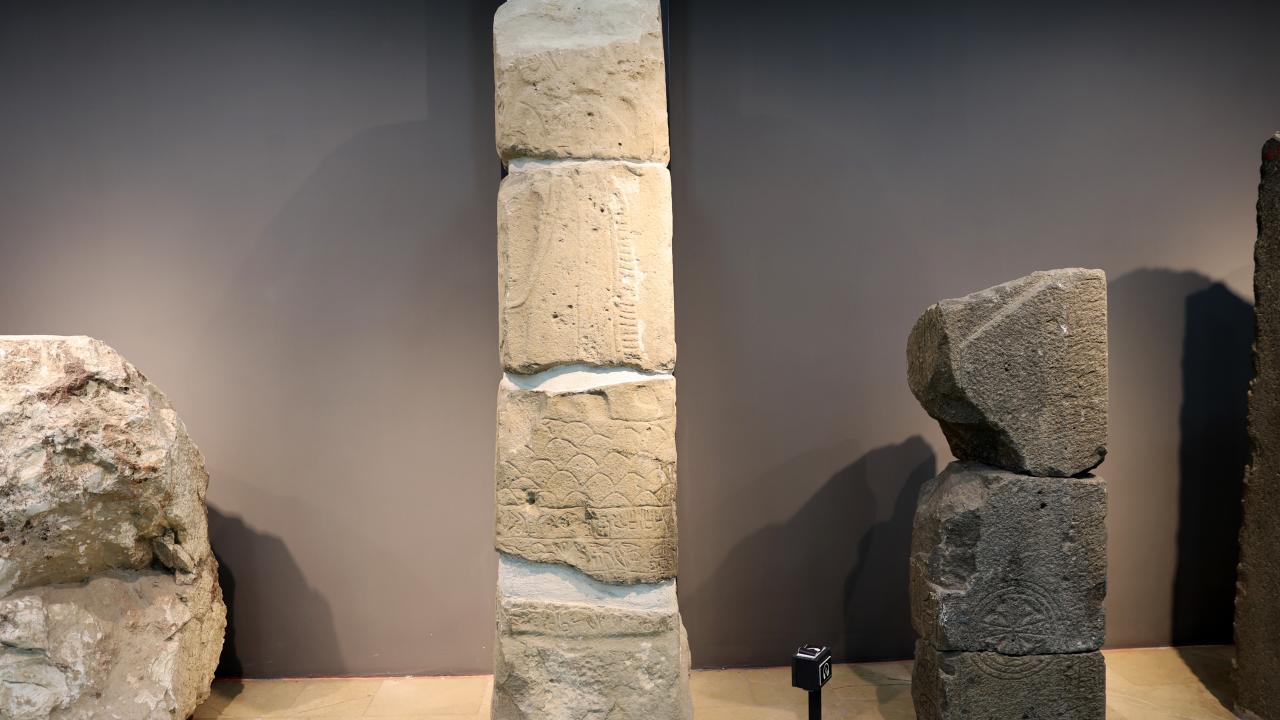
A 3,000-year-old stone monument in Türkiye preserves the history of four generations of a Hittite royal dynasty. Known as the İspekçir Stele, the monument bears Luwian hieroglyphic inscriptions and carved figures depicting members of a royal family that continued to rule after the Hittite Empire collapsed.
Now displayed at the Sivas Archaeology Museum, the roughly two-metre-tall stele also depicts a religious ceremony in which a ruler honours his deified ancestors. The monument dates to around the 11th century BCE, when regional kingdoms were emerging from the ruins of the Hittite Empire.
Four Generations of Hittite Royalty
The stele was discovered in 1907 near İspekçir village, north of the Tohma River in the Darende district of modern Malatya Province.
Professor Bora Uysal, an archaeologist at Sivas Cumhuriyet University, explains that the monument documents a royal family descended from Kuzi-Teshub, who ruled Carchemish in the 12th century BCE.
Carchemish, near the modern Türkiye–Syria border, had been a major political centre under the Hittite Empire. Following the empire’s collapse around 1200 BCE, its ruling family retained influence over territories that included Malatya.
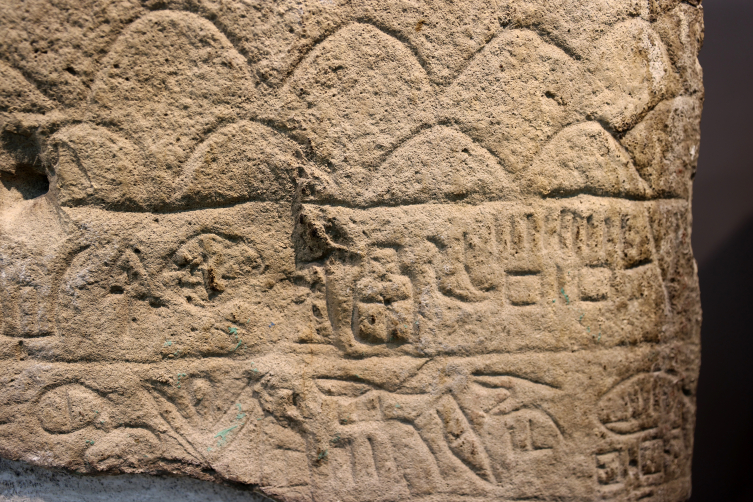
The inscription establishes a line of descent from Kuzi-Teshub through his grandson Arnuwanti I to a later ruler, Arnuwanti II, who commissioned the monument. The two rulers named Arnuwanti were themselves grandfather and grandson.
The carved figures include Arnuwanti I, a female figure interpreted as his wife, and Arnuwanti II. Together with the genealogical inscription, they document a royal line extending across four generations, even though the monument does not portray every generation separately.
A King Pouring Offerings to His Deified Ancestors
The monument also preserves a religious ceremony centred on deceased members of the royal family.
According to Uysal, Hittite royal tradition regarded deceased kings and certain royal family members as divine. On the stele, Arnuwanti I and his wife appear as deified ancestors, while their descendant Arnuwanti II performs a ritual offering before them.
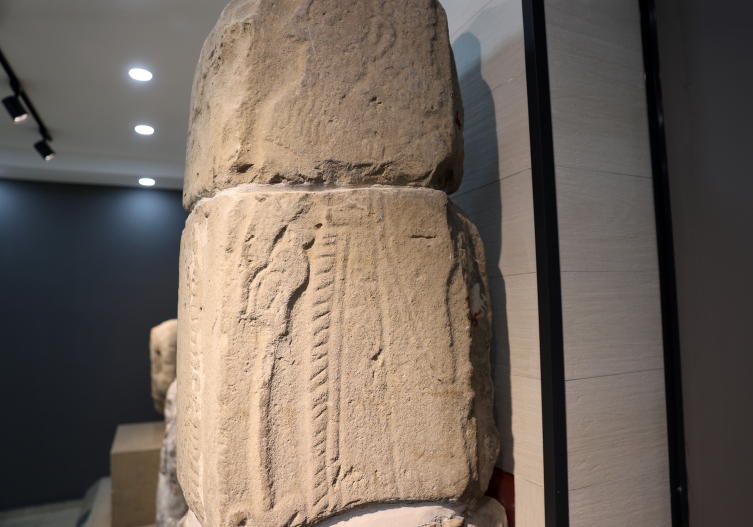
The younger ruler appears standing on a bull, pouring liquid from a vessel. Archaeologists identify this practice as a libation, a ritual offering commonly associated with religious ceremonies throughout the ancient Near East.
The imagery suggests that ancestor worship played an important role in maintaining royal legitimacy. By honouring his deceased relatives, the living ruler connected his authority to the dynasty that had governed the region before him.
The accompanying Luwian inscriptions make the scene particularly informative. They identify the family relationships behind the ceremony, allowing researchers to interpret the figures within a broader political and religious context.
The Hittite Legacy After the Empire’s Collapse
The disappearance of the Hittite Empire’s central government around 1200 BCE did not bring an immediate end to its political and cultural traditions. Across southern Anatolia and northern Syria, regional kingdoms continued to use elements of Hittite royal ideology, religious practices and monumental art.
These states, generally known as the Neo-Hittite kingdoms, developed their own political identities while retaining connections to the earlier imperial world.
Carchemish became one of the most influential centres, and its ruling dynasty maintained important ties with Malatya. Royal monuments and inscriptions helped these rulers establish their ancestry and affirm their authority.
Written evidence remains essential to understanding these political relationships. Elsewhere in Anatolia, discoveries such as the Hittite royal archive containing records associated with a princess and an epidemic have provided further information about the dynasty’s earlier history.
Unlike the cuneiform records of the Hittite imperial period, the İspekçir Stele uses hieroglyphic Luwian, a writing system that remained prominent in several successor kingdoms.
The monument belongs to approximately the early 11th century BCE, placing it among the surviving records of the generations that followed the empire’s collapse.
Today, the stele forms part of the collection at the Sivas Archaeology Museum, administered by Türkiye’s Ministry of Culture and Tourism.
More than three millennia after the events it commemorates, the monument preserves the names, family relationships and religious practices of rulers who continued to claim their place within the Hittite royal tradition.
Cover Image: The approximately 3,000-year-old İspekçir Stele on display at the Sivas Archaeology Museum in Türkiye. Its carvings and Luwian inscriptions document four generations of a Hittite royal dynasty.