
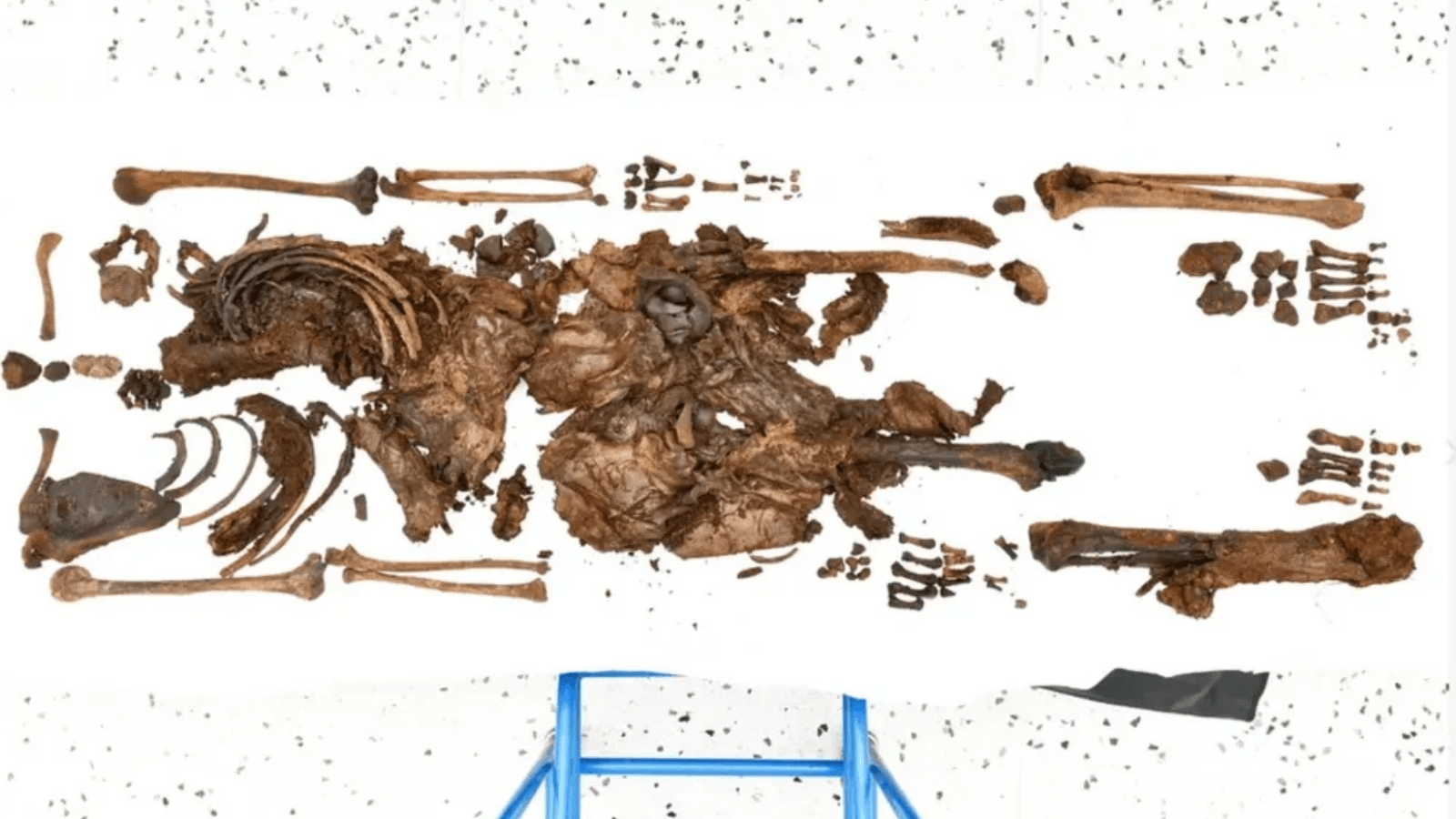
More than 2,000 years ago, someone killed a young woman in what is now Northern Ireland, severing her head with a sharp weapon. Her body remained preserved in a peat bog until workers discovered it in 2023. Now, a coroner has joined archaeologists and forensic specialists to examine the circumstances of her death.
The unusual investigation at Belfast’s Ulster Museum focused on Ballymacombs More Woman, an Iron Age individual who was between 15 and 22 years old when she died. Although researchers have established that she was deliberately decapitated, they still cannot determine who killed her or why.
A 2,000-Year-Old Death Before a Modern Coroner
On November 16, 2026, Northern Ireland coroner Joe McCrisken joined an international team of researchers for a public examination of the ancient remains.
The event was not a formal legal inquest. Instead, the museum organized an educational investigation using the methods and questions familiar to modern coroners. Northern Ireland’s Lady Chief Justice endorsed the initiative as part of the judiciary’s public outreach program.
According to the Ulster Museum’s official announcement, the hearing brought together specialists from universities and museums across Europe. Their investigation examined who the woman was, when and where she died, and how her life ended.
Using advanced imaging techniques and examinations of her preserved remains, researchers pieced together details of the young woman’s health, appearance, and the violent circumstances of her death.
A Young Woman Killed During the Iron Age
Workers cutting peat near Bellaghy, County Londonderry, discovered the remains in October 2023. Police initially investigated the possibility of a recent death before radiocarbon dating established that the body belonged to the Iron Age, between approximately 343 and 1 BCE.
Early assessments suggested that the remains belonged to a teenage boy. Further examination identified a young woman approximately 5 feet 6 inches (1.7 meters) tall.
Professor Eileen Murphy of Queen’s University Belfast examined the bones and identified cut marks on the neck vertebrae. As the university reported in February 2025, the injuries indicated a violent death involving bleeding from the throat followed by decapitation.
The latest investigation supports the conclusion that someone deliberately removed her head, most likely by striking from behind with a bladed weapon. Archaeologists have never recovered her skull.
The findings establish the violent nature of her death, but the motive remains uncertain.
Was Her Death Part of an Iron Age Ritual?
The circumstances of the killing have prompted comparisons with other Iron Age bog bodies discovered across northwestern Europe. A separate Iron Age burial investigation in Scotland also identified unusual treatment of human remains, including evidence suggesting that a woman’s brain may have been removed after death.
Denmark’s Tollund Man and Grauballe Man, along with Ireland’s Clonycavan Man and Old Croghan Man, are among the best-known examples. Several suffered violent deaths that researchers have associated with possible ritual practices.
Ballymacombs More Woman may have belonged to a similar tradition. However, neither the injuries to her neck nor the location of her remains can establish that she was sacrificed.
The distinction is important because archaeologists cannot determine whether her death resulted from a religious ceremony, punishment, or another act of violence. The surviving evidence provides a compelling account of how she died, but not the circumstances that led to her killing.
Ancient Fabric Found Beneath Her Knees
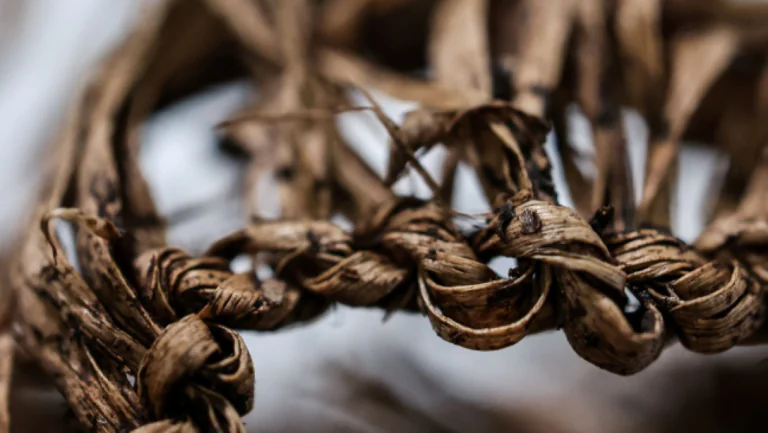
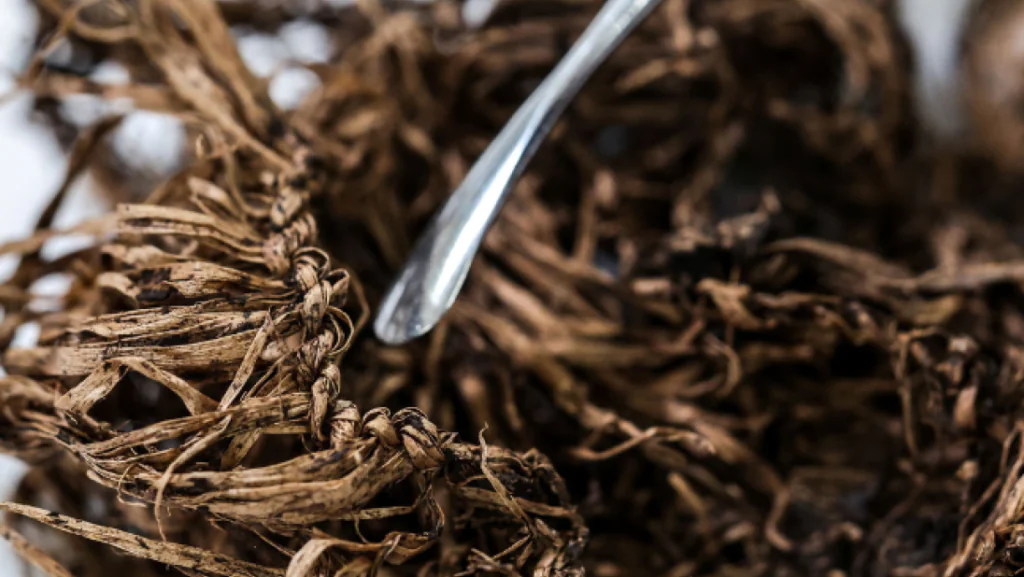
The investigation also examined a fragment of woven plant material recovered beneath the woman’s knees, an object that may provide clues about her everyday life.
University of Glasgow researchers Susanna Harris and Nysa Loudon studied the fragment and identified a technique known as twining, in which plant fibers are twisted and interlaced to create fabric.
Radiocarbon dating placed the material between approximately 363 and 160 BCE, consistent with the period in which the woman lived.
Researchers have suggested that the fabric may have belonged to an item of clothing, an accessory, or another personal possession. Its original purpose remains unknown, but its preservation offers evidence of textile production and craftsmanship during the Iron Age.
National Museums NI plans to incorporate the findings into new interpretation at the Ulster Museum’s Early Peoples gallery. The project will also inform discussions about the ethical treatment of ancient human remains.
More than 2,000 years after her death, researchers know that someone deliberately killed this young woman and removed her head. What they still cannot explain is why she was killed—or what happened to her missing skull.
Cover Image: Remains of Ballymacombs More Woman, a 2,000-year-old Iron Age bog body discovered in Northern Ireland and now reexamined in a new forensic-style investigation. Credit: National Museums NI / Ulster Museum