
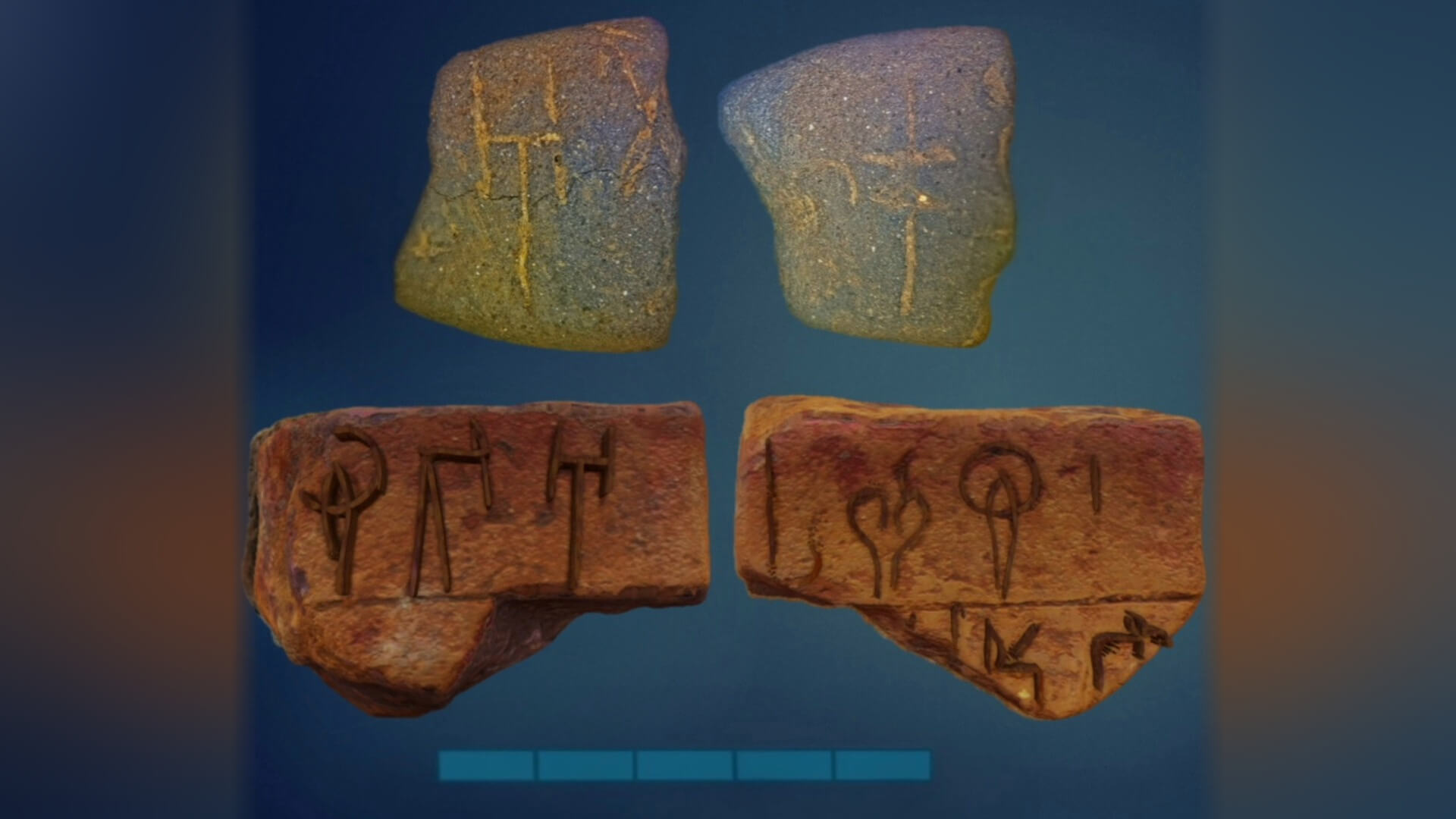
A clay tablet fragment measuring barely 1.3 centimeters in height has provided new evidence of an ancient administrative center in southwestern Greece. Archaeologists discovered the 3,300-year-old object at Iklaina, a Mycenaean settlement whose inhabitants may have governed an independent territory before the powerful Kingdom of Pylos absorbed the community.
The fragment carries Linear B inscriptions on both sides, including surviving syllabic signs and possible numerals. Its discovery adds to evidence that officials at Iklaina maintained written records independently of the administrative system later established at the Palace of Nestor.
Writing on Both Sides of a Tiny Tablet
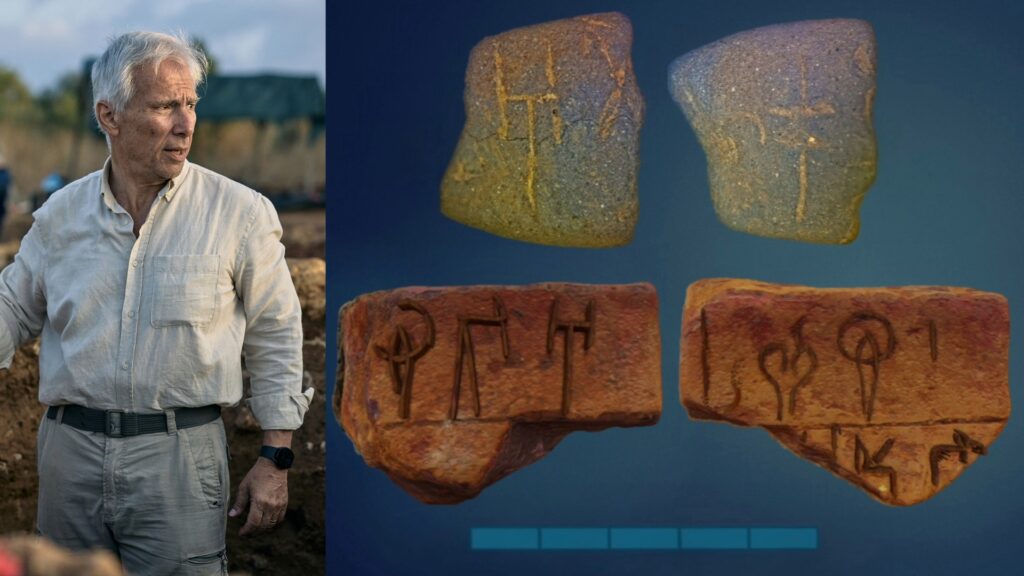
Archaeologists led by Michael Cosmopoulos of the University of Missouri–St. Louis recovered the fragment during the 2025 excavation season. They found it in Room Gamma 3, within a building known as Megaron Gamma.
According to the 2025 excavation report published by Archaeology in Greece Online, the fragment came from a deposit containing pottery, a small piece of gold sheet, a stone spindle whorl, and a nail head. The deposit also covered earlier architectural remains, including five walls that probably belonged to two buildings.
The tablet preserves one syllabic sign on each face, surrounded by additional markings that may represent numbers. Because so little of the original inscription survives, researchers cannot yet determine the document’s precise contents.
Linear B, the earliest known written form of Greek, served primarily administrative purposes in Mycenaean society. Officials used clay tablets to record goods, agricultural production, personnel, and other resources under institutional control.
The new fragment is the second Linear B tablet discovered at Iklaina. Archaeologists found the first in 2010, establishing that the settlement participated in written administration during the Late Bronze Age.
Administrative Records Older Than Those at Pylos
The latest excavation report identifies an important chronological difference between the administrative records at Iklaina and those at Ano Englianos, the location of the Palace of Nestor.
Researchers estimate that Iklaina’s archival evidence predates the surviving records from Ano Englianos by approximately 150 years. This comparison concerns the administrative archives rather than establishing an exact age difference between individual tablets.
The findings are significant because scholars have traditionally associated sophisticated written administration with major Mycenaean palaces. Evidence from Iklaina suggests that recordkeeping also developed at other important regional centers.
Evidence from other Mycenaean centers illustrates the importance of written administration. At Aghios Vasileios near Sparta, archaeologists discovered more than 200 Linear B archival components, documenting the sophisticated recordkeeping practices associated with Bronze Age palace economies.
Excavations have revealed monumental Cyclopean masonry, wall paintings, and substantial infrastructure at the settlement. These features indicate that Iklaina possessed considerable economic resources and organizational capabilities.
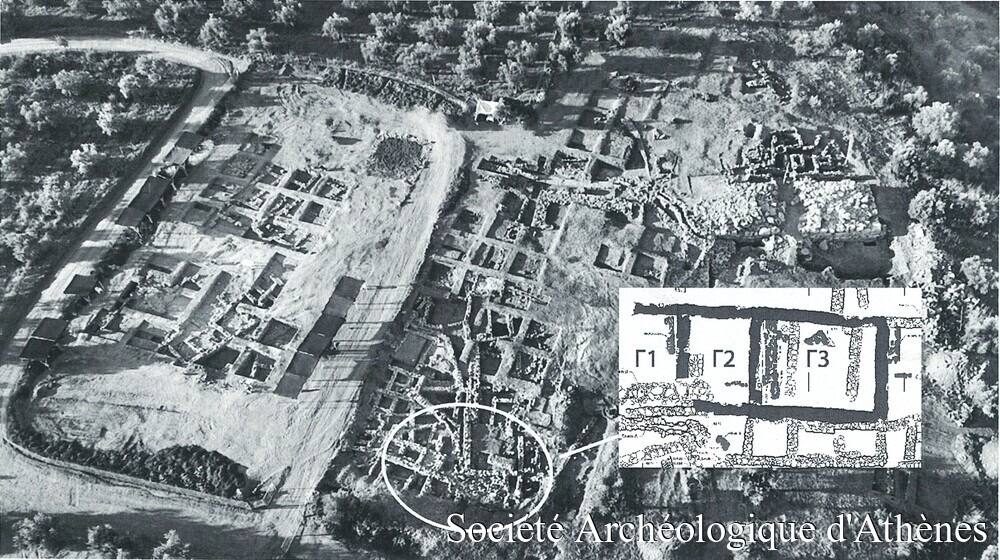
The 2025 investigations also identified two distinct phases of occupation. Earlier buildings stood relatively far apart, while a later phase featured denser construction and additional drainage systems.
A substantial destruction layer separated the two phases. Archaeologists documented burned soil, partially burned pottery, bricks, and animal bones within the deposit, which reached approximately 40 centimeters in thickness.
Preliminary ceramic analysis suggests that this destruction occurred around the same period as damage to other monumental structures at Iklaina. The precise circumstances remain uncertain.
An Independent Center Before the Kingdom of Pylos
The archaeological discoveries have implications for understanding how the Kingdom of Pylos developed during the Late Bronze Age.
Michael Cosmopoulos argues that Iklaina and Ano Englianos initially served as centers of separate political entities. Under this interpretation, the Pylian kingdom emerged through the gradual consolidation of smaller states rather than developing under a single dominant palace from the beginning.
Cosmopoulos outlined this model in a 2019 study published in the American Journal of Archaeology. His research proposed that the two centers followed parallel political trajectories before the Pylian state achieved unification relatively late in the Mycenaean period.
The expanding kingdom may have incorporated Iklaina around the middle of the 13th century BC, bringing its territory and administrative institutions under the authority of Pylos.
In a University of Missouri–St. Louis announcement, Cosmopoulos explained that the newly discovered tablet strengthens the evidence for this process of political consolidation.
However, the fragment does not independently prove that Iklaina was politically autonomous. Its significance lies in documenting local administrative activity alongside architectural and archaeological evidence suggesting that the settlement once held substantial regional importance.
The discovery adds another written record to a growing body of evidence that political authority in Mycenaean Greece may have developed across multiple centers before larger kingdoms brought them under centralized control.
Cover Image: The newly discovered 3,300-year-old Linear B tablet fragment from Iklaina, Greece, showing inscriptions on both sides. Credit: Michael Cosmopoulos.