
A military airfield in Hungary has revealed an unexpected glimpse into life nearly 1,400 years ago. Archaeologists have uncovered nine Avar-period graves containing Byzantine cosmetic tools, elaborate silver earrings, decorated bone boxes, and the weapons of ancient warriors. The discoveries offer rare evidence of personal grooming, burial customs, and cultural connections in the early medieval Carpathian Basin.
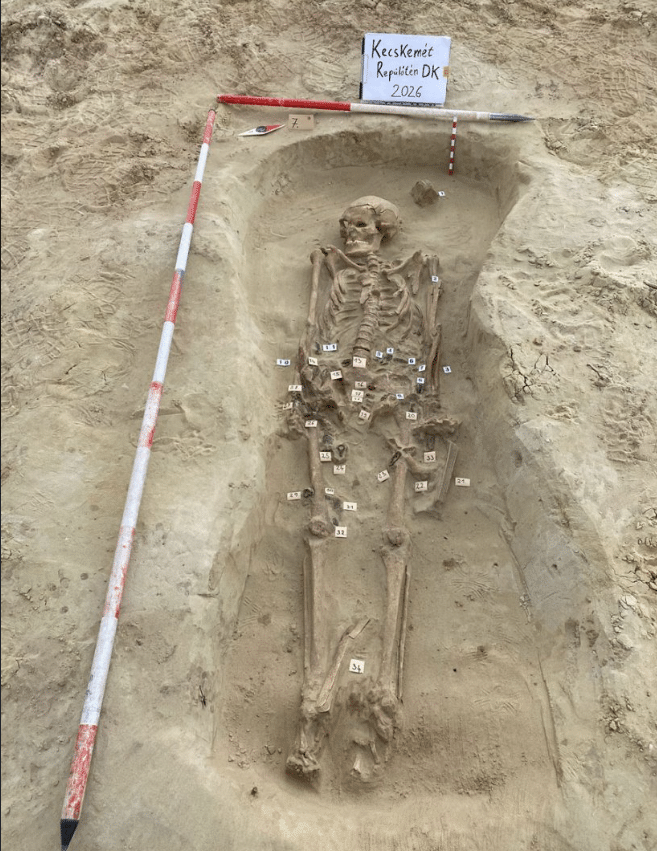
The graves were discovered at Kecskemét Military Airfield during excavations in early summer 2026, led by archaeologist András Kristóf Fazekas of the Katona József Museum. Dating to the first half of the 7th century AD, the burials belonged to five women and two men, while the sex of two individuals could not be determined because of extensive disturbance. All but one of those buried were adults.
Byzantine Cosmetic Tools and Mysterious Bone Boxes
Among the most intriguing finds are bronze cosmetic instruments recovered from a woman’s grave. Archaeologists identified a strainer spoon and spatulas of Byzantine origin, which may have been used to sift, mix, and prepare creams or powders.
The discovery reflects the wider connections between the Avar Khaganate and the Byzantine Empire. From the late 6th century onward, their relationship involved warfare, diplomatic negotiations, and exchanges of valuable goods. As historian Georgios Kardaras documents in Byzantium and the Avars, 6th–9th Century AD, Byzantine objects reached Avar communities through various channels. Although the precise origins of the Kecskemét instruments remain uncertain, they provide further evidence of the circulation of Byzantine material culture beyond the empire’s frontiers.
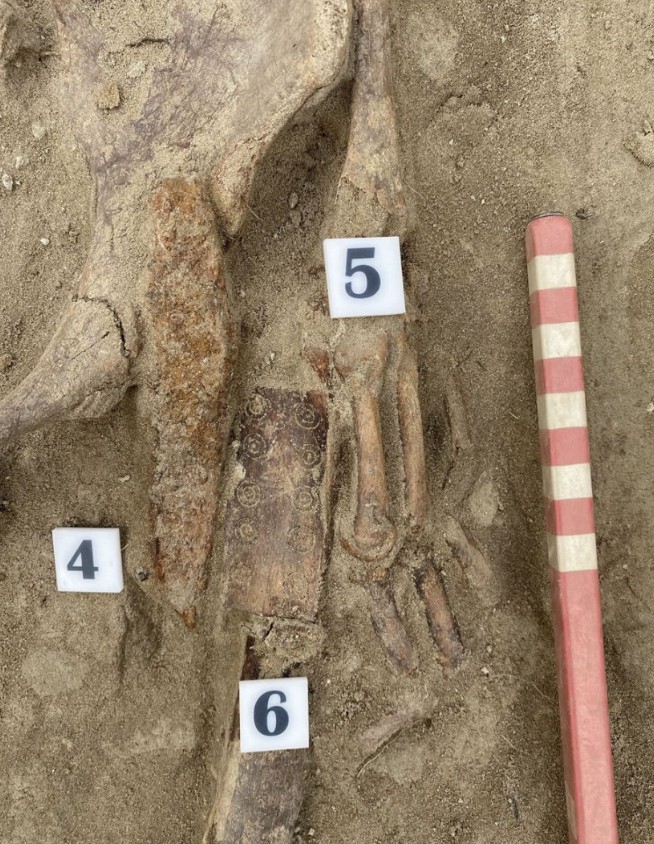
Two other women’s graves contained small boxes made from decorated bone plates. The surviving panels feature circle-and-dot patterns characteristic of similar objects found in the region between the Danube and Tisza rivers. Their purpose remains uncertain, although the excavators suggest that they may have been used to store cosmetics.
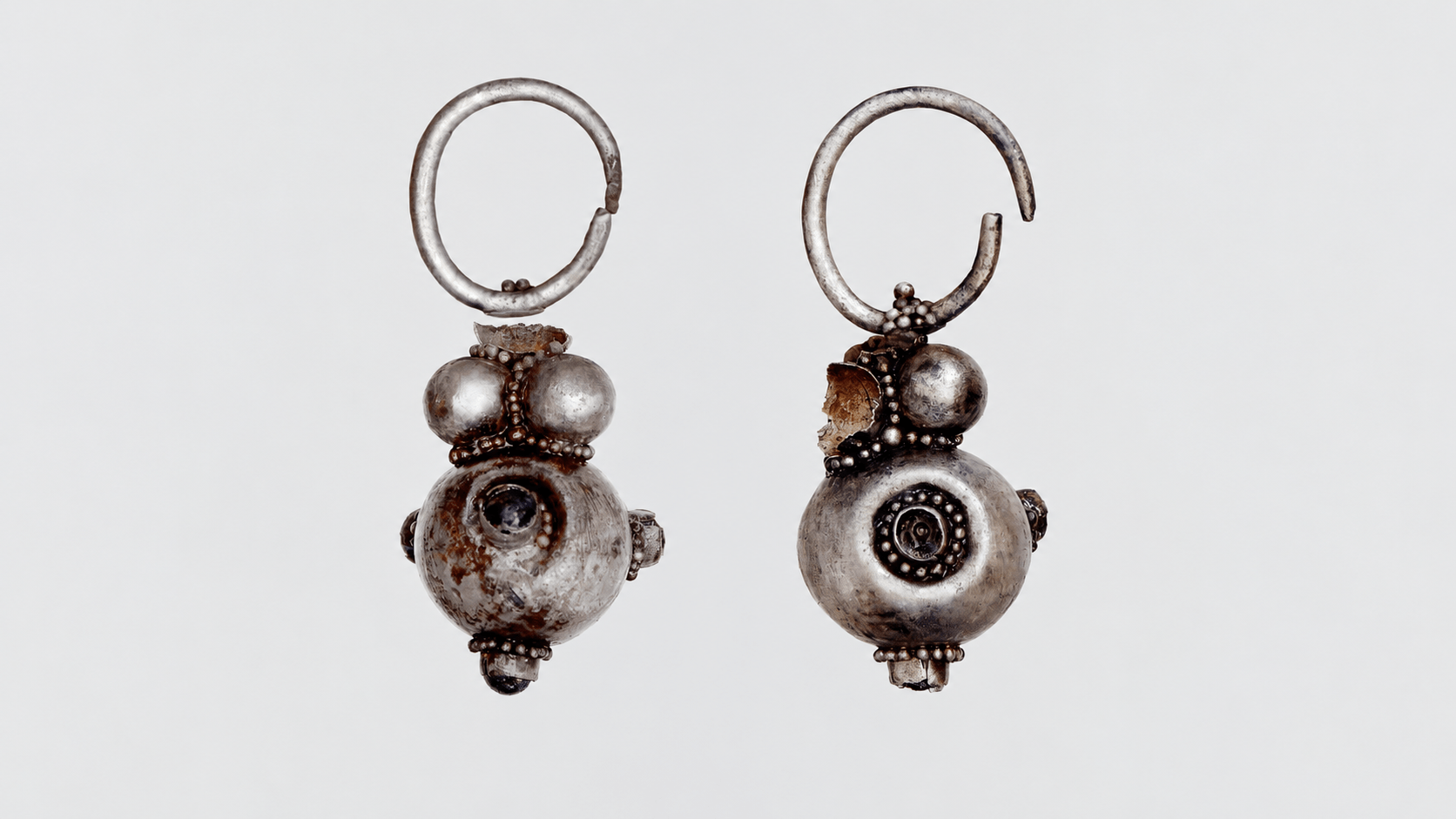
Personal ornaments were equally revealing. Five graves contained pairs of earrings, including one male burial. Three pairs were silver and two bronze, with the most elaborate example featuring blue glass inlays and finely worked spherical ornaments.
Archaeologists also found colorful glass-paste beads in two female burials. In one grave, the beads lay around the neck, suggesting a necklace, while another group was concentrated near the pelvis. The latter arrangement raises the possibility that the beads had been kept in a small pouch that has since decomposed.
Every woman’s grave contained a clay spindle whorl, a tool used for spinning thread. Together with the jewelry and cosmetic implements, these objects provide a varied picture of the possessions selected to accompany women into the afterlife.
Weapons and Equipment of Avar Warriors
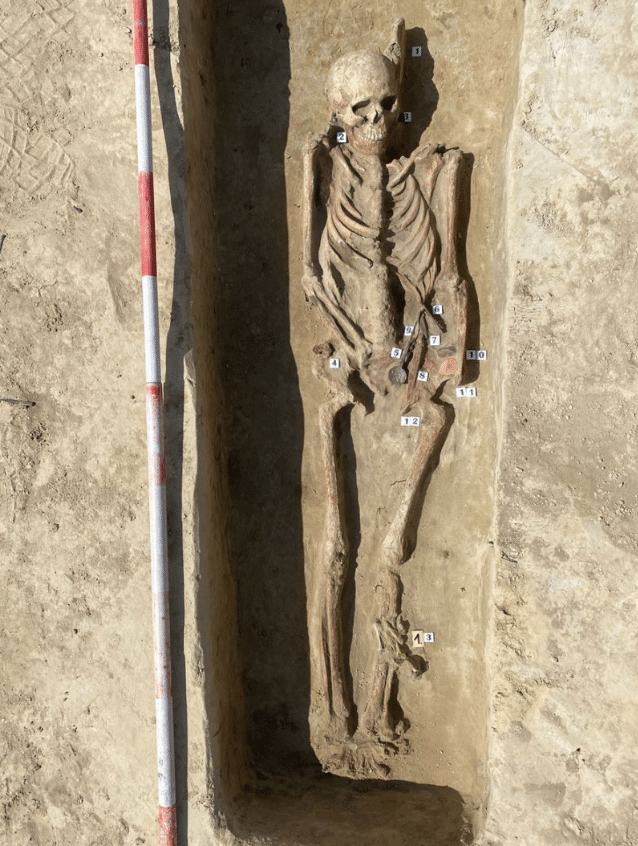
The two male graves contained weapons and decorated belt fittings associated with the military traditions of the early Avar period. The richest assemblage came from Grave 7, where archaeologists discovered bone reinforcements from a composite reflex bow, two iron three-bladed arrowheads, and bronze fittings belonging to a quiver.
Iron cutting and thrusting weapons were also recovered from the same burial. Grave 8 contained another three-bladed arrowhead and two knives, while both male graves yielded belt ornaments made from bronze and silver.
The Avars established a powerful political presence in the Carpathian Basin during the late 6th century, creating a khaganate that remained influential for more than two centuries. Their military strength depended heavily on mounted warfare, and composite bows were among the characteristic weapons associated with steppe fighting traditions.
Food Offerings and a Damaged Cemetery
The excavations also revealed evidence of funerary rituals. Six graves contained animal remains placed beside the deceased, including articulated body parts and individual bones. Bird bones appeared in all five female burials, while one male grave contained the remains of a mammal.
Researchers interpret these deposits as possible food offerings linked to Avar burial beliefs. The discoveries add to archaeological evidence of funerary practices whose religious meanings are still not fully understood.
The cemetery had already suffered substantial damage long before archaeologists arrived. During the construction of the military airfield between 1935 and 1937, workers leveled the surrounding landscape, probably destroying additional graves. The surviving burials were consequently found at unusually shallow depths.
The finds have been transferred to the Katona József Museum for further scientific examination and chronological study. Although only nine graves survived, their contents preserve traces of a community whose possessions reflected both local traditions and connections with the wider early medieval world.
Cover Image: A decorated bone box with circle-and-dot patterns discovered in an early Avar woman’s grave at Kecskemét Military Airfield. Its original function remains uncertain, although it may have held cosmetics. Credit: Katona József Museum.