
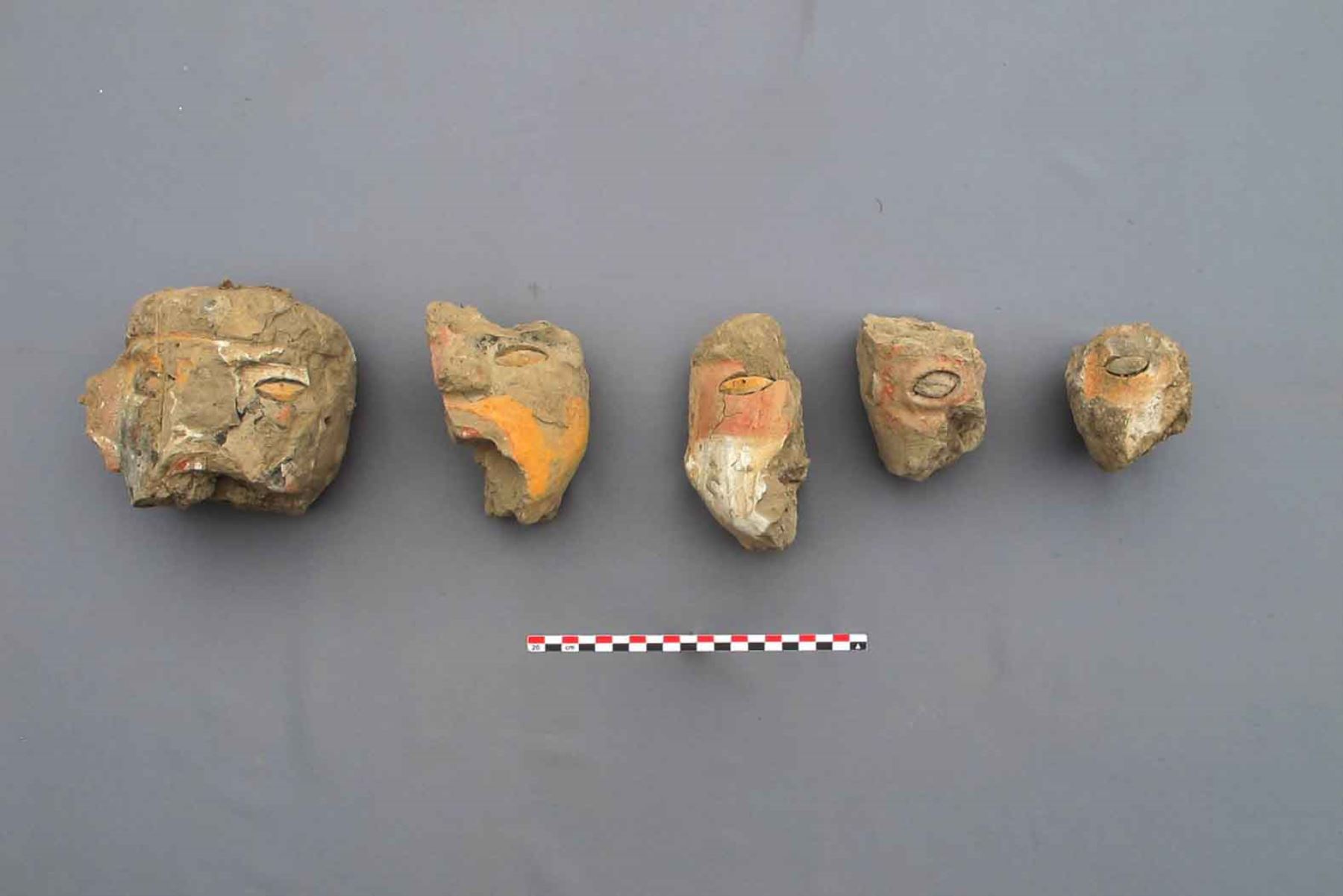
Archaeologists in northern Peru have uncovered ten mysterious clay faces with feline features, possibly representing ancient deities worshipped by the Moche civilization. Decorated with yellow, red, and black paint, the unusual objects emerged from an early construction layer at Huaca Santa Ana, a ceremonial site in the Chicama Valley.
The discovery is part of a wider investigation into the earliest phases of Moche culture, which flourished along Peru’s northern coast between approximately the first and eighth centuries AD. Researchers also recovered plant remains associated with blood rituals and ceramic vessels depicting ancient food preparation, including guinea pigs roasted on skewers.
Ten Painted Faces That May Have Represented Moche Gods
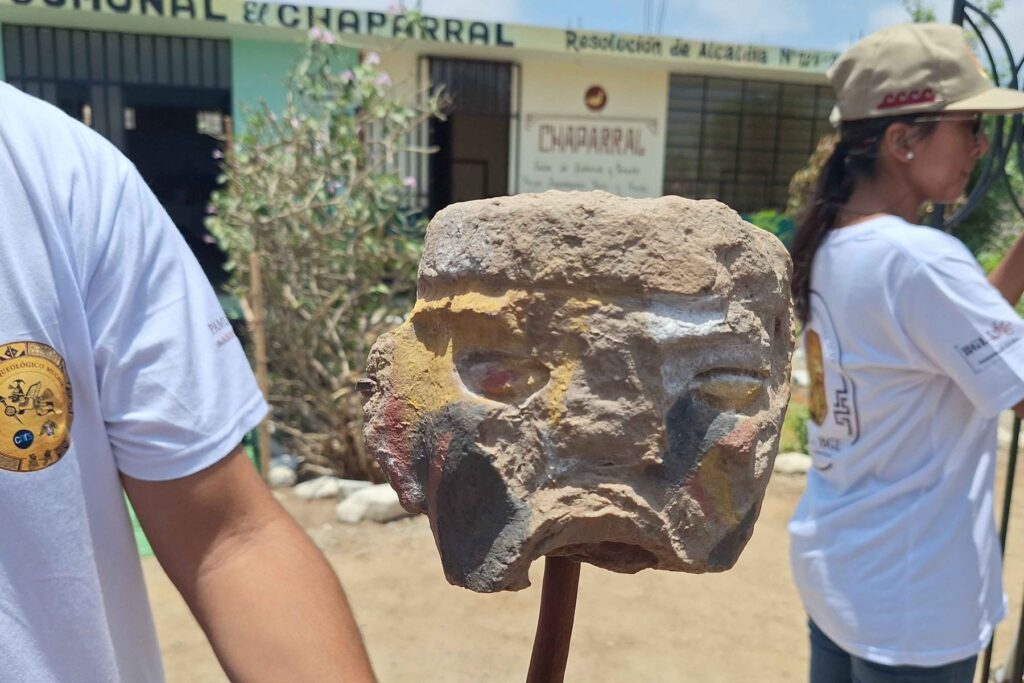
The clay faces were discovered inside a ramp at Huaca Santa Ana, near the village of El Chaparral in Peru’s La Libertad region. Each has distinct facial characteristics, including differences in the eyes, noses, and ear ornaments, while feline features appear alongside human traits.
Small holes in the objects suggest they may once have been mounted on wooden supports and displayed in niches. However, archaeologists recovered them from early construction fill, leaving their original arrangement uncertain.
Belkys Gutiérrez León, director of the Muchik-BGL Archaeological Program, told Peru’s Andina news agency that the figures may have represented deities worshipped by the site’s inhabitants. She emphasized that the objects are three-dimensional sculptures rather than the raised reliefs commonly found in ancient ceremonial architecture.
According to Gutiérrez León, researchers have not previously documented a comparable collection of painted clay faces at Moche sites. She pointed to the sculpted heads at Huaca Los Reyes, part of the older Caballo Muerto archaeological complex, as a possible comparison, although those examples differ in their artistic form.
A Plant Associated With Blood Sacrifice
The excavations also yielded preserved specimens identified as ulluchu, a fruit that appears in Moche imagery associated with ritual ceremonies and sacrifice. Its discovery is particularly significant because physical examples previously reported from Huaca Dos Cabezas and Sipán are no longer available for examination, according to Gutiérrez León.
The plant has attracted attention because of a proposed connection to blood rituals. Gutiérrez León suggested that its properties may have prevented collected blood from coagulating, allowing it to remain liquid during ceremonies.
However, the newly recovered specimens have not yet undergone the necessary chemical testing to establish whether they possess anticoagulant properties. Researchers plan to conduct specialized analyses in France, subject to authorization from Peru’s Ministry of Culture, to investigate their composition, botanical identity, and geographical origin.
The results could help clarify the role of ulluchu in Moche ceremonial practices and determine whether its traditional association with blood sacrifice has a chemical basis.
Ancient Pottery Depicts Guinea Pigs on Skewers
Another unusual discovery provides a glimpse into food preparation roughly 1,500 years ago. Archaeologists recovered two ceramic objects depicting food, including ears of maize and guinea pigs pierced with wooden sticks.
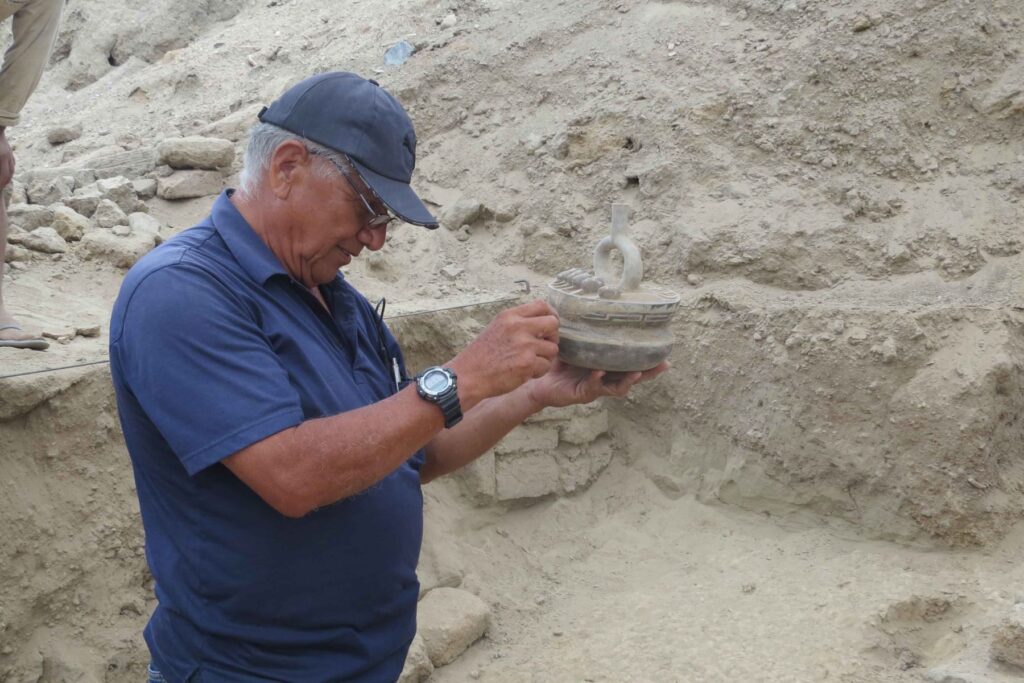
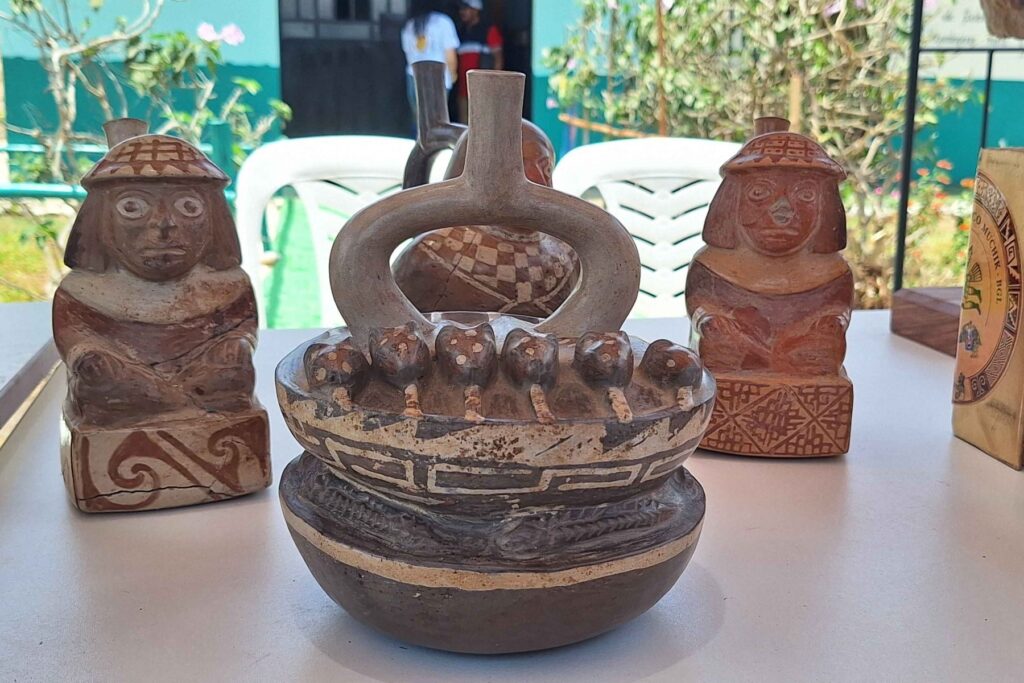
One vessel shows guinea pigs arranged on skewers over a hearth, suggesting that Moche communities were familiar with a cooking method still recognizable in Andean cuisine. Gutiérrez León described the representation as especially unusual and noted that similar preparations survive in neighboring Ecuador.
Guinea pigs were an important food source in ancient Andean societies and remain part of regional culinary traditions today. Although the ceramic vessel depicts food preparation, its precise ceremonial significance has yet to be established.
New Evidence of the Earliest Moche Communities
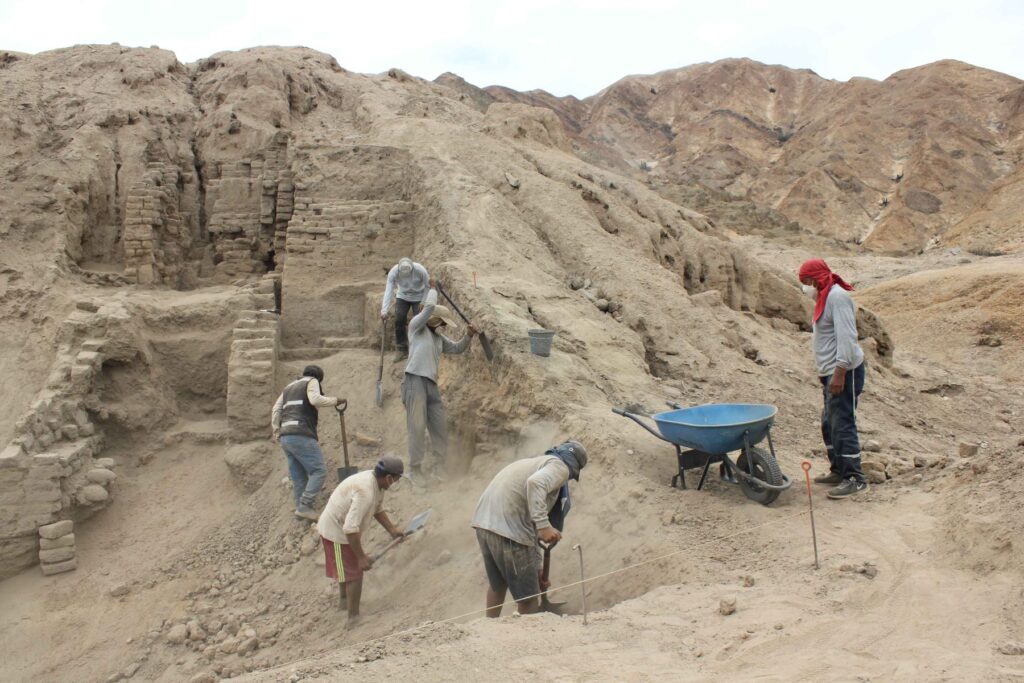
Beyond the individual objects, Huaca Santa Ana offers valuable evidence for understanding the emergence of Moche culture in the Chicama Valley. Excavations in 2018 and 2019 documented monumental architecture, successive construction phases, and domestic and funerary contexts, while the 2026 season expanded investigations to Huaca Garrapón and Licapa II.
Archaeologist Martín Serquen Aguilar explained that Santa Ana and Garrapón contain evidence associated with early Moche occupation, whereas Licapa II represents later phases. At Santa Ana, different forms of adobe construction reveal changes between earlier cultural traditions and Moche-period architecture, supporting the investigation of cultural continuity in the region.
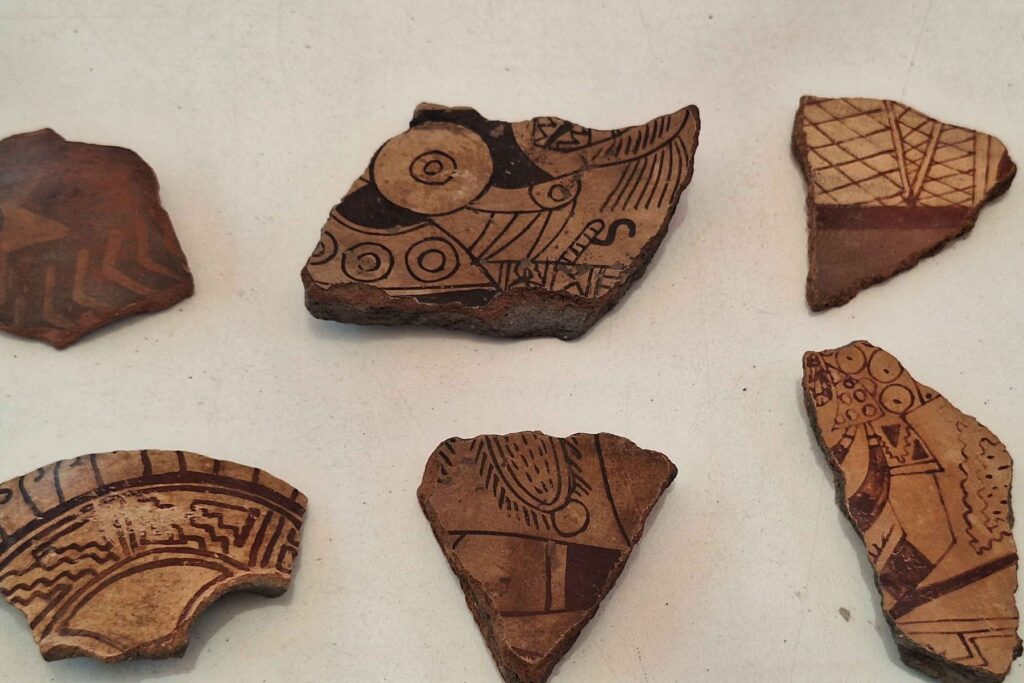
Researchers also identified architectural erosion caused by heavy rainfall. Gutiérrez León suggested that an intense El Niño event may have contributed to the site’s abandonment, although this interpretation requires further investigation.
The research program, which began in the Chicama Valley in 1995, aims to reconstruct the region’s architectural and cultural development. For the team, the painted faces are particularly important because they may preserve an unfamiliar form of religious imagery from the earliest Moche communities in the valley.
Cover Image: Five painted clay face fragments recovered at Huaca Santa Ana in northern Peru. Researchers believe these unusual sculptures may represent deities worshipped by early Moche communities. Photo: ANDINA / Luis Puell.