
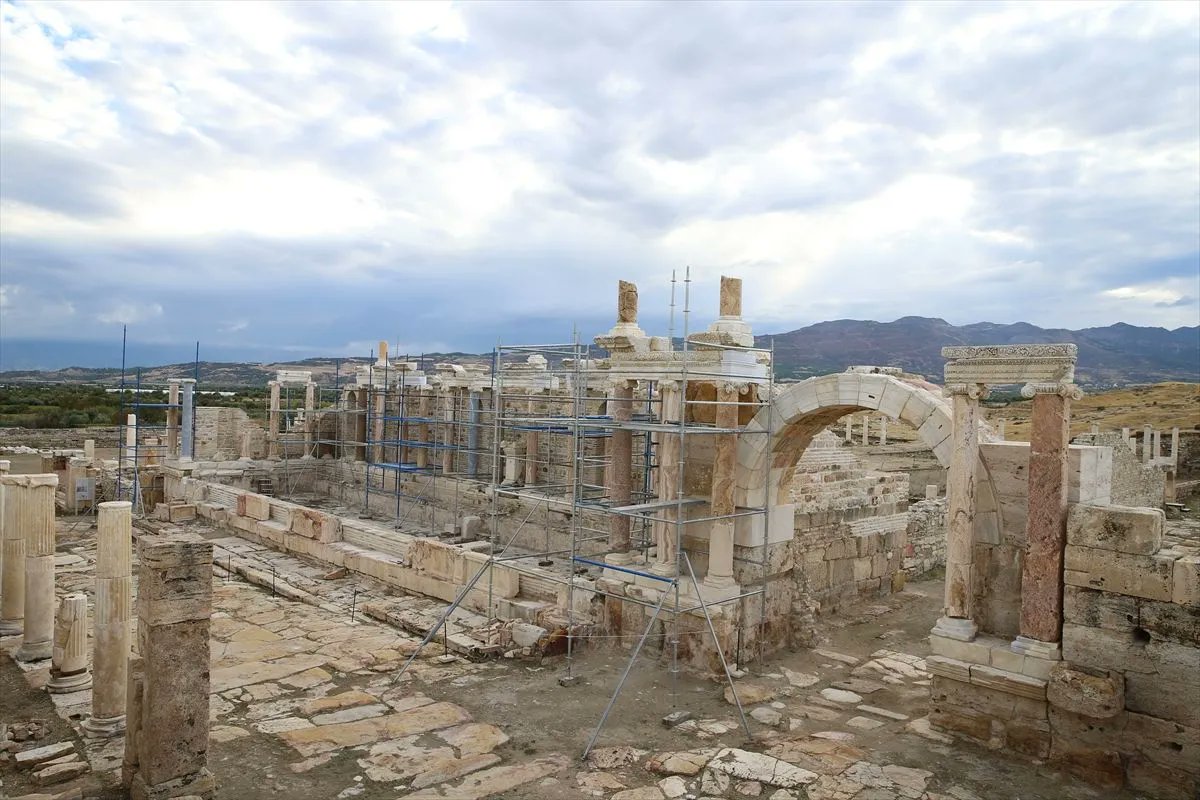
A monumental Roman fountain in the ancient city of Tripolis, western Türkiye, is gradually taking shape again as archaeologists work to restore its three-story façade using 400 surviving stone blocks. Built nearly 1,800 years ago, the structure once stood approximately 15 meters high and underwent several major transformations before falling into ruin.
The restoration, led by Professor Bahadır Duman of Pamukkale University, is expected to be completed by the end of 2026. Beyond rebuilding the monument, the project is helping archaeologists reconstruct its complex architectural history, including alterations made during the Roman and Byzantine periods.
Reconstructing One of Tripolis’ Largest Roman Monuments
The fountain, known as a nymphaeum, was originally built in the early second century AD. Measuring approximately 32 meters across its façade, the structure featured three architectural levels decorated with Ionic, Corinthian, and Composite elements. A large basin collected water beneath the elaborate stonework.
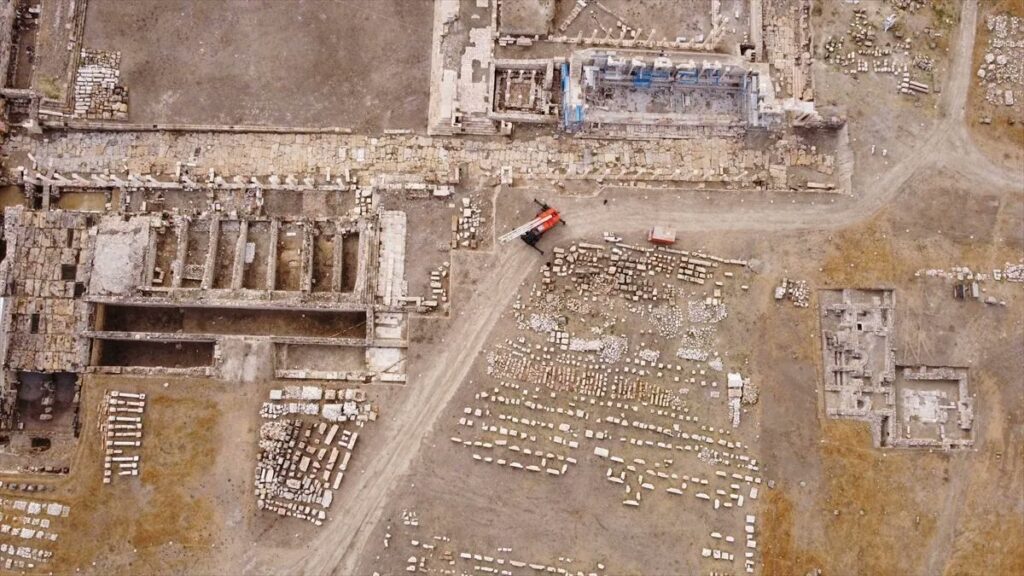
Excavations conducted between 2016 and 2019 uncovered approximately 900 architectural blocks associated with the monument. Restoration began in 2020, with specialists studying the surviving stones to determine their original arrangement and identify modifications made during later construction phases.
The international team includes two Italian archaeologists working alongside Turkish specialists. Researchers have completed the restoration plan for the first level and are now concentrating on 400 blocks associated with the second and third stories.
Italian archaeologist Tommaso Ismaelli, from Italy’s National Research Council, told Anadolu Agency that the project combines different scientific approaches and technologies. The work aims to reconstruct the fountain while improving researchers’ understanding of its architectural development.
Marble from Anatolia and Granite from Egypt
The fountain’s construction required stone from several regions of the ancient Mediterranean. Builders combined locally quarried, multicolored banded travertine with marble and granite transported from more distant sources, according to Pamukkale University’s excavation records.
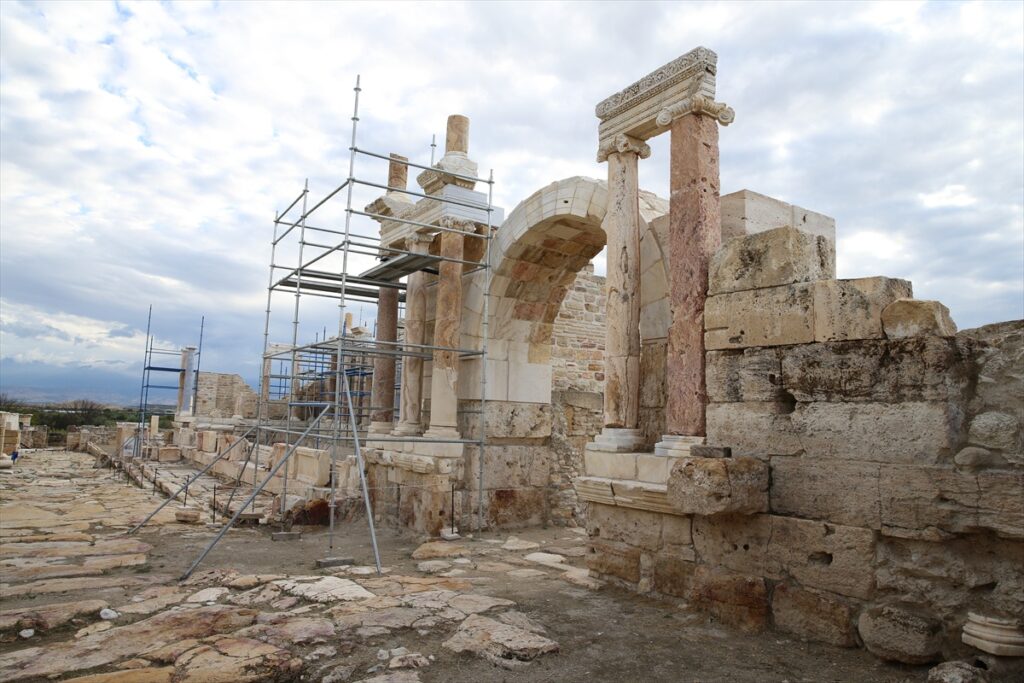
Some materials came from Dokimeion near modern Afyon, Denizli, Çanakkale, and Marmara Island. Others originated from Aswan in Egypt and the Larisa region of Greece, indicating the extensive network of stone suppliers involved in the monument’s construction.
The combination of different stone types contributed to the fountain’s elaborate appearance. Its decorated columns, carved capitals, and monumental water basin reflected the investment Roman cities made in prominent public buildings.
Ancient Repairs Complicate Modern Reconstruction
The fountain had already undergone substantial changes long before modern archaeologists began restoring it. Researchers have identified alterations dating to the Severan period, between the late second and early third centuries AD, when builders modified elements of the original façade.
A more extensive reconstruction followed during the fifth century AD. Builders reused architectural blocks in different positions, significantly changing the monument’s appearance and leaving behind a mixture of elements from separate construction phases.
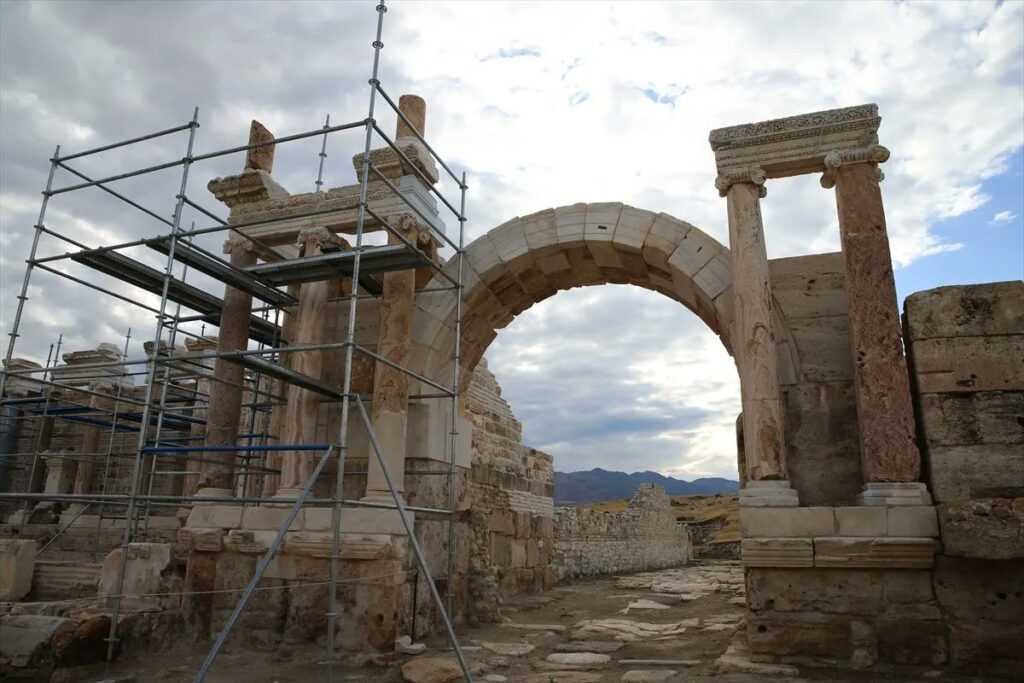
These alterations create a challenge for the current restoration. Archaeologists must determine which blocks belonged to the original second-century structure and which were repositioned during later repairs, rather than simply rebuilding the monument according to its final ancient arrangement.
The project may also contribute to plans for an open-air museum at Tripolis. Ismaelli said the proposed exhibition would present examples of Roman and Byzantine architecture, allowing visitors to examine the city’s surviving architectural remains.
Once the restoration is completed, visitors will be able to see the fountain’s monumental façade on a scale that has been lost for centuries. The surviving stone blocks will also preserve evidence of the successive rebuilding campaigns that shaped the structure throughout antiquity.
Cover Image: The monumental Roman fountain at ancient Tripolis in Denizli, Türkiye, where restoration work continues on the approximately 1,800-year-old structure. Credit: AA.