
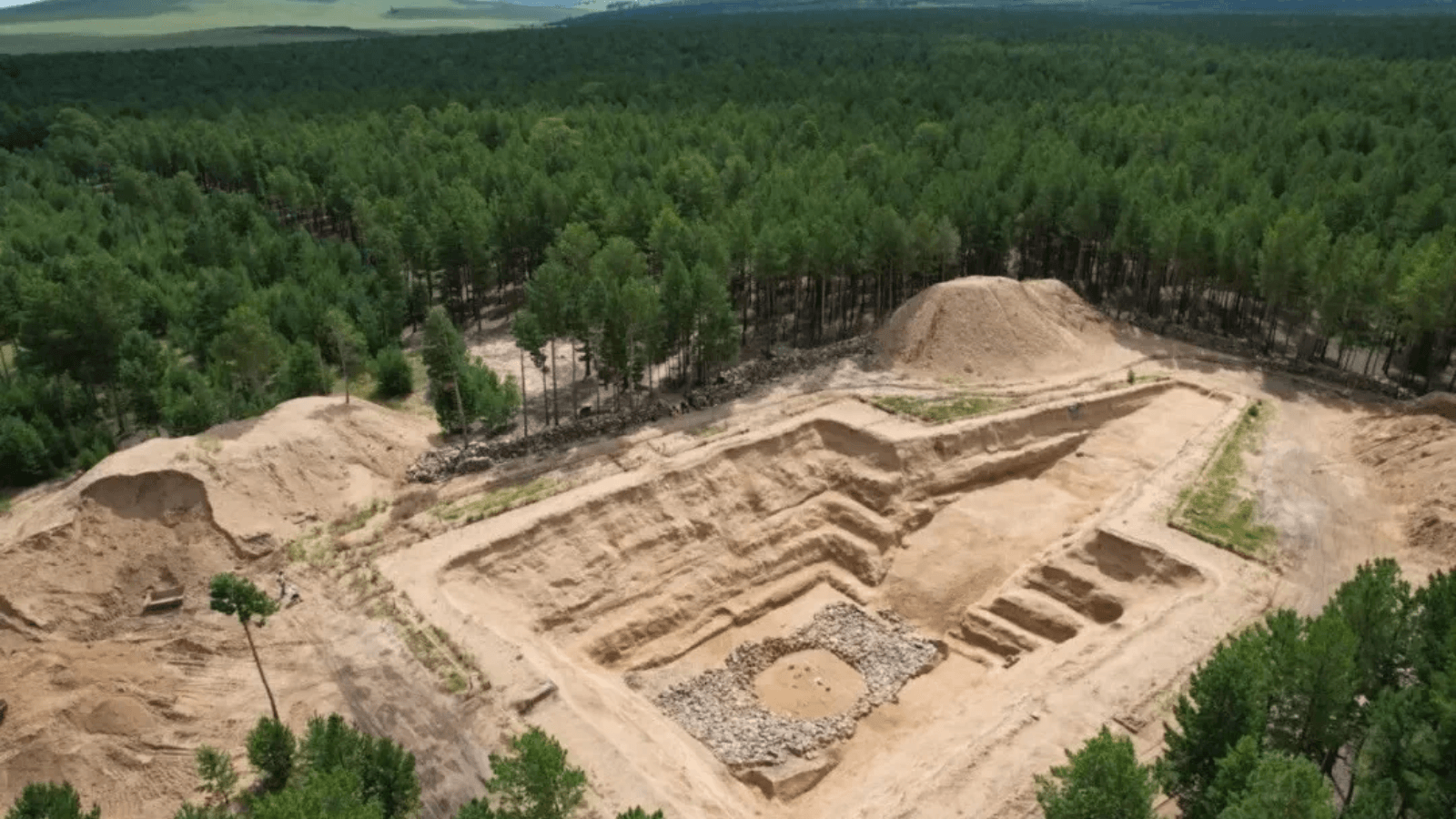
A monumental 2,000-year-old Hun tomb in Mongolia has yielded 413 artifacts, including a glass vessel possibly made in the Roman Empire, jade objects inspired by Chinese burial traditions, and elaborate silver ornaments resembling those found on the Korean Peninsula. The discoveries show how the aristocracy of the ancient steppe empire incorporated objects and artistic traditions from distant cultures.
Archaeologists from South Korea and Mongolia have completed the excavation of Tomb 160 at the Duurlig Nars cemetery in eastern Mongolia’s Khentii Province. According to the National Museum of Korea, the burial is the largest Xiongnu elite tomb excavated in Mongolia to date.
The Xiongnu, often referred to as the Huns in regional historical accounts, established a powerful nomadic empire centered on the Mongolian steppe. Their political influence extended across much of eastern Eurasia, bringing them into contact with Han China and other neighboring societies.
Dating to the late first or second century AD, the newly excavated tomb belongs to a period when Xiongnu political power was declining. Yet the remarkable collection of objects found inside suggests that its elite continued to participate in extensive networks of cultural exchange.
A Roman Connection Thousands of Kilometers Away
One of the most intriguing discoveries is a transparent glass vessel with a handle. Researchers believe it may have been manufactured in a region controlled by the Roman Empire, thousands of kilometers west of Mongolia.
If confirmed, the vessel would provide further evidence of how luxury goods circulated across Eurasia long before the development of modern trade networks.
However, its presence does not establish direct contact between the Xiongnu and the Romans. Valuable objects frequently passed through multiple communities, changing hands through trade, diplomatic exchanges, or gift-giving.
The vessel’s precise origin remains uncertain. Researchers plan to examine its chemical composition to establish where it was manufactured.
The same burial also contained objects displaying striking similarities to artifacts from Han China and the Korean Peninsula, suggesting that the Xiongnu elite had access to material traditions from several directions.
Chinese Jade and Unusual Silver Ornaments
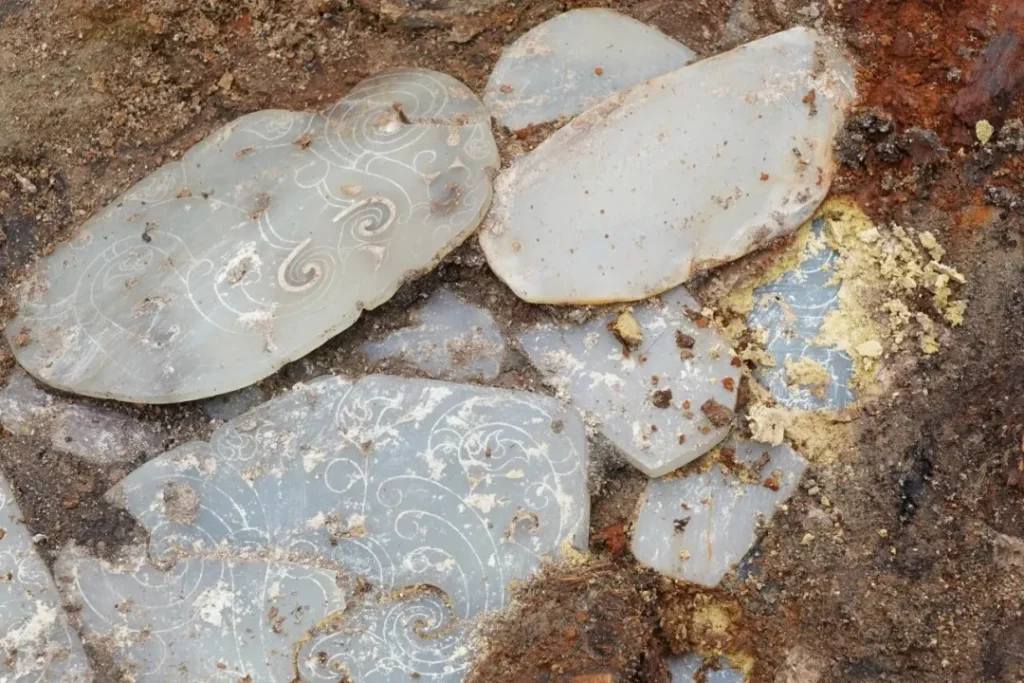
At the bottom of the coffin, archaeologists recovered 15 jade objects inspired by the bi discs used in Han Chinese funerary rituals. Traditionally circular, these ceremonial objects played an important role in elite burial practices.
The examples from Duurlig Nars, however, differ from their Chinese counterparts. Their irregular shapes and finely engraved surfaces suggest that Xiongnu craftspeople adapted foreign funerary traditions rather than simply reproducing them.
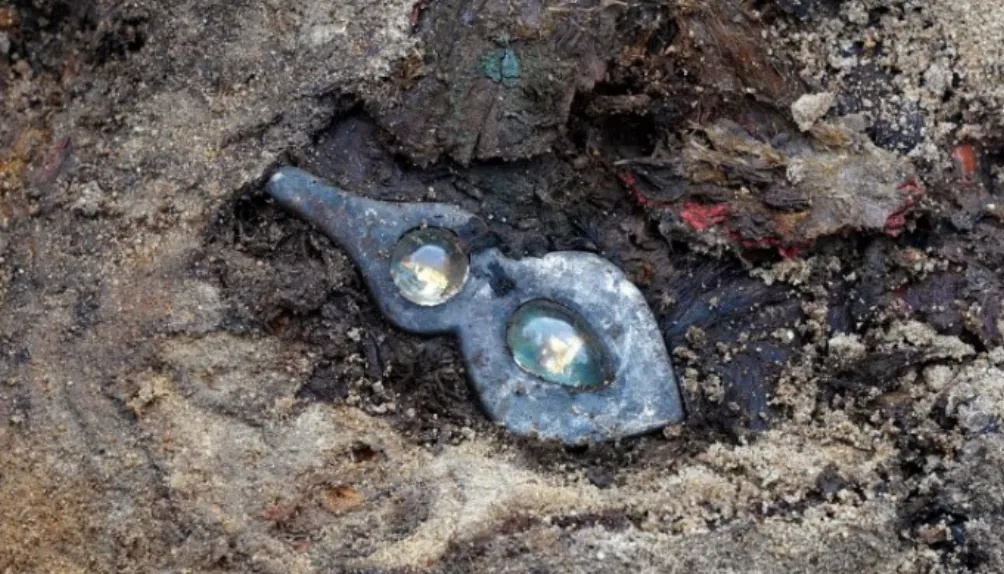
The silver horse ornaments discovered nearby provide another example of this cultural exchange.
Made from thin, hammered silver sheets, several ornaments have a distinctive gourd-like shape resembling decorations recovered from Lelang-period tombs near present-day Pyongyang, on the Korean Peninsula.
Some pieces display an especially elaborate decorative technique. Craftspeople placed gold foil and red or blue materials beneath transparent crystals, allowing the underlying colors to shimmer through the surface.
According to the excavation team, this form of decoration had not previously been identified in Xiongnu burials.
Together, these objects suggest that the steppe aristocracy did more than collect prestigious foreign goods. They also incorporated outside artistic techniques and ceremonial practices into their own material culture.
A Monumental Burial with a Surprisingly Small Chamber
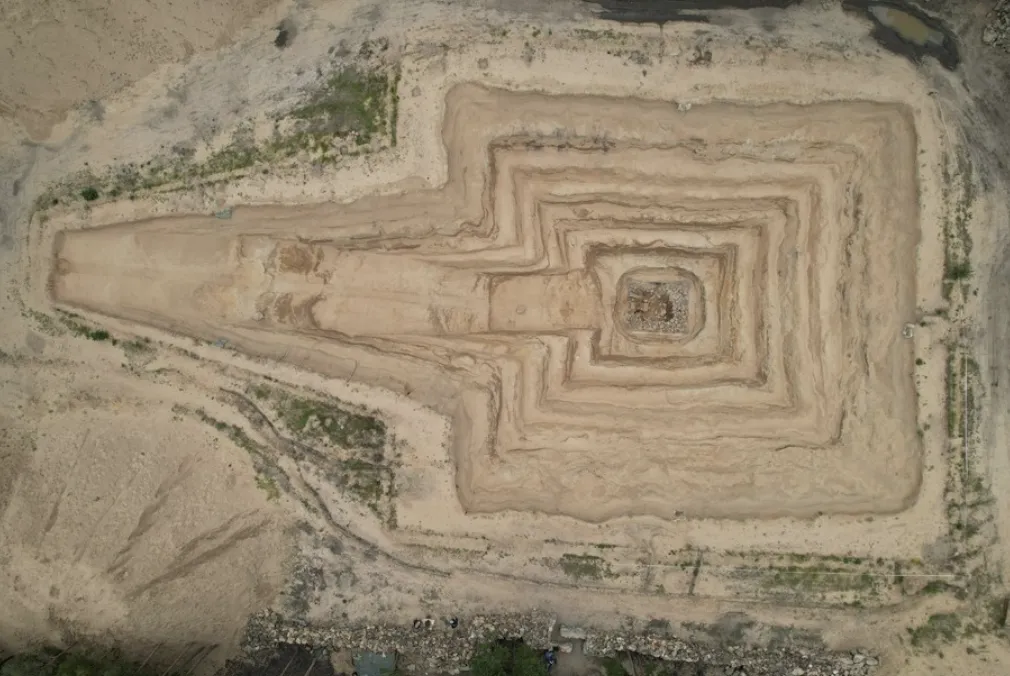
The size of Tomb 160 reflects the extraordinary resources devoted to burying its occupant.
Including its long southern entrance passage, the monument extends approximately 73 meters. Its builders excavated a stepped pit, constructed a double wooden burial enclosure around the coffin, and filled the structure with nine successive layers of stone.
A lacquered carriage placed above the central burial chamber further emphasizes the status of the deceased.
Despite this monumental construction, the central chamber proved unexpectedly small and shallow compared with those of other major Xiongnu tombs.
The burial reaches a depth of 14.5 meters, whereas comparable elite tombs in central Mongolia can extend as deep as 22 meters. Archaeologists also identified similar architectural characteristics in subsidiary burials investigated at Duurlig Nars in 2019.
Researchers believe these differences may reflect changes in Xiongnu society during a period of political decline. However, the relationship between burial architecture and shifting social structures remains uncertain.
Ancient DNA May Help Identify the Tomb’s Occupant
Although the architecture and grave goods indicate that Tomb 160 belonged to a member of the highest Xiongnu elite, the identity of the deceased remains unknown.
Archaeologists recovered tooth and hair samples from the burial for planned ancient DNA investigations. These studies may help establish the individual’s biological profile and clarify possible family relationships with people buried in nearby subsidiary graves.
The excavation was conducted by the National Museum of Korea, the Institute of Archaeology of the Mongolian Academy of Sciences, and the National Museum of Mongolia. Fieldwork on Tomb 160 resumed in 2023 as part of a long-running archaeological partnership between the two countries.
First discovered in 1974, the Duurlig Nars cemetery has produced lacquerware, gilded horse fittings, jade ornaments, and other objects associated with elite Xiongnu burial traditions.
The latest discoveries add important evidence to the history of cultural exchange across ancient Eurasia. The combination of possible Roman glass, Chinese-inspired jade, and silver ornaments resembling Korean Peninsula finds illustrates how objects and technologies from distant regions could become part of a single aristocratic burial.
Further scientific analyses and the forthcoming excavation report should help establish the origins of these artifacts and provide a clearer understanding of the society that buried them.
Aerial view of Tomb 160 at the Duurlig Nars cemetery in Mongolia, where archaeologists excavated a monumental Xiongnu elite burial dating to the first or second century AD. Credit: National Museum of Korea / Mongolian–Korean Joint Archaeological Project