
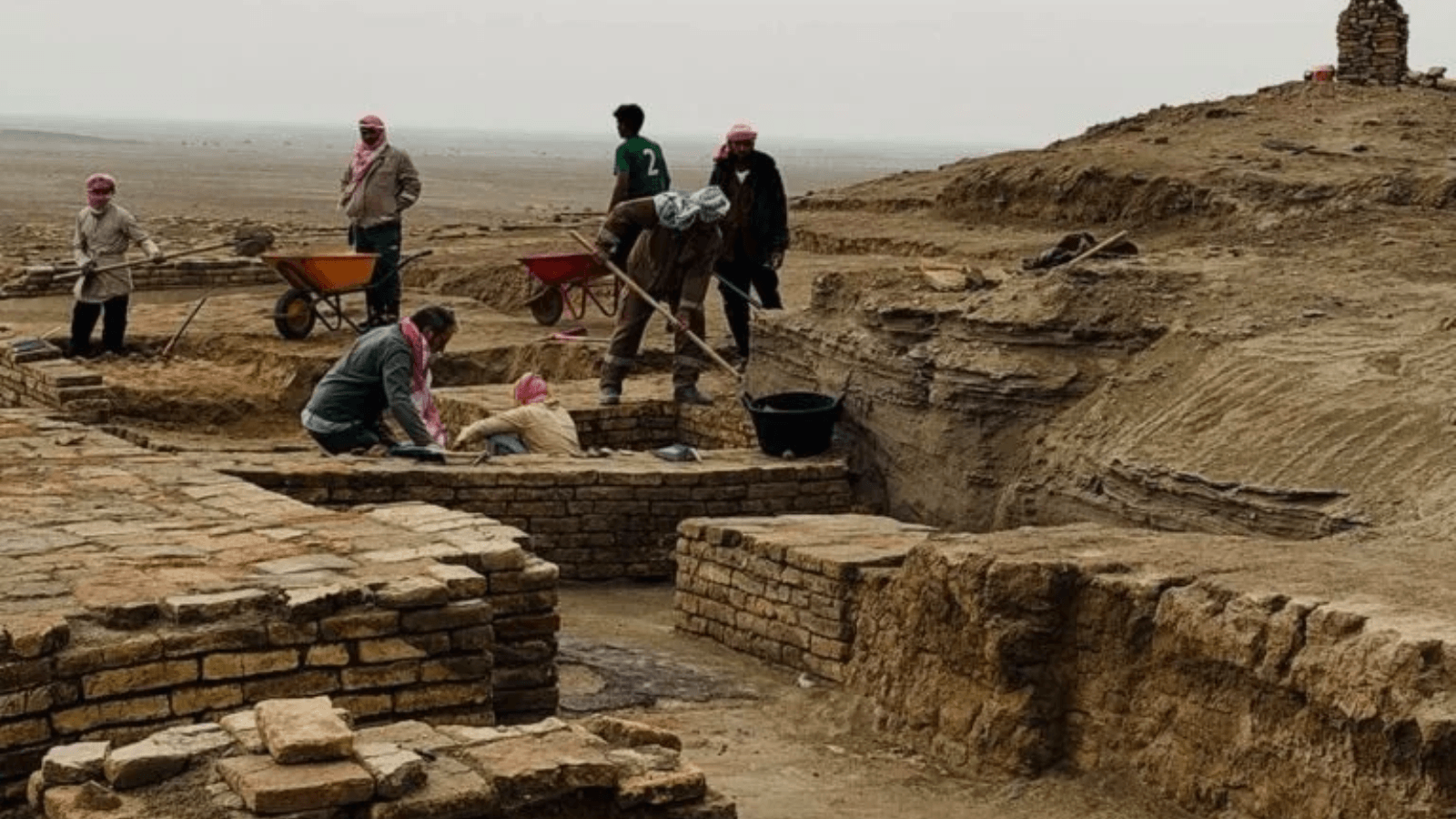
A 3,800-year-old Babylonian bridge in southern Iraq was designed to do more than carry people across a canal. Archaeologists investigating the ancient city of Larsa have identified a sophisticated structure that also functioned as a dam, helping regulate water flow through one of the city’s principal waterways. The discovery provides evidence of how Mesopotamian engineers combined transportation and water management in a single construction nearly four millennia ago.
The bridge, built across a canal approximately 22 meters wide, features massive fired-brick piers, reinforced foundations, and waterproofing materials. Although archaeologists first identified the structure in 2019, ongoing excavations have exposed approximately half of its remains, revealing details of an engineering system associated with King Sin-iddinam, who ruled Larsa in the 19th century BCE.
A Babylonian Bridge with a Second Purpose
Located in Iraq’s Dhi Qar Governorate, Larsa was a major political and economic center in southern Mesopotamia during the early second millennium BCE. Its prosperity depended on an extensive network of canals that supplied agricultural lands, supported transportation, and connected different parts of the city.
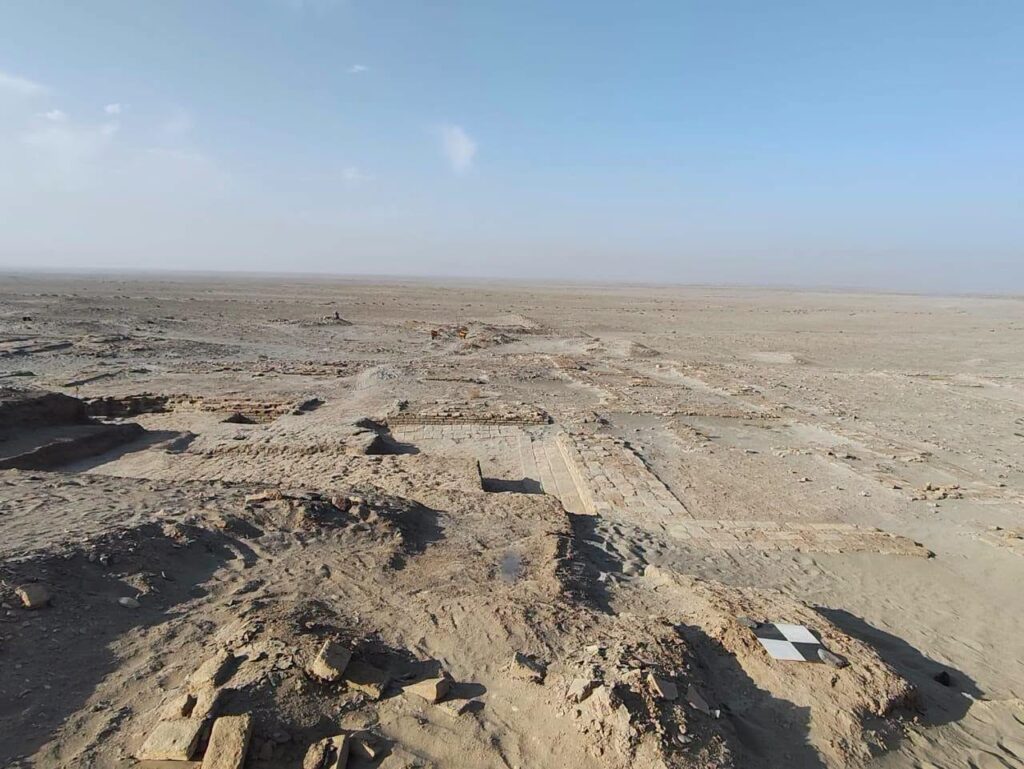
French archaeologists resumed investigations at Larsa in 2019 under the direction of Régis Vallet, working with Iraqi specialists. Their research has since identified approximately 5.4 kilometers of city walls and mapped hundreds of canals within and beyond the ancient settlement.
One of the most important structures is Bridge B69, situated near Larsa’s ziggurat. Archaeologists began excavating its remains in 2021, gradually establishing that the structure had a more complex purpose than providing a crossing.
According to the excavation team’s 2022–2023 archaeological report, the bridge also operated as a dam-like structure capable of closing sections of the canal. This arrangement would have allowed the inhabitants to regulate water flow and temporarily isolate parts of the waterway for dredging and maintenance.
The interpretation suggests that Larsa’s engineers integrated two essential urban functions into the same architectural system.
Engineering That Withstood the Canal’s Pressure
Excavations have exposed the bridge’s eastern pier, a substantial fired-brick construction measuring approximately four meters wide and extending at least eight meters along the canal.
Its southern face survives to a height of three meters, comprising 30 courses of brickwork. Beneath the structure, archaeologists identified specially designed foundation pillars extending deep into the ground.
One southeastern support preserved 20 courses of bricks joined with bitumen, a naturally occurring material used for waterproofing in ancient Mesopotamia. Additional supporting structures connected the main pier to the canal embankment at different elevations.
These features were particularly important because the bridge had to withstand the pressure of water moving through a major canal while supporting the crossing above it.
The excavations also identified two principal construction phases. During a later rebuilding episode in the 18th century BCE, workers filled the space between the eastern pier and the embankment, narrowing the canal passage to approximately eight meters.
This modification indicates that the bridge and its surrounding hydraulic structures were adapted over time rather than remaining unchanged throughout their use.
Inscribed Bricks Link the Bridge to King Sin-iddinam
Among the archaeological evidence are bricks bearing the name of Sin-iddinam, who ruled Larsa between approximately 1849 and 1843 BCE.
The king is known from historical inscriptions for extensive construction projects involving temples, defensive walls, and irrigation canals. His reign belonged to a period when Larsa’s rulers invested heavily in infrastructure to strengthen their political authority and sustain agricultural production.
The inscribed bricks associate an early construction phase of Bridge B69 with Sin-iddinam’s reign. A subsequent phase dates to the 18th century BCE, while later remains of a Kassite-period pottery workshop eventually covered parts of the abandoned structure.
The succession of building phases provides evidence of how Larsa’s urban landscape changed over several centuries.
Excavations Continue at the Ancient City of Larsa
The bridge has attracted renewed attention following information released by Iraqi heritage officials in November 2026. Shamil Al-Rumaidh, director of antiquities and heritage in Dhi Qar Governorate, confirmed that archaeologists have exposed approximately half of the structure, with further excavation planned for subsequent seasons.
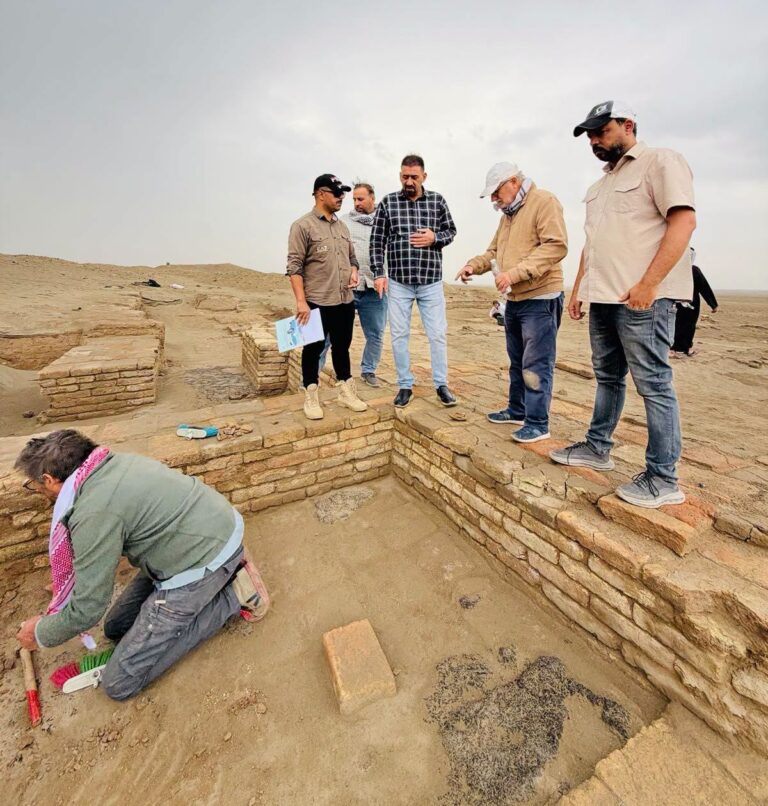
The investigation forms part of a larger French-Iraqi archaeological project examining Larsa’s urban organization.
The French Ministry of Culture’s archaeological overview documents a network of hundreds of canals mapped across approximately 1,200 hectares, alongside monumental buildings, residential districts, and defensive walls.
These investigations are changing how researchers understand the relationship between water and urban development in ancient Mesopotamia. Canals were not merely irrigation channels serving agricultural fields. They also supported transportation, connected important districts, and required carefully planned infrastructure to control water levels and maintain navigable passages.
Similar evidence of ancient water management has been documented near Eridu in southern Iraq. Researchers identified a 6,500-year-old irrigation system, demonstrating that sophisticated canal networks had developed in Mesopotamia thousands of years before the construction of Larsa’s bridge.
The Babylonian bridge at Larsa illustrates how these requirements could be addressed through a single engineered structure. Its surviving foundations and successive modifications demonstrate the considerable technical knowledge involved in maintaining the waterways of a major Mesopotamian city nearly 3,800 years ago.
Cover Image: Archaeological excavations at the ancient city of Larsa in Iraq reveal the brick-built remains of a 3,800-year-old Babylonian bridge designed to regulate canal water flow. Credit: Iraqi State Board of Antiquities and Heritage.