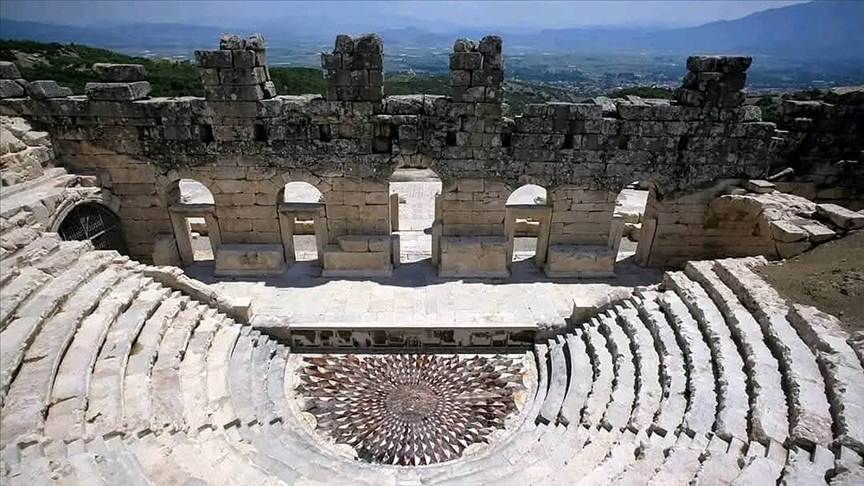
In the ancient city of Kibyra, tucked into the highlands of southwestern Turkey, one of antiquity’s most striking floor compositions has re-emerged with the season. The Medusa mosaic, dating back nearly 2,000 years, has been uncovered after its winter protection and is once again open to visitors.
Each year, the mosaic is carefully covered during the colder months to shield it from moisture, frost, and temperature fluctuations. With the arrival of spring, conservation teams remove the protective layers—revealing a work that continues to stand out not only for its imagery, but for its remarkable craftsmanship.
A rare technique in ancient stonework
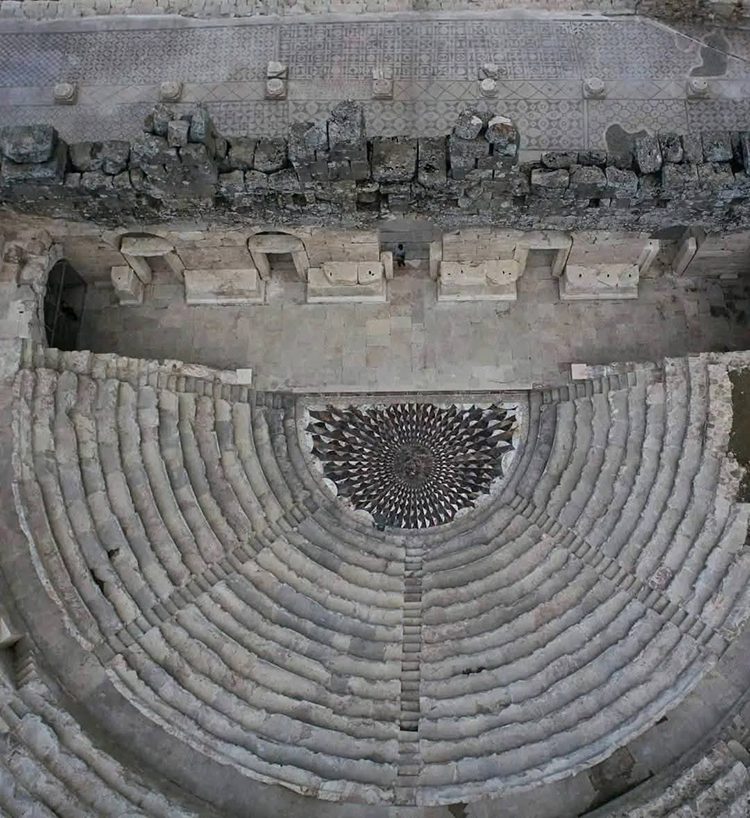
What makes the Kibyra Medusa mosaic exceptional is not just the iconic figure it portrays, but the technique used to create it. Unlike conventional mosaics composed of small tesserae, this piece was crafted using the opus sectile method—where precisely cut pieces of colored marble are assembled to form intricate designs.
This approach demanded a higher level of planning and precision, turning the floor into something closer to a sculptural composition than a typical mosaic surface. Examples of opus sectile pavements survive across the Roman world, but well-preserved figural compositions of this scale remain rare.
At the heart of a multifunctional civic building
The Medusa mosaic lies at the center of Kibyra’s odeion, a structure that once served multiple roles within the city. It functioned as a concert hall, a council chamber, and even a judicial space—making it one of the most important public buildings in Kibyra’s urban layout.
Positioned at the focal point of this structure, the Medusa figure was far from decorative alone. In ancient Mediterranean belief, Medusa’s gaze held apotropaic power—warding off evil and protecting the space. Its placement here suggests a symbolic layer embedded within the architecture itself.
Seasonal access and conservation strategy
According to excavation director Prof. Dr. Şükrü Özüdoğru of Mehmet Akif Ersoy University, both the Medusa mosaic and the Odeion Stoa floor mosaics have now been reopened and will remain accessible until late November 2026.
This seasonal opening is part of a broader conservation strategy. Rather than exposing the mosaic year-round, archaeologists have opted for a controlled cycle of visibility and protection—balancing public access with long-term preservation.
Water flows again in Kibyra
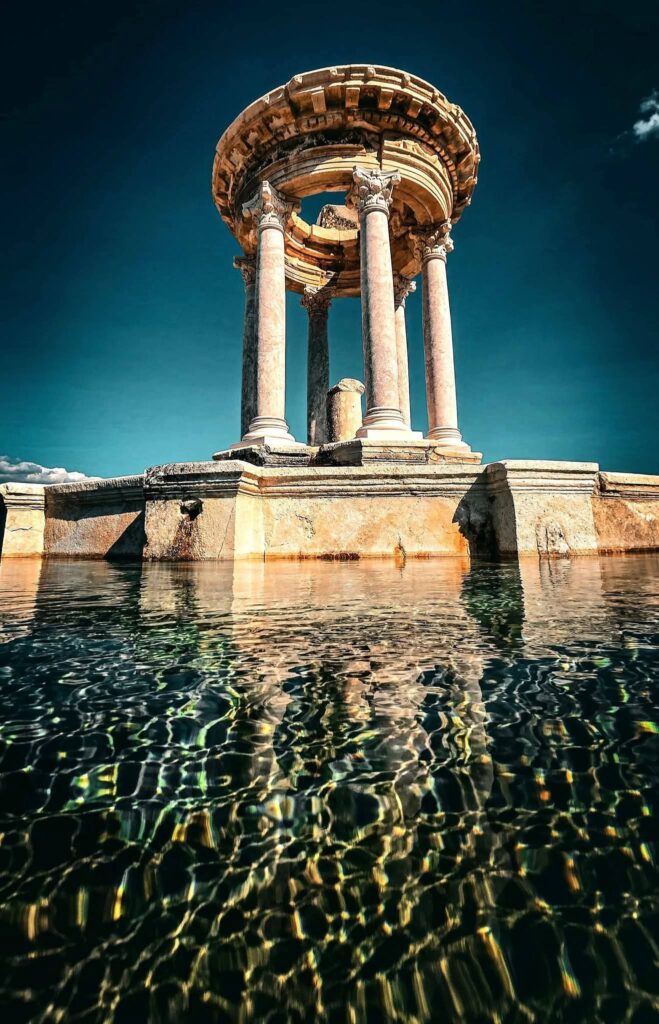
The reopening of the site also marks the return of another subtle but meaningful feature. Water has begun flowing once more through the monumental circular fountain within the ancient city, supplied from its original source.
It is a small detail, perhaps—but one that reshapes how visitors experience the site. Kibyra is no longer just a static archaeological landscape; it briefly regains elements of movement and sound that once defined its daily life.
A seasonal encounter with the ancient world
The Medusa mosaic’s limited annual visibility adds a quiet urgency to the experience. It is not always there to be seen. For a few months each year, however, this carefully preserved surface reconnects modern visitors with the artistic ambition and symbolic language of the Roman world.
And in that moment—standing within the odeion, facing a figure designed to both protect and confront—the distance between past and present feels unexpectedly thin.