
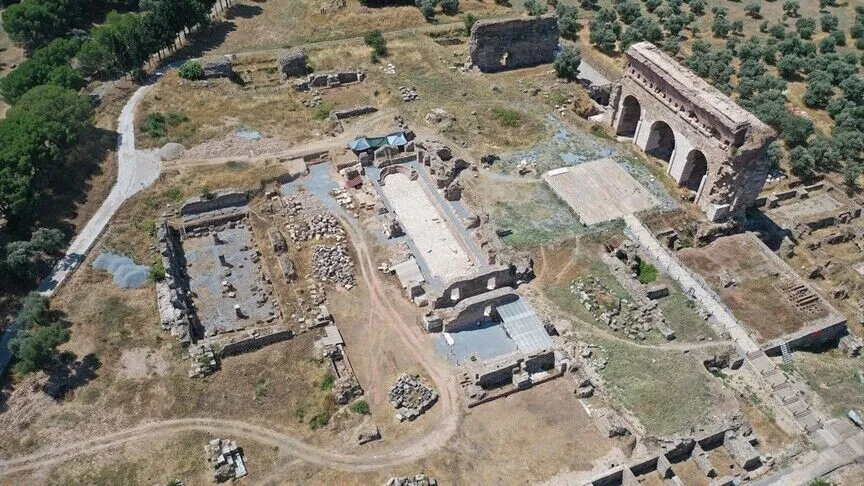
A Roman pool capable of holding around 300 people has been fully excavated at Tralleis, an ancient city near Aydın in western Turkey. The 2,000-year-old basin was supplied with fresh water through a network stretching approximately 56 kilometres from the mountains north of the city.
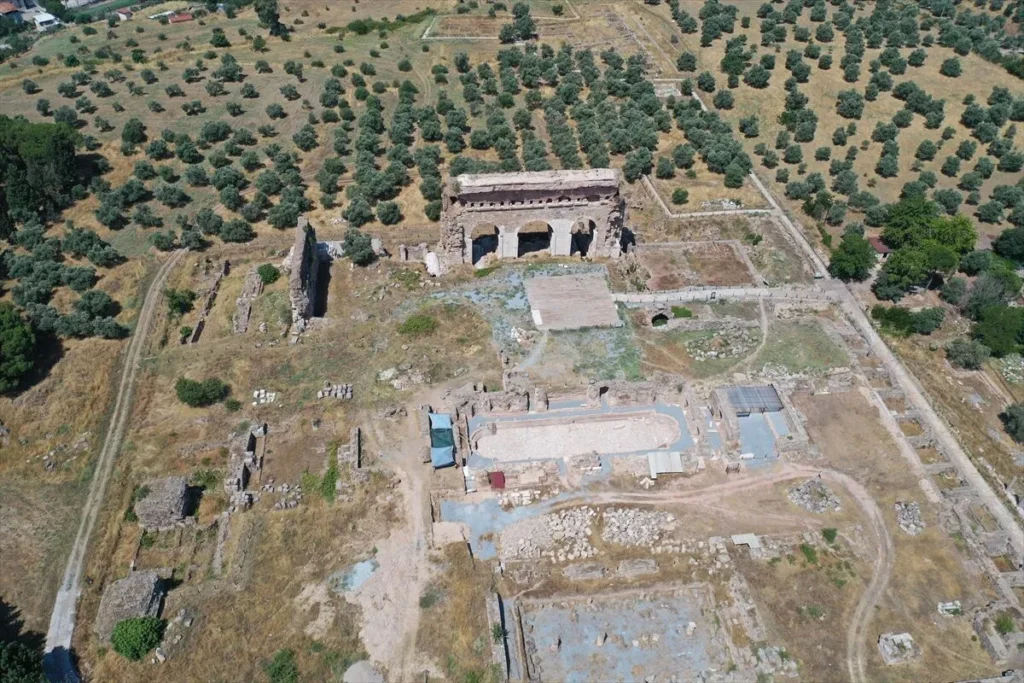
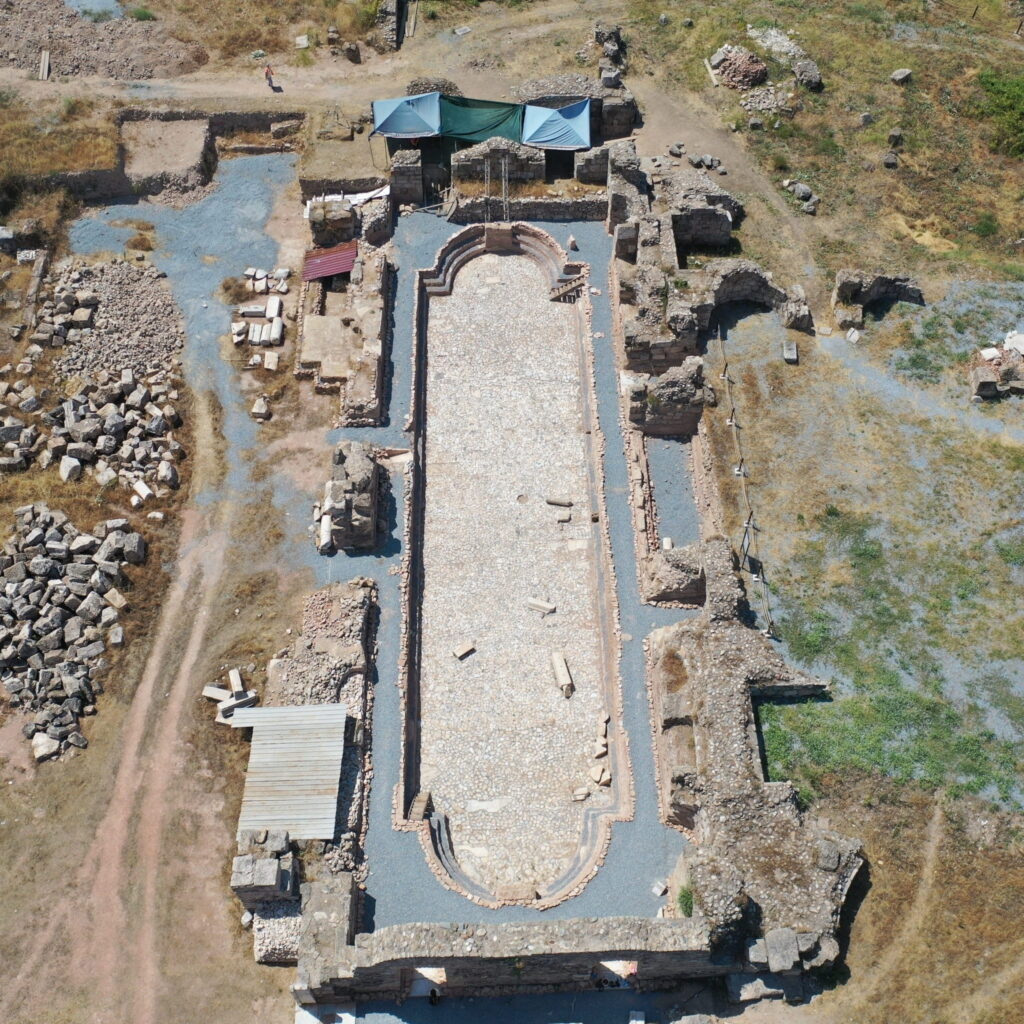
The open-air pool measures 37 metres long and 12 metres wide, with a depth of about 1.5 metres. It stood at the centre of a monumental bath-gymnasium complex that served as one of the busiest public spaces in Roman Tralleis.
A pool designed for hundreds of people
The wider complex covered nearly 40,000 square metres. Excavation director Prof. Dr. Murat Çekilmez of Aydın Adnan Menderes University estimates that between 3,000 and 5,000 people may have used the building each day.
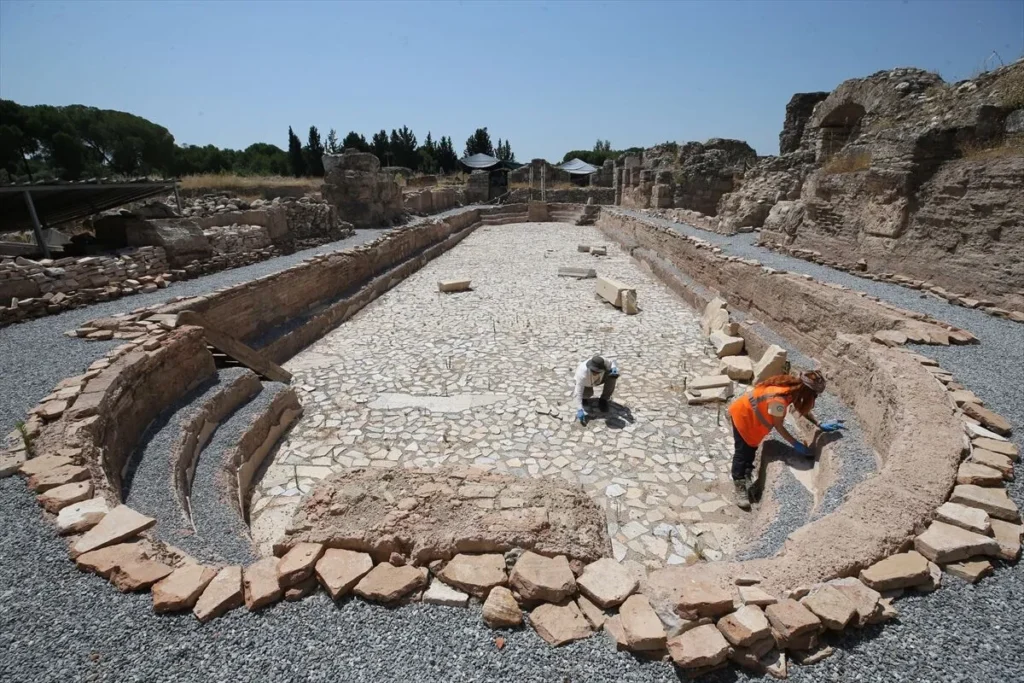
Around 300 bathers could enter the pool at the same time. Its size distinguishes it from the smaller cold-water basins commonly found in Roman bath buildings.
Filled with cold water and exposed to the open air, the pool would have offered relief during the hot summers of the Büyük Menderes Valley. It also formed part of a larger complex where bathing, exercise and education took place side by side.
Young athletes may have trained here
The Roman pool stood beside the gymnasium, where young men received physical and intellectual training.
Its position and dimensions suggest that the basin may have been used for swimming lessons or organised water training. According to Çekilmez, athletes educated at Tralleis may have prepared there before taking part in competitions held elsewhere in the region.
The excavation team has described the pool as “Olympic” in scale for antiquity. The term refers to its exceptional size and probable athletic function rather than to the standard dimensions of a modern Olympic pool.
Fresh water travelled from the mountains
Supplying such a large basin required extensive infrastructure.
Spring water reached Tralleis through a system running for roughly 56 kilometres from the mountains north of the city. Archaeologists also uncovered drainage channels that allowed the basin to be emptied quickly.
When the water became dirty, it could be released through the channels. The pool could then be cleaned and filled again, allowing it to remain in regular use.
The supply and drainage systems reveal the engineering required to operate a heavily used public facility. The pool depended on a carefully managed network rather than a simple local water source.
Public life in Roman Tralleis
Tralleis developed on the slopes of the Kestane Mountains overlooking the Büyük Menderes Valley. During the Hellenistic and Roman periods, it became an important urban centre in western Anatolia.
The city contained a theatre, stadium, agora and several monumental public buildings. Its best-known surviving remains are the arches known locally as the “Three Arches,” once part of the same bath-gymnasium complex as the pool.
The basin adds a more human dimension to the monumental ruins. It shows how water, sport and social life were brought together within a public complex built to accommodate large crowds.
After conservation work, the ancient pool is expected to hold water again for the first time in centuries.
Cover Image: Aerial view of the 2,000-year-old Roman pool and bath-gymnasium complex at Tralleis near Aydın, western Turkey. Credit: AA