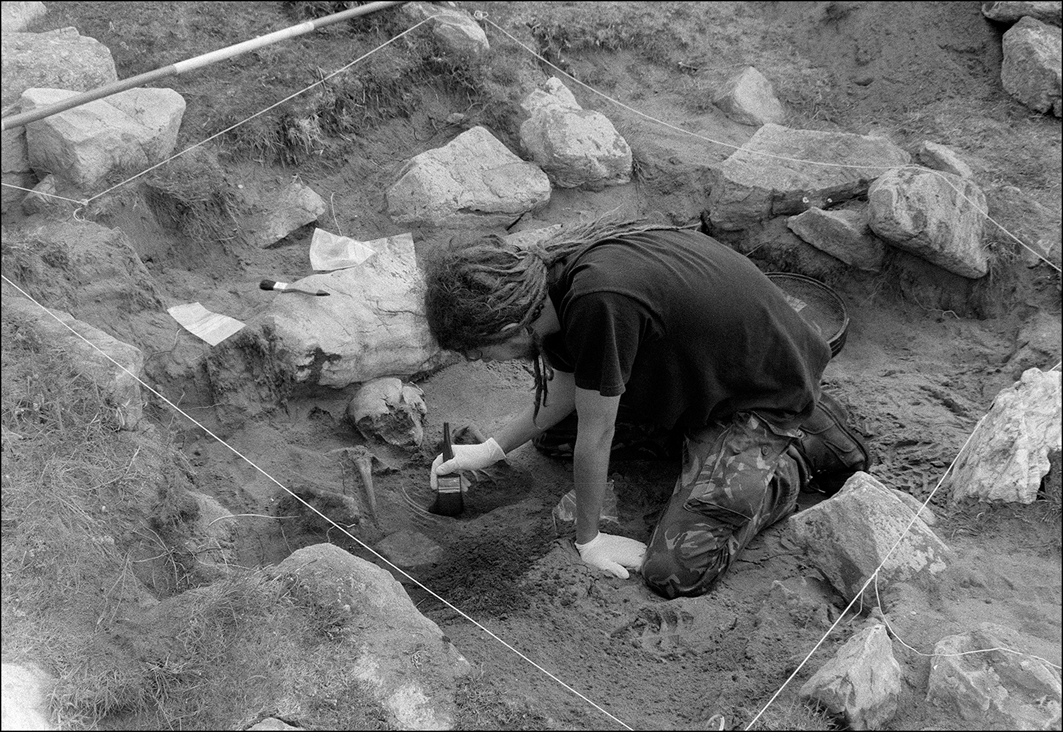
An Iron Age burial in northern Scotland has revealed one of the most unusual examples of postmortem body treatment yet identified in prehistoric Britain.
A new study published in the journal Antiquity reports that researchers re-examined the remains of two individuals buried in a low stone cairn at Loch Borralie, on the Durness Peninsula in Sutherland. The burials date most likely to around 50 BC to AD 70, before the first Roman incursions into southern and eastern Scotland.
The remains belonged to an adult woman over the age of 30 and a teenage boy of about 15. Both had been laid on their backs with their heads to the east. At first glance, it looked like another rare Iron Age burial from Atlantic Scotland. The closer analysis told a much stranger story.
A skull opened after death
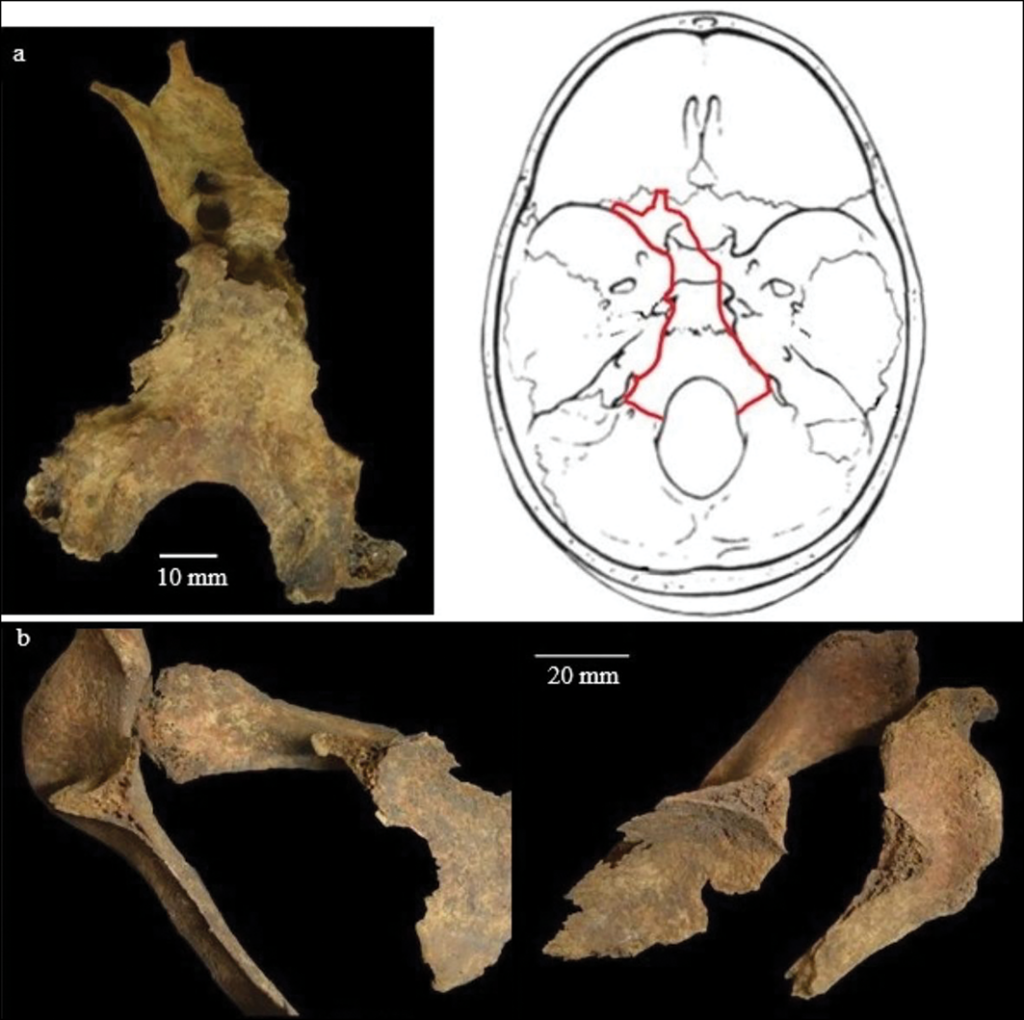
The adult woman showed evidence of unusual treatment around the time of death and after death. Researchers identified trauma at the base of the skull, fractures on both shoulder blades, and a series of marks on the inner surface of the cranium.
Taken together, these traces suggest that the woman’s brain may have been deliberately removed soon after death. The researchers stop short of presenting one fixed explanation. The act could have formed part of a funerary process involving the cleaning or curation of the skull. Cannibalism is mentioned as a possibility, but the study notes that there is no supporting evidence such as long bones being processed for marrow.
That caution matters. The discovery is striking, but not simple.
Long bones worked into sharp points
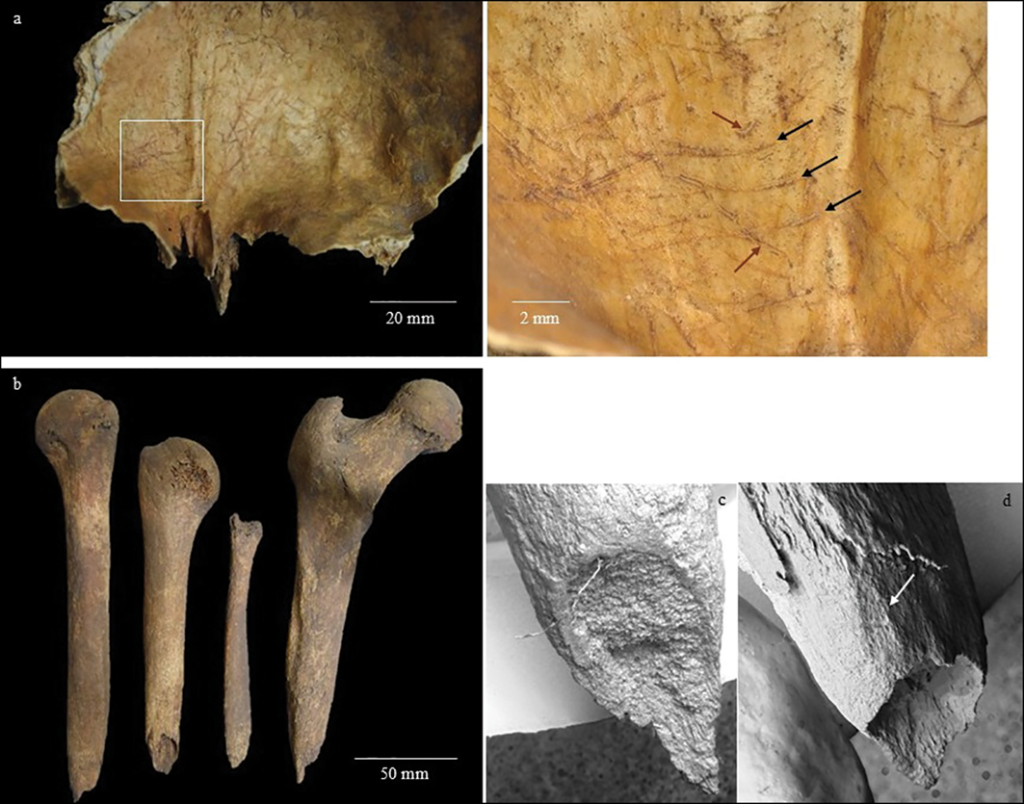
The woman’s long bones add another layer to the case. Both humeri, the left ulna and the left femur had been modified before burial. The outer layers of bone had been removed in places, and several fragments had been worked toward sharp or pointed ends.
One modified femur showed use-wear, suggesting it may have served as an implement of some kind. The other three modified bones do not show the same clear signs of use, which leaves their function uncertain.
What stands out is not only the modification, but the way the remains were returned to the grave. The worked bones were placed back in their correct anatomical positions. This was not casual disposal. It required knowledge of the body and a deliberate act of reassembly.
A teenager buried nearby
The second individual was a teenage boy. His skeleton was less complete, and his bones did not show the same complex pattern of trauma or postmortem modification seen in the woman.
His teeth, however, preserved signs of physiological stress. The study notes evidence that he may have experienced periods of growth disruption or malnutrition, with possible indications of vitamin C deficiency.
Ancient DNA showed that the woman and the boy were closely related, most likely through the maternal line. The researchers suggest they may have been maternal second cousins.
Lives shaped by movement
The burial also speaks to movement across northern Scotland. Isotope analysis indicates that both individuals probably did not grow up at Loch Borralie. Their childhood signatures fit better with the east coast of Sutherland, around the area between modern Helmsdale and Golspie, roughly 80 kilometers to the south-east.
Their DNA also links them more widely to individuals from Orkney and Applecross. For the researchers, this suggests that Iron Age communities around the north coast and Northern Isles were connected by movement, kinship and shared traditions.
The sea, in this case, was not a boundary. It was part of the route.
A rare glimpse of Iron Age death
Funerary practice in Iron Age Britain is difficult to study because human remains often do not survive. North-west Scotland is an exception. Its environmental conditions can preserve bone, and the region has produced some of the clearest evidence for the curation, circulation and modification of human remains.
Even within that wider pattern, the Loch Borralie woman remains exceptional. No close parallel is known for the combination of possible brain removal, worked long bones and careful reassembly inside a cairn.
The study does not reduce the burial to a single explanation. It leaves open difficult possibilities: reverence, ritual processing, ancestral curation, or a treatment whose meaning is now beyond recovery.
What can be said more securely is that the dead at Loch Borralie were not simply buried and forgotten. Their bodies remained meaningful to the living, handled with precision, remembered through practice, and placed back into the landscape with care.
Cover Image: Individual 1, part of the Iron Age burial discovered at Loch Borralie in Sutherland, Scotland, during excavation. Credit: SC 1061426 © Crown Copyright: HES. Excavation photograph by GUARD.