
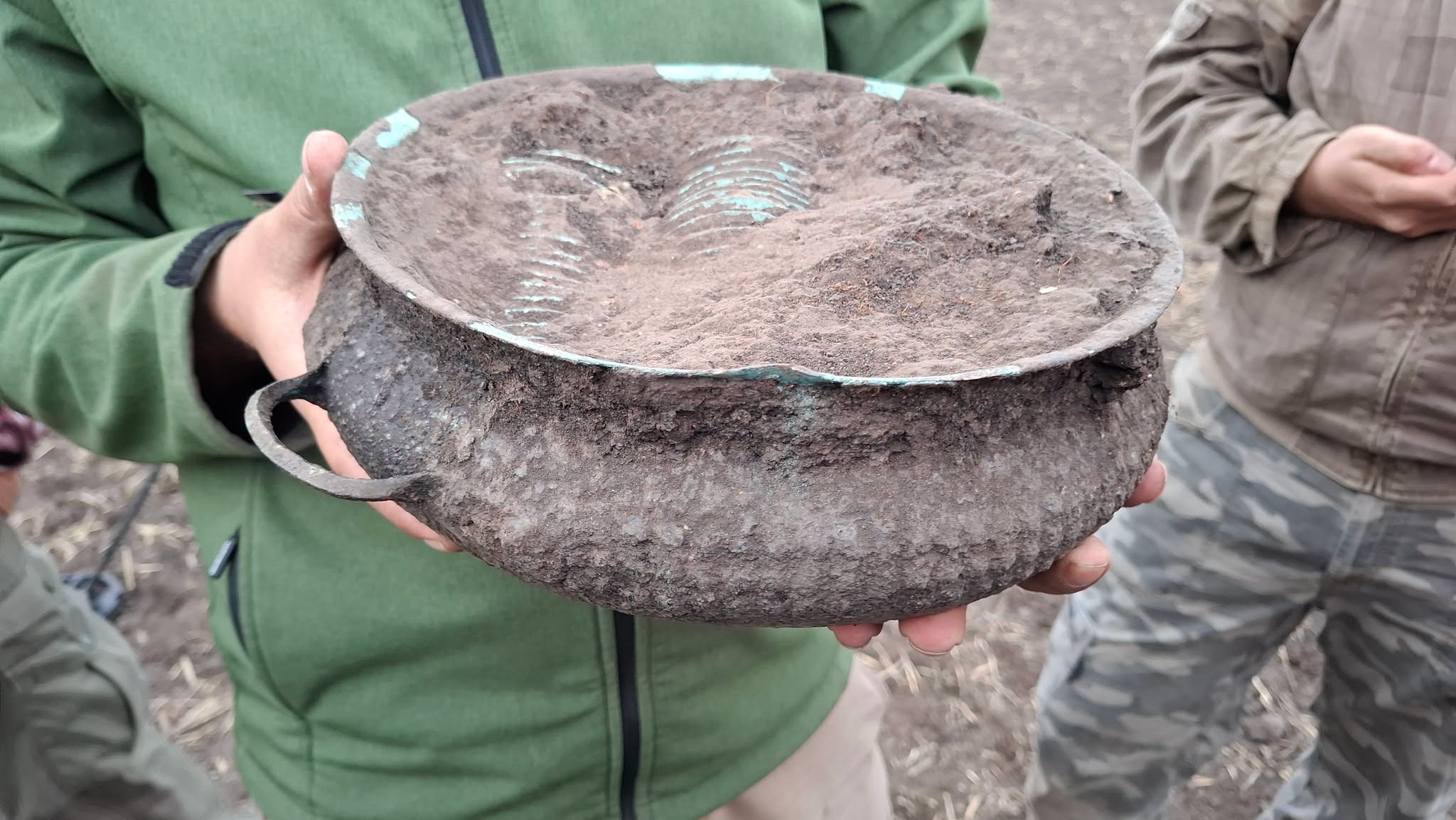
Archaeologists investigating a 1596 Ottoman battlefield in Hungary have discovered a Bronze Age hoard more than 3,000 years old. The find at Mezőkeresztes includes a bronze cup containing twisted arm ornaments, buried long before the armies of the Ottoman Empire and the Habsburgs fought at the site.
The discovery came during the latest fieldwork by the Hungarian National Museum’s National Archaeological Institute. Researchers have spent nearly a decade investigating the battlefield, using historical documents and metal detectors to identify traces of the 16th-century conflict.
A Bronze Cup Containing Ancient Jewellery
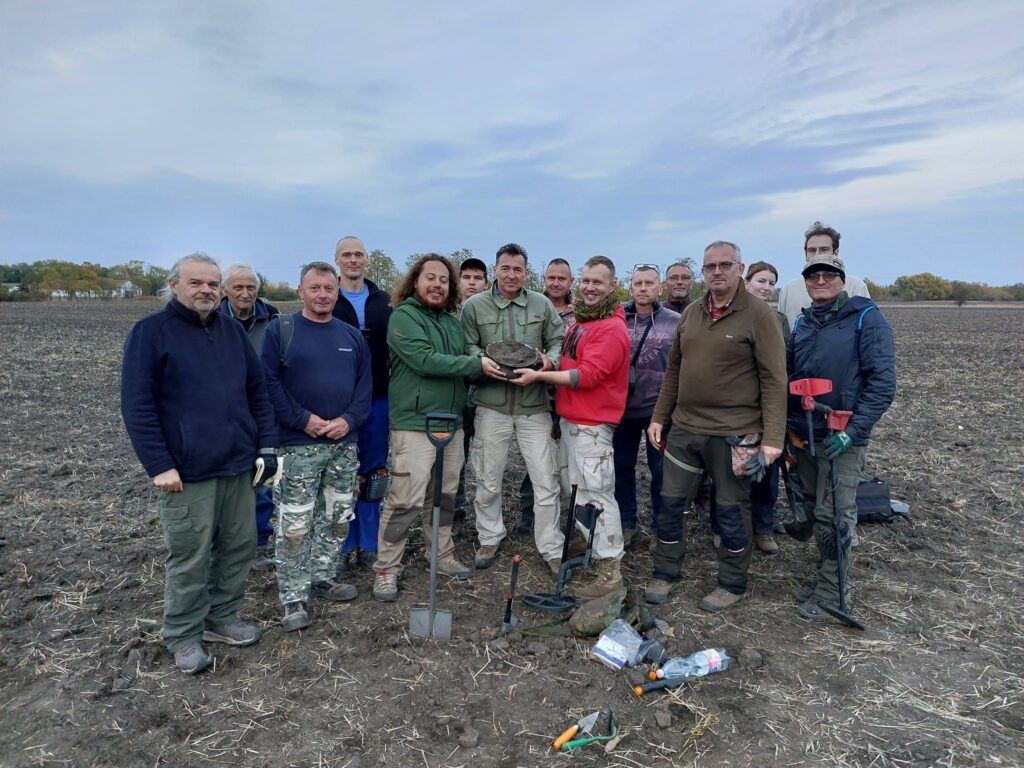
Archaeological volunteer Zoltán Vágó first detected the buried metal objects during a field survey. Under the direction of archaeologist Gábor Bakos and geographer András Gömöri of the University of Miskolc, the team carefully excavated a large bronze cup containing two twisted arm ornaments.
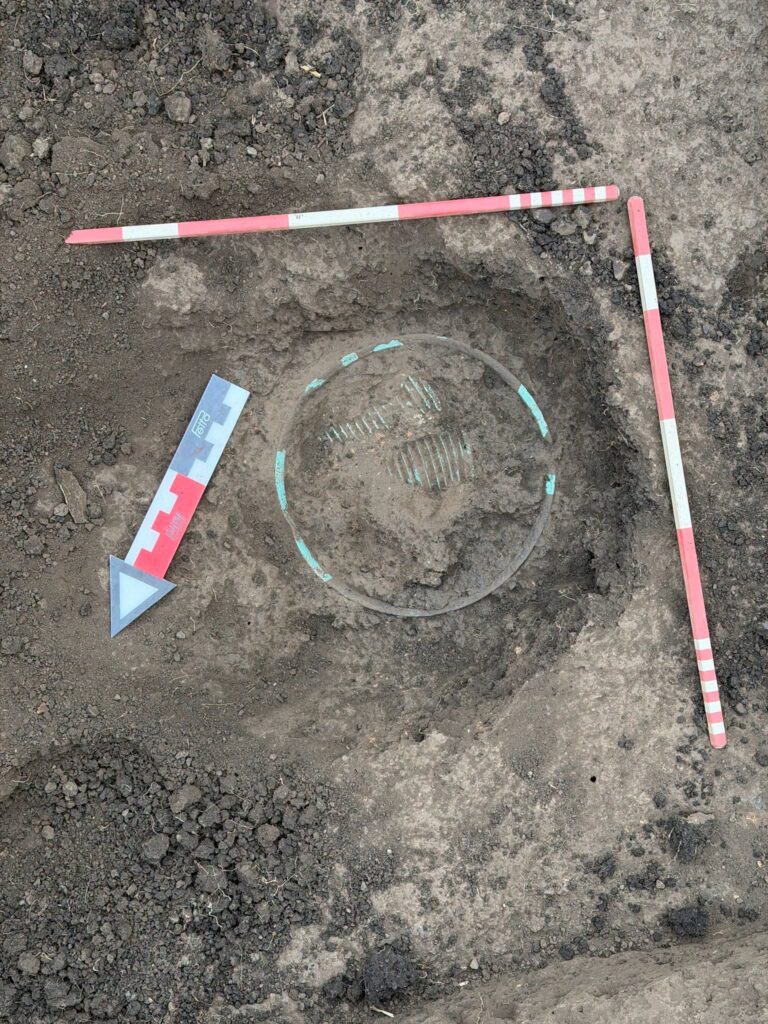
The objects’ forms and decorative features place them in the Late Bronze Age, between the 13th and 11th centuries BCE. During this period, communities in the Carpathian Basin developed sophisticated bronze-working traditions, producing weapons, jewellery and metal vessels.
The excavation initially revealed three objects, but the story did not end at the site. During laboratory examination, archaeologists discovered a third arm ornament inside the cup, bringing the total number of bronze objects to four.
Rather than removing the ornaments individually, the team had lifted the entire deposit with its surrounding soil. This decision preserved the objects’ original arrangement and allowed specialists to examine the contents more carefully.
Laboratory Analysis May Reveal the Cup’s Contents
At the Hungarian National Museum, archaeologist János Gábor Tarbay and geographer András Gömöri conducted a detailed micro-excavation, gradually removing the soil while recording the position of each object. Bakos also created three-dimensional documentation of the process.
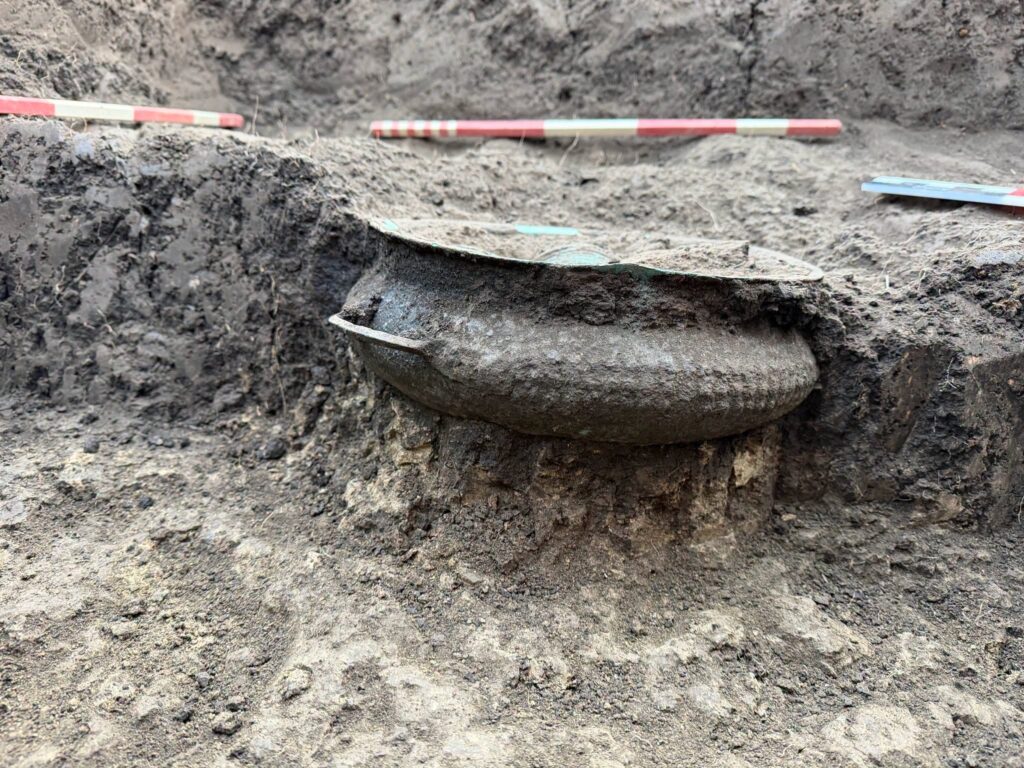
The researchers are examining soil samples for plant remains, pollen and chemical traces of organic substances. These analyses could help determine whether the cup once held food, drink or other materials before someone buried it alongside the ornaments.
A previous discovery in Hungary shows what such examinations can reveal. In a 2025 study published in Archaeologiai Értesítő, Tarbay and his colleagues reported traces of millet and honey in a Late Bronze Age bronze cup recovered from Somló Hill.
The Somló discovery demonstrates how chemical evidence can survive inside ancient metal vessels for thousands of years. Researchers have not yet established whether the Mezőkeresztes cup contained similar substances, but the ongoing analyses may provide clues about its original use.
Bronze Hoards in the Carpathian Basin
The practice of burying collections of bronze objects was widespread across Central Europe during the Late Bronze Age. Archaeologists have recovered numerous hoards containing weapons, ornaments, tools and metal vessels, sometimes arranged together in containers.
Their purpose remains a subject of archaeological debate. Some deposits may represent valuable possessions hidden for safekeeping, while others appear to have been deliberately placed in the ground as offerings or during ceremonial activities. The circumstances surrounding each discovery are essential to understanding why the objects were buried.
The Mezőkeresztes assemblage offers an opportunity to investigate these questions because the researchers preserved its original context. According to the Hungarian National Museum, this is the first comparable Late Bronze Age deposit from the Borsod region to undergo a carefully documented laboratory micro-excavation.
A Much Older History Beneath the Battlefield
The Battle of Mezőkeresztes took place between October 22 and 26, 1596, during the Fifteen Years’ War. Ottoman forces fought a coalition led by the Habsburg monarchy in one of the conflict’s major engagements.
The ongoing battlefield project covers more than 100 square kilometres. Working with archaeological volunteers, researchers survey areas selected through historical and archival investigations, searching for evidence that can help reconstruct the battle and its wider setting.
These surveys have also identified archaeological remains from other periods. The Bronze Age hoard is among the oldest groups of objects recovered during the project, demonstrating that the area had a human history extending thousands of years beyond the events of 1596.
The laboratory investigation now offers a chance to examine that earlier history in greater detail. By studying the ornaments, their arrangement and any surviving organic residues, archaeologists hope to learn more about the use of bronze vessels and the practice of burying valuable objects in the Late Bronze Age.
Cover Image: A 3,000-year-old bronze vessel containing spiral arm ornaments, part of a Late Bronze Age hoard discovered at the Mezőkeresztes battlefield in Hungary. Credit: Hungarian National Museum / National Archaeological Institute.