
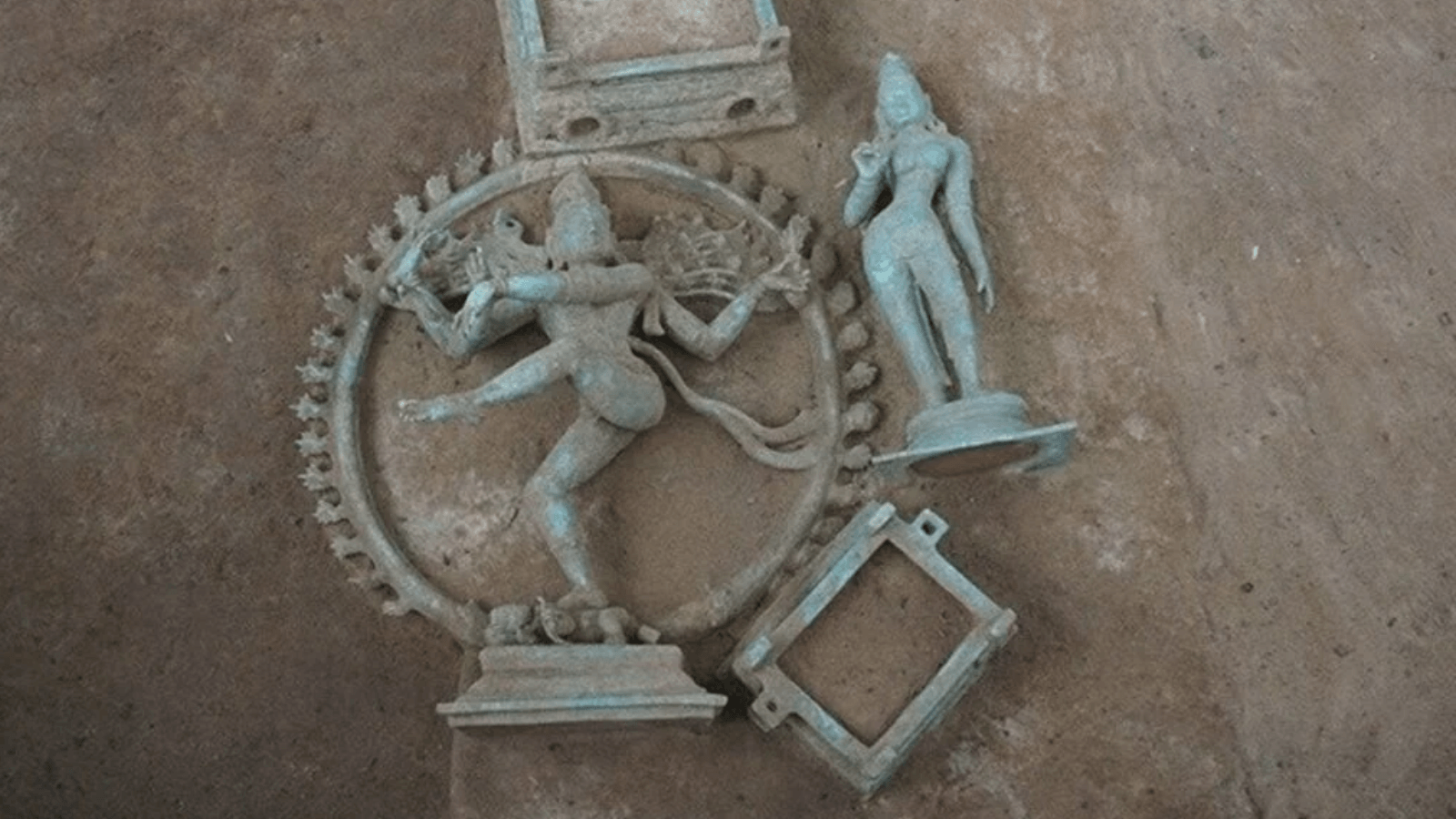
Archaeologists excavating the historic port city of Nagapattinam in southern India have discovered a bronze statue of Shiva performing his cosmic dance. The four-armed sculpture was one of two religious figures recovered during the excavation, the other depicting the goddess Sivakami.
The discovery was announced on October 30, 2026, by Tamil Nadu minister A. Rajmohan. Excavations began on August 3, with researchers opening six trenches at the site. The two statues were found in separate trenches, designated A2 and XA1, approximately one metre below the surface, with their pedestals preserved.
Shiva’s Cosmic Dance Captured in Bronze
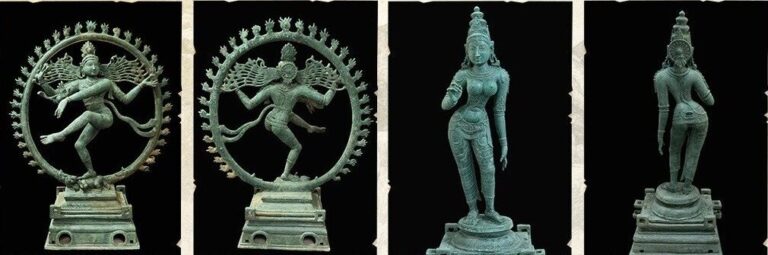
The larger sculpture stands 110 centimetres tall and measures 100 centimetres wide. It portrays Shiva as Nataraja, the Lord of Dance, performing the Ananda Tandava, or Dance of Bliss, one of the most recognisable images in Hindu religious art.
Shiva holds a small drum in one hand, symbolising the rhythm of creation, and a flame in another, representing destruction and renewal. One foot rests on Muyalaka, a figure associated with ignorance, while the other rises into the air, symbolising spiritual liberation. Together, these elements express the cosmic cycle of creation, destruction, and renewal.
The second statue represents Sivakami, a form of the goddess Parvati and Shiva’s consort. Standing 82 centimetres tall and 23 centimetres wide, the two-armed figure adopts the tribhanga posture, in which the body bends gracefully at three points.
Archaeologists have provisionally dated both bronzes to the 12th century CE based on their proportions, ornamentation, iconography, and pedestal designs. These characteristics associate the sculptures with the later Chola period, when bronze casting reached a high level of artistic and technical sophistication in southern India.
Why Were the Bronze Statues Buried?
The circumstances surrounding the burial of the sculptures remain uncertain. Professor K. Rajan, an adviser to the Tamil Nadu archaeology department, believes the statues may have been deliberately concealed for safekeeping.
Excavation director K. Vasanthakumar told The Times of India that researchers are investigating why hundreds of Chola-period bronzes have previously been discovered buried in the Nagapattinam region.
V. Selvakumar, a retired professor of maritime history and marine archaeology at Tamil University, has suggested that religious sculptures may have been hidden during later invasions or periods of insecurity.
However, researchers have not established when the newly discovered statues were buried or what circumstances led to their concealment. Their estimated 12th-century production date does not necessarily correspond to the time they entered the archaeological deposit.
Nagapattinam and the Chola Bronze Tradition
Nagapattinam was an important maritime centre under the Chola dynasty, which dominated much of southern India between the 9th and 13th centuries. Its connections across the Bay of Bengal supported trade and cultural exchanges with Southeast Asia.
During this period, Chola metalworkers produced bronze representations of Hindu deities that became central to religious life. Unlike sculptures intended solely for permanent display, many bronzes served as objects of worship and could be carried through temple streets during festivals and religious processions.
Nataraja and Sivakami frequently appeared together in South Indian temple traditions. Although the newly discovered figures belong to this broader artistic and religious context, archaeologists have not identified the temple where they were originally housed or established whether they were used in processions.
The excavation also marks an institutional milestone. According to officials cited by The New Indian Express, these are the first bronze statues recovered through excavations conducted by the Tamil Nadu State Department of Archaeology itself.
Further Examination of the Chola Bronzes
The statues have been transported to Chennai for conservation and chemical treatment. Researchers also plan metallurgical analyses to determine the composition of the bronze alloys used in their manufacture.
The results could provide further information about the materials and casting techniques employed by Chola-period artisans. Continued archaeological investigation may also help establish when the sculptures were buried and whether their deposition was connected to changes in religious practice or periods of political instability.
Cover Image: Front and rear views of the 12th-century Chola bronze sculptures depicting Shiva as Nataraja and the goddess Sivakami. Credit: Tamil Nadu Department of Archaeology.