
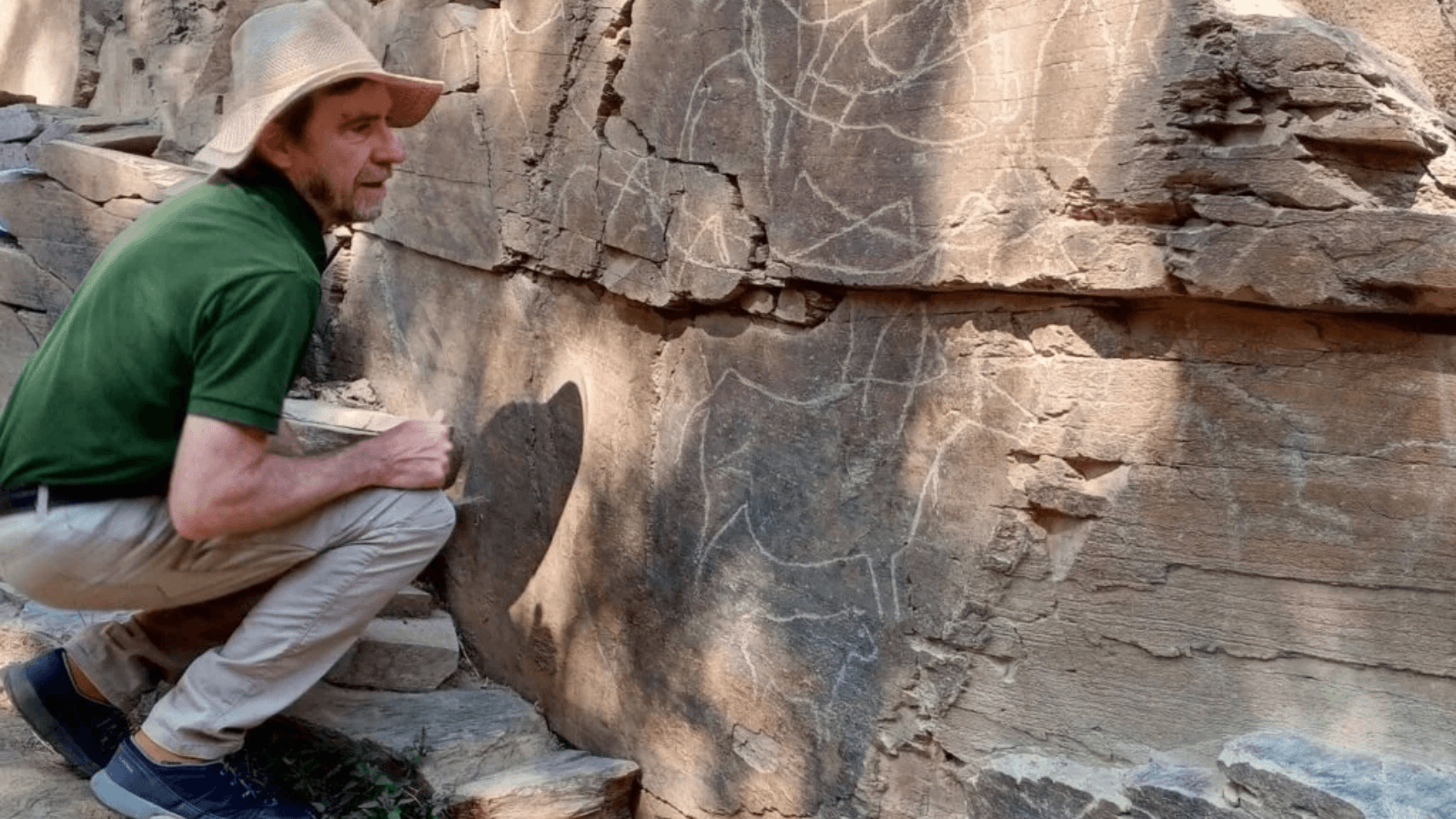
The horses and wild cattle engraved on the rocks of Portugal’s Côa Valley have survived for thousands of years as outlines carved into stone. But a discovery at Penascosa is raising the possibility that these prehistoric images once looked very different: archaeologists have recovered hundreds of mineral pigment fragments near one of the engraved rock faces.
The find has prompted researchers led by archaeologist Thierry Aubry to investigate whether color played a role in the valley’s Paleolithic art. Establishing how the pigments were used, however, will require further analysis.
Could the Engravings Have Lost Their Original Colors?
The Côa Valley is celebrated for its open-air rock art, particularly engraved representations of horses, aurochs and other animals. Prehistoric artists created these figures by cutting, pecking and abrading rock surfaces, leaving marks that have survived for thousands of years.
The newly recovered pigments introduce the possibility that engraving was not the only technique used by the artists.
Speaking to the Portuguese news agency Lusa, Aubry explained that painting and engraving frequently appeared together in prehistoric art. He suggested that some images in the Côa Valley may originally have been painted before artists reinforced their outlines through pecking or engraving.
The absence of surviving paint does not necessarily rule out this possibility. Open-air rock surfaces are exposed to weathering, and pigments applied thousands of years ago may have disappeared while engraved lines remained visible.
Yet an important distinction remains: the excavation has identified materials suitable for painting, not painted engravings themselves. No direct connection between the recovered pigments and a particular rock image has been demonstrated.
A Small Excavation Extends Penascosa’s History
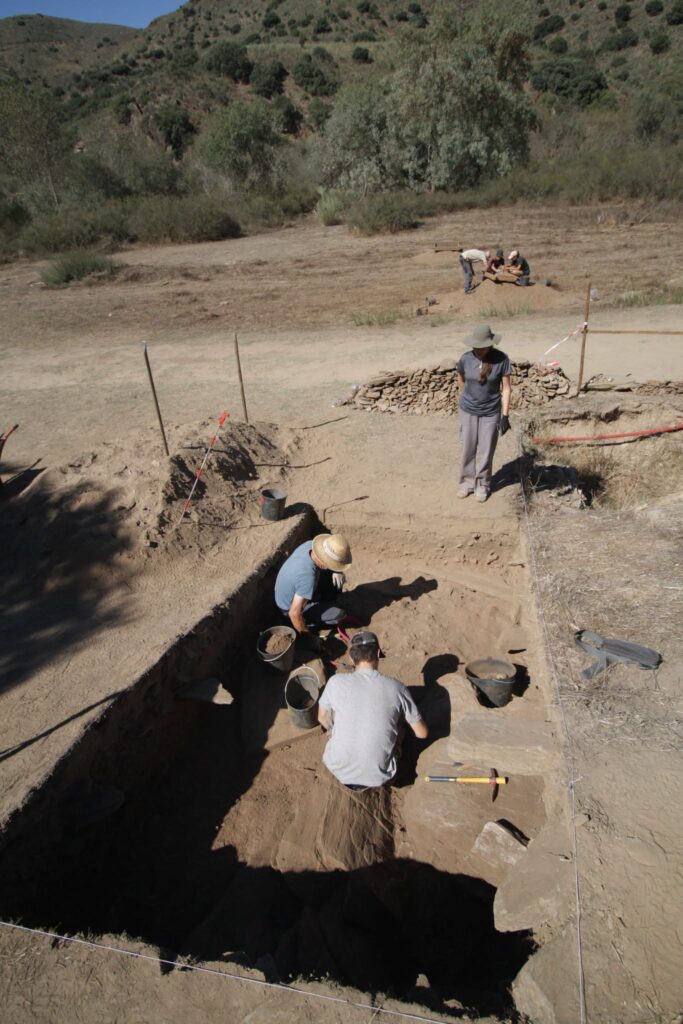
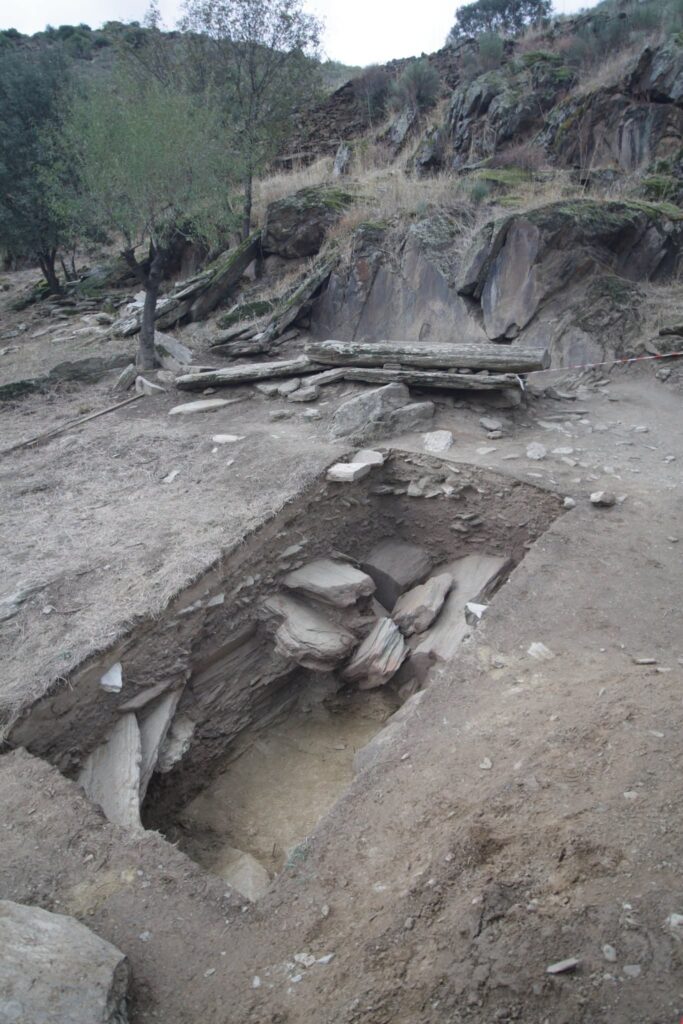
The discoveries came from an excavation covering approximately eight square meters beside Rock 3 at Penascosa. Archaeology students from the University of Lisbon joined the investigation, which continued for several months.
Aubry reported that the oldest archaeological layer contained evidence of human activity exceeding 27,000 years in age. Previous findings had placed the known occupation of Penascosa at approximately 26,000 years ago.
The archaeological material appears to belong to the later Gravettian, a phase of the Upper Paleolithic associated with hunter-gatherer communities across Europe.
Researchers identified evidence of stone-tool production, hunting equipment, animal-hide processing and hearths. These discoveries provide a broader picture of activities at Penascosa, showing that the location was used for practical tasks alongside the artistic traditions represented by the nearby engravings.
The pigments add another dimension to this evidence, although their individual ages and precise uses have not yet been established through published analyses.
Finding Out Where the Pigments Were Applied
Painting rocks is only one possible explanation for the mineral fragments. Aubry also considers their potential use in preparing adhesives and processing animal hides, activities consistent with the other materials discovered at Penascosa.
The distinction matters because prehistoric communities employed mineral pigments for purposes that extended beyond artistic decoration. Their presence at an archaeological site cannot, by itself, establish how people used them.
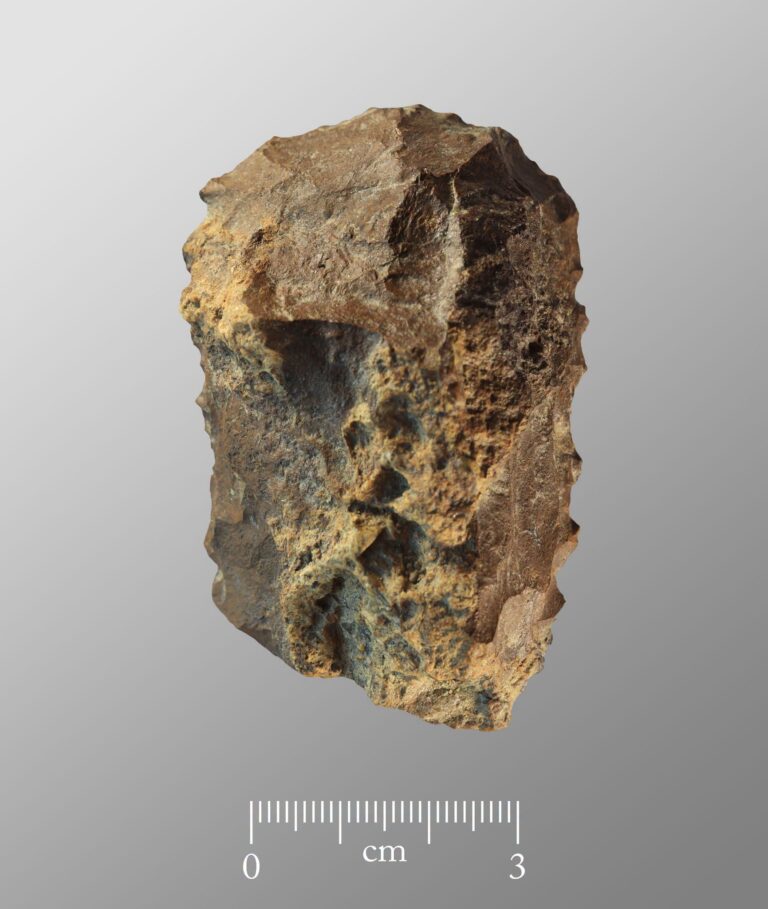
Future laboratory work may help narrow the possibilities. According to Aubry, different surfaces can leave different traces on pigment materials, potentially allowing researchers to investigate whether they came into contact with stone, hides or other substances.
The team also intends to examine the geological origins of the fragments. Similar pigment-bearing materials occur within the wider Côa region, but identifying the sources of individual pieces will require further study.
Excavations are expected to resume at Penascosa in spring 2027, allowing the researchers to investigate the archaeological deposits and recovered materials in greater detail.
New Evidence from a World Heritage Landscape
The Côa Valley’s rock art was inscribed on the UNESCO World Heritage List in 1998, two years after the archaeological park was established. Since then, continued fieldwork has greatly expanded the known distribution of engraved surfaces.
According to the Côa Parque Foundation, researchers have identified more than 1,600 rock surfaces across 104 archaeological sites. The discoveries encompass artistic traditions extending well beyond the Paleolithic.
The Penascosa excavation adds evidence of pigment materials to this extensive archaeological record. It also offers a new line of investigation into how prehistoric communities produced images and combined artistic activities with everyday work.
Establishing whether those pigments ever reached the valley’s engraved rock surfaces will depend on further analysis. Until then, the possibility of painted Paleolithic figures remains a hypothesis supported by the availability of coloring materials rather than direct evidence of surviving paintings.
Cover Image: Prehistoric rock engravings in Portugal’s Côa Valley, where the discovery of mineral pigments has raised the possibility that some ancient images were once painted. Credit: Museu do Côa / Facebook.