
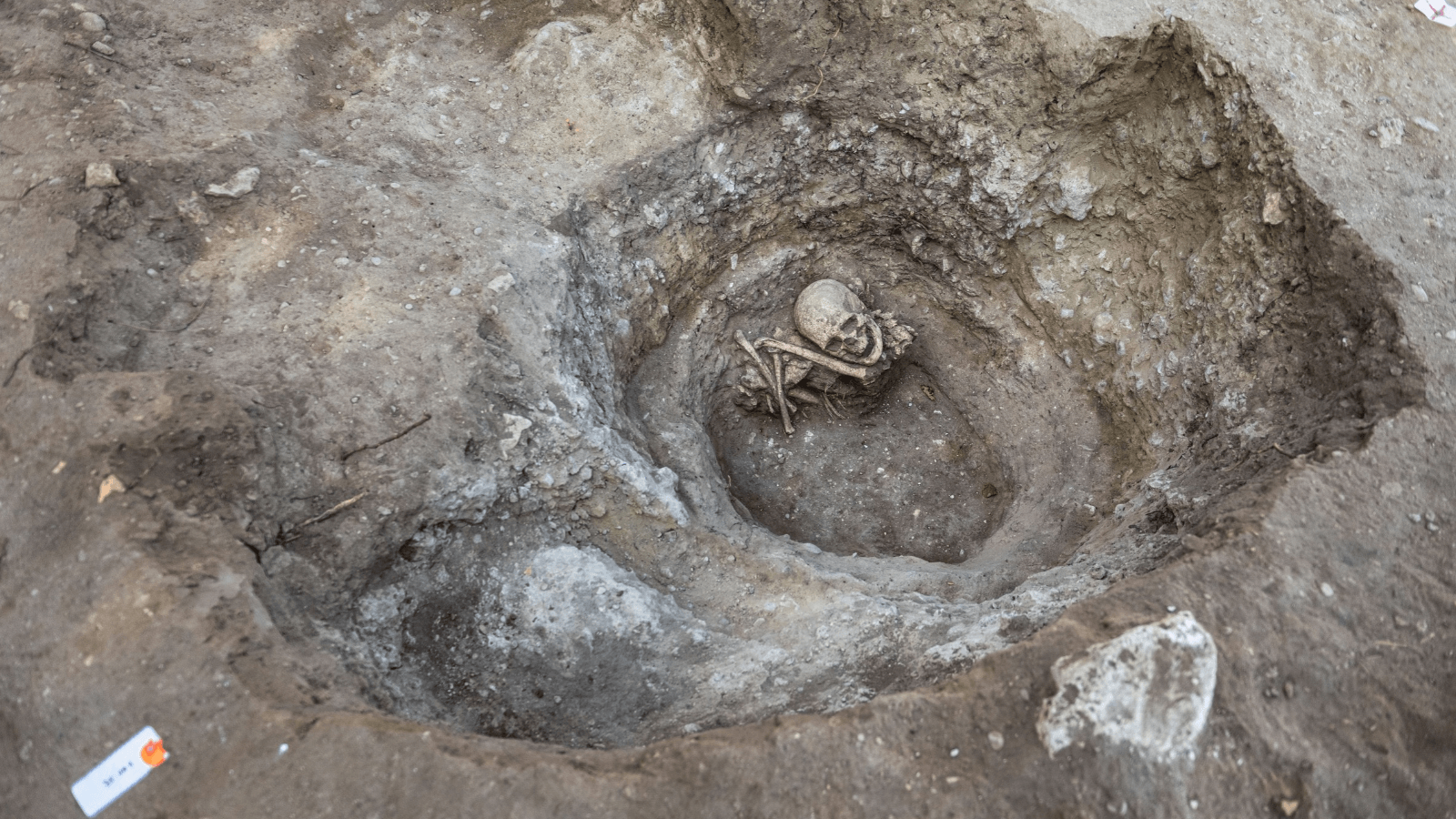
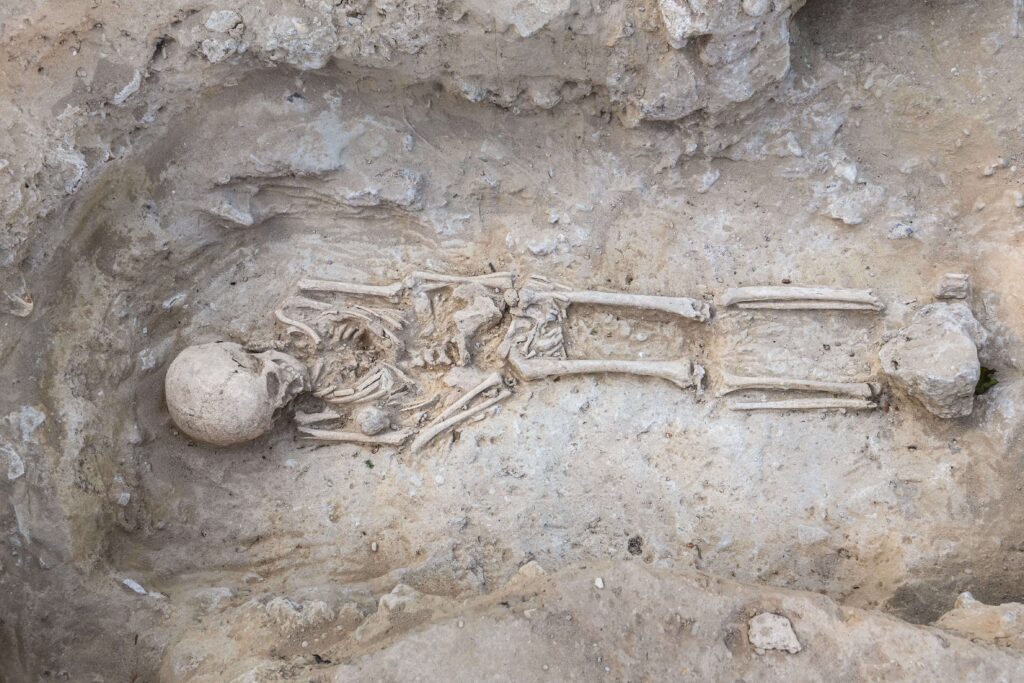
An adult buried in a seated position inside a narrow, well-like grave and a human-shaped menhir are among the discoveries at a Neolithic cemetery near Paris. Archaeologists uncovered the unusual remains at Champigny-sur-Marne, where excavations have revealed a group of prehistoric graves and megalithic monuments.
According to the French National Institute for Preventive Archaeological Research (INRAP), the site contains 30 megalithic stone blocks, including a statue-menhir, 11 graves, and traces of wooden structures. Researchers date the principal Neolithic phase to approximately 4750–4300 BCE, during the Middle Neolithic period.
A Human-Shaped Menhir with a Carved Belt
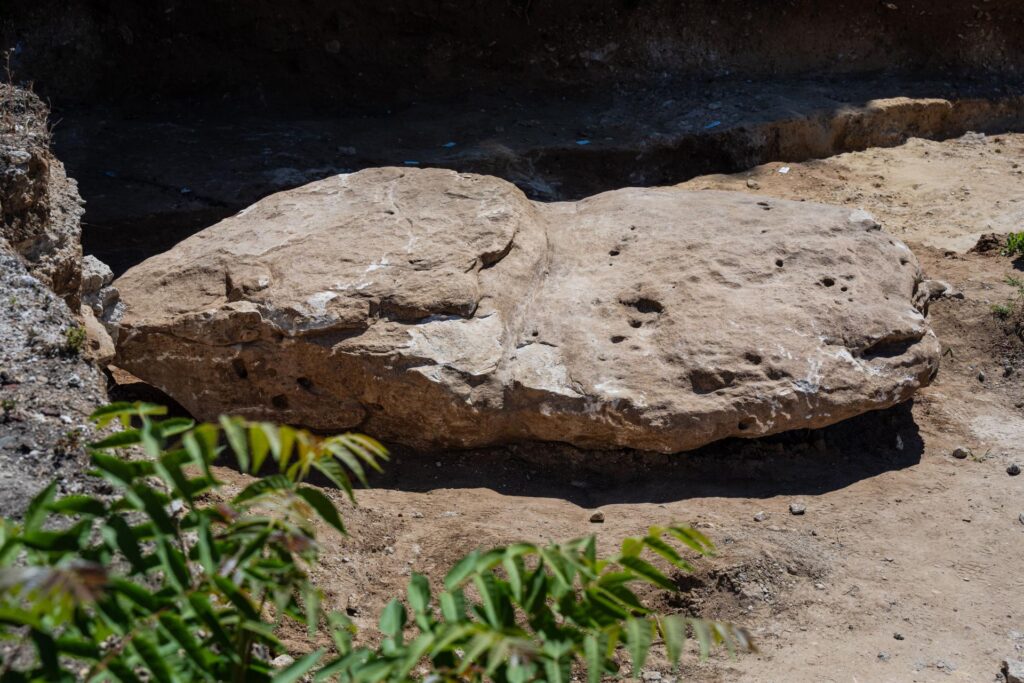
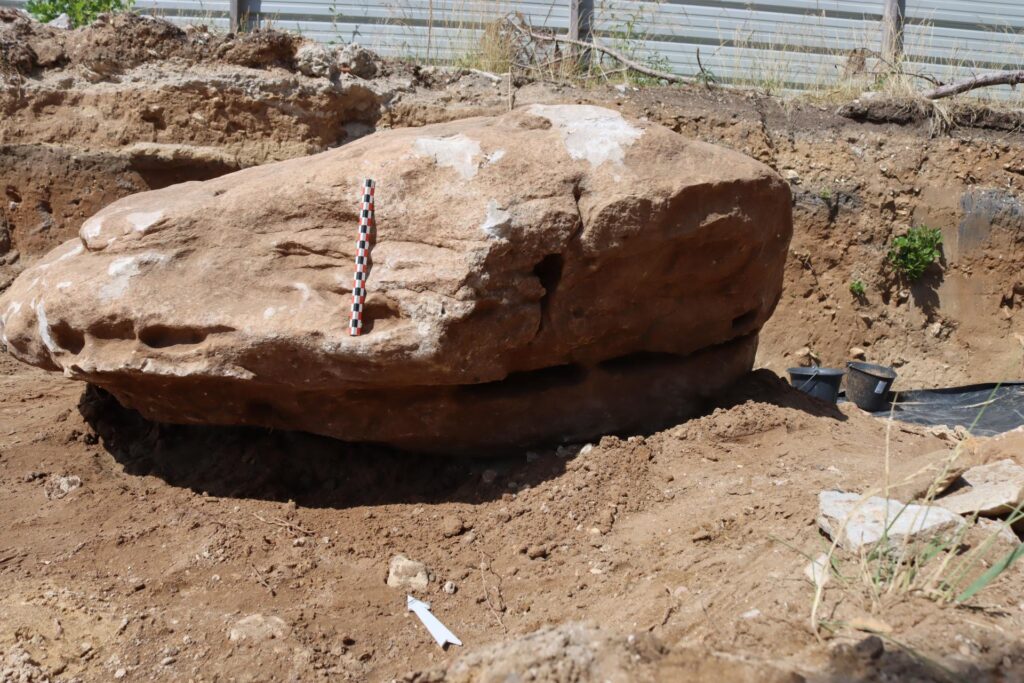
One of the most distinctive finds is a large stone monument decorated with markings that suggest a human figure. Archaeologists have identified it as a statue-menhir, a form of megalithic monument incorporating anthropomorphic features.
The stone bears pecked and grooved markings, including a motif resembling a belt. These details distinguish it from an undecorated standing stone and indicate that its makers deliberately incorporated elements associated with the human body.
Statue-menhirs are known from several parts of prehistoric Europe, although their forms and decoration vary considerably. Researchers have proposed different interpretations of these monuments, including representations of individuals or figures with symbolic significance.
At Champigny-sur-Marne, the monument was discovered among other large stone blocks in an area that also contained burials. Its archaeological context may help establish how the stone was used, but its precise function and relationship to the graves have yet to be determined.
An Adult Buried Sitting Inside a Narrow Grave
Another striking discovery came from a narrow, circular pit resembling a well. Inside, archaeologists encountered the remains of an adult buried in a seated position, with the lower legs and feet completely enclosed in calcite deposits.
The mineral deposits formed inside the grave after burial, preserving evidence of the conditions that developed around the body. The individual’s seated position makes the grave particularly interesting for researchers examining the diversity of Neolithic funerary practices.
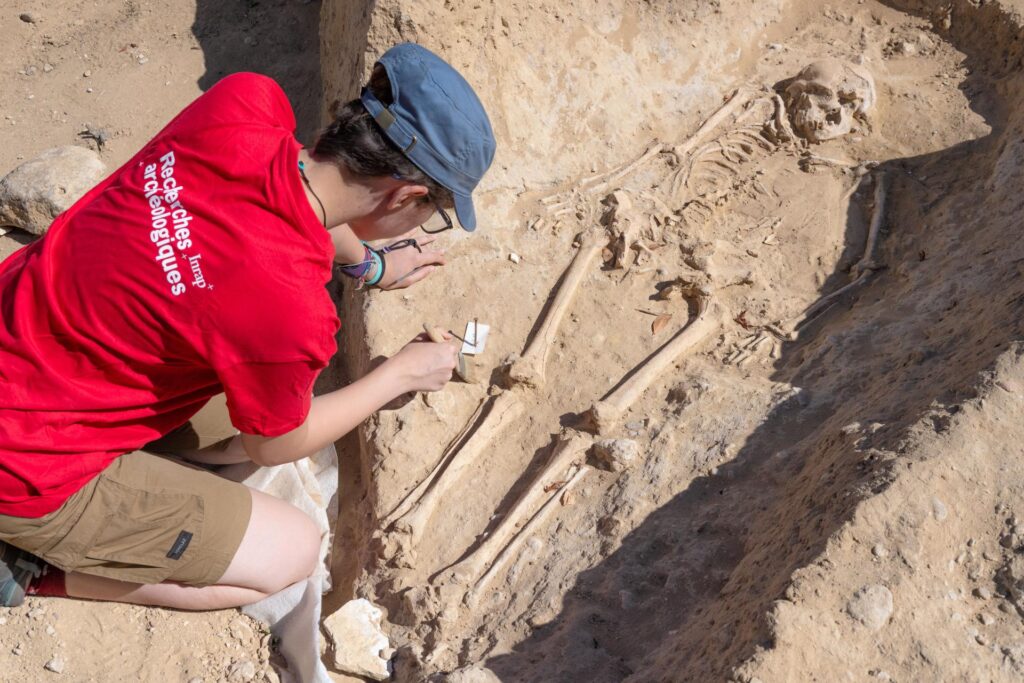
Across the Paris Basin, burial customs changed during the Middle Neolithic. Archaeologists have documented individuals placed in flexed positions, alongside graves constructed with wooden or stone elements and sometimes covered by earthen mounds.
The Champigny-sur-Marne burial adds to this archaeological record, but the reason for the seated position remains unknown. Neither the posture nor the unusual shape of the grave is sufficient to establish the individual’s identity, social standing, or the beliefs surrounding the burial.
Thirty Megalithic Blocks and Eleven Graves
Beyond the human-shaped menhir and seated burial, the excavations revealed evidence of structures combining earth, timber, and stone. Archaeologists also investigated an earthen, dome-like feature associated with wooden posts and stone elements.
These remains suggest that the burial ground included different forms of construction rather than a single type of funerary monument. Determining how the structures relate to one another will be essential for understanding the site’s development.
The discoveries are especially relevant to research on the Paris Basin, where funerary architecture became increasingly varied during the fifth millennium BCE. The use of stone and timber in burial settings reflects broader changes in how some Neolithic communities constructed places for their dead.
Archaeologist Romana Blaser presented preliminary findings from the Champigny-sur-Marne site at the Île-de-France Archaeology Research Meeting in December 2025. The excavation adds important evidence to the study of Middle Neolithic burial practices in northern France.
A central question now concerns the chronology of the stone monuments and graves. Establishing whether they were constructed during the same period or represent successive phases of use could clarify how this burial ground developed and how its different monuments were connected.
Cover Image: A Neolithic burial pit at Champigny-sur-Marne containing the remains of an adult buried in a seated position. Credit: © Hamid Azmoun / Inrap