
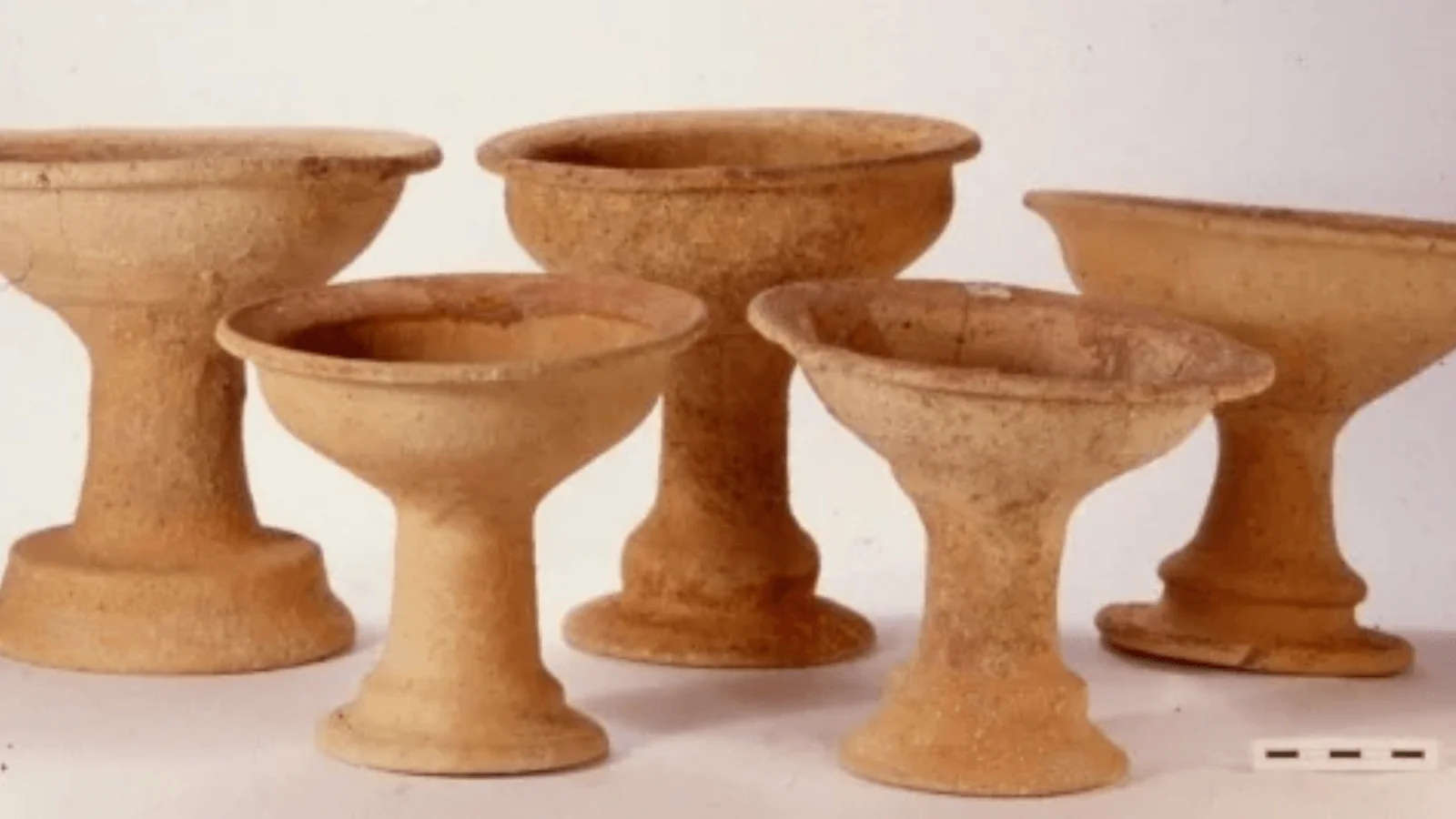
Nearly 3,000 years ago, mourners at ancient Pella in present-day Jordan placed ceramic cups alongside their dead, sometimes positioning them beneath the heads of the deceased. The vessels bore signs of burning, suggesting they had been used in ceremonies whose details remained unknown.
Now, chemical analysis of seven of these cups has identified organic compounds potentially linked to aromatic plants and exotic spices, including black pepper. The findings suggest that funerary traditions at Pella may have involved specialized plant substances, some possibly obtained through long-distance exchange networks connecting the Near East with distant regions.
The research, published in the Journal of Archaeological Science: Reports, offers new evidence of ritual practices and cultural connections during a period traditionally associated with the disruption of Bronze Age trade networks.
An Ancient Tomb with Unusual Burial Offerings
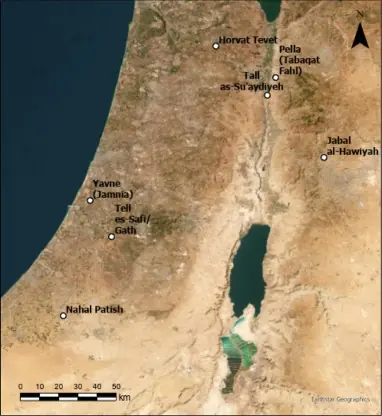
Archaeologists discovered Tomb 89 at Pella in 1987. The undisturbed communal burial, dating to approximately 1000–900 BCE, contained the remains of at least 82 individuals and numerous funerary offerings, including 21 ceramic chalices.
Several cups occupied unusual positions close to the deceased, including beneath their heads. Burning marks on the vessels suggested that they had once been exposed to heat, potentially during ceremonies involving aromatic substances.
Researchers Prudence Sheaves, Kang-Yu Peng, Stephen Bourke, and Ben Crossett examined seven chalices using liquid chromatography–mass spectrometry (LC-MS). The technique allowed them to investigate organic residues preserved in the ceramics and identify a range of chemical compounds.
Possible Black Pepper Traces Suggest Distant Trade Connections
Among the most intriguing results were chemical signals associated with piperine in three vessels. Piperine is particularly abundant in black pepper (Piper nigrum), a spice originating in South Asia.
Its possible presence raises the prospect that valuable plant products circulated between distant regions during the early Iron Age. However, the researchers’ identification remains tentative, and the chemical evidence alone cannot establish that the cups contained Indian black pepper.
The analysis also identified compounds potentially associated with wormwood (Artemisia) and other aromatic plants. Some species have medicinal or psychoactive properties, but the findings do not demonstrate that the inhabitants of Pella deliberately used these substances to alter consciousness.
Together, the results suggest that the vessels may have contained different plant-based preparations rather than a single standardized funerary offering.
Aromatic Substances in Funerary Ceremonies
The location of the chalices provides an important archaeological context for interpreting their contents. Their association with human remains suggests that the cups formed part of burial practices rather than ordinary domestic activities.
The burning marks strengthen the possibility that mourners heated or burned substances during ceremonies. Researchers cannot yet establish exactly how the materials were prepared, whether they produced scented smoke, or what symbolic meaning participants attached to them.
The findings also raise questions about social distinctions within the burial community. Access to particular substances, especially those obtained through distant exchange networks, may have reflected differences in status or ritual importance, although the evidence cannot establish such a relationship conclusively.
Ancient Connections After the Bronze Age Collapse
The discoveries are particularly interesting because Tomb 89 dates to a period following widespread political and economic disruption across the eastern Mediterranean. The collapse of major Bronze Age kingdoms transformed established trading systems, but regional and long-distance contacts did not necessarily disappear.
If further analysis confirms the presence of imported plant products, the Pella chalices could provide additional evidence of exchange networks operating during this transitional period. The findings may also help explain how communities incorporated unusual materials into ceremonies honoring their dead.
For now, the researchers emphasize that several chemical identifications require further confirmation, and only seven of the tomb’s 21 chalices have undergone analysis. Even with these limitations, the study demonstrates how microscopic residues preserved in ordinary-looking pottery can reveal important details about ancient burial customs and the movement of valuable substances.
Cover Image: Ceramic chalices from Tomb 89 at ancient Pella in Jordan. Chemical analysis of similar vessels identified possible traces of aromatic plants and exotic spices used in Iron Age funerary rituals. Source: Sheaves et al., Journal of Archaeological Science: Reports
Scientific reference: Sheaves, P., Peng, K.-Y., Bourke, S., & Crossett, B. Closer to the gods: Residue analysis of chalices from Tomb 89, Pella, Jordan. Journal of Archaeological Science: Reports, 76, 106107. DOI: 10.1016/j.jasrep.2026.106107.