
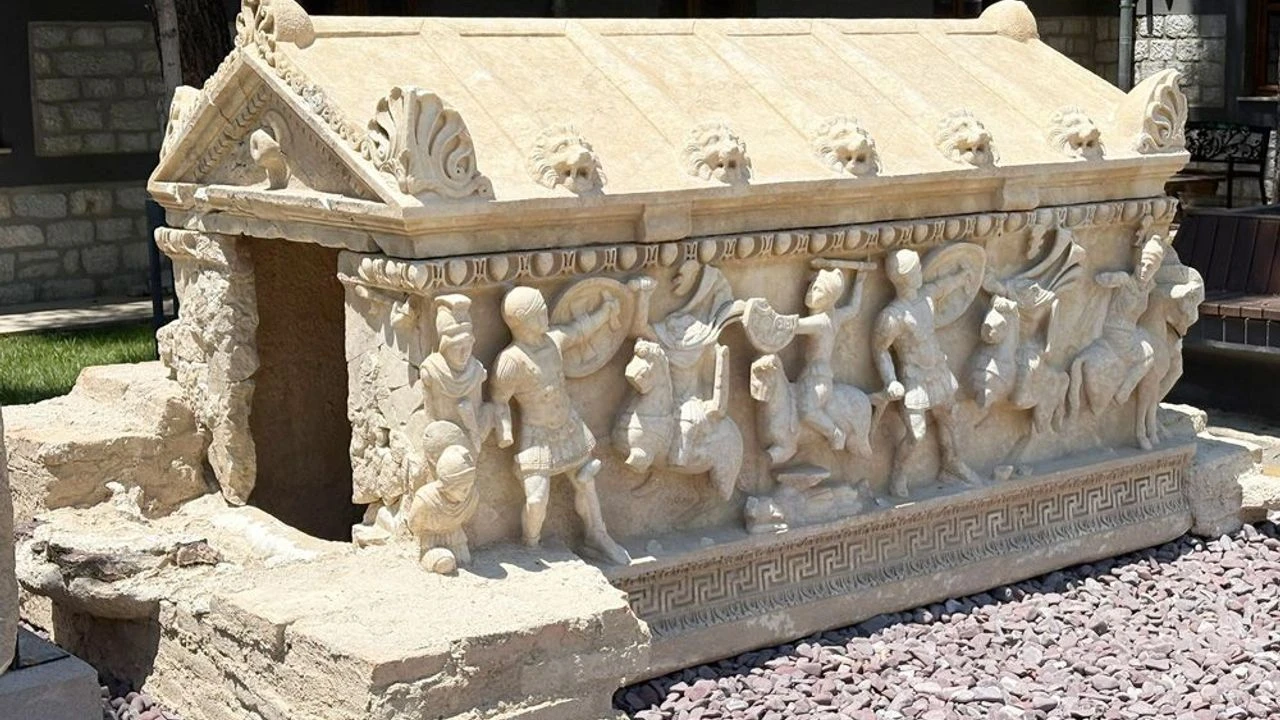
An approximately 1,800-year-old Roman sarcophagus decorated with scenes of legendary Amazon warriors is attracting renewed attention in western Türkiye. Originating from the territory of the ancient city of Eumeneia, near modern-day Çivril in Denizli Province, the elaborately carved monument is now displayed in the garden of the Denizli City Museum.
Dating to the late second or early third century AD, the marble sarcophagus features a dramatic confrontation between the Amazons, the formidable female warriors of Greek mythology, and their male opponents. The subject, known as Amazonomachy, was a popular theme in Greek and Roman art, frequently appearing on funerary monuments.
A Mythological Battle Carved in Marble
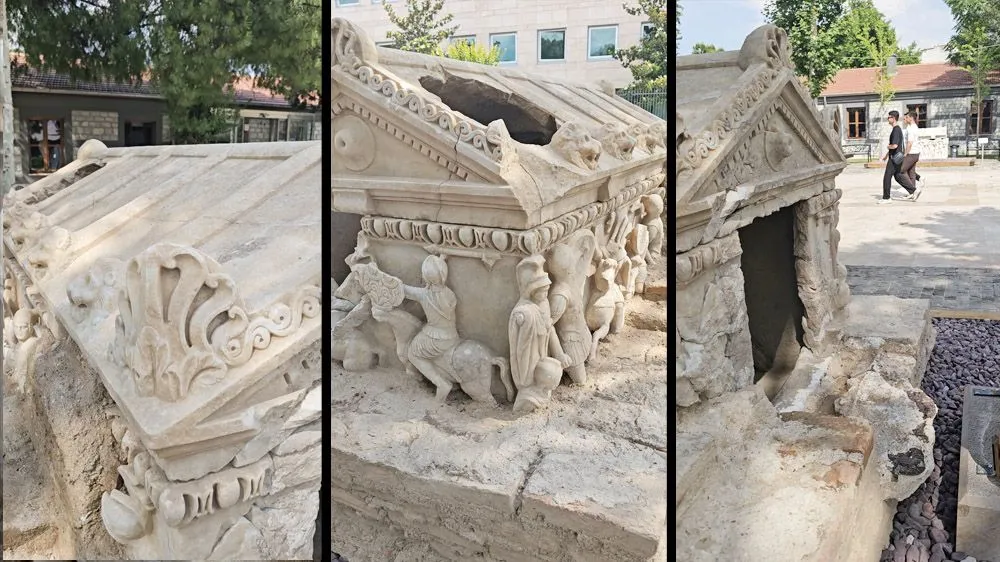
The sarcophagus is distinguished by its high-relief figures, which create a sense of movement and conflict across the stone surface. Among the depicted warriors are mounted figures carrying shields, while armored opponents confront them in closely arranged battle scenes.
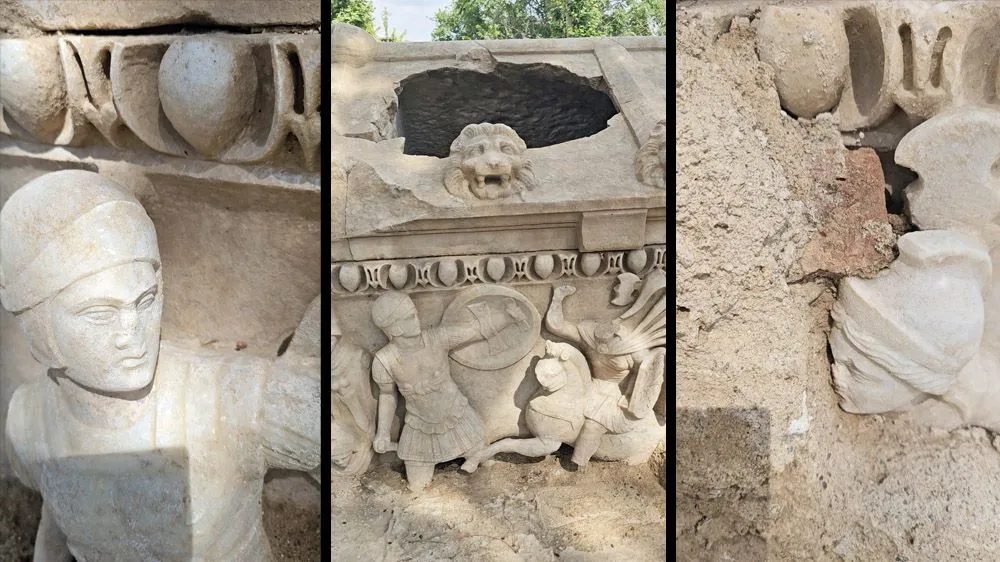
Associate Professor Devrim Alkaya described the monument’s decorative features, including its pitched-roof lid, carved lion heads, and architectural ornamentation. The sarcophagus also bears visible damage, with sections of its body and lid broken or missing.
In classical mythology, the Amazons represented a powerful society of female warriors who fought legendary Greek heroes, including Heracles, Theseus, and Achilles. Their battles became a recurring artistic subject, often associated with courage, conflict, and the struggle between opposing forces.
On Roman sarcophagi, such mythological imagery could communicate ideas about heroism, mortality, and the deceased person’s social identity. The precise meaning intended for the Eumeneia monument, however, remains uncertain.
Eumeneia’s Roman Heritage
The sarcophagus originated from the wider territory of Eumeneia, an ancient settlement in Phrygia associated with the Hellenistic Kingdom of Pergamon. The city was named in honor of King Eumenes II and later developed under Roman rule. Its position near the Maeander Valley connected it to an important regional network of settlements and routes.
Although the monument’s original burial context and the identity of its occupant have not been established in the available reports, its intricate reliefs illustrate the importance of mythological imagery in Roman funerary art.
Today, the Amazon sarcophagus stands in the garden of the Denizli City Museum, preserving a striking example of the artistic traditions that once flourished in Roman Anatolia.
Cover Image: The approximately 1,800-year-old Amazon sarcophagus from ancient Eumeneia, displayed at the Denizli City Museum in Türkiye. Its marble reliefs depict a mythological battle between Amazons and Greek warriors. Credit: Assoc. Prof. Dr. Devrim Alkaya / Denizli Güneş