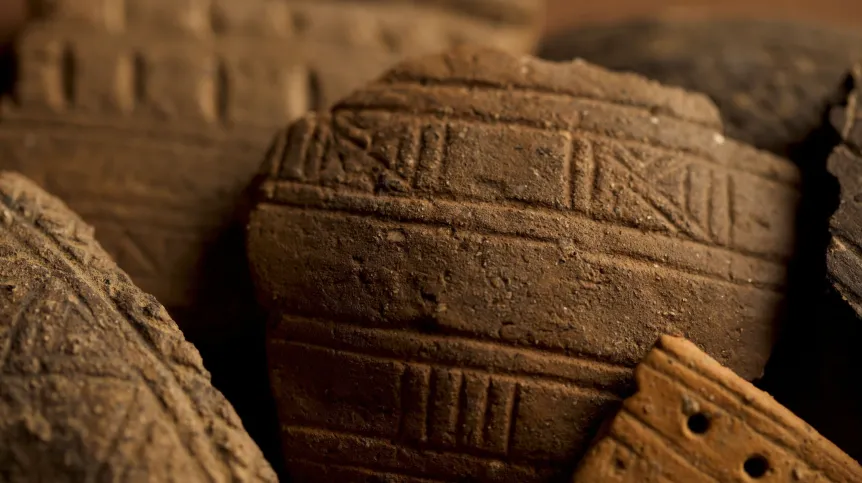
A few broken pots from northeastern Poland have preserved a surprisingly vivid trace of prehistoric life: the remains of fermented alcoholic drinks consumed around 4,500 years ago.
Researchers from the University of Warsaw and Lodz University of Technology identified chemical residues inside ceramic fragments from Supraśl in the Northern Podlasie Lowland and Skrzeszew in the Mazovian Lowland. The vessels were not ordinary kitchenware. They came from funerary and ritual contexts, suggesting that alcohol may have played a role in ceremonies connected with death, memory and community identity.
The study, published in Archaeometry and reported by PAP, pushes the chemical evidence for alcoholic beverages in this part of Poland back to the second half of the third millennium BC.
Traces preserved in ritual pottery
Most of the analysed vessels are linked to the Bell Beaker phenomenon, one of the most recognizable archaeological traditions of Late Neolithic and Early Bronze Age Europe. Known for its distinctive inverted bell-shaped cups, the Bell Beaker world spread widely across Europe between roughly 2800 and 1800 BC.
At Supraśl, the pottery came from four funerary-ritual features associated with this cultural horizon. Another fragment from Skrzeszew belonged to a ritual setting connected with the early Trzciniec Cultural Sphere, a later tradition that developed in parts of Central and Eastern Europe.
That detail matters. It suggests that alcohol-related customs may not have disappeared with the first Bell Beaker communities. Instead, they may have continued, changed or merged with new Bronze Age practices.
A beer-like drink, but not modern beer
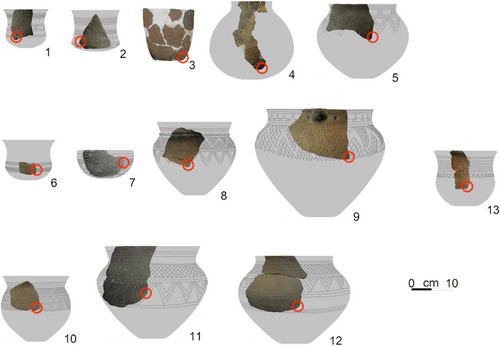
The research team selected 13 pottery sherds from a larger group of 43 fragments. Because the analysis damages the samples, only a limited number could be tested. Using gas chromatography coupled with mass spectrometry, the scientists searched for organic compounds absorbed into the ceramic fabric.
At least nine vessels appear to have once contained fermented beverages. The residues included chemical markers associated with fermentation, including organic acids and compounds linked to yeast or bacterial activity.
The drink was probably not beer in the modern sense. Researchers describe it more cautiously as beer-like, or possibly similar to a mixed fermented beverage sometimes called Nordic grog. Such drinks may have combined cereals with fruits, herbs, resins or other plant ingredients.
Some traces may point to wheat or barley. Others may suggest fruits such as cherries or raspberries. Resin-related compounds raise the possibility that tree resins were added for preservation, flavour or aroma.
The result is not a reconstructed recipe, but a chemical outline of a drink that may have been sour, cloudy and aromatic.
Alcohol, exchange and prehistoric ceremony
The discovery is especially important because northeastern Poland was not a strongly agricultural landscape at the time. Clear evidence for local cereal cultivation appears much later in the region. If wheat or barley helped produce these drinks, the ingredients may have arrived through exchange networks from farming areas such as Kuyavia or the Chełmno Land.
That turns the vessels into more than evidence of prehistoric drinking. They also point to contact, movement and social connection across different parts of Europe.
In a ritual setting, fermented drink may have carried meaning beyond taste. It could have been consumed during funerary gatherings, shared among participants or offered as part of a ceremony. Archaeology cannot recover the voices around those vessels. But chemistry has preserved something close to an aftertaste.
What remained inside the clay was not the drink itself, but the trace of a social world gathered around it.
Manasterski, D., K.Januszek, A.Rosiak, A.Cetwińska, and J.Kałużna-Czaplińska. 2026. “The Oldest Traces of Alcoholic Beverages in the Border Zone of the North and East European Plains.” Archaeometry68, no. 2: 153–172. https://doi.org/10.1111/arcm.70024.
Cover Image Credit: Fragments of Bell Beaker vessels from ritual features at Supraśl. Miron Bogacki.