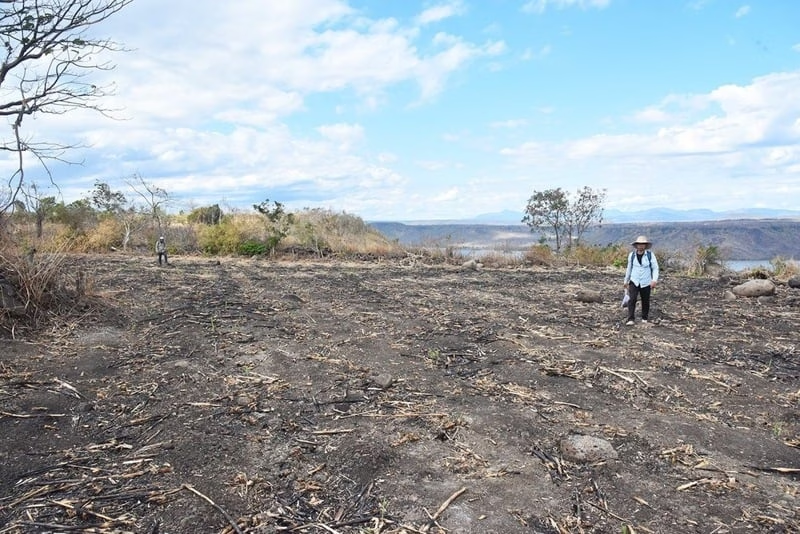
Archaeologists in Vietnam’s Central Highlands have uncovered a prehistoric site that reshapes our understanding of both technology and music in early societies. Excavations at Plei Ring, located in Chu Se district of Gia Lai province, revealed the remains of a large opal stone workshop alongside a set of rare lithophones, or stone xylophones, dating back more than 3,500 years.
Evidence of Large-Scale Stone Tool Production
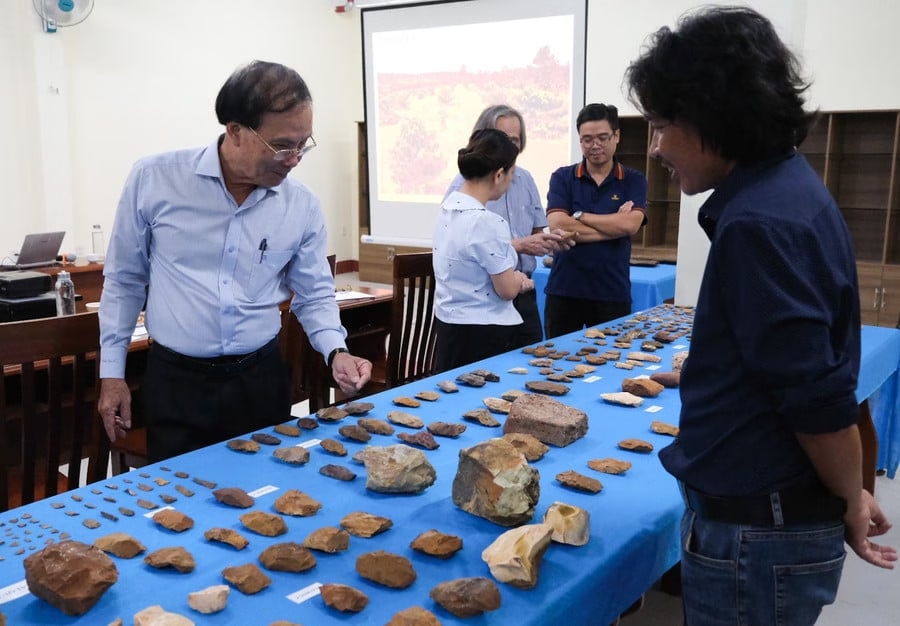
Excavations carried out between March and June 2025 show that Plei Ring was not a simple settlement but an organized production hub. According to Dr. Nguyen Quoc Manh, deputy director of the Archaeological Center, the site operated as a large-scale opal workshop between 3,500 and 3,000 years ago. Hundreds of broken and discarded tools point to mass production, strict quality control, and an early division of labor—clear signs of an increasingly complex agricultural society dependent on durable stone implements.
Music from the Stone Age
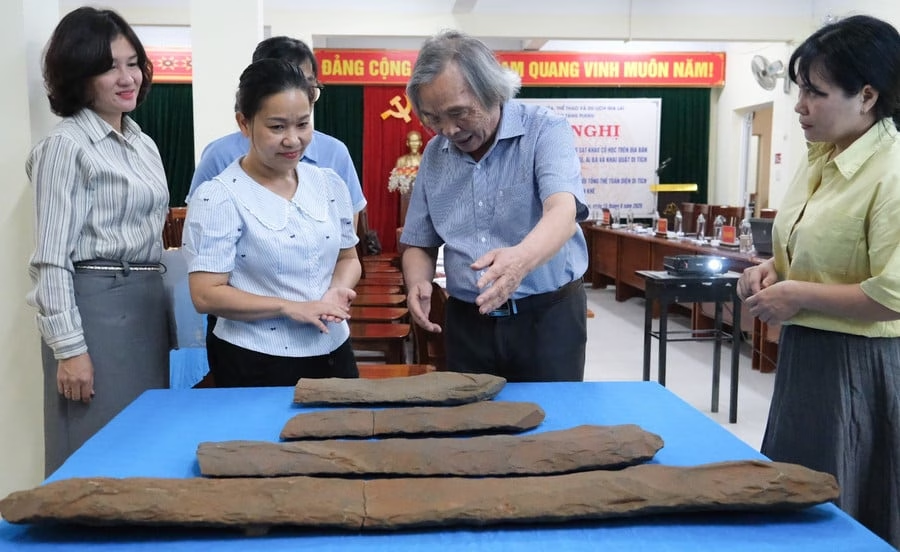
Among the most remarkable discoveries at the site was a set of lithophones—prehistoric instruments made of carefully shaped stone slabs that resonate when struck with wooden mallets. Considered among the oldest musical instruments in the world, lithophones in Vietnam date back at least 3,000 years. Researchers suggest they were likely played in rituals, communal gatherings, and seasonal festivals, offering a rare glimpse into the spiritual and artistic dimensions of early Vietnamese culture.
A Testament to Creativity
While stone tools served as essential survival instruments, lithophones reflect something deeper: the human drive to create rhythm, sound, and art. Scholars argue that their presence in a major workshop site indicates that music was not a marginal activity but a vital element of community life, reinforcing both social bonds and symbolic beliefs.
Toward World Heritage Recognition
The findings were presented on August 15 at a conference organized by the Pleiku Museum and the Southern Institute of Social Sciences. Experts emphasized the urgent need to preserve Plei Ring and suggested linking it with other key archaeological sites in the region, such as Roc Tung-Go Da in An Khe, to prepare a potential UNESCO World Heritage nomination. With more than 50 newly identified prehistoric sites in Chu Se district alone, Gia Lai is rapidly emerging as a crucial center for studying Vietnam’s ancient past.
An Ancient Sound That Still Resonates
Far from being relics of a forgotten age, lithophones continue to inspire modern audiences. Contemporary Vietnamese musicians have revived the instrument for concerts and cultural showcases, bridging thousands of years of history through sound. The Plei Ring discovery underscores Vietnam’s role as a cradle of prehistoric innovation—where stone was not only shaped into tools of survival but also transformed into instruments of art and expression.