
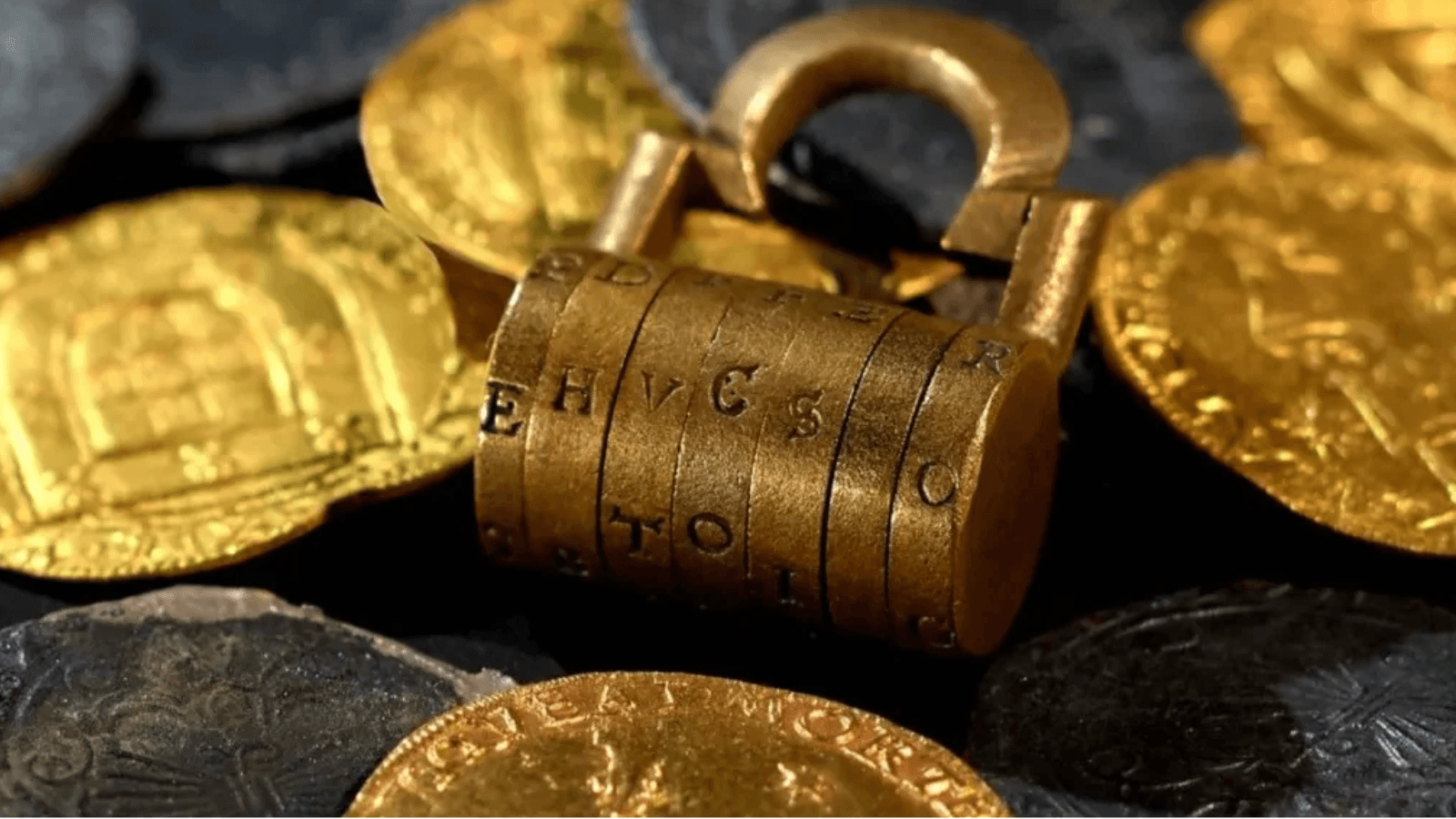
A brass combination lock associated with a merchant ship wrecked on the Welsh coast in 1583 has finally been opened after researchers discovered its four-letter code. Found among Spanish silver coins, the small object had resisted attempts to unlock it for decades.
Specialists from Amgueddfa Cymru – Museum Wales and Cardiff University used micro-computed tomography (micro-CT) scanning to examine the lock without damaging it. The technology revealed the arrangement of its internal mechanism, allowing researchers to identify the correct combination.
A 400-Year-Old Lock with 1,296 Possible Combinations
The brass lock has four rotating rings, each containing six different letters. Together, they create 1,296 possible combinations, with the correct sequence requiring precise alignment with a metal loop at the top.
Dr David Williams, a researcher at Cardiff University’s School of Engineering, used micro-CT scans to produce detailed three-dimensional images of the mechanism. The technology, more commonly used to examine bones and other biological structures, allowed him to study the internal notches without dismantling the historic object.
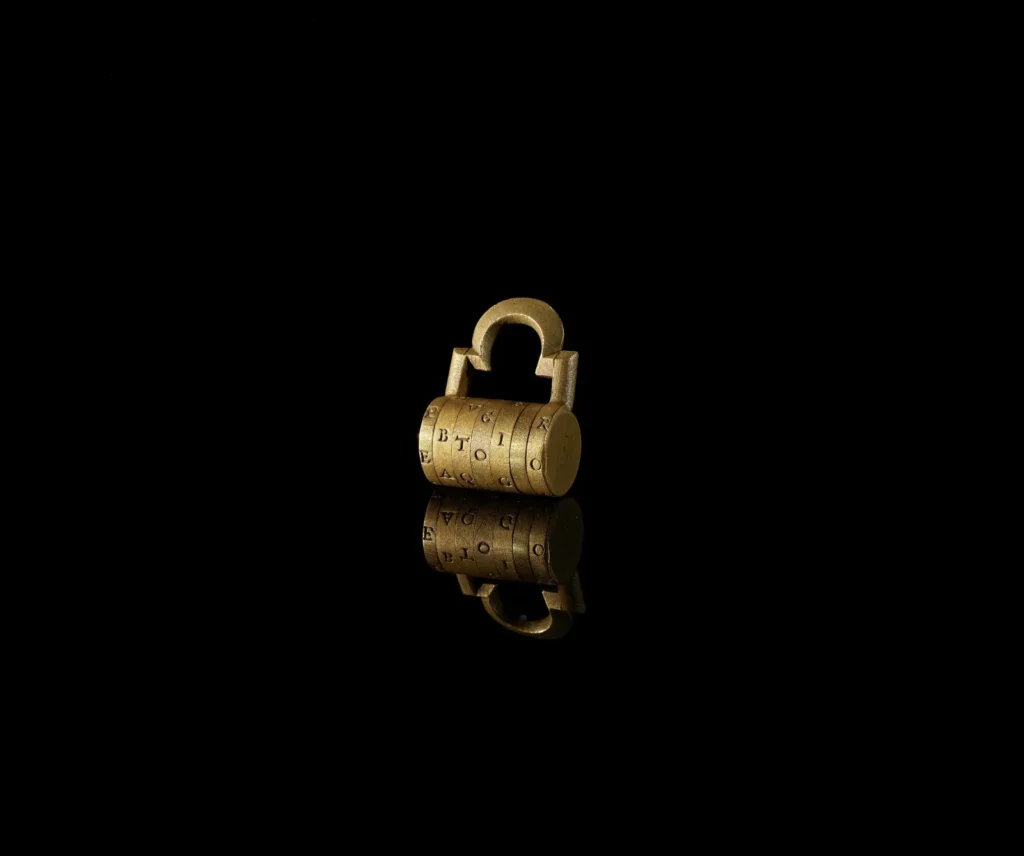
After examining the scans, Williams identified how the notches corresponded to the letters on the rotating rings. Museum specialists subsequently tested the combination and successfully opened the lock.
The code was ANCE. Researchers have not established whether the four letters had a particular meaning for the original owner or were simply chosen as a security combination.
The Merchant Ship Lost in a Storm in 1583
The lock forms part of a collection of artefacts associated with the Ann Francis, an English merchant ship that sailed from King’s Lynn in Norfolk to the Iberian Peninsula carrying wheat.
On December 28, 1583, the vessel was returning from Spain with payment for its cargo and other commercial goods when a violent storm drove it off course. The ship eventually wrecked on Margam Beach, near present-day Port Talbot in South Wales.
The disaster also left an extensive historical record.
According to research published by Amgueddfa Cymru, documents from England’s Star Chamber court describe disputes over the wreck and the goods recovered from it. The vessel’s owner, Francis Shaxton, later attempted to reclaim his property.
An inventory from the period lists cannons, anchors, ropes, textiles, spices, Spanish silver and three chests whose locks had been broken. The existence of these chests raises the possibility that the newly opened combination lock belonged to one of them, although researchers have not established a direct connection.
Spanish Silver Coins and a Remarkably Preserved Lock
Objects associated with the Ann Francis began appearing on Margam Beach during the twentieth century. Between 1996 and 2017, metal detectorist Peter Hughes recovered most of a collection that includes approximately 870 gold and silver coins, alongside personal belongings and equipment associated with life aboard the ship.
Earlier discoveries at the same beach, dating back to the 1970s, included navigational instruments and a boatswain’s whistle. Together, these finds helped researchers connect the archaeological material to the historically documented wreck.
Hughes discovered the brass combination lock in 1999. Despite spending more than four centuries beneath the sand, its rotating rings still moved freely. He spent approximately 20 years trying to discover the correct combination without success.
The lock was found among Spanish silver coins, close to two weights used for checking the weight of currency. Researchers believe it may once have secured a small chest containing coins, valuable possessions or important documents, although its original contents remain unknown.
Alastair Willis, Senior Curator for Numismatics and the Welsh Economy at Amgueddfa Cymru, explained that Elizabethan combination locks are already known in Britain. This example stands out because of its exceptional preservation and association with a shipwreck whose date is established through historical records.
A Shipwreck Linked to International Trade
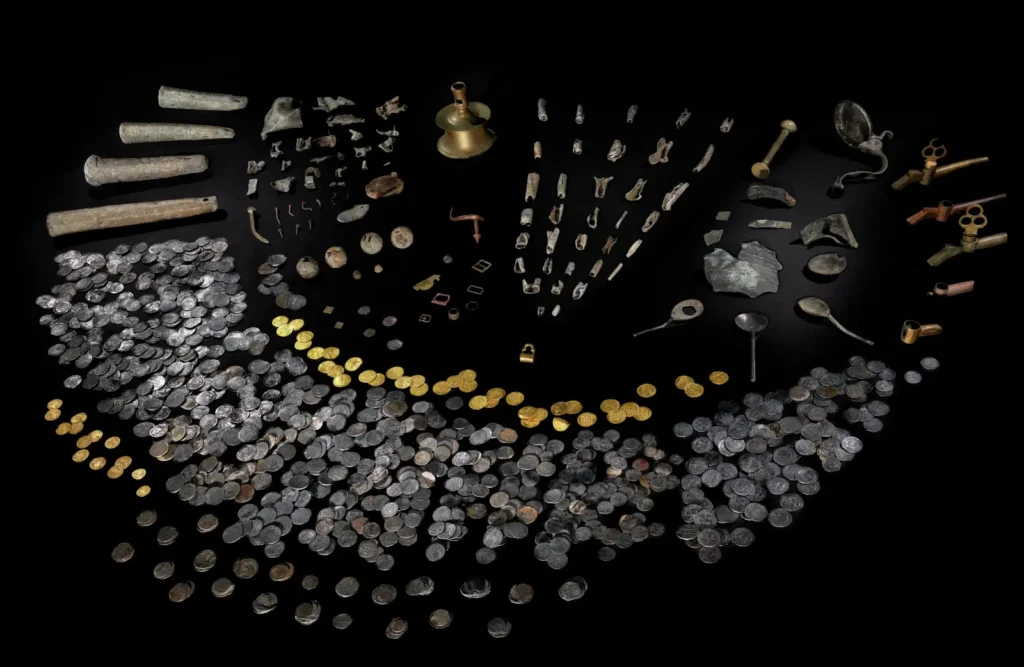
The wider Ann Francis collection provides evidence of the commercial networks connecting England, continental Europe and the Americas during the sixteenth century.
The recovered coins include Spanish and Portuguese gold, German silver and currency produced at early colonial mints in the Americas. More than 120 Mexican silver coins have been identified among the finds, including examples associated with the early years of Spanish coin production in Mexico City.
These objects illustrate how precious metals and currencies circulated through European maritime trade during the Elizabethan period. Their presence aboard a merchant vessel returning from Spain reflects the international character of the commerce in which the Ann Francis participated.
The combination lock and other artefacts from the wreck are now displayed at the National Waterfront Museum in Swansea as part of the Tides of Treasure exhibition.
Although modern scanning technology has revealed how the lock worked and provided the combination needed to open it, its original purpose remains uncertain. The meaning of the letters ANCE, known to someone aboard a sixteenth-century merchant ship, is still a mystery.
Cover Image: The four-ring brass combination lock recovered from the Ann Francis shipwreck, surrounded by historic coins. Researchers identified its four-letter code, ANCE, using micro-CT scans. Credit: Amgueddfa Cymru.