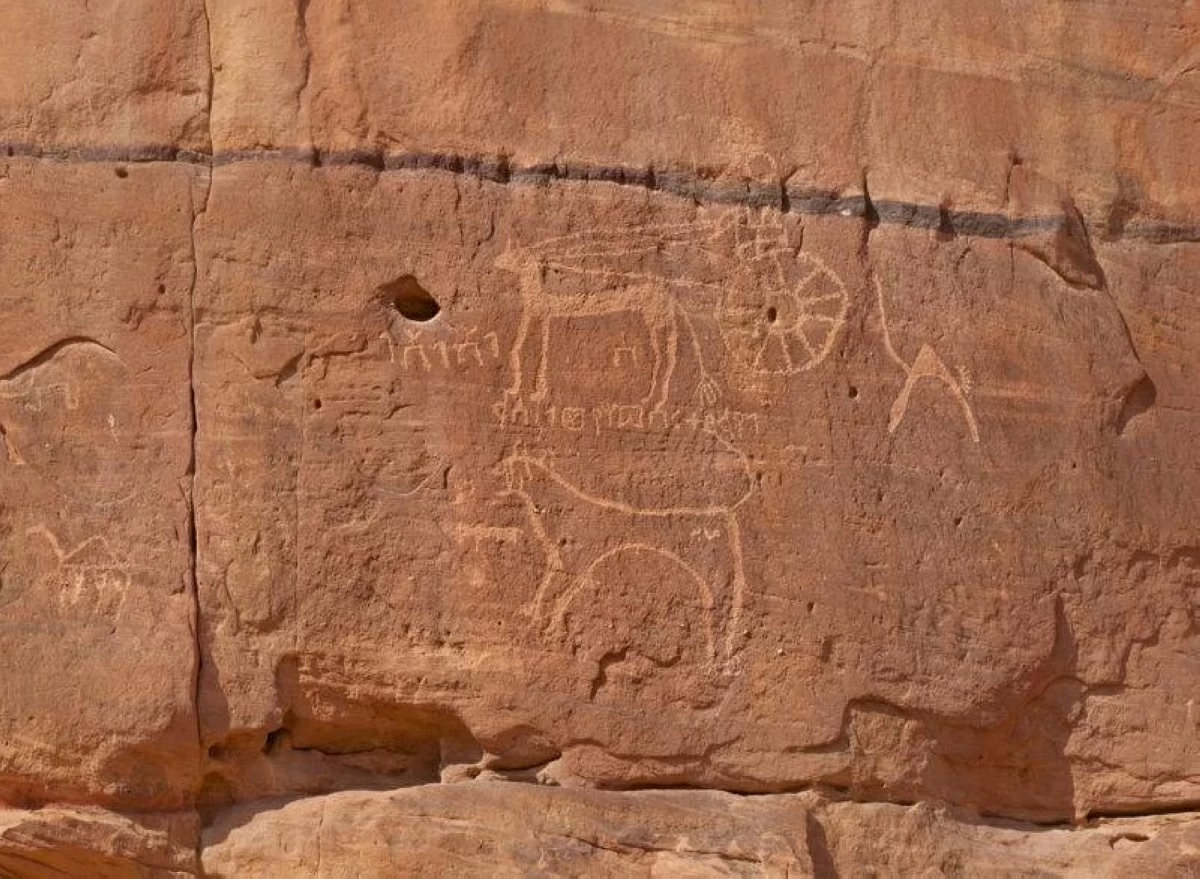
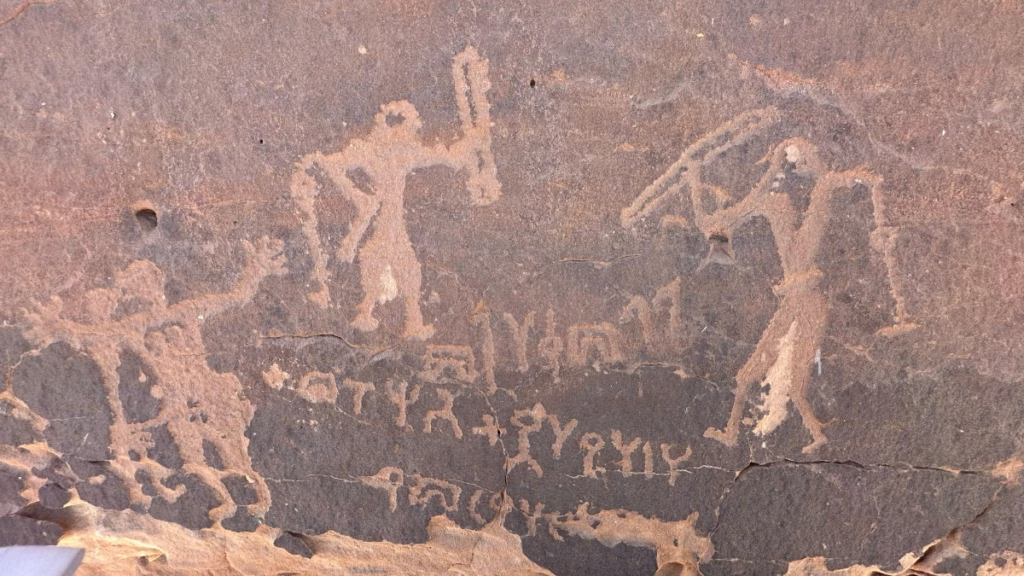
For thousands of years, the deserts of Arabia have served as vast canvases where people carved and painted images of daily life, beliefs, and encounters with animals. These rock engravings—depicting both human figures and creatures such as camels, horses, and goats—stand as silent witnesses of a deep cultural past. Yet, for archaeologists, the greatest challenge remains: when exactly were they made?
According to Australian archaeologist Professor Alison Betts, dating Arabia’s rock art is notoriously difficult:
“Most carvings are found on exposed rock surfaces without archaeological layers that could help us determine their age. In rare cases, engravings discovered in stratified contexts provide more reliable clues, but these are exceptions rather than the rule.”
Pre-Islamic Inscriptions Offer Clues
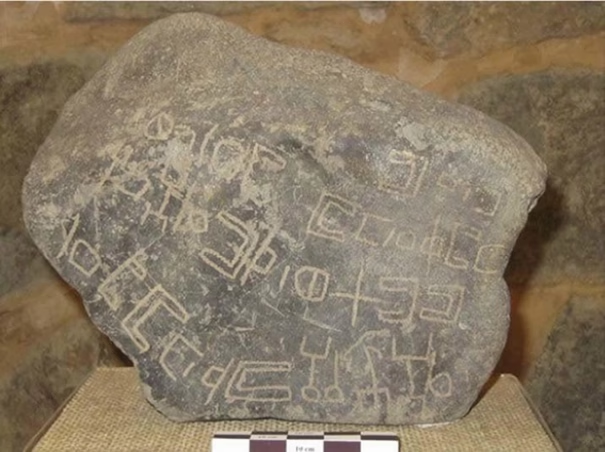
Much of Arabia’s known rock art is linked with inscriptions in pre-Islamic scripts such as Nabataean, Safaitic, Hismaic, and several Thamudic variants. These texts, written by nomads of the Syro-Arabian desert, date roughly from the mid-first millennium BCE to the Roman and Byzantine periods.
Safaitic inscriptions are generally assigned to the 1st century BCE to the 4th century CE, while Thamudic variants are thought to span from the 7th century BCE to the 3rd century CE. However, even when inscriptions appear next to images, scholars caution that they may not have been created at the same time.
Animals as Dating Markers
Animal depictions provide important, though imperfect, chronological hints:
- Horses likely arrived in northern and eastern Arabia during the second half of the 1st millennium BCE, meaning equine figures cannot predate this period.
- Camels, both wild and domesticated, dominate rock art scenes. Harnessed or ridden camels clearly belong to historical times, while depictions of camel hunting suggest earlier traditions.
- Exotic species like the two-humped Bactrian camel indicate later cultural contact and trade networks beyond the peninsula.
The Archaeologist’s Dilemma
Betts emphasizes that stylistic analysis and radiocarbon dating provide only partial answers:
“Comparing images stylistically with others of known date is subjective and often misleading. Even the presence of certain animal types only gives us a rough timeframe, not a precise date.”
Despite these challenges, Arabia’s rock art remains one of the richest visual archives of desert life. From nomadic raids and hunting expeditions to the gradual domestication of animals, these carvings preserve fragments of stories otherwise lost to time—though their exact chronology still eludes modern science.
This article was prepared using material from an article by Saeb Rawashdeh, published in The Jordan Times.