
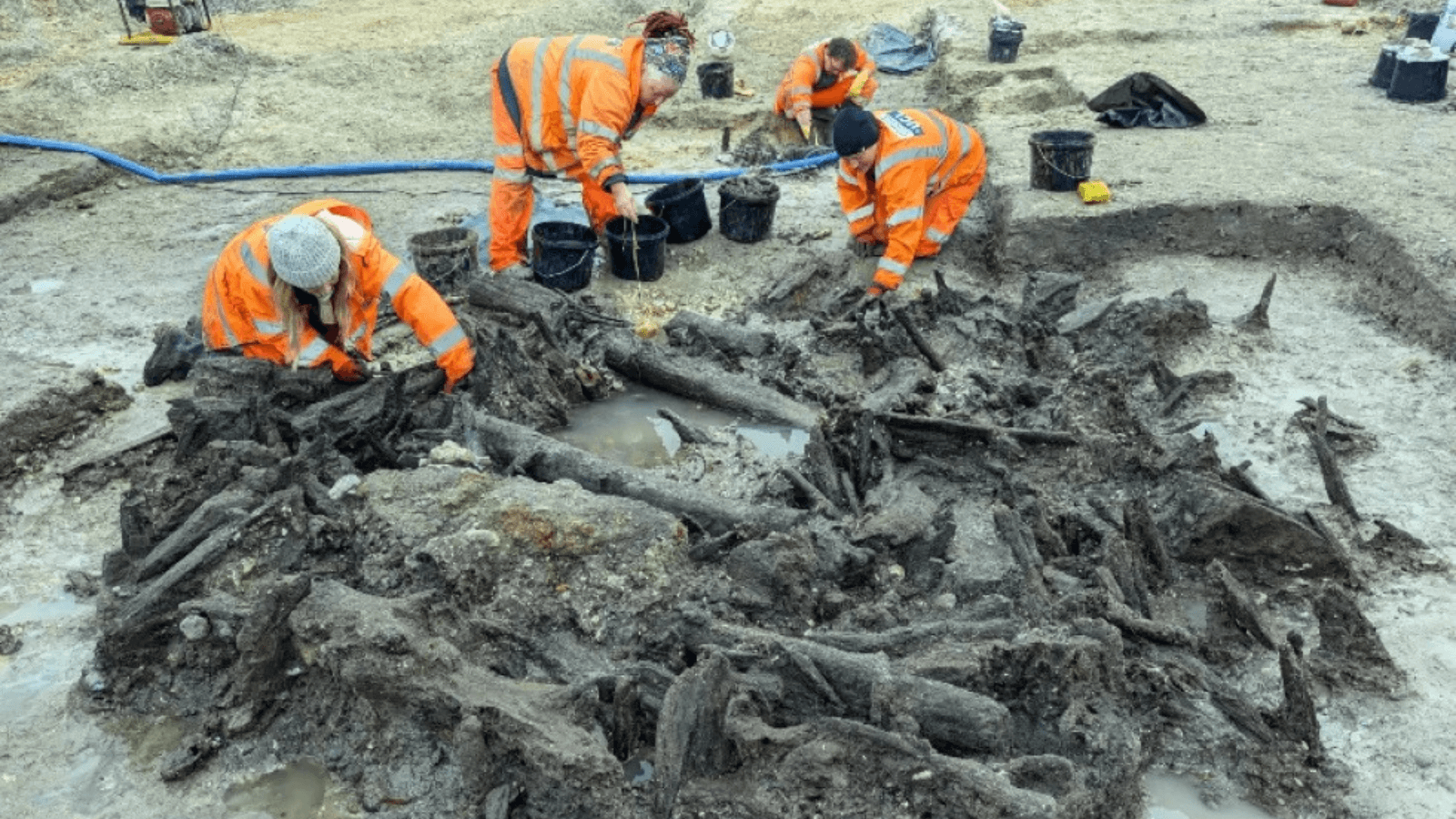
An Iron Age well in southern England still bears an unusual repair: a wooden shovel blade used to support its damaged side. It is one of five remarkably preserved wooden wells discovered near Southampton, where waterlogged ground also protected axe marks left by ancient carpenters. The discovery offers a rare glimpse of how people built, repaired and used wells across centuries of British history.
Archaeologists from Archaeology South-East, part of the University College London (UCL) Institute of Archaeology, discovered the wells beside a natural spring during excavations ahead of a new water pipeline between Otterbourne and Southampton in Hampshire. Radiocarbon dating places the construction of one well between 719 and 396 BC, making it an important example of Early Iron Age woodworking.
Iron Age Wells Built from Hollowed Oak Trees
Four of the five wells are thought to date to the Iron Age. Their builders hollowed out large oak trunks and lowered them into pits, creating structures that provided access to the spring water. The largest measures approximately 70 centimetres in diameter.
The surviving wood reveals how people maintained these structures. One well had a ring of supporting stakes, while another showed evidence of repairs using a wooden shovel blade to reinforce a broken section.
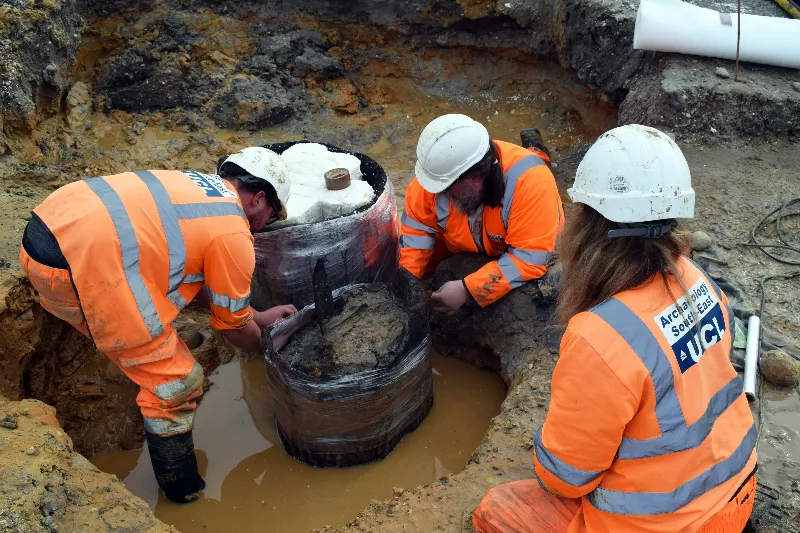
Wooden structures of this age rarely survive in such condition. At this site, however, the waterlogged soil restricted the supply of oxygen and slowed decomposition, preserving details that would normally have disappeared.
Excavation leader Rachael Geoghegan of UCL Archaeology South-East highlighted the exceptional condition of the timbers. “We can even see axe marks on some of the timbers,” she explained, pointing to evidence of the tools used to shape the ancient wooden structures.
Roman Builders Used a Different Construction Method
The fifth well belongs to the Roman period and displays a noticeably different design. Instead of hollowing out a tree trunk, its builders excavated a shallow rectangular pit and lined it with wooden planks and stakes.
The Roman structure incorporated substantial reused timbers alongside smaller roundwood stakes. Initial analysis suggests that oak remained the principal material, although the builders selected wood from both younger and older trees.
Excavating the Roman well presented a different challenge. Its overlapping timbers suggested several phases of construction, and Hannah Street, a waterlogged wood specialist at UCL Archaeology South-East, worked with the team to record their positions and understand how the structure had changed over time.
A Natural Spring Used for Centuries
The wells were built around a natural spring that appears to have remained important long after the earliest structures were constructed. Pottery fragments recovered from the wells and their surroundings indicate that people continued using the water source into the later Roman period.
The pottery does not prove that any single well remained in use for hundreds of years. It does, however, show that people continued using the spring long after the earliest oak wells were built.
Further Analysis May Reveal When the Wells Were Built
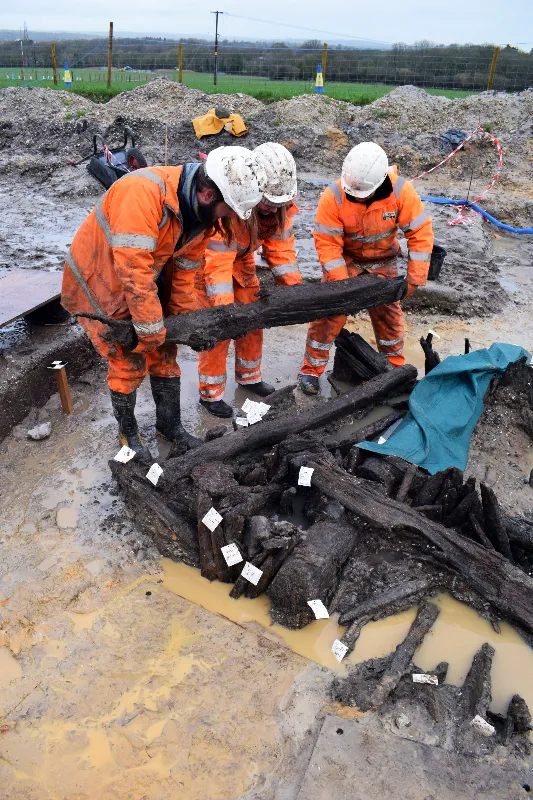
Following the excavation, specialists transported the fragile timbers to UCL Archaeology South-East’s laboratory in Portslade. They are preserving the wood in large water-filled tanks to prevent deterioration while examining tool marks, joints, and construction details.
Researchers are also using dendrochronology, which examines tree-ring patterns, to establish more precise dates for some of the Roman well timbers. The results could help clarify when the structure was built and how its construction relates to the earlier wells.
During the excavation, the team used photogrammetry to create three-dimensional records of the timber arrangements at successive stages. These models will allow researchers to revisit structural details even after removing the original wooden components from the ground.
Analysis of preserved pollen, plant remains, and soil samples may provide further information about the surrounding environment and how the site changed over time. Researchers also hope to determine when people eventually stopped using the spring.
The axe marks and the repurposed shovel blade give the discovery its human scale. They show not only how people built these wells, but also how they kept them working.
Cover Image: Archaeologists excavate a Roman-period wooden well constructed from large reused timbers and smaller stakes near Southampton, Hampshire. Credit: UCL Archaeology South-East.