
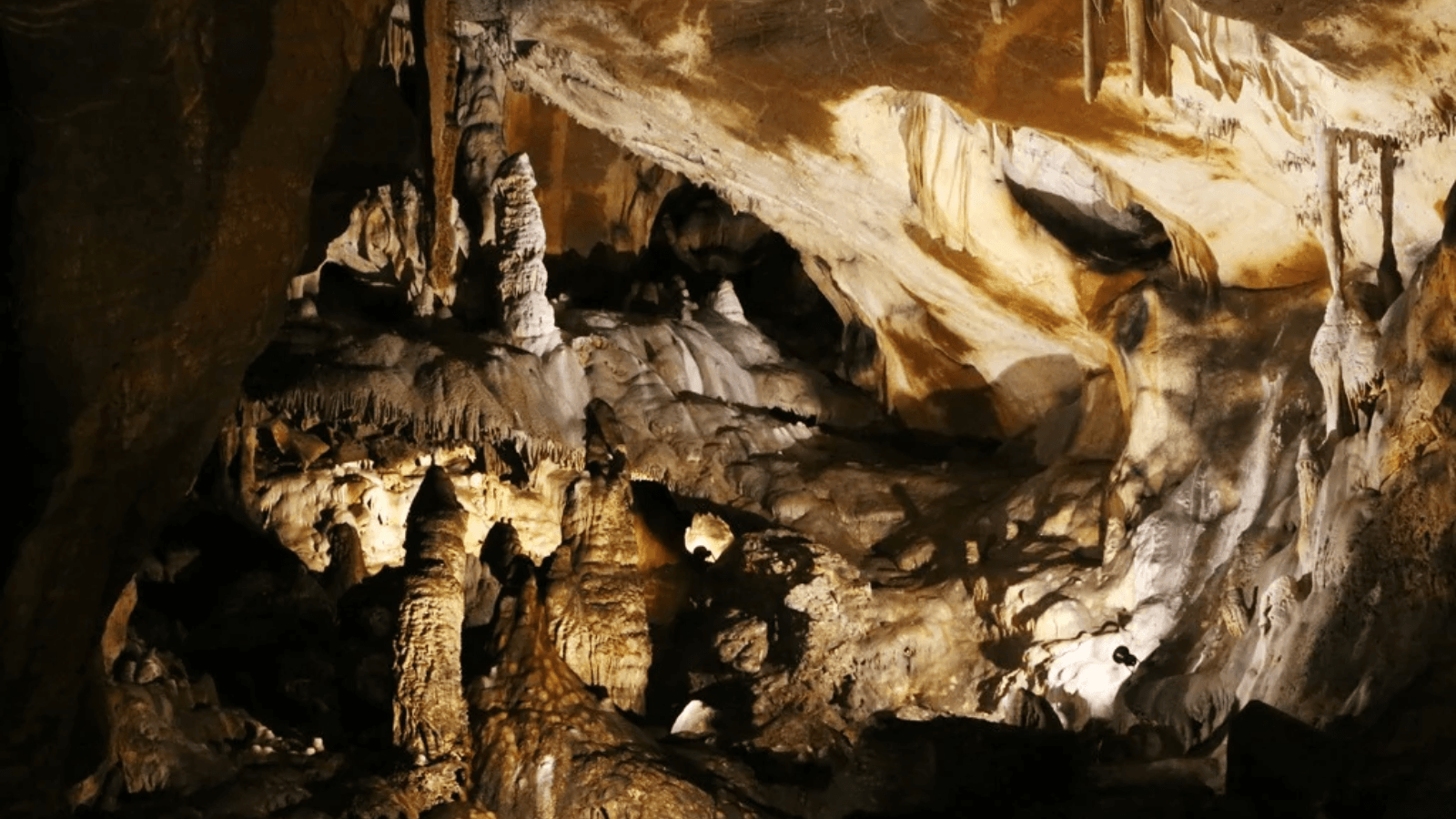
DNA recovered from a 30,000-year-old woman in southwestern France has revealed unexpected genetic connections between Ice Age populations previously considered largely separate. Her ancestry suggests that people living in different parts of Europe were genetically linked thousands of years earlier than previous evidence had established.
The findings come from a new study published in Science Advances by an international research team led by the University of Vienna. According to the university’s official announcement, the results challenge aspects of an influential genetic model developed just three years ago.
The Genetic Divide Identified in 2023
In 2023, researchers published one of the most comprehensive genetic studies of prehistoric European populations. Their research in Nature, based on 356 ancient hunter-gatherer genomes spanning approximately 35,000 to 5,000 years ago, revealed that people associated with the Gravettian culture had different genetic histories.
The Gravettian flourished across much of Europe between approximately 34,000 and 25,000 years ago. Its communities shared hunting technologies, stone tools and artistic traditions, but their genetic ancestry followed different regional patterns.
Scientists identified two major ancestry groups. The Fournol group was associated primarily with western and southwestern Europe, while the Věstonice group included people from central and southern Europe.
The distinction suggested that shared cultural traditions did not necessarily reflect close genetic relationships. Yet the populations were not entirely isolated. DNA from approximately 27,000-year-old individuals at Goyet Cave in Belgium had already revealed ancestry from both groups, indicating that genetic mixing occurred during the later Gravettian period.
The new research pushes evidence of these connections further back in time.
A Woman from Isturitz Changes the Timeline
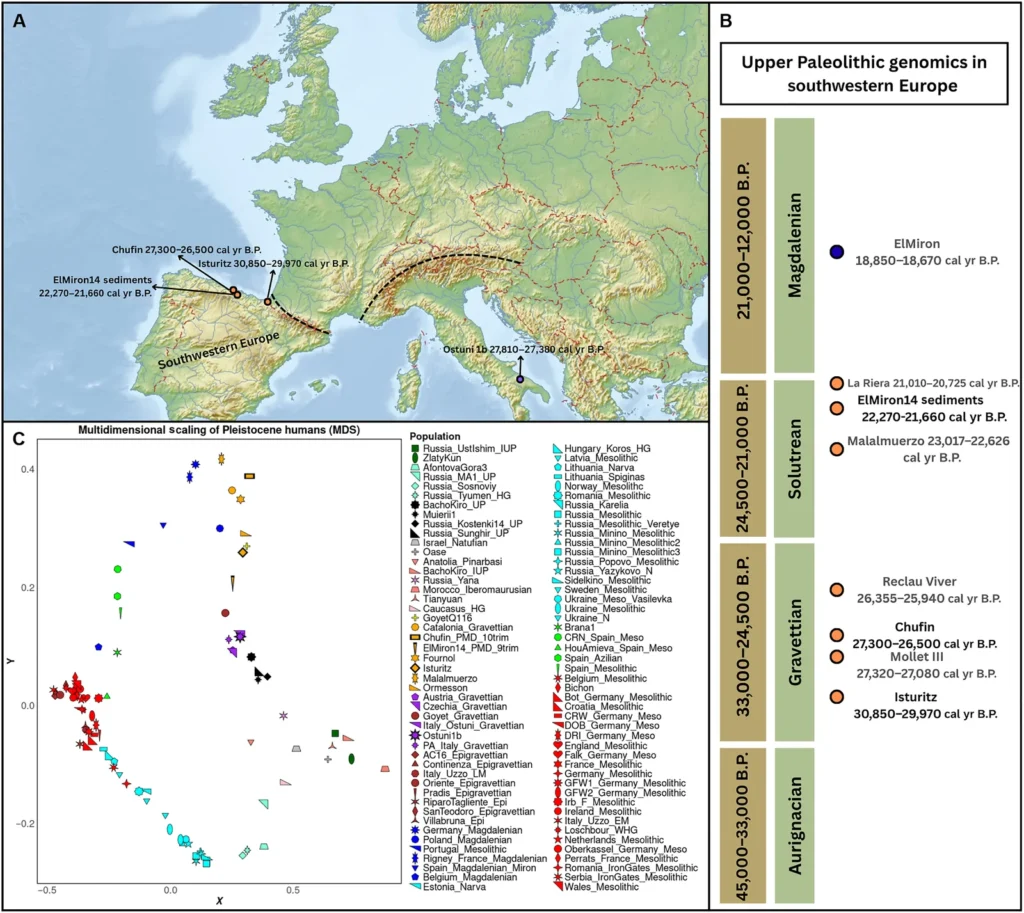
Isturitz Cave, in the French Basque Country, has yielded archaeological evidence of human activity extending across thousands of years. Among its remains was a small bone fragment belonging to a woman who lived approximately 30,000 years ago.
Researchers recovered more than 454,000 genetic markers from her remains, producing the oldest genome-wide dataset yet obtained from a modern human in southwestern Europe.
Most of her ancestry was associated with the western Fournol group. However, her DNA also contained genetic signals related to the ancestors of the Věstonice population, whose descendants lived farther east.
The team also re-examined genetic data from a previously studied Gravettian individual at Ormesson in northern France. The analysis revealed a comparable ancestry signal, suggesting that the connection extended beyond the woman from Isturitz.
Using genetic modelling, the researchers estimated that the mixing reflected in the Isturitz genome may have occurred between approximately 32,500 and 31,500 years ago.
This is several thousand years earlier than the mixed ancestry previously documented among the Gravettian individuals at Goyet Cave.
Although the Ormesson results support a similar interpretation, the researchers note that the admixture date estimated for that individual did not reach statistical significance. The strongest chronological evidence therefore comes from Isturitz.
Did People Travel Across Ice Age Europe?
The genetic similarities raise questions about how distant prehistoric populations interacted.
One explanation involves people carrying ancestry related to eastern European groups moving westward and mixing with established communities. However, the DNA cannot identify a migration route or determine precisely when and where individuals met.
The researchers also consider an alternative: the ancestry detected at Isturitz might reflect an older genetic component already present in some western European populations before the Gravettian period.
Both possibilities remain under investigation. Although the genetic evidence supports connections between geographically distant groups, it does not establish that a single migration brought eastern ancestry into southwestern France.
The findings therefore refine rather than overturn the earlier understanding of Europe’s population structure. Distinct regional ancestry groups existed, but their histories were not entirely separate.
Genetic Survival During the Coldest Ice Age Centuries
The research also explored what happened to these populations as Europe entered the Last Glacial Maximum, approximately 26,500 to 19,000 years ago.
At Chufín Cave in northern Spain, researchers identified western European ancestry in DNA recovered from an ancient human tooth. At El Mirón Cave in Cantabria, they obtained human DNA directly from sediments approximately 22,000 years old, despite the absence of human skeletal remains in the sampled layer.
The sediment contained enough genetic information to examine more than 14,000 markers. These results support the persistence of Fournol-related ancestry in southwestern Europe during the harsh climatic conditions of the Last Glacial Maximum.
The findings reinforce the interpretation of the Iberian Peninsula as an important refuge for prehistoric populations during this period.
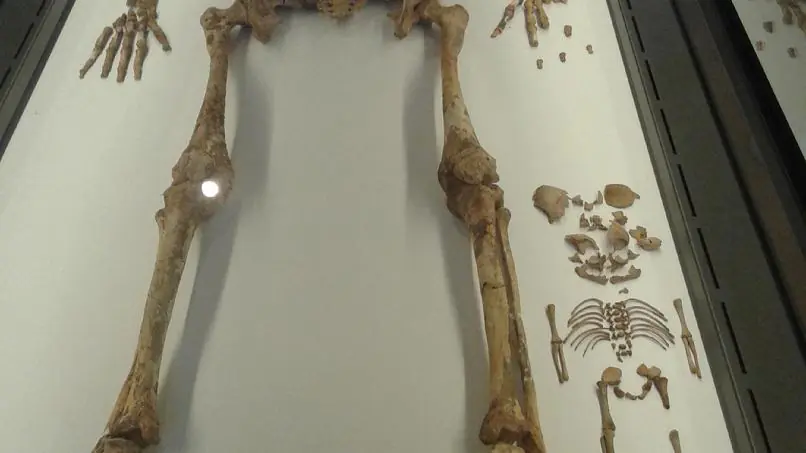
In southern Italy, genetic analysis of a male fetus from Ostuni also supported his close biological relationship with a previously studied Gravettian woman, most likely his mother. Their genetic profiles provided additional information about family relationships and the Věstonice-related populations of prehistoric Italy.
Together, the discoveries reveal a complicated picture of Ice Age Europe. Some ancestry groups survived in particular regions for thousands of years, while genetic connections also formed between populations living far apart.
Nevertheless, the number of available genomes from this period remains limited. More evidence, particularly from earlier occupations in southwestern Europe, will be needed to establish when these genetic connections first emerged and whether they resulted from population movements or deeper shared ancestry.
Cover Image: Interior of Isturitz Cave in southwestern France, where researchers recovered DNA from a woman who lived approximately 30,000 years ago. Credit: © Séverine Dabadie.