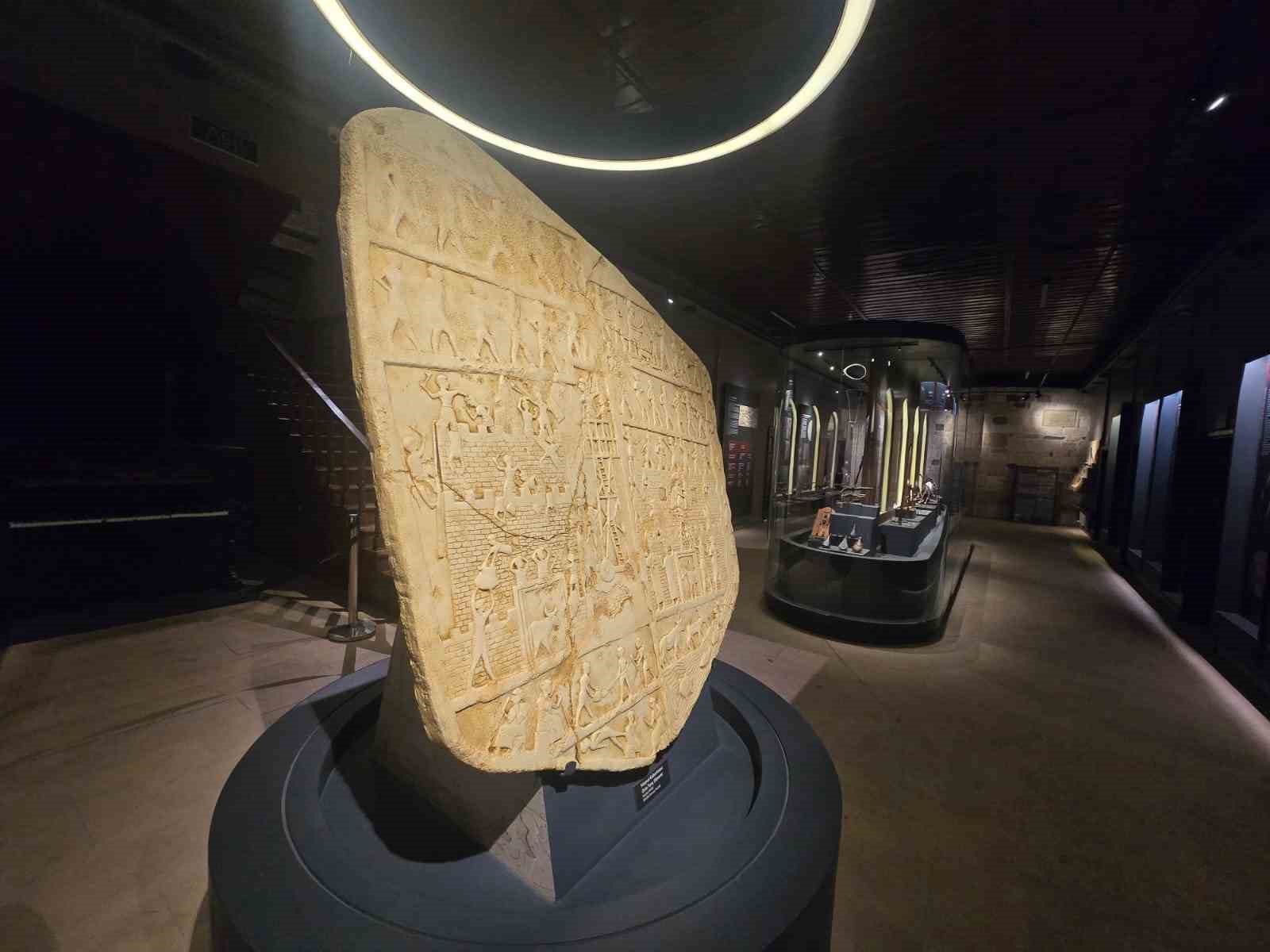
Discovered by chance during construction work nine years ago, the 4,000-year-old Harput Relief is now displayed at the Elazığ City Museum, offering a rare glimpse into the beliefs and visual culture of ancient Anatolia.
Discovery of the Harput Relief
In 2016, while performing terracing work in the Nevruz forest area, located about 200-250 meters east of Harput Castle, the relief emerged from about one meter below the ground. Archaeologists refer to it as the “Harput Relief.” Weighing around 4 tons, it is made from local limestone and features a low-relief carving technique.

Scenes Depicted on the Relief
The relief depicts a dramatic siege of a castle on a riverbank. It shows a wheeled siege tower positioned in front of the fortifications, sappers working to undermine the defenses, soldiers scaling the walls with ladders, and warriors engaged in battle.

Intriguing Themes and Symbolism
The relief also presents fascinating themes. For instance, it shows captives emerging from the conquered castle and soldiers accepting prisoners into peace. Additionally, one of the castle gates features a winged, portal-clawed goddess holding a child, adding depth to the story.
Harput Castle: A Historical Landmark
Harput Castle, built in the 8th century BC by the Urartians, has a rectangular layout. It consists of two main sections: the inner castle and the outer walls. Its strategic location allowed it to serve many civilizations throughout history.

Historical Importance
The castle played a significant role during the Roman and Byzantine eras. Later, it underwent repairs and fortifications during the Seljuk and Ottoman periods. Harput Castle served not only as a military structure but also as the region’s administrative and religious center. Within its walls, people built churches, mosques, and homes, highlighting its importance to the community.
Cultural Heritage
Today, Harput Castle is a vital structure that illuminates Anatolian history. Its rich heritage and architectural significance make it a valuable site for historians and tourists alike. Currently, Harput Castle is on the UNESCO World Heritage Tentative List.