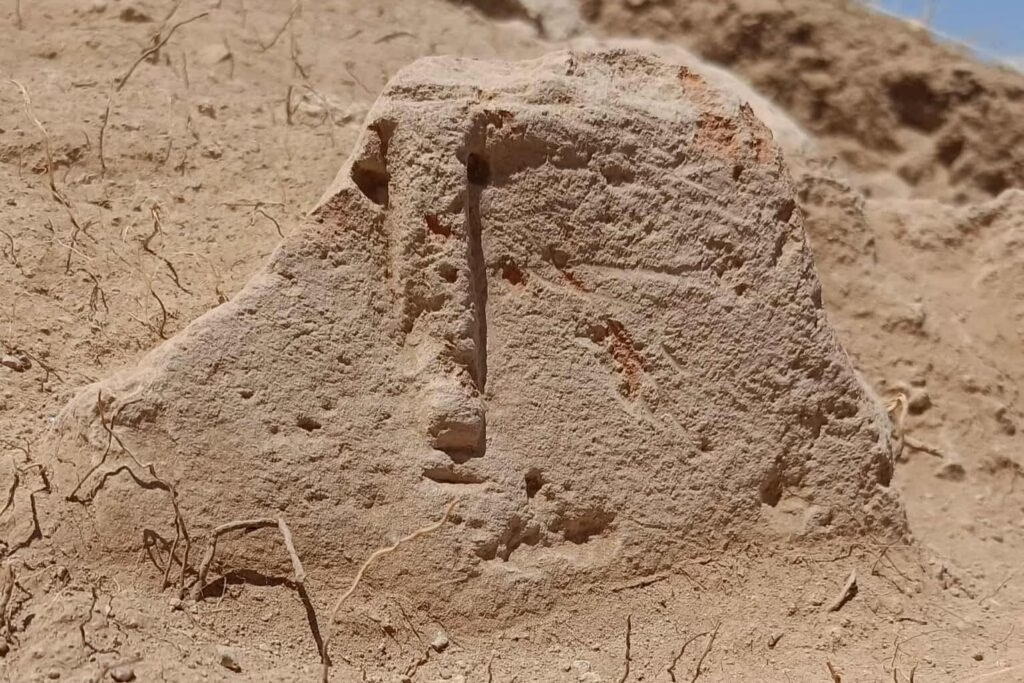
Archaeologists working in the ancient Urartian fortress of Argishtikhinili, in modern-day Armenia, have uncovered a striking 2,500-year-old volcanic-stone idol that may rewrite what is known about domestic spirituality in the centuries following the collapse of the Urartian Kingdom.
The small figurine — carved from dark volcanic tuff with a sharply modeled face, narrow lips, and deep-set eyes — was found beside a rectangular stone chest inside a Late Iron Age dwelling. According to researchers, its position and preservation suggest it was part of a household cult, used in rituals to protect the home or honor ancestors long after Urartu’s royal palaces had fallen silent.
“It’s not just an artifact — it’s a frozen moment of everyday belief,” said Dr. Mateusz Iskra of the Polish Centre of Mediterranean Archaeology, who co-directs the Armenian–Polish mission with Dr. Hasmik Simonyan from the National Academy of Sciences of Armenia.
A Forgotten Household Shrine
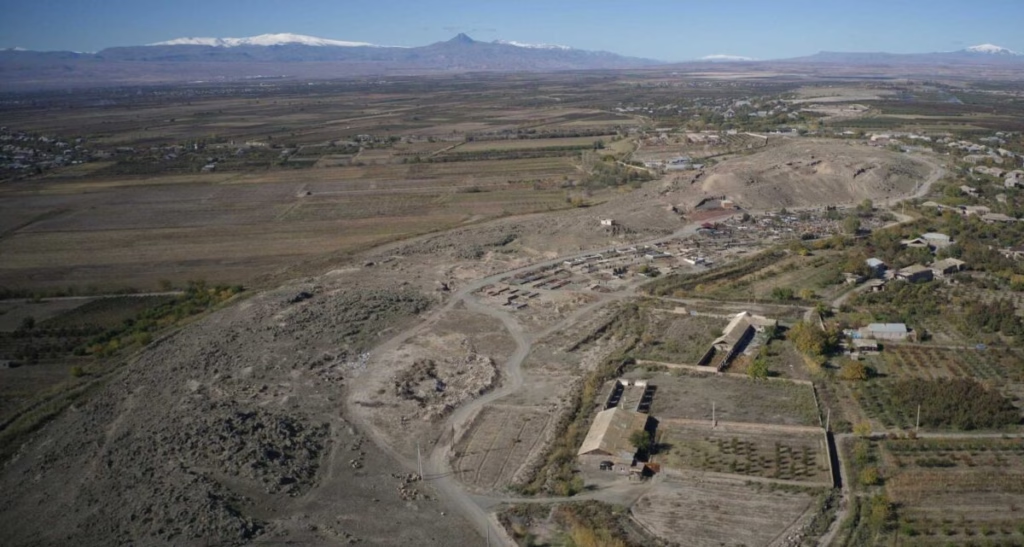
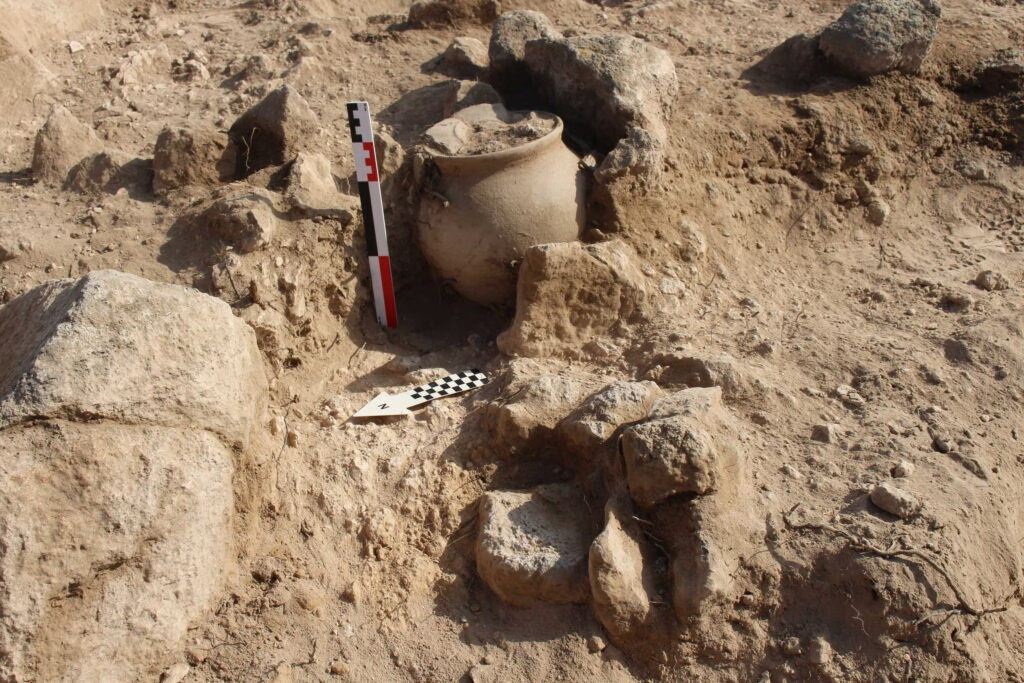
The discovery was made on Surb Davti Blur (St. David’s Hill), where excavation has revealed a surprisingly intact residential quarter with storage jars (pithoi) still embedded in the floors. Nearby lay the idol, deliberately positioned near what may have been an altar or offering box — physical traces of rituals once performed in domestic space rather than in monumental temples.
Archaeologists believe such practices point to the survival of Urartian spiritual traditions within local communities that continued to live among the ruins of a lost empire.
Cremation Cemetery: Signs of Transformation
Close to the same residential area, the team also unearthed Armenia’s largest cremation cemetery, dated to roughly the same period. The urns contained cremated remains accompanied by ornaments, miniature vessels, and beads — artifacts reflecting both mourning and rebirth.
“This site changes everything we thought we knew about post-Urartian belief,” said Dr. Simonyan. “It shows how ancient Armenians redefined death and ritual in the wake of political collapse.”
Argishtikhinili: Legacy of a Lost Kingdom
Built in the 8th century BCE by King Argishti I, Argishtikhinili once controlled the Ararat Plain as part of Urartu’s vast network of fortresses, temples, and irrigation canals. The Urartians worshipped gods like Haldi, lord of war and sovereignty, leaving behind inscriptions and monumental architecture across modern Armenia, eastern Türkiye, and northwestern Iran.
When Urartu fell in the 6th century BCE, its cities did not vanish — they adapted. Excavations now reveal how ordinary families preserved fragments of a shattered culture, blending memory, survival, and devotion in daily life.
Reconstructing Lives After Collapse
The ongoing project, funded by Poland’s National Science Centre, seeks to reconstruct the “biographies of households” — a detailed look into how people reorganized their lives after imperial institutions disappeared. Through residue analysis, digital modeling, and artifact studies, researchers aim to map resilience across the ruins of empire.
The Idol’s Enduring Silence
Carved from volcanic rock that once flowed beneath Mount Ararat, the idol’s impassive face now stares across millennia — a symbol of endurance, faith, and transformation.
As Dr. Iskra concluded:
“Every household we uncover here tells the story of how people faced the end of their world — not with despair, but with ritual, continuity, and meaning.”
Polish Centre of Mediterranean Archaeology, University of Warsaw (PCMA UW)