
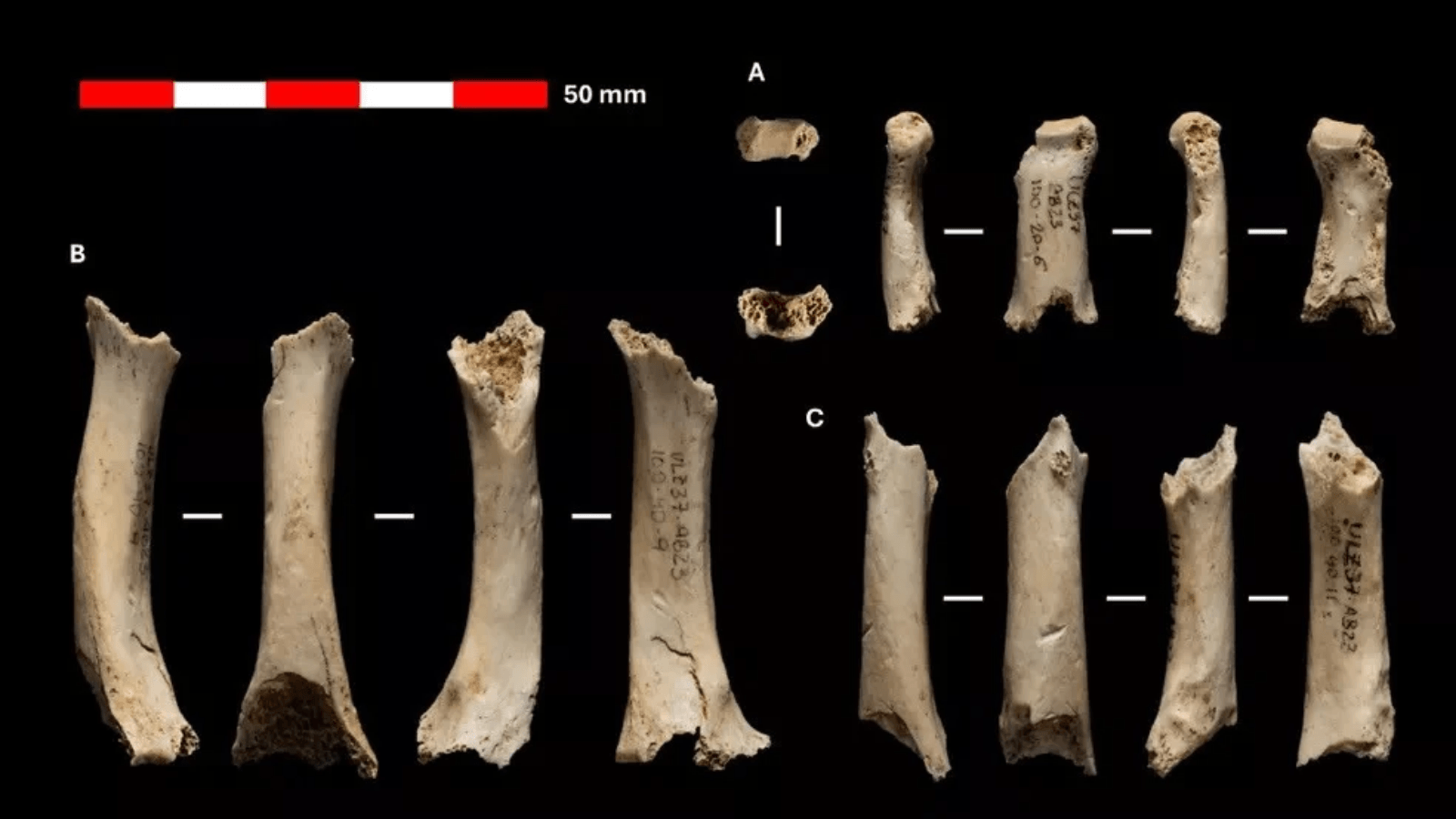
Six Neanderthal hand bones discovered in a cave in northern Spain are the oldest human remains ever identified in Navarre. The fossils, dated to between 44,000 and 49,000 years ago, have also preserved ancient DNA that could help scientists investigate Europe’s last Neanderthal populations.
For decades, archaeologists had uncovered evidence of Neanderthal activity in Spain’s western Pyrenees without finding identifiable fossils of the people themselves. That gap has now been filled by six bones recovered from Abauntz Cave, belonging to an adult male Neanderthal who lived approximately 46,000 years ago. The discovery represents both the first confirmed Neanderthal remains and the oldest human fossils ever found in Navarre, providing direct biological evidence of a population previously known in the region mainly through archaeological material.
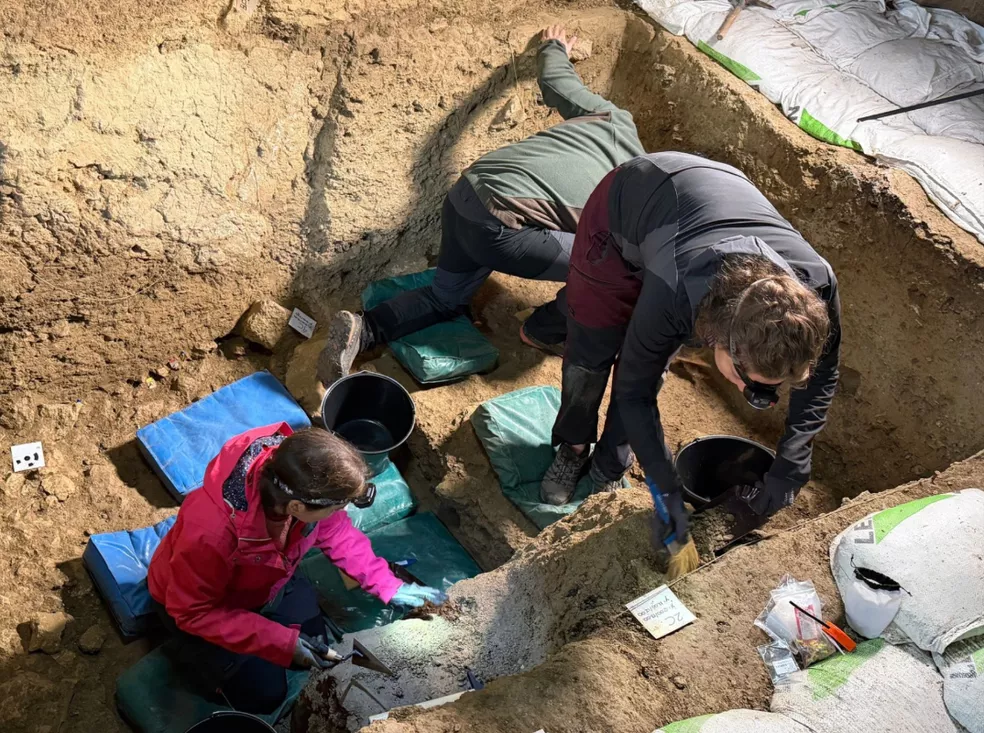
The fossils were recovered during earlier excavation campaigns at Abauntz Cave, near Arraitz-Orkin in the Ultzama Valley. An international investigation co-directed by Andion Arteaga of the University of Warsaw and IPHES-CERCA, and Mikel Arlegi of the Musée de l’Homme in Paris, established their identity through anatomical, protein, and genetic analyses. The research involves more than 25 specialists from several European institutions.
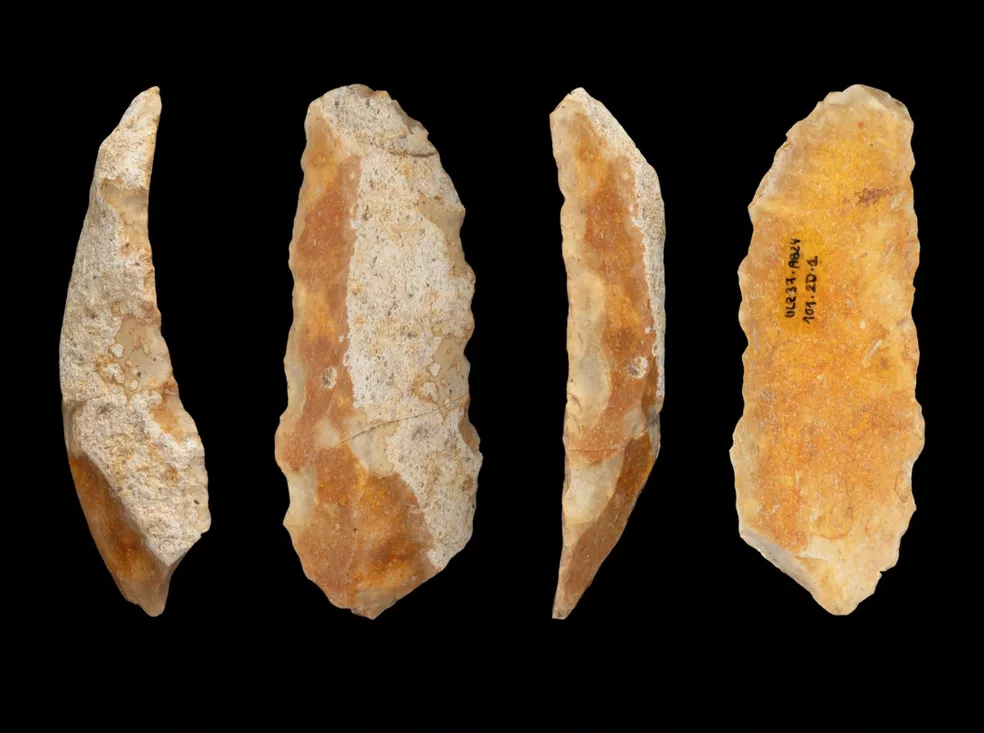
Carnivore Bite Marks on the Neanderthal Bones
The assemblage consists of three metacarpals, which form part of the palm, and a middle phalanx from the right hand of an adult. Researchers identified two additional fragments as human through paleoproteomic analysis, a technique that examines ancient proteins preserved in fossil material. Genetic testing subsequently confirmed that the remains belonged to a male Neanderthal.
Some of the bones bear tooth marks left by carnivorous animals, offering clues about what happened to the remains after death. These marks indicate that animals interacted with the bones, possibly through scavenging, although they do not establish how the individual died. Their presence raises questions about how the remains accumulated inside the cave and the processes that affected them before burial.
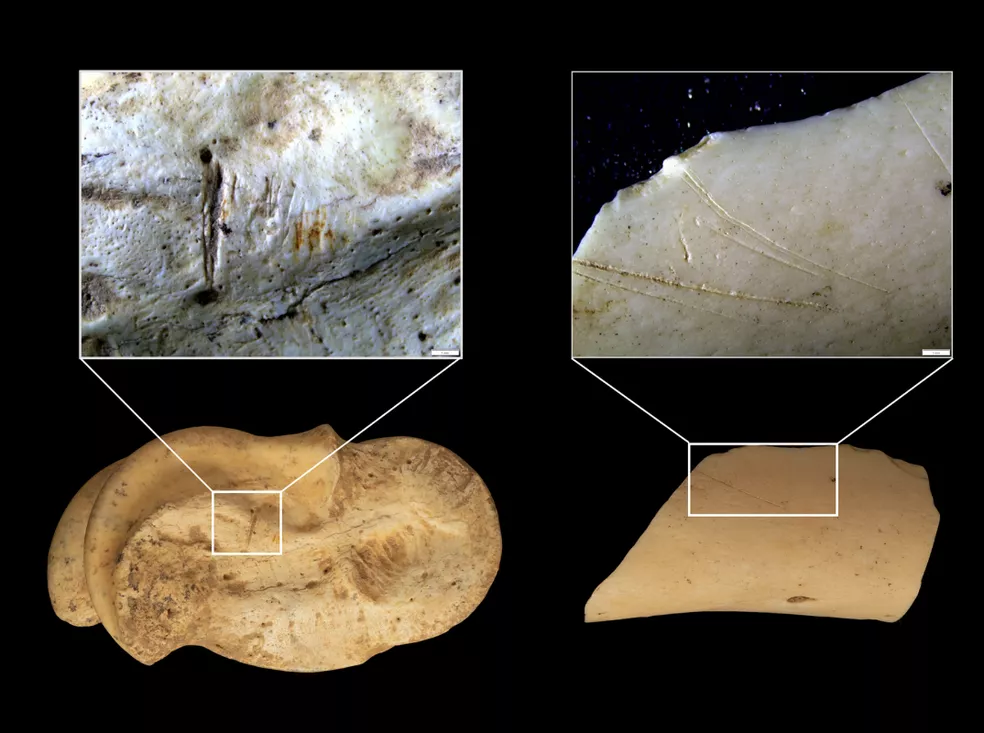
The fossils were found in an archaeological context containing stone tools and animal bones, some displaying evidence of processing and consumption by prehistoric humans. These materials provide additional information about activities inside the cave, although they cannot all be directly connected to the individual represented by the hand bones. Researchers are continuing to examine the relationship between the human remains and their surrounding deposits.
Ancient DNA from Europe’s Final Neanderthal Populations
Direct radiocarbon dating places the fossils between 44,000 and 49,000 years old, with an approximate age of 46,000 years. Dating the human bones themselves is particularly valuable because it reduces reliance on estimates derived from surrounding archaeological layers. Their unusually good preservation has also allowed researchers to recover ancient DNA, despite the gradual deterioration of genetic material over thousands of years.
The combination of radiocarbon dating, paleoproteomics, and genetic analysis gives scientists an opportunity to investigate Neanderthal populations in a region where human fossil evidence had previously been absent. Further DNA studies may reveal whether groups living in the western Pyrenees maintained genetic connections with populations elsewhere in Europe. For now, the individual’s precise relationship to other Neanderthal groups remains unresolved.
Abauntz Cave occupies an important geographical position near natural corridors linking the Iberian Peninsula with territories north of the Pyrenees. Such routes may have influenced prehistoric population movements, making the region relevant to discussions about Neanderthal mobility and isolation. The individual lived during a relatively late period of Neanderthal history, several thousand years before the species largely disappeared from Europe around 40,000 years ago.
A Cave That Also Preserved a 13,660-Year-Old Map
Abauntz Cave was already known for an extraordinary archaeological discovery dating to a much later period of prehistory. Researchers led by Pilar Utrilla studied an engraved stone approximately 13,660 years old, interpreting its markings as a possible representation of the surrounding landscape. The engraving includes features resembling mountains, rivers, and routes, along with depictions of animals, potentially recording a hunting expedition or planning future movements through the terrain.
The stone belongs to the Magdalenian period and is unrelated to the newly identified Neanderthal individual. Nevertheless, the two discoveries demonstrate the remarkable chronological depth of human activity preserved at Abauntz, spanning populations separated by more than 30,000 years. The cave’s location near a natural passage through the western Pyrenees adds further significance to its long archaeological sequence.
Excavations and laboratory investigations remain underway, with contributions from the University of Vienna, the Max Planck Institute for Evolutionary Anthropology, and other research institutions. Continuing genetic analyses may help establish how the Abauntz individual relates to Neanderthal populations elsewhere in Europe. The six hand bones have already transformed the archaeological record of Navarre, replacing an absence of identifiable human fossils with directly dated remains and genetic evidence.
Cover Image: Hand bones belonging to a male Neanderthal who lived approximately 46,000 years ago, discovered in Abauntz Cave in Navarre, Spain. Credit: Abauntz Research Team.