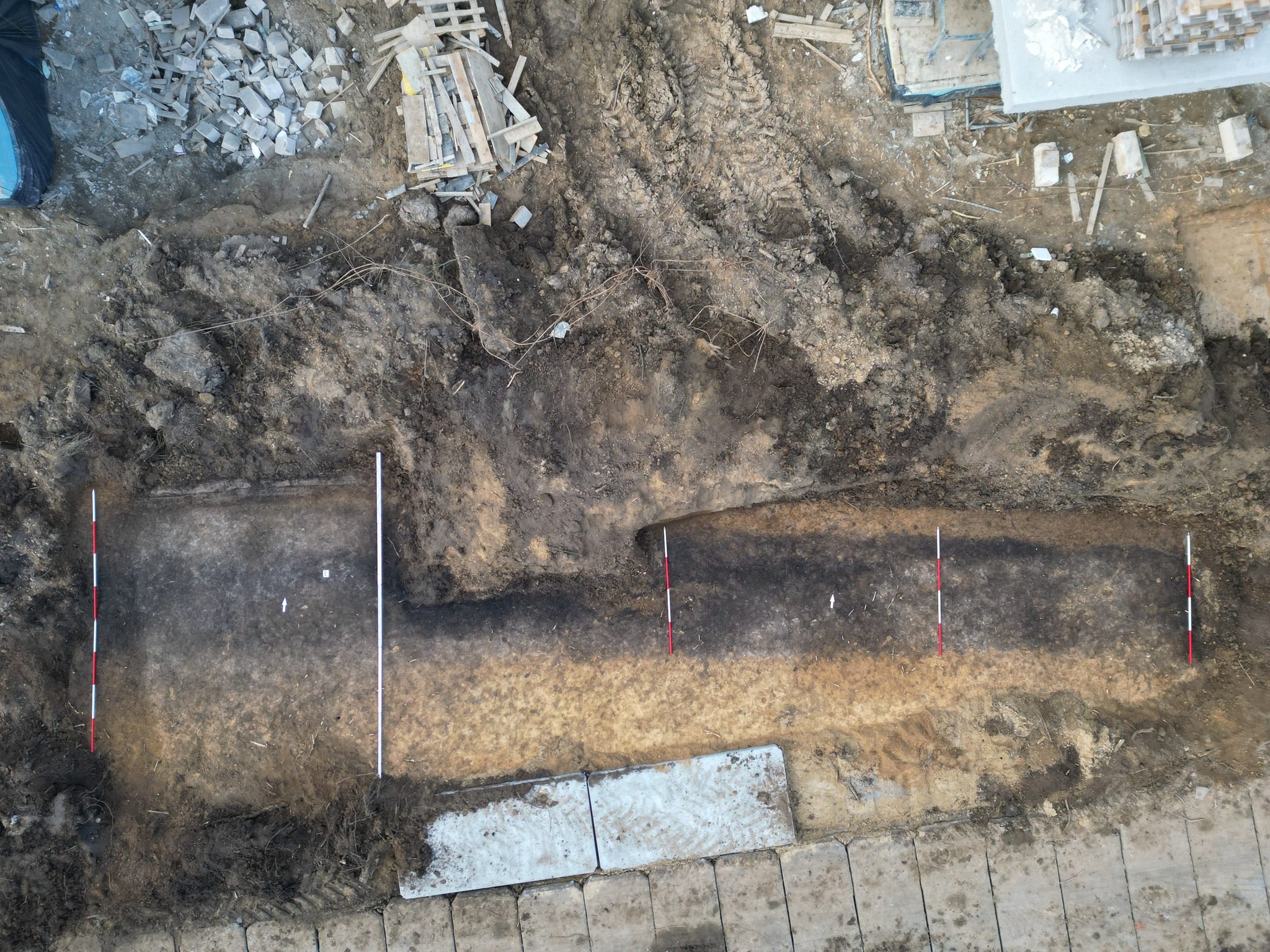
A 6,000-year-old wooden megalithic tomb discovered in Lublin, Poland, during a housing project is offering rare insight into prehistoric burial traditions in Central Europe. What began as routine groundwork has revealed an unexpected structure tied to one of the region’s earliest farming communities.
According to a statement by the Lublin Voivodeship Conservator of Monuments, based on research led by archaeologist Jacek Tkaczyk, the tomb dates to the Funnel Beaker Culture (TRB)—a Neolithic society known for its monumental burial practices.
A Rare Wooden Megalith Emerges
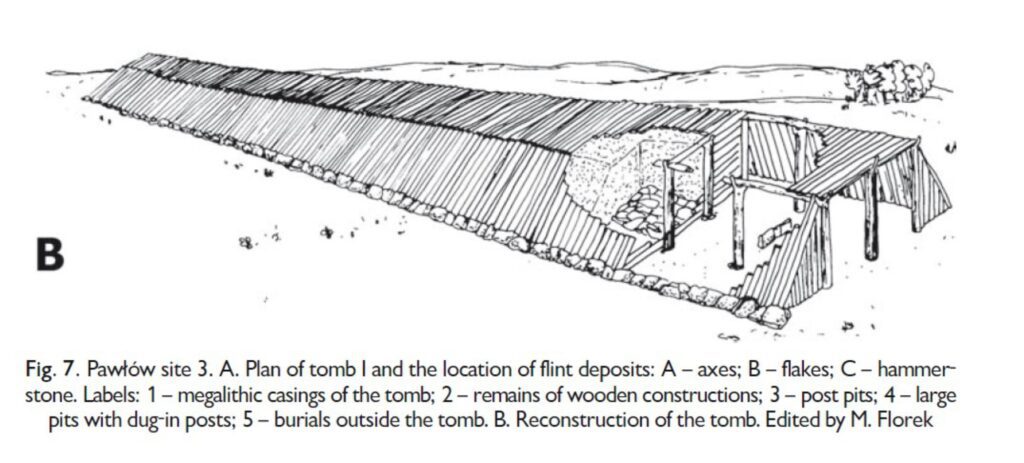
Unlike the well-known stone megaliths of Western Europe, this structure represents a megadendron—a form of monumental tomb built primarily from timber.
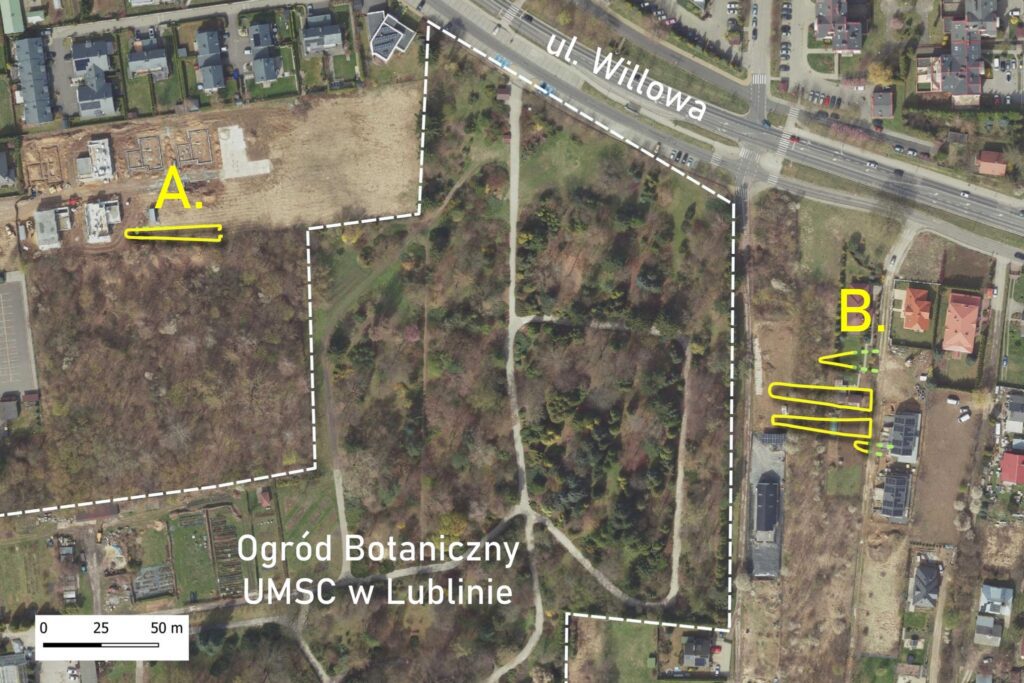
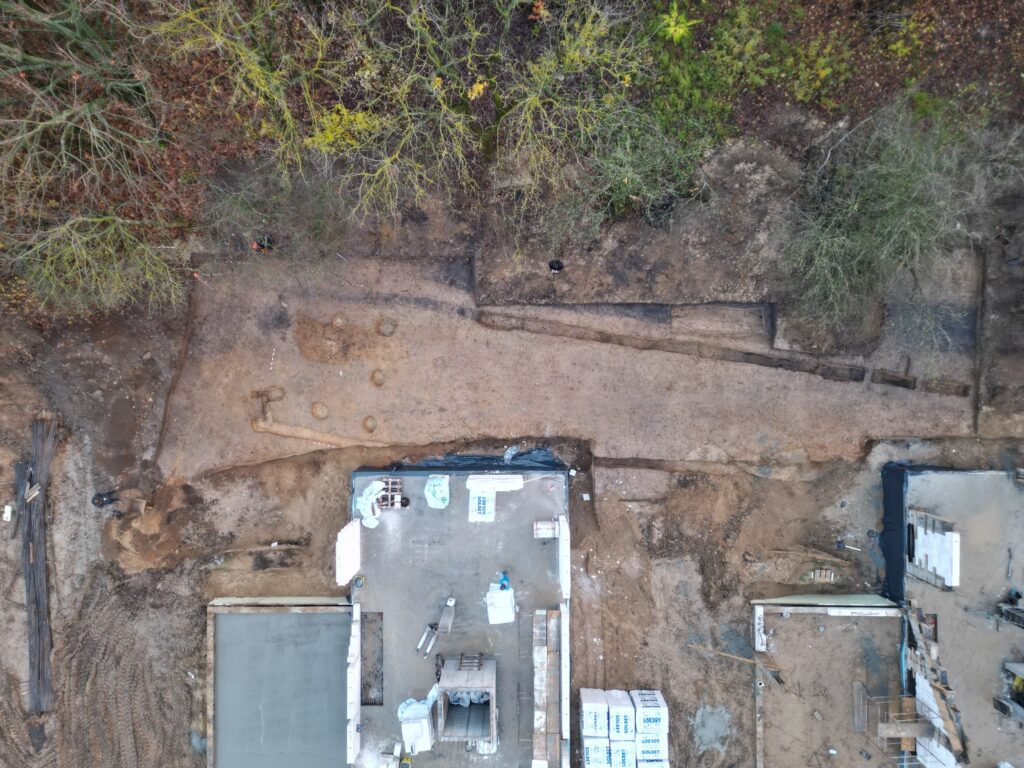
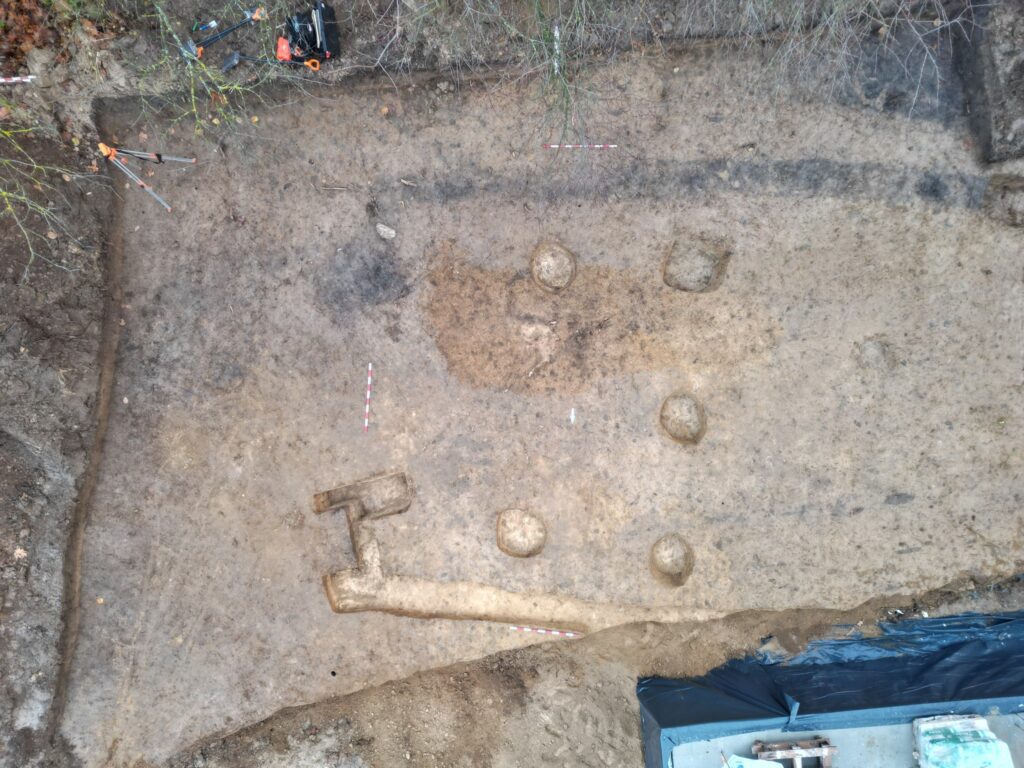
Constructed on an elongated triangular plan aligned east to west, the tomb measures approximately 42 meters in length. Its width narrows from around 5.2 meters at the eastern end to about 3.3 meters at the western tip, forming a distinctly tapered profile.
Instead of massive stones, prehistoric builders used deeply embedded wooden posts to define the structure, which was then covered by an earthen mound. Over millennia, the organic materials decayed, leaving behind only subtle traces such as postholes and soil discoloration.
This construction method reflects regional adaptation. In areas like Lublin, where large glacial stones were not readily available, communities developed alternative monumental forms using wood.
No Burial Found Inside
Despite its size, the structure contained no human remains—a detail that has drawn particular attention.
Archaeologists suggest the tomb may have functioned as a cenotaph, a symbolic monument rather than a physical burial site. Such structures are known in prehistoric Europe, though their exact purpose remains debated.
They may have served as ritual spaces, memorial markers, or expressions of social identity, especially for prominent members of early farming communities.
Material Traces of Activity
Excavations did, however, recover archaeological material linked to activity at the site.
Fragments of pottery were found alongside flint artifacts, including partially worked tools made from regional materials such as chocolate flint and Świeciechów flint. These finds point to human presence and possibly ceremonial use, even in the absence of burials.
To the south of the structure, researchers also identified a ditch nearly 30 meters long, likely formed during the construction of the mound. Similar features are commonly associated with megalithic tombs and may have held both practical and symbolic roles.
Part of a Larger Prehistoric Landscape
The newly uncovered tomb is not an isolated find. Earlier excavations in the area have revealed multiple megalithic structures, suggesting that this part of Lublin once formed a broader funerary landscape.
Research conducted since the 1960s identified at least three or four similar tombs nearby. More recent investigations, including work carried out in 2023, have expanded this picture further.
Archaeologists now believe the latest discovery may represent another element—possibly the fifth—within this complex, pointing to long-term use of the area by Neolithic communities.
Why This Discovery Matters
The significance of the find lies in its construction material and preservation.
Wooden megaliths rarely survive in the archaeological record, as organic components decay over time. As a result, such structures are far less visible than their stone counterparts, even if they were once widespread.
This discovery therefore provides a rare opportunity to understand how prehistoric communities in Central Europe adapted monumental architecture to local environmental conditions, while still maintaining shared cultural traditions.
Rescue Excavations Continue
The tomb was uncovered during preventive archaeological excavations carried out ahead of planned residential development—an increasingly important process in protecting buried heritage.
Fieldwork at the site is ongoing, and further research may help clarify the structure’s function and its role within the wider landscape.
For now, the discovery stands as a reminder that even beneath modern construction sites, traces of deep human history can still emerge—quietly reshaping what we know about the prehistoric past.