
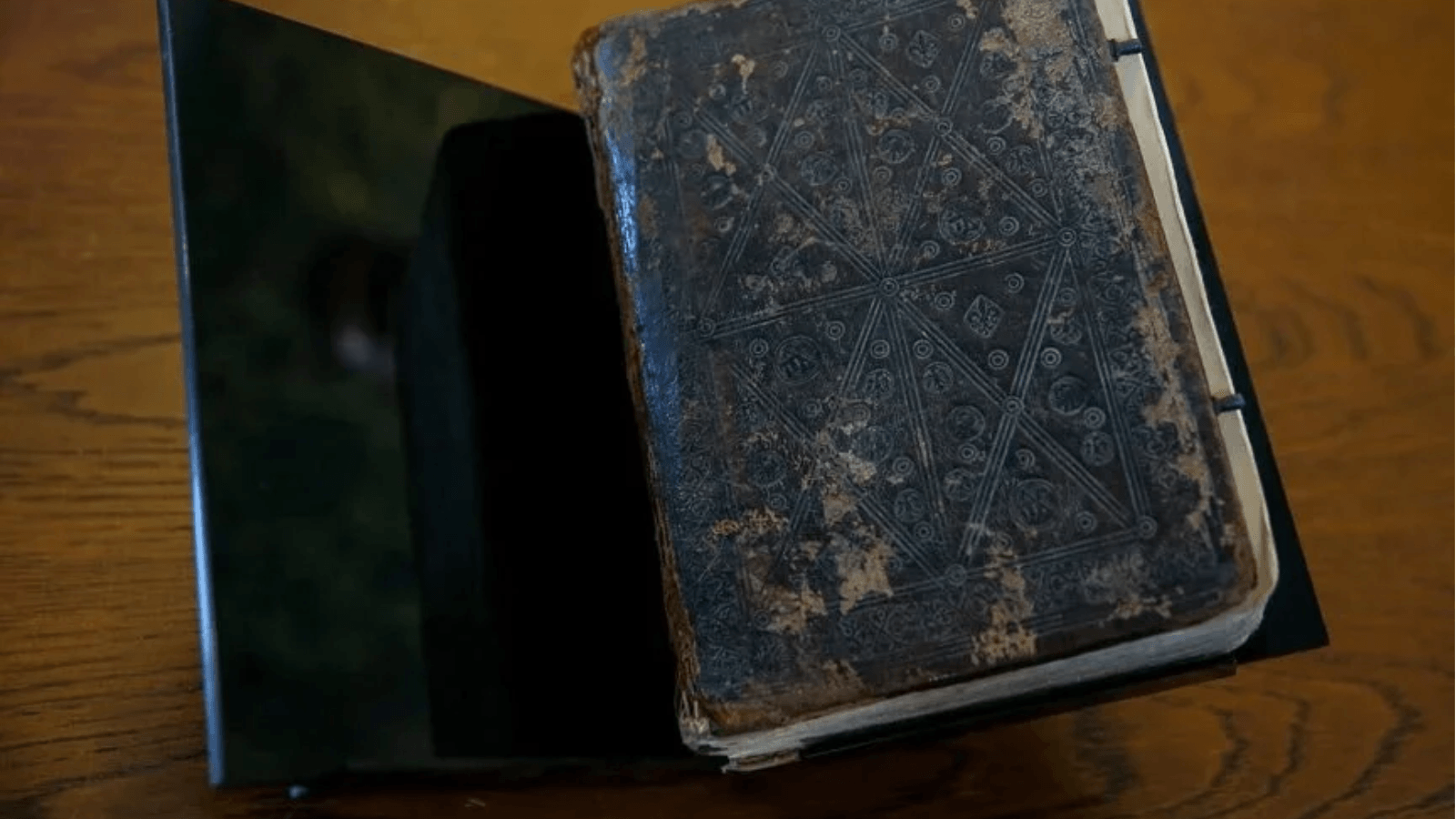
An 800-year-old Iliad manuscript preserved in the former library of Ottoman Sultan Mehmed II may have been copied in Byzantine Constantinople. A new examination by Istanbul University historian Professor Hamdi Şahin has identified previously unstudied features of the manuscript, including evidence that could help establish its place in the history of Homer’s epic.
The 260-leaf volume, dating to the 12th or 13th century, is preserved at Topkapı Palace in Istanbul, Türkiye. It contains the complete Iliad, accompanied by extensive Greek commentaries that reflect centuries of scholarship on the ancient poem.
Evidence for a Constantinople Workshop
The manuscript’s carefully organized pages, handwriting, decorations, and explanatory notes suggest that it may have originated in a copying workshop in Constantinople, then the capital of the Byzantine Empire.
Its paper leaves are protected by wooden covers wrapped in decorated leather. The main Greek text appears in relatively large, clearly formed letters, while smaller writing fills the surrounding margins with explanations and interpretations.
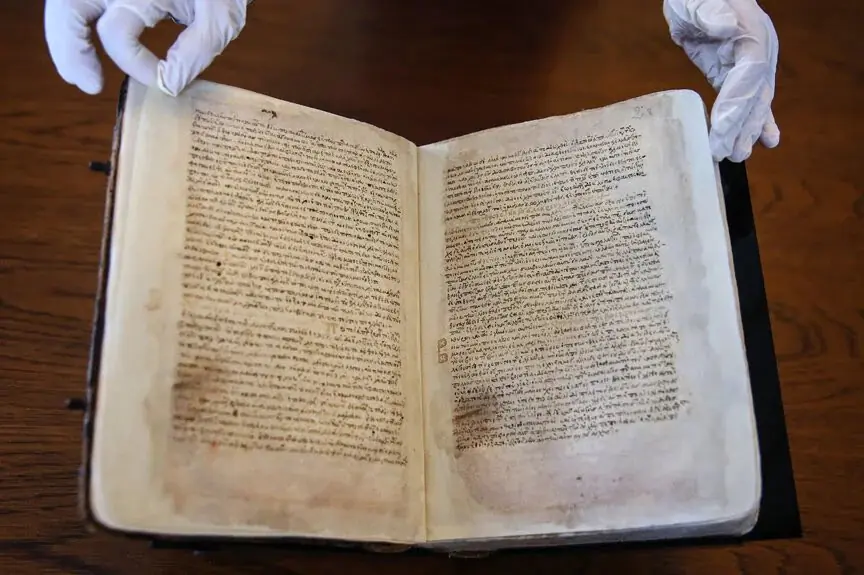
Şahin’s examination also identified red-ink headings, interlacing patterns, floral decorations, and geometric diagrams. Some of these elements divide sections of the poem, while others help readers connect individual passages with their accompanying commentaries.
Together, these features point to a carefully planned manuscript intended for both reading and scholarly study. Its proposed Constantinople origin, however, remains an interpretation based on the evidence examined so far.
Centuries of Scholarship Written Around the Iliad
The manuscript preserves more than Homer’s verses. Its opening leaves contain traditional accounts of the poet’s ancestry, parents, and supposed birthplace, followed by summaries of the epic’s books.
The Iliad begins on the seventh leaf and continues to its final verse. Yet the arrangement differs considerably from page to page, with the number of poetic lines varying between approximately 14 and 30.
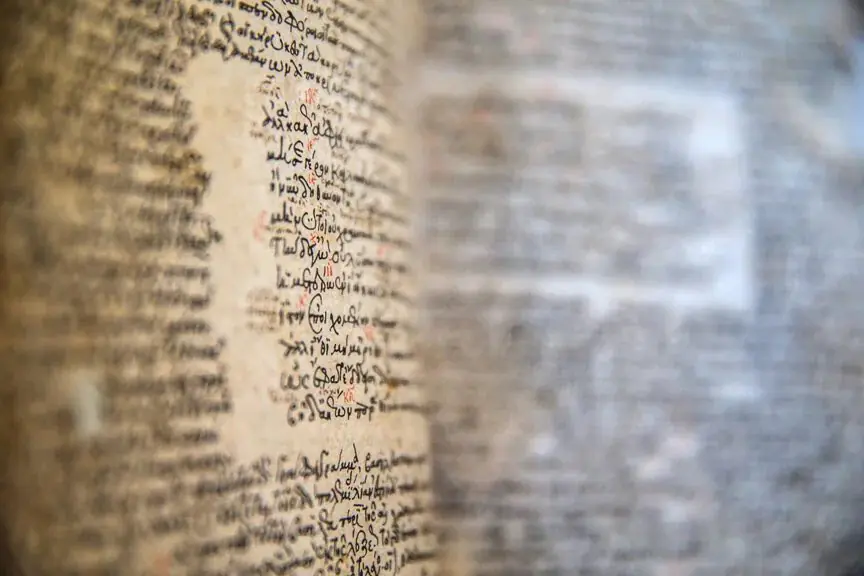
The surrounding commentaries explain difficult Greek expressions, interpret mythological episodes, and provide additional information about characters and events. Rather than functioning as simple notes, they form an extensive body of scholarship alongside the poem.
One of the examination’s findings is that these annotations were not drawn from a single manuscript source. Their varied origins suggest that the scribes who prepared the volume combined different traditions of Homeric interpretation.
A Byzantine Patriarch’s Book in an Ottoman Library
The manuscript’s ownership history is another important aspect of the investigation.
An Ancient Greek inscription inside its cover is interpreted as evidence that the volume once belonged to Gennadius II, who became Patriarch of Constantinople following the Ottoman conquest in 1453.
The book subsequently entered the library of Mehmed II, although the circumstances of its transfer remain unknown.
The historical connection is significant. As previously explored by Anatolian Archaeology in its examination of Mehmed II’s relationships with Orthodox intellectuals, the Ottoman ruler and Gennadius maintained an important relationship following the conquest.
French and Ottoman Turkish labels inside the manuscript record information about its contents and dating. Additional inventory markings document its preservation within the Topkapı Palace collection.
The manuscript’s presence in the Ottoman imperial library also illustrates how ancient Greek literary works continued to circulate and survive beyond the Byzantine period. There is, however, no direct evidence that Mehmed II personally studied this particular copy.
Tracing the Manuscript’s Place in Homer’s Textual History
The investigation may eventually establish a previously unidentified connection between different generations of Iliad manuscripts.
Şahin believes the Istanbul volume could represent an intermediate stage between earlier Byzantine copies and manuscripts produced during the 13th, 14th, and 15th centuries.
Important reference points include the 10th-century Venetus A manuscript, preserved at the Marciana Library in Venice, and the 11th-century Townley Homer, now held by the British Library in London.
Differences in the spelling of certain Greek words, together with the varied sources of the marginal commentaries, may help researchers investigate how these manuscripts are related. Şahin considers it possible that the Istanbul copy influenced later versions, although a direct connection has not yet been demonstrated.
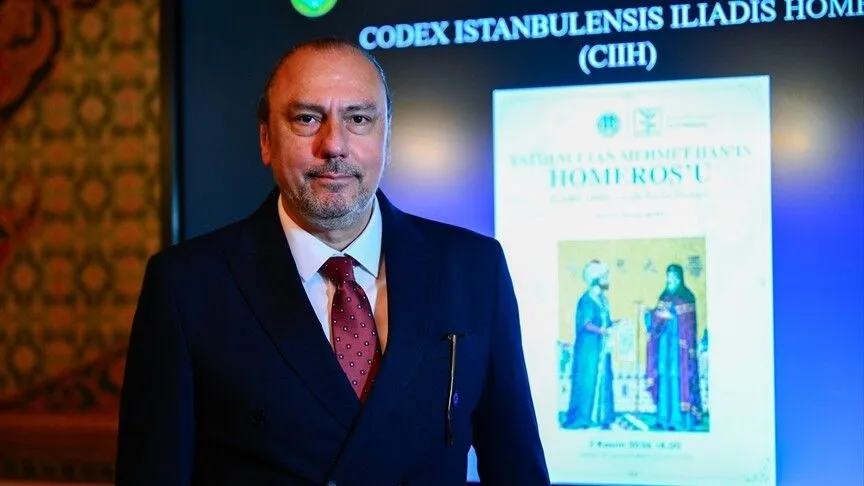
The investigation began when Şahin noticed a possible spelling error while preparing an academic article about Homer in February 2026. After consulting modern editions of the poem, he turned to historical manuscripts, eventually examining the Topkapı Palace volume.
Further comparisons will be necessary to establish its precise position within the surviving Homeric tradition. The manuscript’s complete text and extensive commentaries nevertheless provide substantial material for investigating how Byzantine scholars copied, interpreted, and transmitted the Iliad.
Cover Image: The ornate leather binding of a medieval copy of Homer’s Iliad, once part of Sultan Mehmed II’s library and now preserved at Topkapı Palace in Istanbul. Credit: Arif Hüdaverdi Yaman / AA.