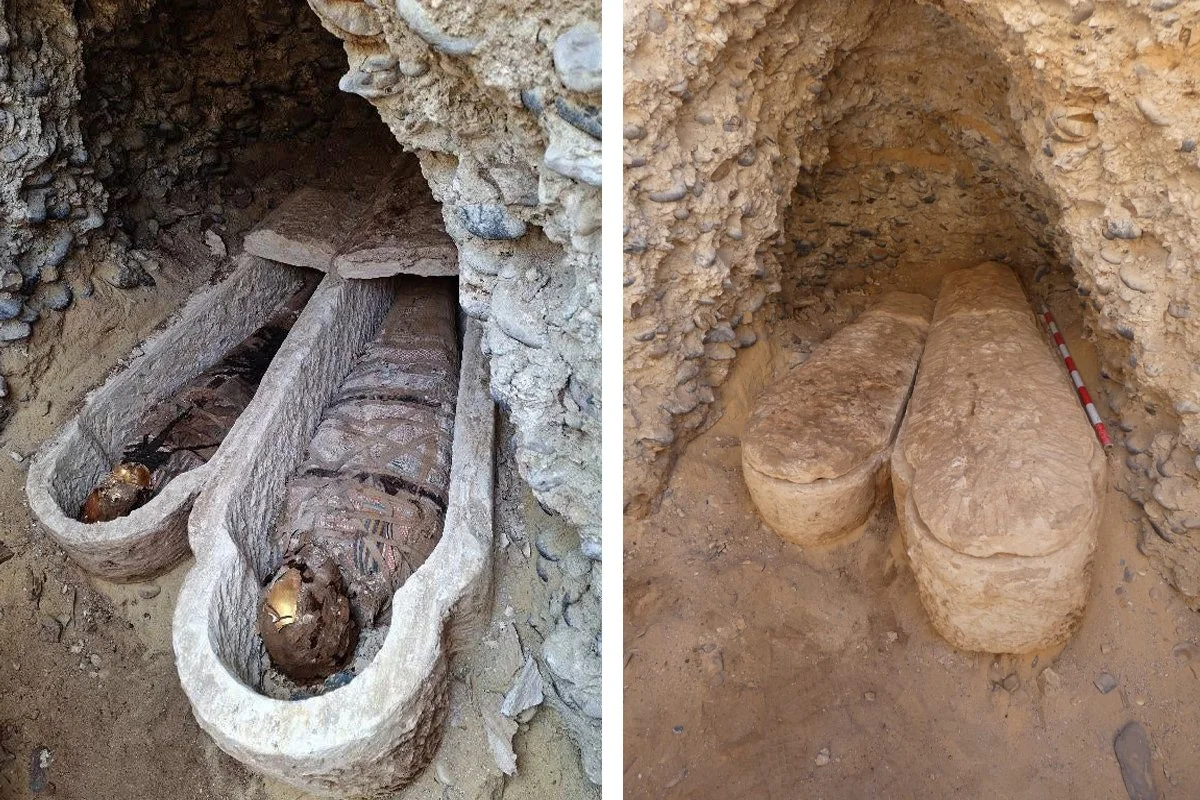
Inside a quiet burial ground in Egypt’s Minya region, something unexpected was waiting beneath the sand. When archaeologists opened several Roman-era burials, they noticed a detail that felt almost symbolic. Thin tongues of gold had been placed inside the mouths of the dead.
The discovery comes from the ancient site of Al-Bahansa, known in antiquity as Oxyrhynchus. It offers rare, tangible evidence of a belief long described in texts but seldom observed so clearly in the archaeological record.
The excavation was carried out by a Spanish mission led by researchers from the University of Barcelona in collaboration with the Institute of the Ancient East, under the direction of Maite Mascort and Esther Pons Mellado. What they uncovered suggests this was not simply a cemetery, but a place shaped by layered meanings where ritual and identity intersected.
Giving the Dead a Voice
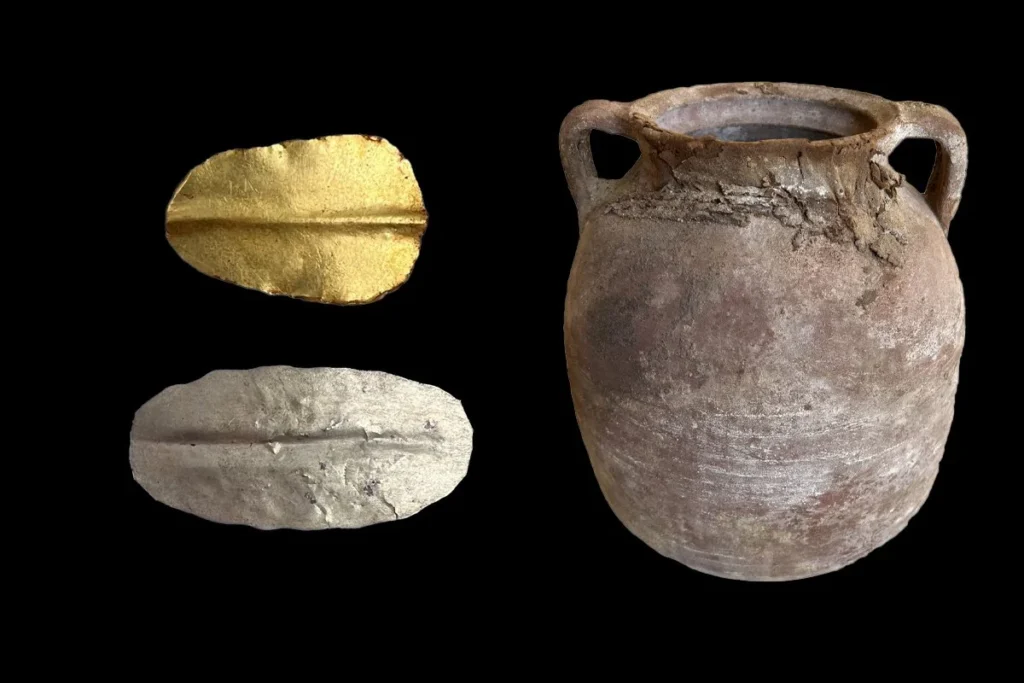
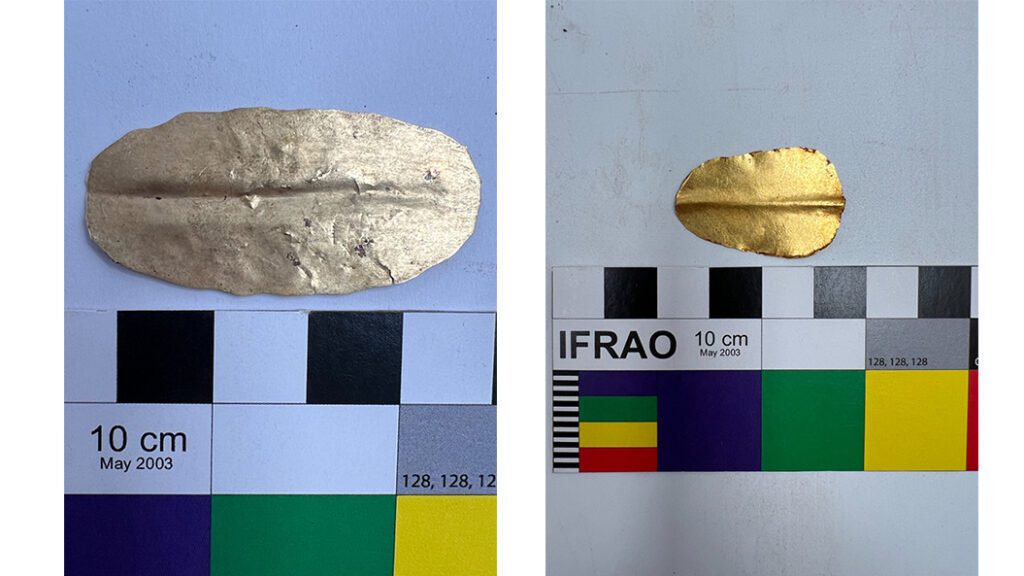
The most striking finds were the metal tongues, mostly gold, with at least one made of bronze, placed directly inside the mouths of mummies. Archaeologists link these objects to the belief that the dead needed the ability to speak in the afterlife.
This idea is known from ancient texts, but physical examples remain rare. Here, the practice is clear. The objects were deliberately placed, carefully crafted, and clearly meaningful.
Nearby, the team also uncovered mummies laid in wooden coffins, some still wrapped in patterned linen textiles. These details point to a funerary process that valued both ritual precision and visual presentation.
A Piece of Homer Beneath the Sand
One burial revealed something even more unexpected.
Inside it lay a papyrus inscribed with lines from the Iliad by Homer. The passage belongs to the “Catalogue of Ships,” describing the forces of the Trojan War.
Its presence raises quiet but compelling questions. It may reflect education, identity, or belief. It may also point to a broader cultural world that extended far beyond Egypt.
At Oxyrhynchus, such overlaps are not unusual. Greek literature, Egyptian burial customs, and Roman-period life appear here as a single, intertwined cultural landscape.
Burials That Refuse a Single Pattern
The cemetery does not follow a single rule.
Excavations near the so-called Golden Cemetery uncovered a limestone structure divided into three chambers, each revealing a different way of treating the dead.
In one chamber, a large jar held the cremated remains of an adult, accompanied by infant bones and the head of a bird, all wrapped in cloth. Another chamber contained two individuals alongside animal remains, suggesting that burial practices here were flexible rather than fixed.
Small terracotta and bronze figurines were also recovered. Some depict Harpocrates, while another resembles Cupid. Together, they reflect a belief system shaped by multiple traditions.
A Cemetery That Still Has More to Say
Parts of the site show signs of earlier disturbance, likely from looting. Even in this condition, the cemetery continues to offer meaningful archaeological insight.
Egypt’s Minister of Tourism and Antiquities, Sherif Fathi, noted that Minya remains one of the country’s most important archaeological regions. Officials from the Supreme Council of Antiquities emphasize that the discovery adds new depth to Oxyrhynchus’ burial history.
For archaeologists, the importance of the site lies not in a single object, but in the pattern that emerges. Gold tongues, literary texts, and varied burial practices together reveal a complex way of thinking about death, preserved in the material record.