
Scientists have failed to find a geological match for Stonehenge’s six-tonne Altar Stone among the Scottish sandstone formations examined so far. Although research published in 2024 pointed to northeastern Scotland as its likely source, a new investigation has found significant differences between the ancient monument’s central stone and rocks from the proposed source region.
An international team led by Professor Duncan Pirrie, Emeritus Professor at the University of South Wales, conducted the investigation. Their study, published in the Journal of the Geological Society, provides the most comprehensive geological analysis of the Altar Stone to date and identifies several locations that are unlikely to have supplied it.
Scottish Sandstones Fail the Geological Tests
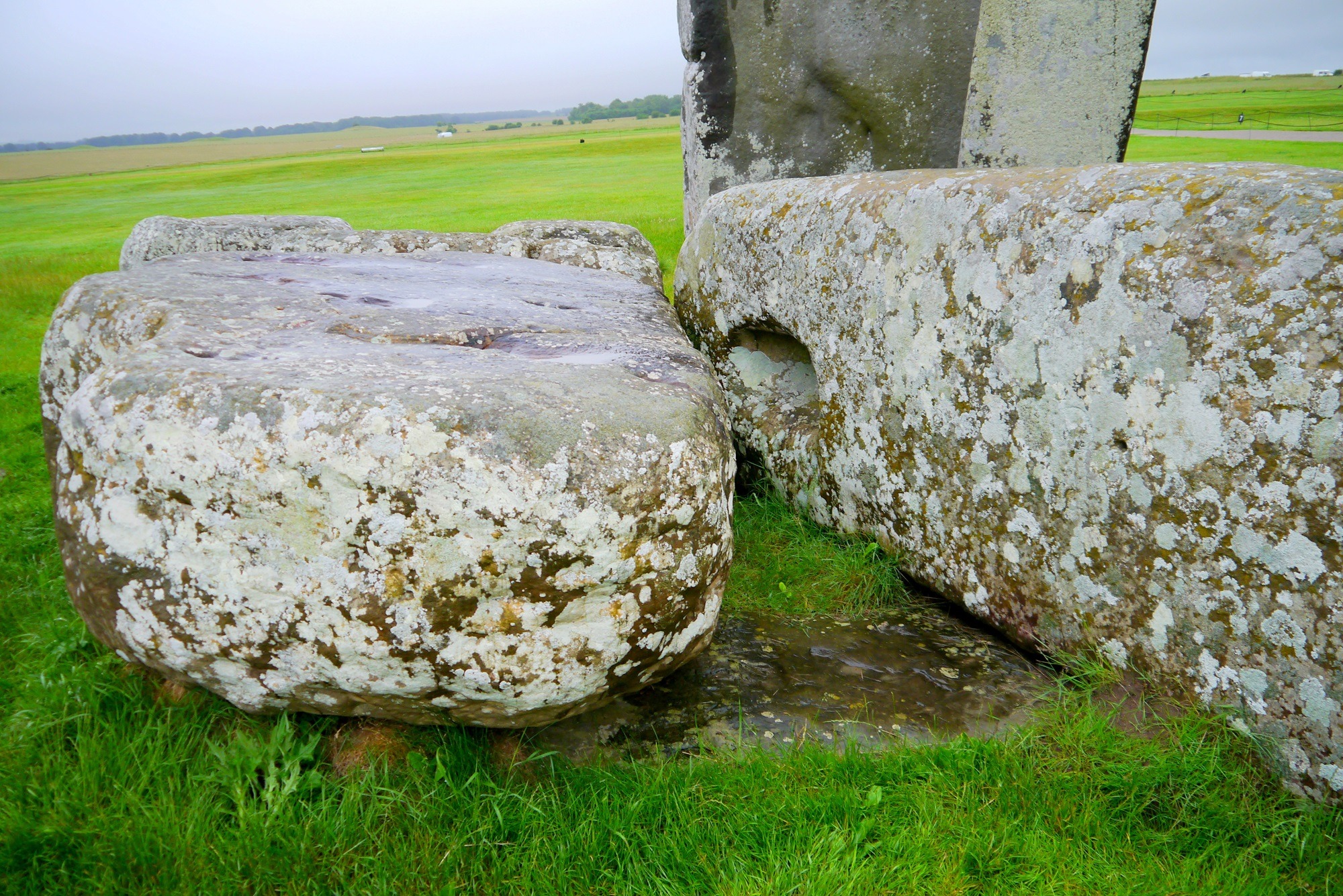
The Altar Stone is a sandstone slab approximately 4.9 metres long, weighing around six tonnes. It lies horizontally beneath two fallen sarsen stones near the centre of Stonehenge, the Neolithic monument on Salisbury Plain in southern England.
Unlike many of Stonehenge’s smaller bluestones, whose origins have been traced to western Wales, the Altar Stone has resisted attempts to identify its source. Its composition differs from those of the other stones, making it particularly difficult to connect to a specific geological formation.
To investigate its origins, Pirrie and his colleagues combined observations made directly on the monument with laboratory analyses of fragments preserved in museum collections. Since researchers cannot take new samples directly from the Altar Stone, these historic fragments provide essential material for examining its internal composition.
The team studied the sandstone’s sedimentary structure, mineral assemblages, chemical composition and isotopic characteristics. Particular attention went to its heavy minerals, clay minerals and the geological processes that formed and altered the rock.
The researchers compared these characteristics with Old Red Sandstone formations across Britain, including the Orcadian Basin in northeastern Scotland, which previous research had identified as a promising source.
The results revealed important discrepancies. Although some Scottish sandstones shared individual features with the Altar Stone, the examined formations lacked the complete combination of mineralogical and chemical characteristics recorded in the monument’s central slab.
The investigation also failed to identify a convincing match among other examined Old Red Sandstone outcrops in Britain. However, the findings do not exclude every possible Scottish source, as extensive geological areas remain insufficiently studied.
Why Scientists Previously Traced the Stone to Scotland
For nearly a century, researchers believed the Altar Stone originated in western Wales. That interpretation began to change when detailed mineralogical and geochemical studies found that the stone did not match the proposed Welsh source rocks.
A major breakthrough appeared in August 2024, when Anthony Clarke and his colleagues published a study in Nature examining the ages and chemistry of zircon, rutile and apatite minerals within fragments of the Altar Stone.
Their results revealed a strong similarity between the mineral signatures of the Altar Stone and sandstones from the Orcadian Basin. The findings suggested that the massive block had originated more than 700 kilometres from Stonehenge, considerably farther away than previously believed.
The Scottish interpretation attracted attention because it implied that Neolithic communities possessed the organisational capacity to move enormous stones across extensive distances. However, the mineral evidence did not establish the exact quarry or outcrop from which the Altar Stone came.
Mineral grains can survive repeated cycles of erosion, transportation and deposition. Consequently, sandstones from different locations may contain minerals with similar geological histories without having identical compositions.
The latest research addresses this problem by examining a broader range of characteristics rather than relying primarily on mineral ages.
Professor Richard Bevins of Aberystwyth University, who contributed to both the earlier Scottish provenance research and the new investigation, explained in the university’s official announcement that the findings help researchers identify which geological characteristics future source locations must possess.
The new evidence does not overturn the earlier mineral dating. Instead, it demonstrates that identifying the stone’s original location requires a closer match across several independent geological indicators.
The Altar Stone’s Journey Remains Unexplained
Determining the Altar Stone’s origin could also clarify how prehistoric communities transported it to Stonehenge. A Scottish source would imply a journey of several hundred kilometres, potentially involving maritime routes, overland transportation or both.
Researchers have also considered whether glaciers might have moved the sandstone part of the way south before humans transported it to the monument.
A separate study published in the Journal of Quaternary Science in June 2026 examined this possibility using ice-flow models. It found that glaciers could potentially have carried rocks from parts of northeastern Scotland towards Dogger Bank, now submerged beneath the North Sea, but such a scenario would still require extensive human transportation and face significant chronological difficulties.
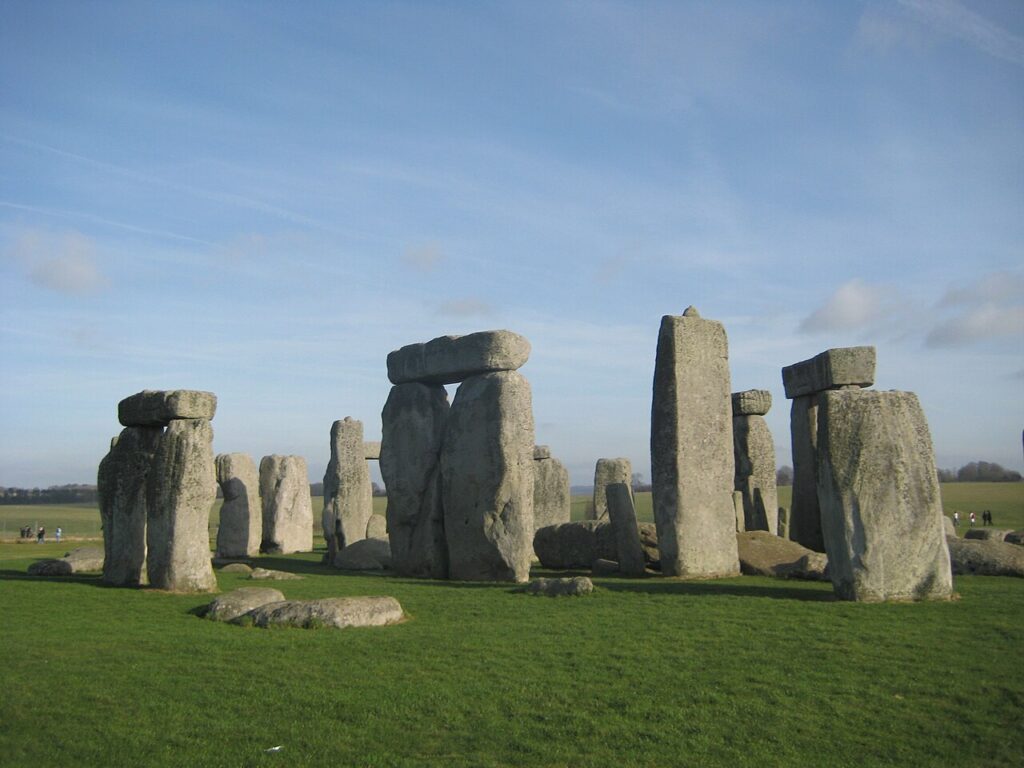
Stonehenge itself developed through several construction phases between approximately 3000 and 1600 BCE. Archaeologists have established that many of its smaller bluestones travelled around 225 kilometres from western Wales. These long-distance connections are also reflected in other archaeological evidence associated with the monument.
A 2025 isotope study of a Neolithic cow’s tooth discovered at Stonehenge identified chemical signatures consistent with the geology of southwest Wales. The findings raised the possibility that cattle helped transport the bluestones, although they do not establish how the animals were used or whether they participated in moving the stones.
Yet the Altar Stone presents a separate problem. Researchers have not established when it arrived at Stonehenge, what precise function it served or where its journey began.
The latest investigation provides a more detailed geological profile that scientists can use to test other potential source locations. Until researchers identify sandstone that matches its distinctive combination of minerals, chemistry and physical characteristics, the origin of Stonehenge’s six-tonne Altar Stone remains unresolved.
Cover Image: Fallen sarsen stones at the centre of Stonehenge, where the six-tonne Altar Stone lies partly buried beneath the massive blocks. Credit: Professor Nick Pearce, Aberystwyth University.