
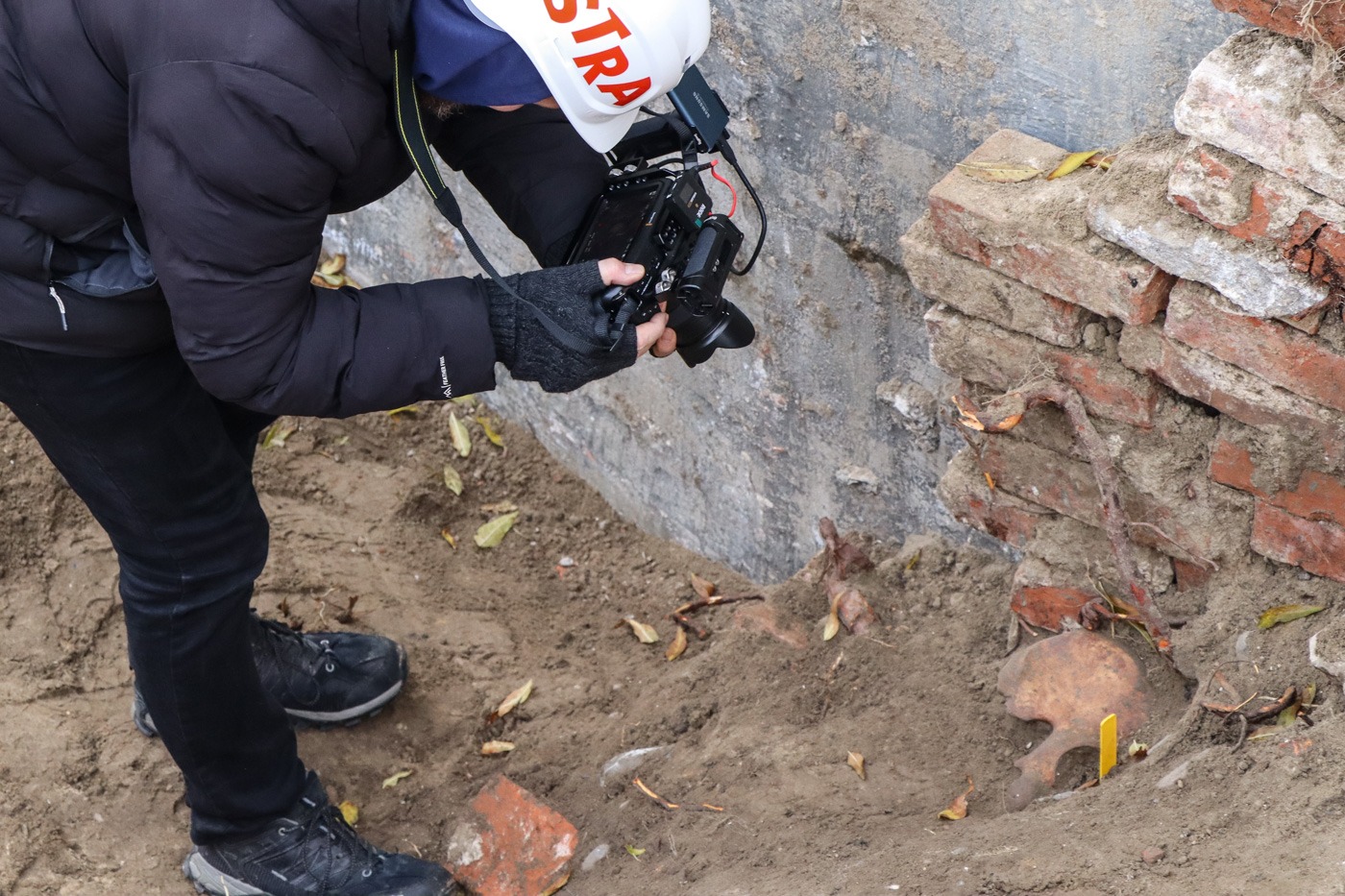
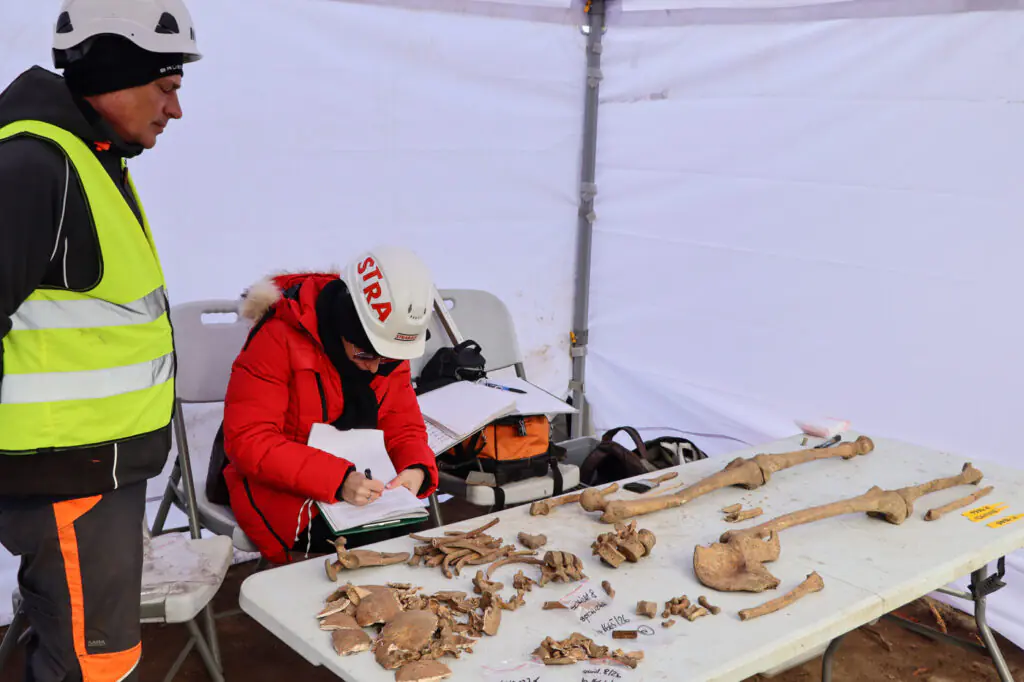
Human remains discovered near a wartime defensive position at Westerplatte in northern Poland may belong to a Polish soldier missing since the opening days of World War II. A bayonet, military buttons, and other equipment recovered alongside the bones suggest a connection to Mieczysław Krzak, who disappeared during the German invasion of Poland in September 1939.
Archaeologists from the Museum of the Second World War in Gdańsk made the discovery on November 5, 2026, while monitoring construction work for the new Westerplatte Museum. Poland’s Institute of National Remembrance (IPN) recovered the remains on November 9 and secured material for DNA analysis, which could establish whether they belong to the missing soldier.
Military Artifacts Found Near a 1939 Defensive Position
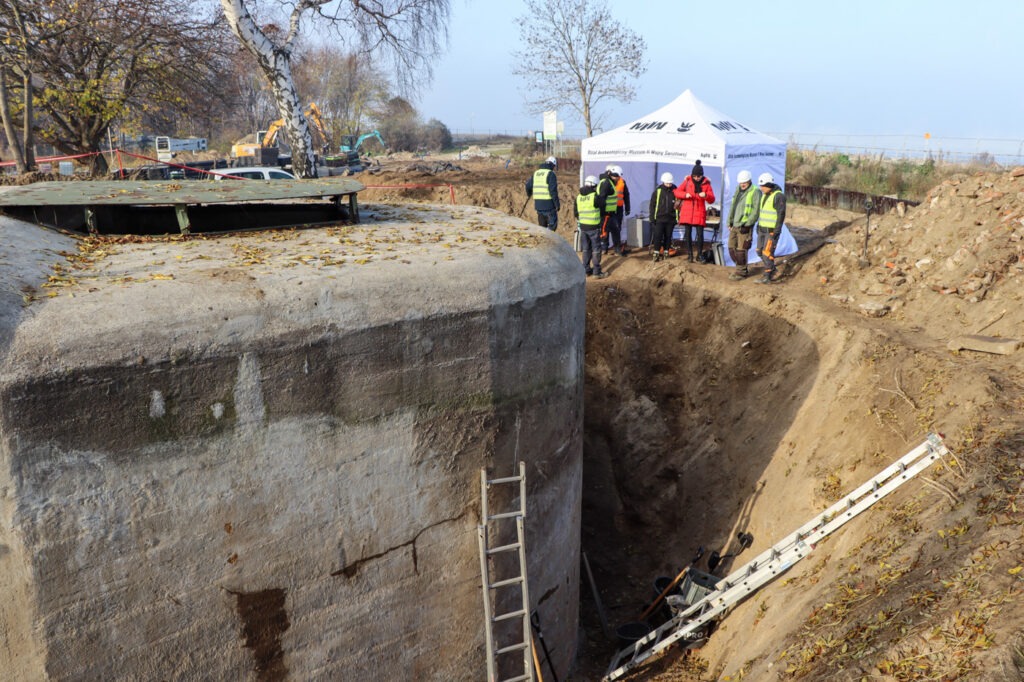
The remains lay approximately 2.5 meters (8.2 feet) below the present ground surface, just half a meter from a reinforced concrete shelter built in 1911. During the defense of Westerplatte in September 1939, Polish troops used the shelter as part of the military transit depot’s defensive system.
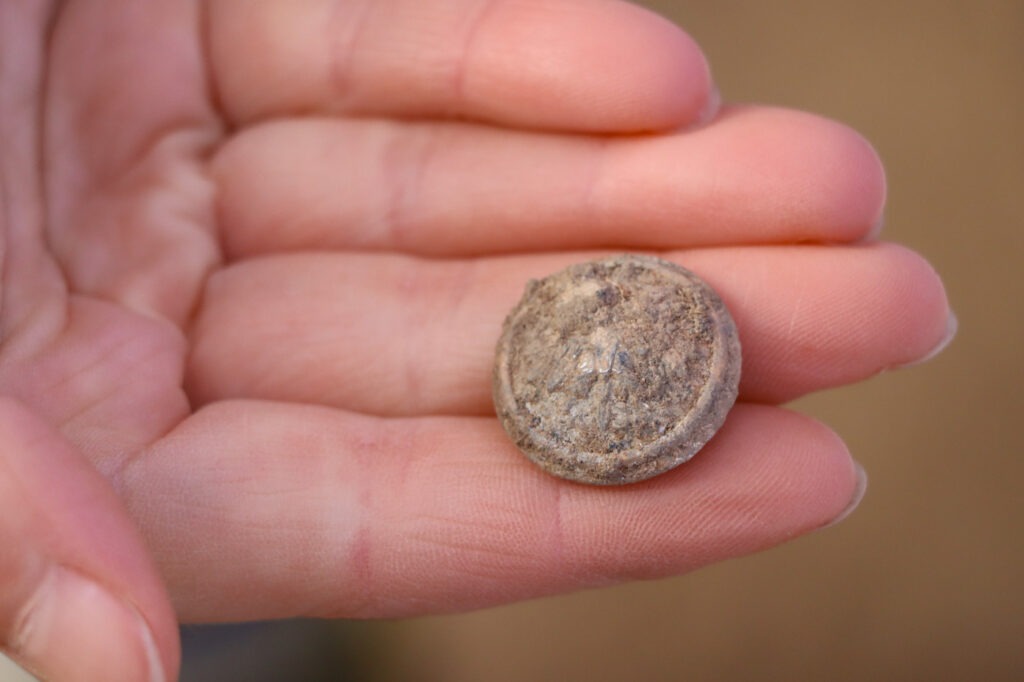
Archaeologists recovered a Polish Model 1929 bayonet with its scabbard and fragments of a leather attachment used to secure it to a military belt. They also identified two Polish military buttons of a type worn by enlisted soldiers during the 1920s.
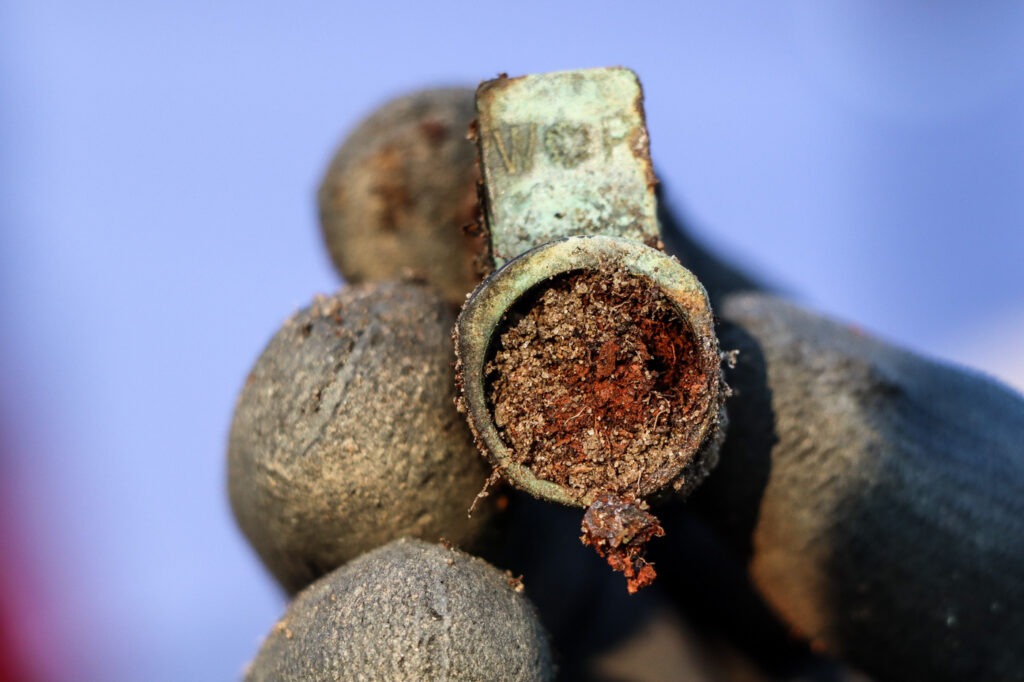
Additional discoveries included military boots, uniform fragments, and a rifle muzzle protector bearing a stamped number and Polish Army markings. According to the Museum of the Second World War in Gdańsk, the location and associated military equipment support the possibility that the remains belong to a Polish defender, although the evidence cannot establish his identity on its own.
The Soldier Who Disappeared During the Battle of Westerplatte
Mieczysław Krzak was born on January 29, 1915, in Boiska, Poland. He served in the 4th Legions Infantry Regiment in Kielce before arriving at Westerplatte on April 5, 1939, where he worked with a mortar unit.
When German forces invaded Poland on September 1, 1939, Westerplatte became the scene of one of World War II’s earliest battles. Its small Polish garrison resisted German attacks for seven days before surrendering on September 7.
Following a German air raid on September 2, Krzak was reassigned to a defensive position near an outpost known as “Fort.” Fellow soldiers later reported that he had been killed in that area, probably during the night of September 2. His body was never recovered, and authorities subsequently listed him as missing.
The German invasion left archaeological evidence across Poland. Other discoveries, including a Polish military eagle recovered near Starachowice, have helped document the fate of military units during the 1939 campaign.
Filip Kuczma, head of the museum’s Archaeology Department, explained that the discovery may mark the end of five years of intensive searches for Krzak’s burial place. He emphasized, however, that the proposed identification remains a hypothesis until genetic testing confirms or rules it out.
The Remains May Have Been Moved in 1945
The condition of the skeleton raises further questions about what happened after the soldier’s death. The bones were not found in their original anatomical arrangement, and many appeared to have been displaced.
Researchers suspect that German troops constructing defensive positions in early 1945 may have encountered the partially skeletonized body of a Polish defender. They may then have moved the remains into a newly excavated pit, disturbing their original arrangement.
This interpretation remains unconfirmed, but it offers a possible explanation for the condition of the burial. It also means archaeologists must consider both the fighting in September 1939 and military activity during the final months of World War II when reconstructing the site’s history.
DNA Analysis Could Resolve an 87-Year-Old Disappearance
The Institute of National Remembrance confirmed that prosecutor Iwona Matczak supervised the recovery of the remains on November 9. Specialists documented the discovery and collected material for genetic testing, which investigators hope to compare with samples from Krzak’s relatives.
The institute has appealed to anyone with information about the soldier’s family to contact its Gdańsk office. Finding suitable relatives could be crucial to confirming or rejecting the proposed identification.
Archaeological investigations at Westerplatte have continued since 2016. In 2019, researchers recovered the remains of nine Polish soldiers, seven of whom were subsequently identified through comparative DNA analysis. Museum officials believe that the remains of two other defenders may still lie somewhere on the peninsula.
If genetic testing confirms the latest remains belong to Mieczysław Krzak, his family will receive an official identification notice, and the soldier will receive a ceremonial burial. Until those results are available, the discovery remains a promising but unconfirmed identification of a man missing since the first days of World War II.
Cover Image: An investigator documents human remains discovered near a World War II defensive position at Westerplatte, Poland. The remains may belong to a Polish soldier missing since 1939. Photo: A. Chomicz / J. Klebba / Institute of National Remembrance (IPN)