
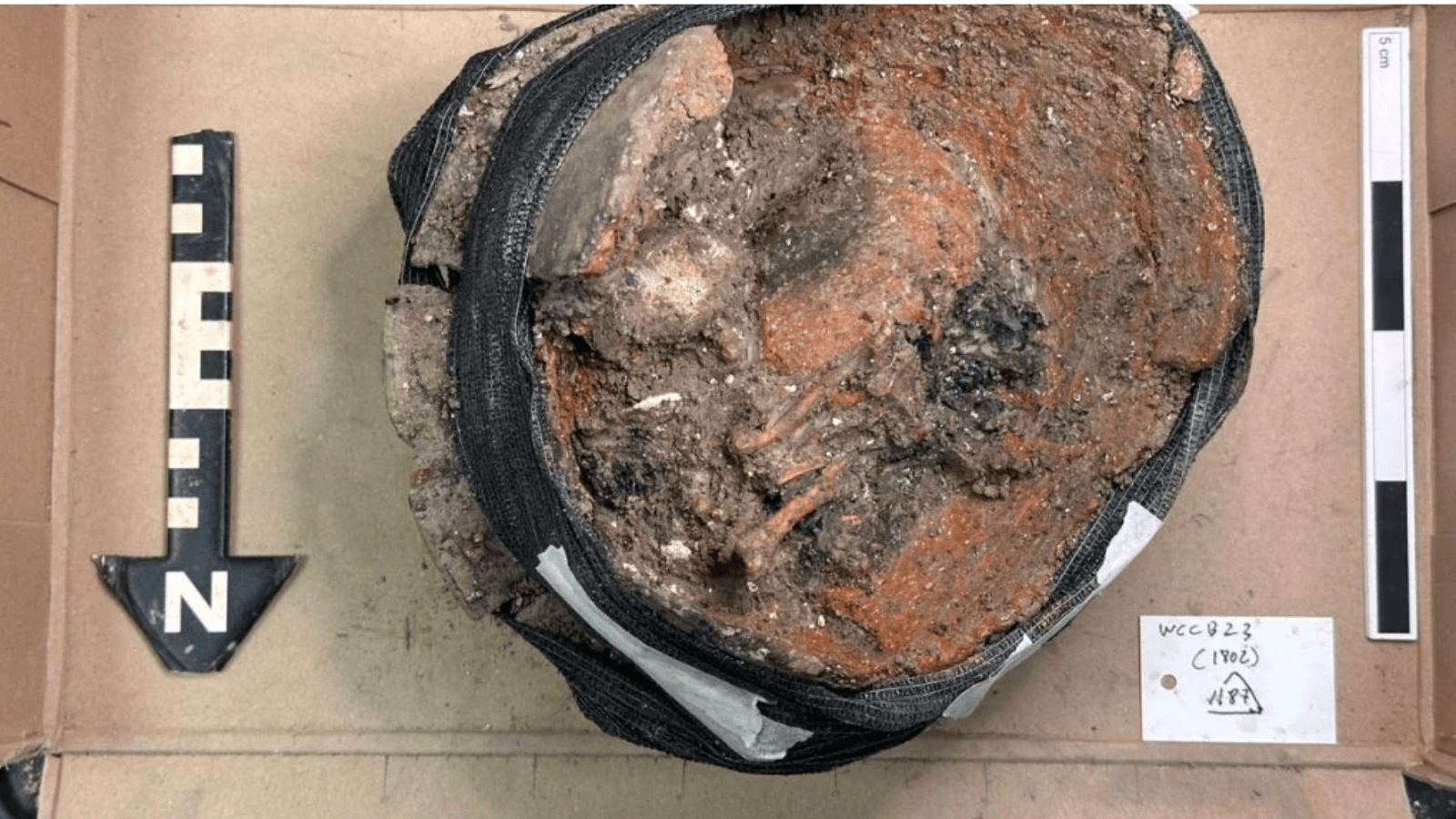
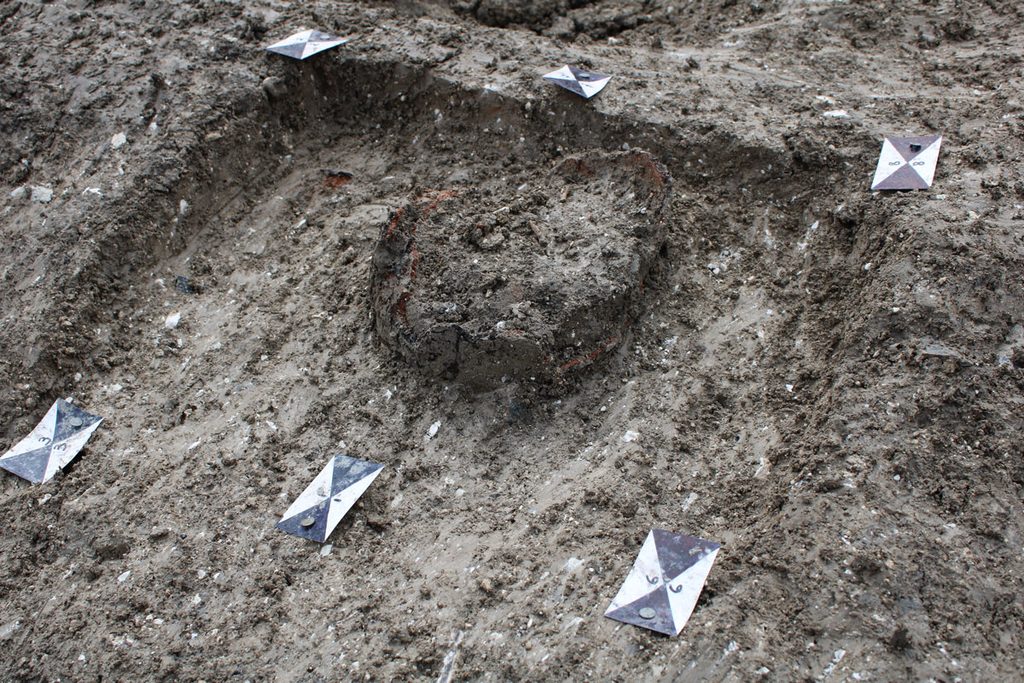
An infant buried inside an upside-down pottery vessel alongside the remains of a hen and a small songbird has been discovered at a Roman settlement in Britain. The unusual grave, found near Wendover in Buckinghamshire, raises the possibility that the child’s family followed a funerary tradition more commonly associated with the Mediterranean world.
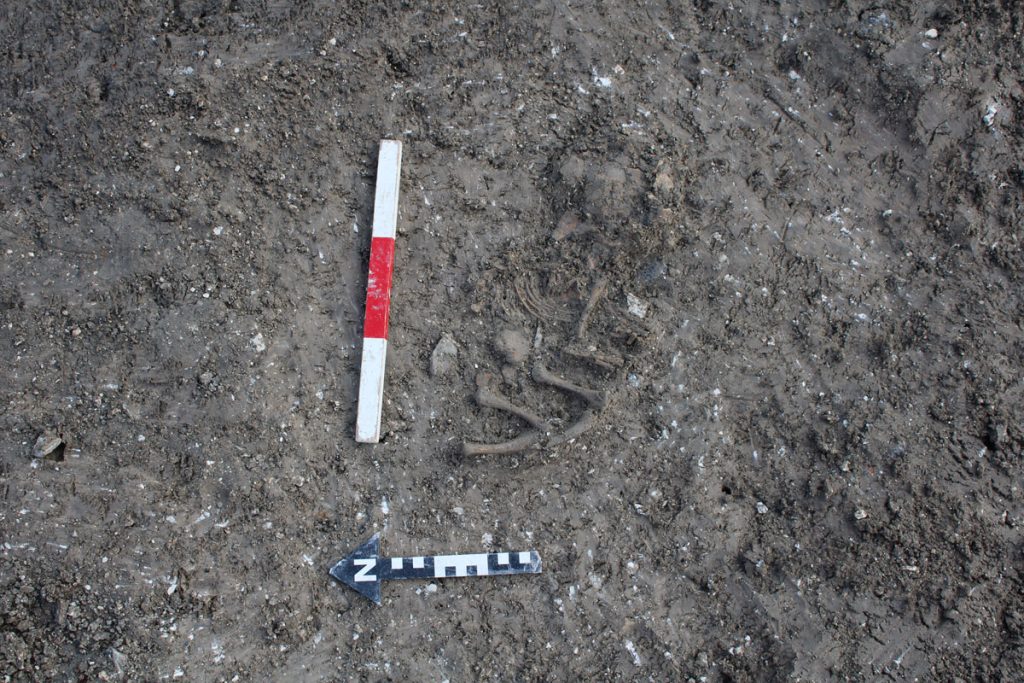
Archaeologists from Cotswold Archaeology uncovered the burial during excavations conducted on behalf of HS2 in 2024, ahead of construction of a new cricket ground. The grave was among nine infant and child burials found on the eastern edge of a settlement occupied during the Late Iron Age and Roman period.
An Infant Buried with Two Birds
The excavation team found the remains of a mature hen and the wings of a smaller bird accompanying the infant inside the inverted pottery vessel. A photograph shared by the archaeologists shows chicken bones near the vessel’s opening, although the complete arrangement of the burial is not visible.
Chickens were commonly included in Roman-period burials, sometimes as food offerings for the deceased. They could also carry symbolic or religious meanings, particularly in traditions associated with the journey to the afterlife.
A study published in Antiquity examined the changing relationship between people and chickens in Europe. The researchers identified examples of chickens buried alongside humans in Britain during the Late Iron Age and early Roman period, when the birds could hold significance beyond their value as food.
At Wendover, however, the combination of a mature hen and a smaller bird makes the burial particularly intriguing. Archaeologists have not yet established whether the two birds served different purposes or formed part of a single funerary offering.
A Mediterranean Tradition in Roman Britain
The pottery vessel may provide an important clue to the family’s burial customs. Placing infants and young children inside ceramic containers, a practice known as enchytrismos, occurred across parts of the ancient Mediterranean but was comparatively uncommon in Roman Britain.
The practice is well documented in Roman North Africa. In a study titled Stages of Infancy in Roman Amphora Burial, archaeologist Susan T. Stevens examined infant burials in amphorae and explored how the size and shape of the vessels may have reflected different stages of early childhood.
Cotswold Archaeology has suggested that the parents of the Wendover infant may have originated from a Mediterranean region where burial in pottery vessels was a familiar custom. If so, the family could have continued a tradition from their homeland after settling in Roman Britain.
The interpretation remains speculative. A burial custom does not necessarily establish geographical ancestry, particularly within an empire where people and traditions circulated across provincial boundaries. The diversity of funerary customs in Roman Britain is also evident at the Brougham Roman cemetery in northern England, where archaeologists documented considerable variation in burial practices. Researchers have not reported isotopic or genetic evidence linking the Wendover child or the family to the Mediterranean.
Other Burials at the Wendover Settlement
According to Cotswold Archaeology’s official report, published on October 7, 2026, the excavations revealed nine graves of infants and young children. One contained a child who died at approximately three or four years of age and was buried with an Oxfordshire white ware pottery cup dating to the fourth century AD.
The archaeologists also uncovered four adult cremation burials, with the remains placed in pottery urns. One grave contained an Oxfordshire red-slipped beaker probably dating to the third or fourth century AD.
Excavations across the settlement revealed wells, three stone-built grain dryers and more than 28 kilograms of Late Iron Age and Roman pottery. Imported amphora fragments from southern Spain and Samian ware from Gaul indicate that the rural community had access to goods circulating through the Roman Empire’s commercial networks.
These connections provide context for the possibility of cultural influences reaching Wendover, although they do not establish the origin of the infant’s family. The child’s burial remains distinctive for its combination of a pottery container and two birds, while the meaning of that arrangement and the identity of those who performed the ceremony remain unresolved.
Cover Image: Chicken bones visible at the entrance of the pottery vessel associated with an unusual Roman infant burial at Wendover, Buckinghamshire. Credit: Cotswold Archaeology.