
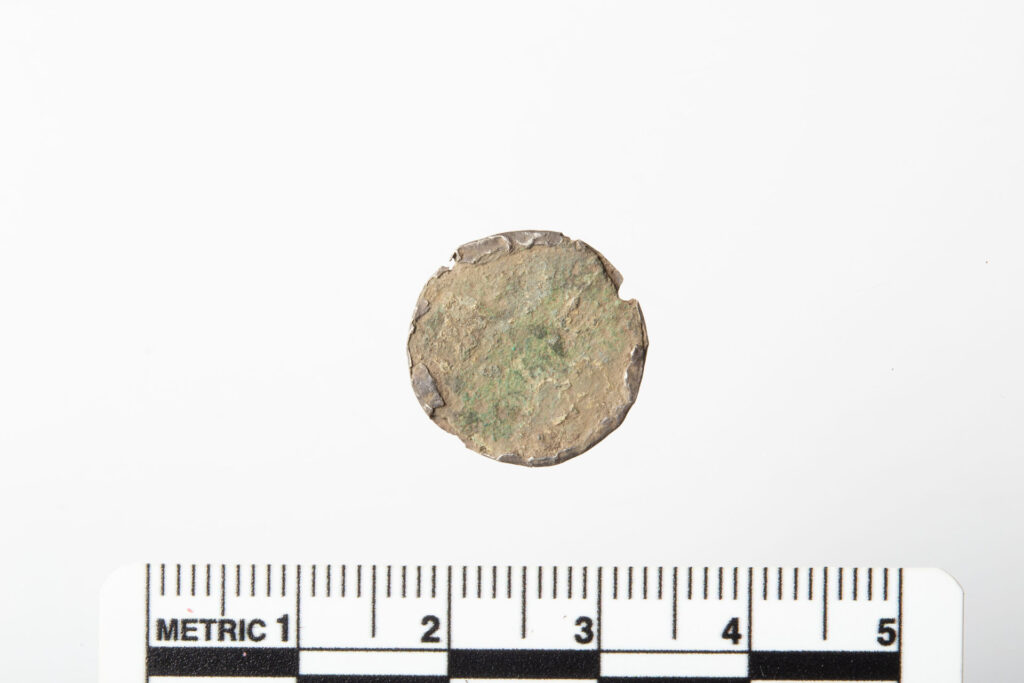
A small object pulled from a field near Utstein Abbey in southwestern Norway looked so ordinary that it was first placed among buttons and other uncertain metal finds. Months later, a closer look revealed that the “button” was actually a medieval silver coin minted under Magnus Barefoot, the Norwegian ruler often described as the last Viking king.
The coin was found by Morten Eek of Rygene Detector Club during a metal-detecting search near Utstein Abbey. It came from the plough layer, only about 10 to 15 centimeters below the surface. At first, there seemed little reason to treat it as exceptional. One side was dirty and copper-colored; the other was brighter, but not enough to immediately identify the object as a coin.
That first impression was understandable. Old clothing buttons made of tin, bronze or silver are common metal-detector finds in Norway. The object was therefore taken home and placed in a box with other buttons, worn coins and unclear fragments.
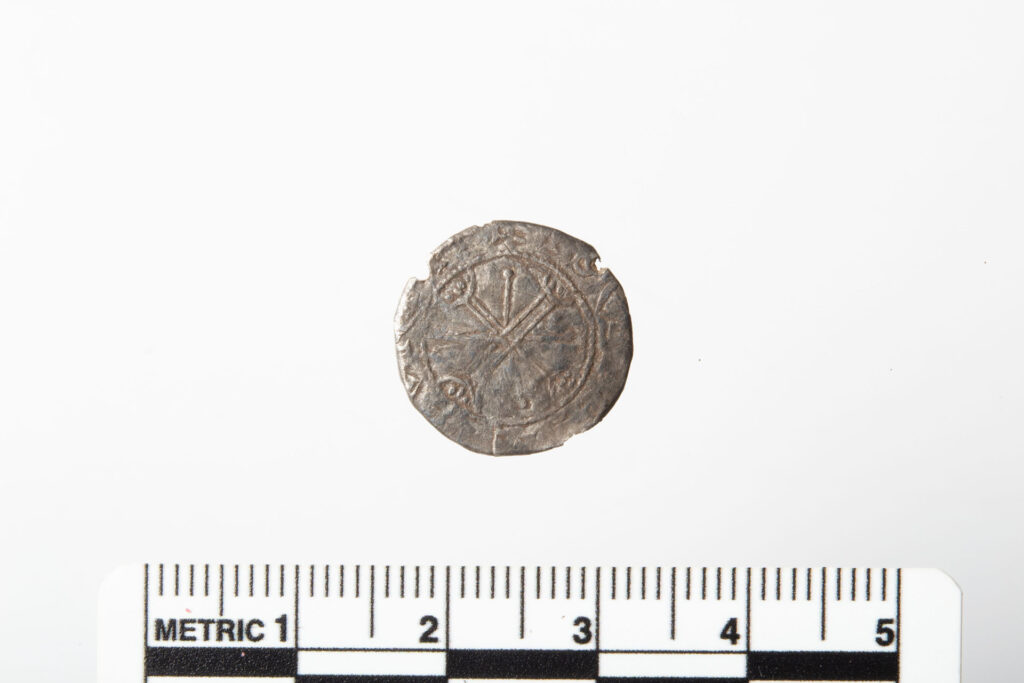
Only later did its importance become visible. During a second inspection, Eek noticed that the silvery side carried a clear cross motif. The object also showed details that did not fit a normal button: a copper plate had been attached to one side, and the edge of the original coin had been folded around it.
Archaeologists at the Museum of Archaeology, University of Stavanger, later identified it as a coin from the reign of Magnus Barefoot, who ruled Norway from 1093 to 1103.
A Coin Turned into an Ornament
The reason the find looked like a button lies in its later reuse. At some point after the coin was struck, someone placed a copper plate on one side and bent the edge of the coin around it. Two small rounded notches on the rim may have held a loop, chain or other fitting.
In other words, the coin seems to have had a second life as an ornament.
This secondary modification is important. Researchers did not simply remove the copper plate to expose the hidden side, because the alteration is part of the object’s history. The object that survived is not just a coin; it is a coin that was transformed and reused.
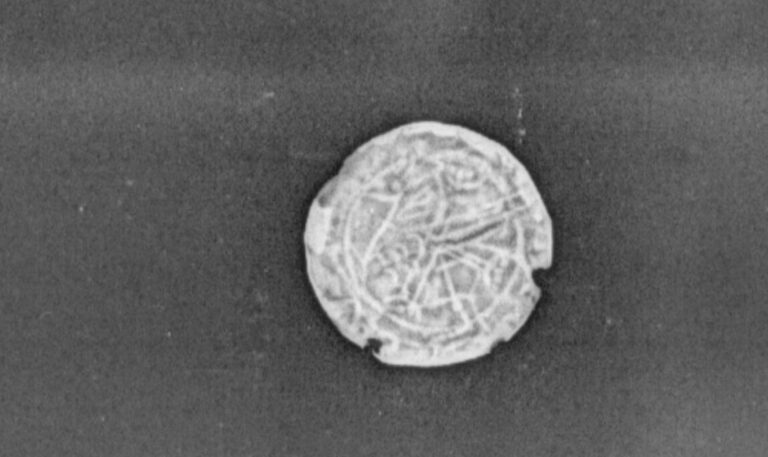
Instead, specialists examined it with X-ray imaging. The result showed that the hidden side carried a griffin-like creature, matching a coin type known from only a handful of examples.
The visible side shows a “cross over cross” motif, a design used on Norwegian coins from the late 11th century into the early 12th century. The other side, hidden beneath the copper plate, revealed the crucial detail: a winged animal interpreted as a griffin, or in some readings as a lion of St. Mark.
Magnus Barefoot and the Last Viking Age
Magnus Barefoot, known in Norwegian as Magnus Berrføtt, occupies a distinctive place in Norwegian history. He was the son of Olaf Kyrre, whose reign is often associated with peace and internal stability. Magnus followed a very different path.
His rule was marked by military campaigns and western expansion. He sought to strengthen Norwegian control over the islands of the North Atlantic, including the Hebrides, the Isle of Man and parts of Ireland. He died in 1103, around the age of 30, after being ambushed during a campaign in Ireland.
For that reason, Magnus is often described as Norway’s last Viking king: a ruler whose reign still belonged to the old world of sea campaigns, island politics and personal warfare.
His coinage also tells part of that story.
Early in his reign, Magnus carried out a notable coin reform. Earlier Norwegian coins had varied sharply in silver content. Magnus reduced the weight of his coins but kept a high silver content, producing small but fine silver pieces. The Utstein coin belongs to that short and distinctive phase of Norwegian coinage.
A Type Never Before Found in Norway
The Utstein coin is especially important because of its rarity. Two-sided coins with the griffin and “cross over cross” combination were previously known from only four examples: one from Sandoy in the Faroe Islands and three from a hoard at Lundby Krat near Aalborg in Denmark.
The newly identified coin from Utstein appears to have been struck with the same die as one of the Danish examples. If confirmed, that link would suggest a very limited coinage and give researchers another small but valuable clue about how Magnus Barefoot’s coins were produced and circulated.
Only around 100 coins from Magnus Barefoot’s reign are known in total. Very few have been found within present-day Norway. The Utstein example is the first known coin of this specific griffin and cross-over-cross type discovered on Norwegian soil.
That does not mean the coin proves a direct connection between Magnus himself and Utstein. Archaeologists are careful on that point. The object came from a plough layer, and soil movement in later periods may complicate the original context.
But the location still matters.
A Rare Object in a Strategic Coastal Landscape
Utstein Abbey stands in a landscape with a long and complex history. The area lies on an important coastal route between Stavanger and Karmsund, with access to the Ryfylke fjords and maritime connections toward the west. Long before the abbey became a medieval monastic site, the surrounding landscape had strategic and economic value.
Archaeological work around Utstein has identified traces of earlier activity, including possible Viking Age features and evidence of craft production. More than ten medieval objects have also been recovered from fields near the abbey over the past 15 years.
For now, the coin’s exact route into the soil remains unknown. It may have been lost as a coin, or after it had already been converted into an ornament. That distinction matters, because jewelry can remain in use long after the coin from which it was made has ceased to circulate.
Further analysis may help narrow the date of the object’s transformation from coin to ornament. Until then, the Utstein find remains valuable precisely because it holds several histories at once: a royal coin, a reused personal object, and a rare trace of Norway’s late Viking-age monetary system.
At only 0.81 grams, it is a small discovery. But it is also a reminder that some of the most important finds do not announce themselves in the field. Sometimes they sit for months in a box of buttons before anyone realizes what they are.
Cover Image Credit: The visible side of the coin, showing the “cross over cross” motif. H. Hollund, Archaeological Museum, University of Stavanger